



Description
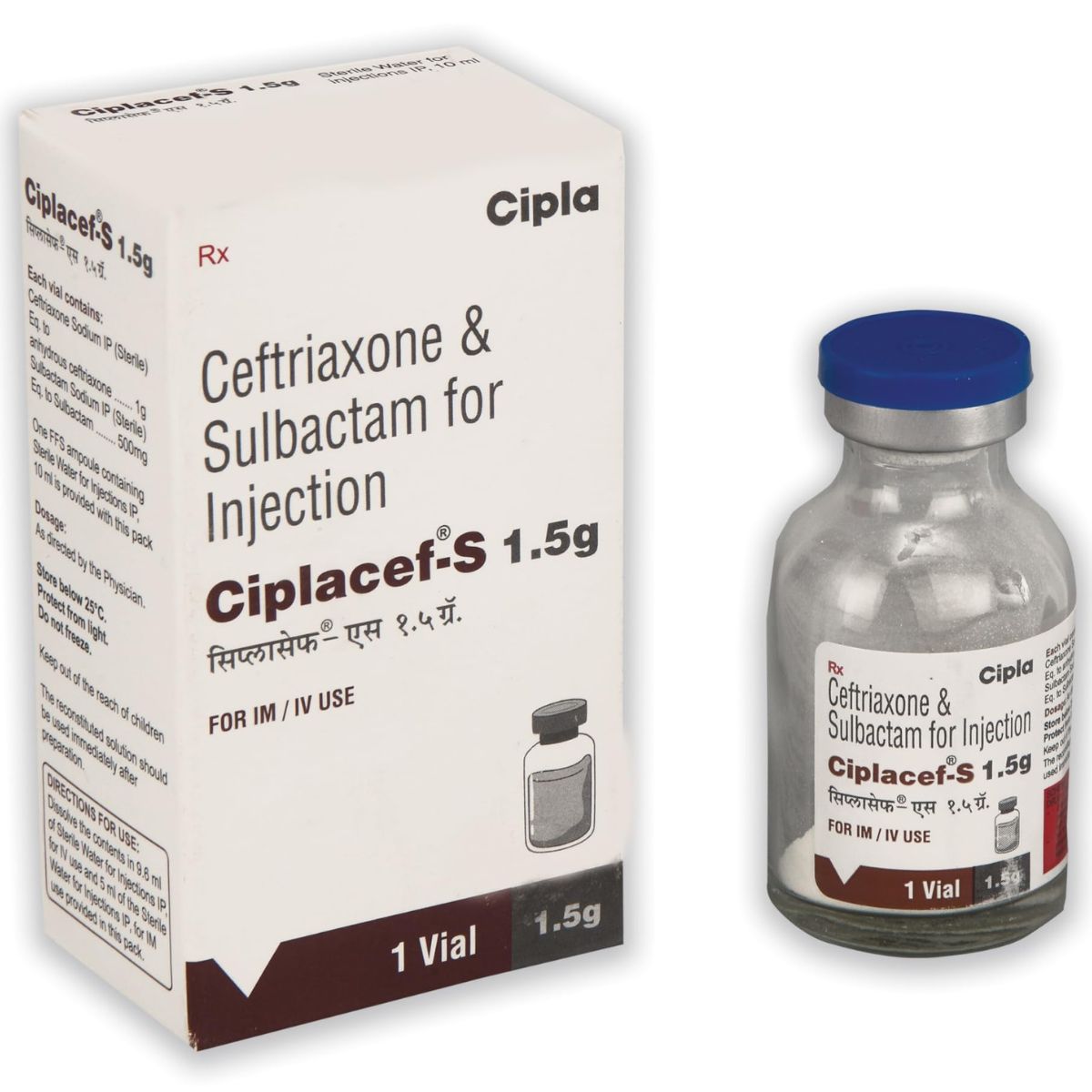
Ciplacef-S 1.5g Injection is a prescription antibiotic containing Ceftriaxone, a third-generation cephalosporin antibiotic, and Sulbactam, a beta-lactamase inhibitor. This combination is effective against a wide range of bacterial infections, including those caused by bacteria that produce beta-lactamase enzymes.
Sulbactam protects Ceftriaxone from bacterial enzymes that can destroy antibiotics, thereby improving its effectiveness. The injection is administered only by a qualified healthcare professional.
Uses of Ciplacef-S 1.5g Injection
- Pneumonia and other respiratory tract infections
- Urinary tract infections (UTIs)
- Skin and soft tissue infections
- Bone and joint infections
- Intra-abdominal infections
- Gynecological infections
- Septicemia (bloodstream infections)
- Meningitis
- Surgical infection prevention (as advised by a doctor)
Benefits of Ciplacef-S 1.5g Injection
- Effectively treats a wide range of bacterial infections
- Provides broad-spectrum antibacterial coverage
- Helps overcome beta-lactamase-mediated resistance
- Reduces infection-related symptoms and complications
- Promotes faster recovery when used appropriately
How Ciplacef-S 1.5g Injection Works
- Ceftriaxone kills bacteria by preventing the formation of their protective cell wall, leading to bacterial death.
- Sulbactam inhibits beta-lactamase enzymes produced by certain bacteria, protecting Ceftriaxone from breakdown and enhancing its antibacterial activity.
Dosage
- Ciplacef-S 1.5g Injection should be administered only by a doctor or qualified healthcare professional.
- The dose and duration depend on the type and severity of the infection, age, kidney function, and overall health.
- Complete the full course of treatment even if symptoms improve.
How to Use
- Administer as an intravenous (IV) or intramuscular (IM) injection as directed by your doctor.
- Do not self-administer unless specifically instructed by a healthcare professional.
Side Effects
Common side effects include:
- Pain or swelling at the injection site
- Diarrhea
- Nausea
- Vomiting
- Skin rash
- Headache
- Mild elevation of liver enzymes
Seek immediate medical attention if you develop severe diarrhea, allergic reactions, difficulty breathing, or swelling of the face, lips, or throat.
Precautions
- Inform your doctor if you are allergic to cephalosporins, penicillins, or other antibiotics.
- Use with caution in patients with liver or kidney disease.
- Inform your doctor if you are pregnant or breastfeeding.
- Antibiotics should only be used for bacterial infections and are not effective against viral illnesses such as the common cold or flu.




Leave a Reply