



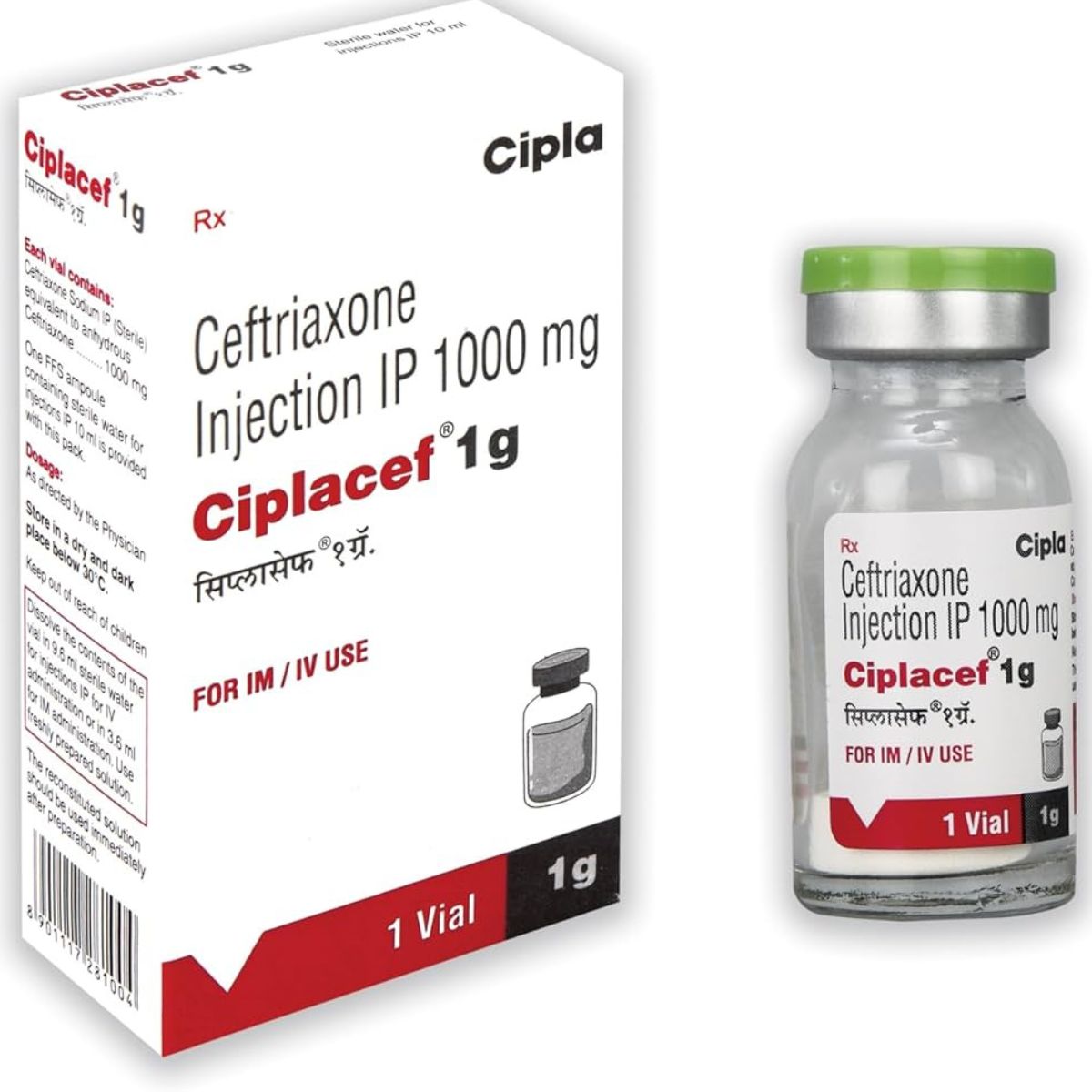
Description
Ciplacef 1gm Injection is a prescription antibiotic containing Ceftriaxone 1gm, a third-generation cephalosporin antibiotic effective against a broad range of bacterial infections. It is commonly used in hospitals and clinics for treating moderate to severe infections caused by susceptible bacteria.
Ceftriaxone works by preventing bacteria from forming their protective cell wall, leading to bacterial death. It is administered only by a qualified healthcare professional through intravenous (IV) or intramuscular (IM) injection.
Uses of Ciplacef 1gm Injection
- Pneumonia and respiratory tract infections
- Urinary tract infections (UTIs)
- Skin and soft tissue infections
- Bone and joint infections
- Intra-abdominal infections
- Septicemia (bloodstream infections)
- Meningitis
- Gonorrhea
- Surgical infection prevention (as advised by a doctor)
Benefits of Ciplacef 1gm Injection
- Effectively treats serious bacterial infections
- Broad-spectrum antibacterial action
- Helps prevent the spread of infection
- Promotes faster recovery
- Suitable for hospital and clinical use
How Ciplacef 1gm Injection Works
Ceftriaxone inhibits the formation of the bacterial cell wall, which is essential for bacterial survival. This causes the bacteria to die, helping the body eliminate the infection.
Dosage
- Ciplacef 1gm Injection should be administered only by a doctor or qualified healthcare professional.
- The dosage depends on the type and severity of the infection, age, body weight, and kidney or liver function.
- Complete the full course of treatment as prescribed.
How to Use
- Administer as an intravenous (IV) or intramuscular (IM) injection.
- Do not self-administer unless specifically instructed by your healthcare provider.
Side Effects
Common side effects include:
- Pain or redness at the injection site
- Diarrhea
- Nausea
- Vomiting
- Skin rash
- Headache
- Mild elevation of liver enzymes
Seek immediate medical attention if you experience severe diarrhea, allergic reactions, difficulty breathing, or swelling of the face, lips, or throat.
Precautions
- Inform your doctor if you are allergic to cephalosporins, penicillins, or other antibiotics.
- Use with caution in patients with kidney or liver disease.
- Inform your doctor if you are pregnant or breastfeeding.
- Do not use this medicine for viral infections such as the common cold or flu.




Leave a Reply