



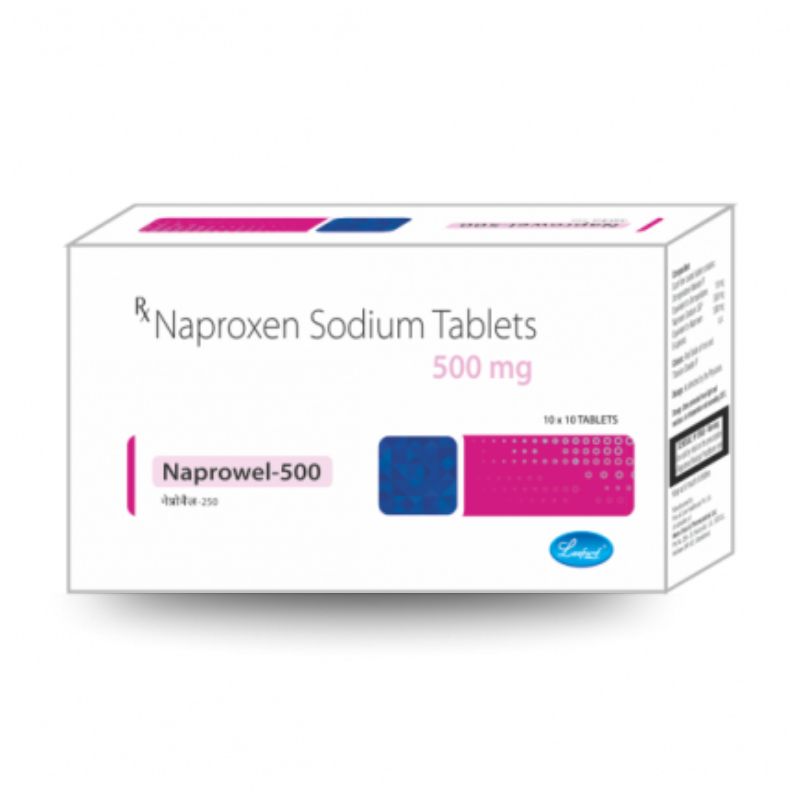
Description
NAPROWEL-500 is a non-steroidal anti-inflammatory drug (NSAID) tablet containing Naproxen 500 mg, presented in strip packaging. It is formulated for effective relief of pain, inflammation, and swelling associated with arthritis, bone and joint conditions, muscle injuries, dental procedures, gout attacks, and menstrual cramps.
How it Works
Naproxen blocks the cyclooxygenase (COX-1 and COX-2) enzymes, decreasing the synthesis of prostaglandins—natural substances that mediate pain, inflammation, and fever. By reducing prostaglandin levels, it helps quickly relieve pain, swelling, and stiffness in various musculoskeletal and inflammatory conditions.
Main Uses
-
Management of osteoarthritis, rheumatoid arthritis, ankylosing spondylitis, gout, tendonitis, and bursitis.
-
Relief of acute moderate-to-severe pain, dental pain, post-operative pain, musculoskeletal injuries, and menstrual cramps.
-
Short-term reduction of fever, if other treatments are unsuitable.
Key Benefits
-
Provides lasting pain relief and reduces inflammation, stiffness, and swelling.
-
High dose per tablet allows flexible dosing and strong analgesic/anti-inflammatory effect.
-
Non-habit-forming, suitable for scheduled or as-needed use, per doctor’s directions.
Dosage & Administration
-
Usual adult dose: 500 mg to 1,000 mg daily, split into 1 or 2 divided doses (e.g., 500 mg once or twice daily).
-
For acute pain, initial 500 mg dose, then 250–500 mg every 6–12 hours as needed, not exceeding 1,250 mg (first day) or 1,000 mg/day thereafter.
-
Take with or after food to minimize stomach upset; swallow whole with water.
-
Use the lowest effective dose for the shortest duration needed.
Safety & Precautions
-
Common side effects: indigestion, abdominal pain, nausea, headache, dizziness, constipation, drowsiness, or rash.
-
Long-term or high-dose use increases risk of stomach ulcers, GI bleeding, heart attack, stroke, and kidney/liver issues.
-
Contraindicated in patients with history of peptic ulcer/bleeding, severe kidney/liver/heart disease, asthma induced by NSAIDs, or in the last trimester of pregnancy.
-
May interact with anticoagulants, blood pressure medications, diuretics, or other NSAIDs—inform your doctor of all medicines taken.
-
Avoid alcohol to lower risk of GI complications.
-
Seek medical attention if severe allergic reactions, black or bloody stools, yellowing skin, or chest pain occur.



Leave a Reply