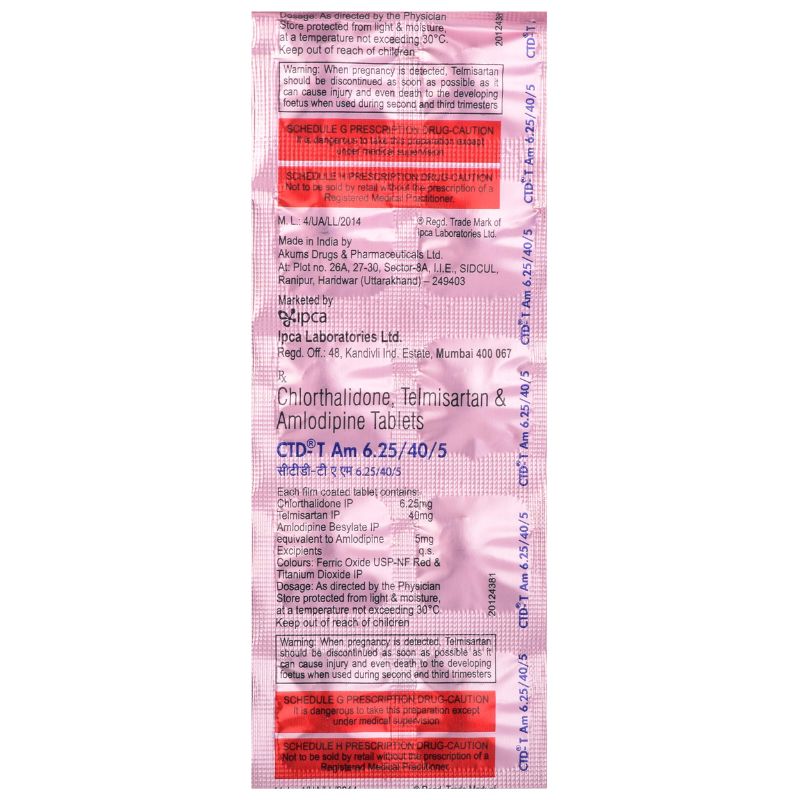
CTD-T AM 6.25/40/5 Tablet is a triple combination medicine containing Telmisartan (an angiotensin II receptor blocker), Amlodipine (a calcium channel blocker), and Chlorthalidone (a thiazide-like diuretic). It is used to treat high blood pressure (hypertension) and reduce fluid retention (edema). This combination works by relaxing blood vessels, reducing fluid overload, and lowering the heart’s workload, providing effective blood pressure control and reducing the risk of heart attack, stroke, and kidney complications.
Dosage & How to Use:
-
Usually taken once daily, with or without food.
-
Swallow the tablet whole with water.
-
Dosage may vary depending on the patient’s condition, age, and response. Follow the doctor’s instructions.
Precautions:
-
Inform your doctor if you have kidney or liver disease, heart problems, diabetes, or electrolyte imbalance.
-
Avoid excessive use of salt substitutes containing potassium.
-
Regularly monitor blood pressure, kidney function, and heart rate.
-
Do not stop taking this medicine suddenly without consulting your doctor.
Side Effects:
Common side effects:
-
Dizziness or lightheadedness
-
Increased urination
-
Fatigue or headache
-
Swelling of feet or ankles
-
Electrolyte imbalance (low potassium, sodium)
Serious but rare side effects:
-
Severe allergic reactions
-
Low blood pressure causing fainting
-
Worsening heart or kidney problems
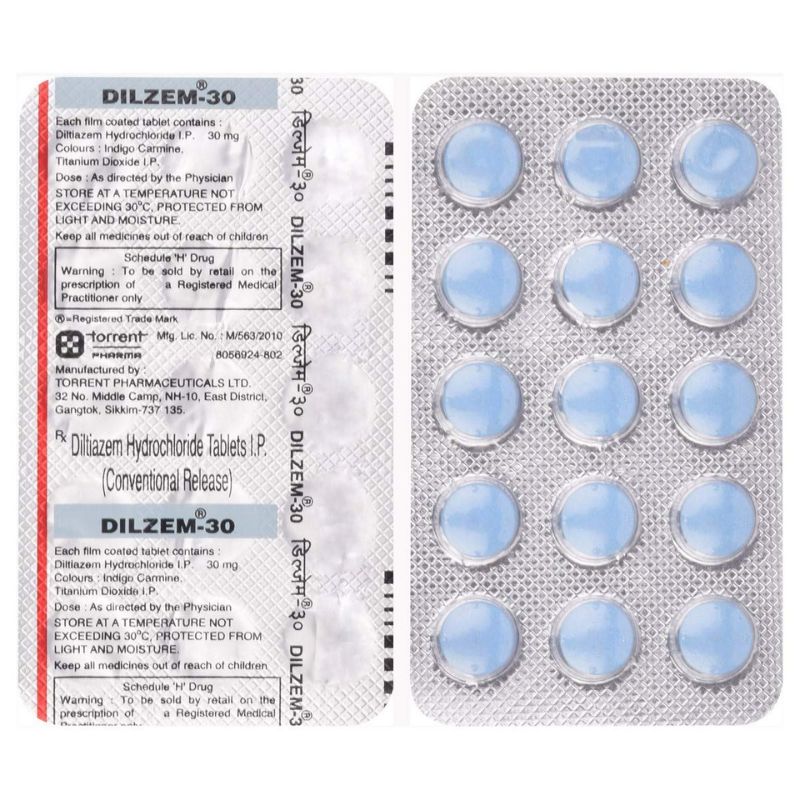
Dilzem 30 Tablet CR contains Diltiazem, a calcium channel blocker that helps relax the blood vessels and improve blood flow. It is primarily used to treat high blood pressure (hypertension), angina (chest pain due to reduced blood flow to the heart), and certain types of heart rhythm disorders. By lowering blood pressure, it helps prevent heart attacks, strokes, and kidney problems in the long term.
The “CR” stands for Controlled Release, meaning the medicine releases slowly in the body to maintain a steady effect throughout the day.
Dosage
The dosage of Dilzem 30 Tablet CR depends on the patient’s age, health condition, and response to treatment. It is usually taken once or twice daily, as prescribed by the doctor.
-
Do not crush, chew, or break the tablet — swallow it whole with water.
-
Take it at the same time every day, with or without food, for consistent results.
-
Continue taking it even if you feel well; do not stop suddenly without consulting your doctor, as it may worsen chest pain or blood pressure.
How to Use
-
Take the tablet exactly as directed by your physician.
-
Swallow it whole with a glass of water.
-
You may take it before or after meals, but it’s best to follow your doctor’s advice.
-
Avoid alcohol while taking this medication, as it may enhance the blood pressure-lowering effect.
Precautions
-
Inform your doctor if you have heart failure, liver disease, low blood pressure, or conduction problems in the heart.
-
Pregnant or breastfeeding women should use it only if prescribed.
-
Avoid driving or operating machinery until you know how this medicine affects you, as it may cause dizziness or tiredness.
-
Regularly monitor your blood pressure and heart rate while on this medication.
-
Limit intake of grapefruit or grapefruit juice, as it may increase diltiazem levels in the body and cause side effects.
Possible Side Effects
Common side effects include:
-
Dizziness or lightheadedness
-
Headache
-
Flushing (warmth, redness of the skin)
-
Swelling of hands, feet, or ankles
-
Fatigue or weakness
-
Slow heartbeat (bradycardia)
-
Nausea or upset stomach
Serious side effects (rare but important):
Seek immediate medical help if you experience difficulty breathing, chest pain, or fainting.
Overview / Uses
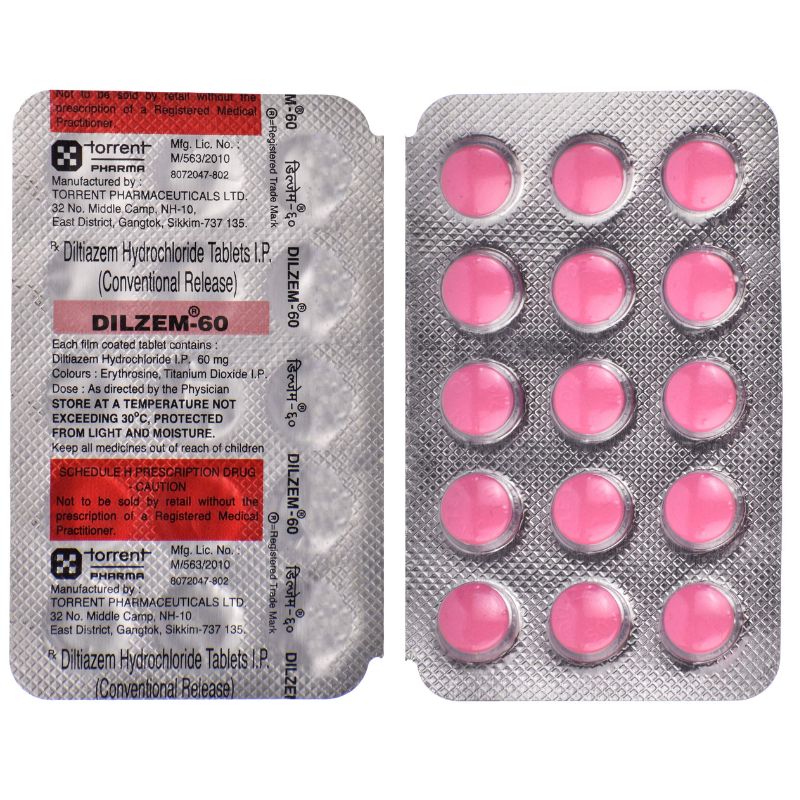
Dilzem 60 Tablet CR is a calcium channel blocker containing Diltiazem (60 mg). It is used to treat high blood pressure (hypertension), chronic stable angina (chest pain), and certain heart rhythm disorders (arrhythmias).
By relaxing the blood vessels and reducing the heart’s workload, it helps improve blood flow, lower blood pressure, and prevent heart-related complications such as heart attacks, strokes, and kidney damage.
The “CR” stands for Controlled Release, meaning the medicine is designed to release the drug slowly into the bloodstream for a longer-lasting effect.
Dosage
-
The dosage is determined by your doctor, based on your condition and how you respond to treatment.
-
Typically taken once or twice daily, preferably at the same time each day.
-
Swallow the tablet whole with a glass of water — do not crush, chew, or break it, as it may interfere with the controlled-release action.
-
Continue taking it regularly to get the full benefit; do not stop suddenly without medical advice, as it may worsen chest pain or cause a sudden increase in blood pressure.
How to Use
-
Take Dilzem 60 Tablet CR exactly as prescribed.
-
Can be taken with or without food, but try to take it consistently the same way each time.
-
Avoid alcohol, as it may increase diltiazem levels and amplify dizziness or blood pressure-lowering effects.
-
Take the medication at the same time every day for best results.
-
If you miss a dose, take it as soon as you remember — unless it’s close to the next one; in that case, skip the missed dose.
Precautions
-
Tell your doctor if you have a history of:
-
Heart failure or slow heart rate (bradycardia)
-
Low blood pressure (hypotension)
-
Liver or kidney problems
-
Heart block or other rhythm disorders
-
Pregnant or breastfeeding women should use this medicine only if clearly prescribed.
-
Avoid driving or operating machinery until you know how the medicine affects you, as it may cause dizziness or fatigue.
-
Regularly monitor blood pressure and heart rate during treatment.
-
Avoid grapefruit or grapefruit juice, as it can increase Diltiazem levels in your blood and cause excessive effects.
Possible Side Effects
Common side effects:
-
Dizziness or lightheadedness
-
Headache
-
Flushing (warmth or redness of the skin)
-
Swelling of ankles, feet, or hands
-
Nausea or indigestion
-
Fatigue or weakness
-
Slow or irregular heartbeat
Rare but serious side effects:
-
Severe drop in blood pressure
-
Worsening chest pain or shortness of breath
-
Fainting or extreme dizziness
-
Swelling of face, lips, or throat (sign of allergy)
-
Abnormal liver function (yellowing of eyes or skin)
If any severe side effects occur, seek immediate medical help.
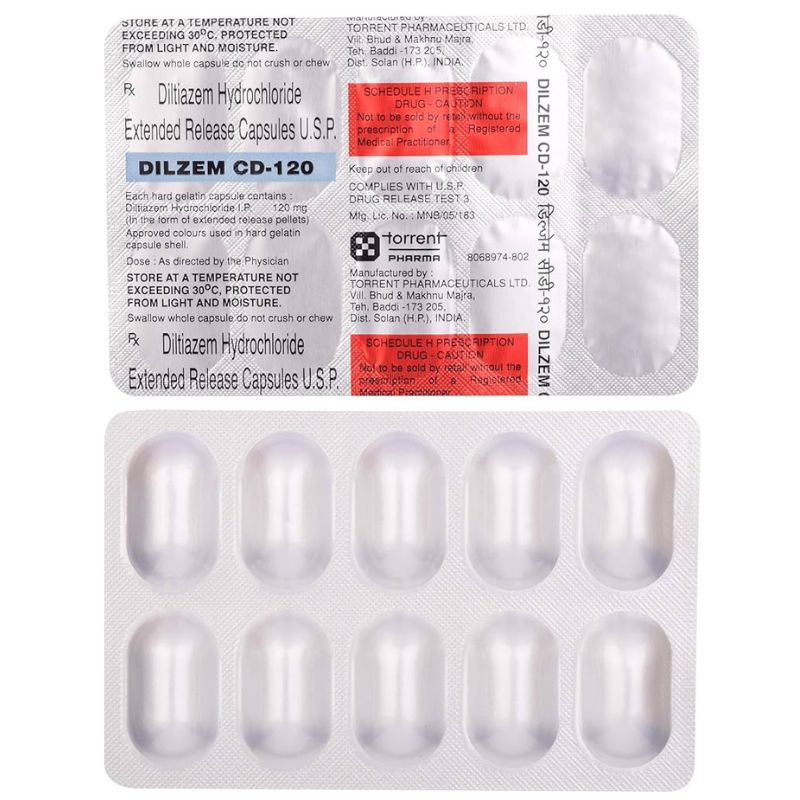
Dilzem CD 120 Capsule ER is a calcium channel blocker medicine containing Diltiazem (120mg). It is primarily used to manage high blood pressure (hypertension), chronic stable angina (chest pain), and certain heart rhythm disorders. The medicine works by relaxing the muscles of the heart and blood vessels, allowing smoother blood flow and reducing the heart’s workload. This helps lower blood pressure, prevent chest pain, and reduce the risk of heart attacks or strokes.
The “CD” stands for Controlled Delivery, which means the medicine is released gradually over time, providing long-lasting effectiveness throughout the day and reducing the need for multiple doses.
Uses:
-
Treatment of high blood pressure (hypertension)
-
Management of chronic chest pain (angina pectoris)
-
Control of abnormal heart rhythms such as supraventricular tachycardia (SVT)
-
Prevention of heart attack and stroke by improving oxygen supply to the heart
Dosage:
The dosage is determined by your doctor depending on your medical condition and response to treatment. Usually taken once daily. The capsule must be swallowed whole with water, not opened, crushed, or chewed. Always take it at the same time each day for consistent results. Do not stop the medicine suddenly without your doctor’s advice as it may worsen your condition.
How to Use:
Take Dilzem CD 120 Capsule ER exactly as prescribed. It can be taken with or without food, but you should take it in the same manner every day. Swallow the capsule whole with a glass of water. Do not break or crush it, as it is designed to release the medicine slowly. Continue taking the medication regularly even if you feel well, since high blood pressure often has no symptoms. If you miss a dose, take it as soon as you remember unless it’s nearly time for the next one.
Precautions:
-
Avoid alcohol as it can enhance drowsiness or dizziness.
-
Inform your doctor if you have heart block, low blood pressure, liver, or kidney problems.
-
Use with caution if taking beta-blockers or other medicines for heart or blood pressure.
-
Pregnant or breastfeeding women should use only under medical advice.
-
Avoid driving or operating machinery if you feel dizzy, tired, or lightheaded.
-
Do not discontinue suddenly without consulting your doctor — may worsen angina or BP.
Side Effects:
Common: Headache, dizziness, flushing, slow heartbeat, constipation, fatigue.
Serious (seek medical help): Swelling of ankles or feet, severe dizziness, fainting, irregular heartbeat, shortness of breath, or allergic rash.
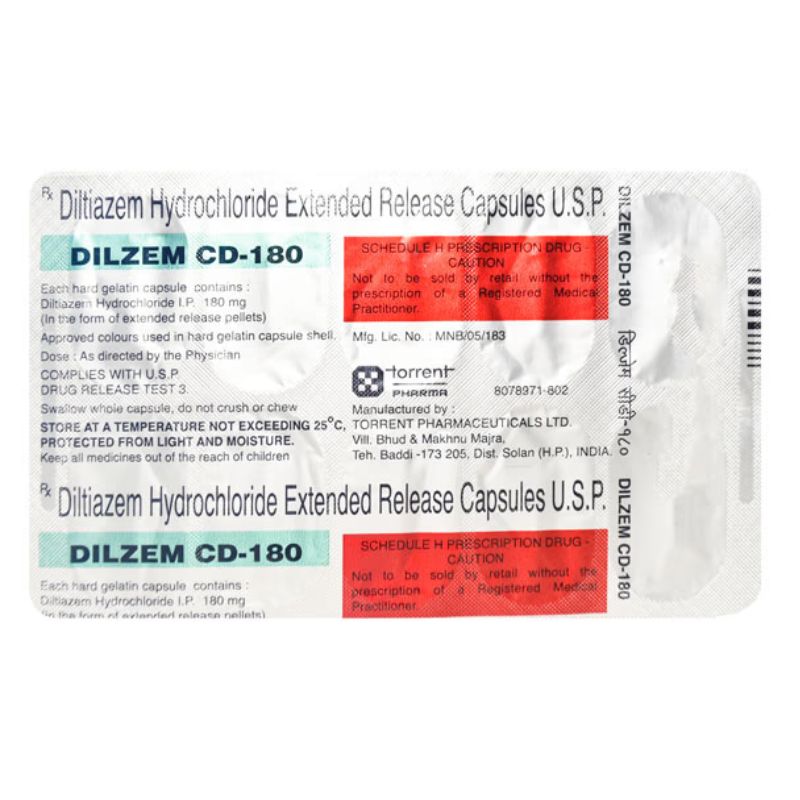
Dilzem CD 180 Capsule ER is a calcium channel blocker medicine that contains Diltiazem (180mg) as its active ingredient. It is used to treat high blood pressure (hypertension), chronic stable angina (chest pain), and certain heart rhythm disorders. Diltiazem works by relaxing the muscles of the heart and blood vessels, allowing better blood flow and reducing the heart’s workload. This helps control blood pressure, prevent chest pain, and protect against heart attack or stroke.
The “CD” (Controlled Delivery) and “ER” (Extended Release) formulation ensures that the medicine is released slowly throughout the day, providing long-lasting control and requiring only one daily dose.
Uses:
-
Treatment of hypertension (high blood pressure)
-
Management of angina pectoris (chest pain)
-
Control of abnormal heart rhythms (arrhythmias) such as SVT
-
Prevention of heart attack and stroke
-
Improvement of blood and oxygen supply to the heart muscles
Dosage:
Dosage is individualized based on the patient’s condition and response to treatment. Generally taken once daily. The capsule should be swallowed whole with water and not crushed, chewed, or opened, as it is an extended-release form designed to release the drug gradually. Take the capsule at the same time each day for optimal effect. Do not skip doses and do not stop the medicine suddenly without consulting your doctor.
How to Use:
Take Dilzem CD 180 Capsule ER exactly as advised by your doctor. It may be taken with or without food, but maintain consistency in timing. Swallow the capsule whole with water — do not break or crush it. Continue taking it regularly even if you feel well, as high blood pressure often shows no symptoms. If you miss a dose, take it as soon as possible unless it’s nearly time for your next dose. Do not double the dose to make up for a missed one.
Precautions:
-
Avoid alcohol, as it can enhance dizziness or cause a drop in blood pressure.
-
Inform your doctor if you have heart block, heart failure, liver, or kidney problems.
-
Use cautiously with beta-blockers or other heart medicines, as it may cause excessive slowing of heart rate.
-
Pregnant or breastfeeding women should use only under medical supervision.
-
Avoid driving or operating machinery if you feel dizzy or lightheaded.
-
Do not stop taking the medicine suddenly; it may worsen angina or blood pressure.
Side Effects:
Common: Headache, dizziness, flushing, constipation, slow heartbeat, tiredness, nausea.
Serious (seek medical help): Swelling of legs or ankles, fainting, irregular heartbeat, chest tightness, shortness of breath, or severe allergic reaction (rash, itching, swelling).
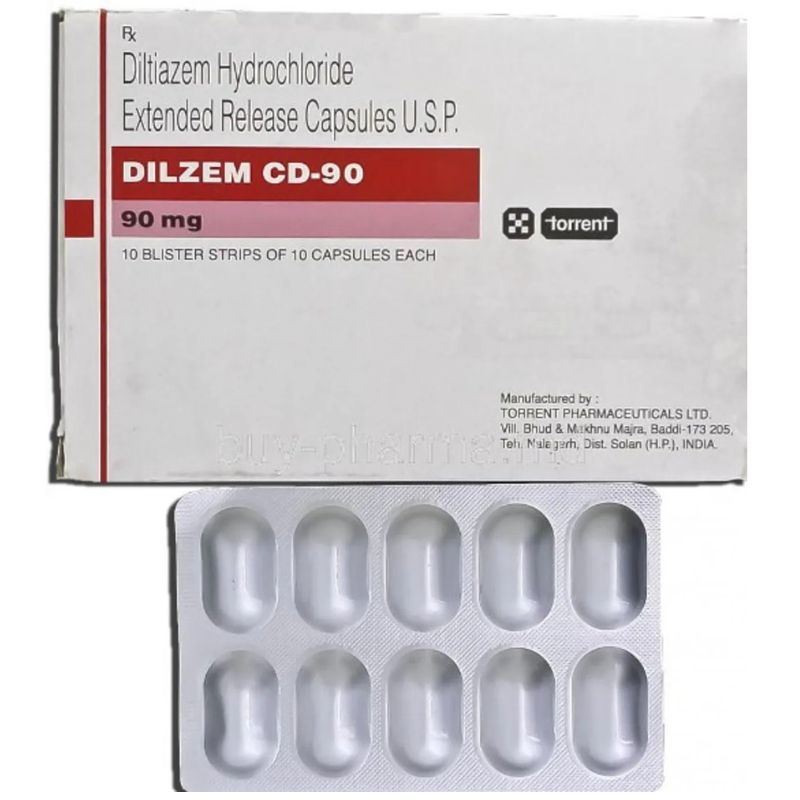
Dilzem CD 90 Capsule ER contains Diltiazem, a calcium channel blocker used to treat high blood pressure (hypertension), chronic chest pain (angina), and certain heart rhythm disorders. It helps relax and widen blood vessels, making it easier for the heart to pump blood and reducing its workload. This improves oxygen flow to the heart and helps prevent heart attacks, strokes, and other cardiovascular problems.
The “CD” or Controlled Delivery (Extended Release) formulation ensures the medicine is released slowly over time, maintaining a steady effect throughout the day.
Uses:
-
Treatment of hypertension (high blood pressure)
-
Management of angina pectoris (chest pain)
-
Treatment of heart rhythm disorders (like supraventricular tachycardia)
-
Prevents complications such as stroke, heart attack, and kidney damage
Dosage:
The dosage is prescribed by your doctor based on your medical condition. Usually taken once daily. The capsule should be swallowed whole with water, not opened, crushed, or chewed. Take it at the same time each day for best results. Do not stop taking it suddenly as it may cause your condition to worsen.
How to Use:
Take the capsule exactly as advised by your doctor. It can be taken with or without food, but should be taken in the same manner every day. Swallow the capsule whole with a glass of water. Do not crush or break it as it is an extended-release formulation meant to release the medicine slowly. Continue taking it regularly even if you feel fine, as high blood pressure often has no symptoms.
Precautions:
-
Avoid alcohol as it can increase dizziness or drowsiness.
-
Inform your doctor if you have liver, kidney, or heart conditions, especially low blood pressure or heart block.
-
Use cautiously if taking other heart or blood pressure medicines such as beta-blockers.
-
Pregnant or breastfeeding women should take it only under medical supervision.
-
Avoid driving or operating machinery if you feel dizzy or tired.
-
Do not stop this medicine suddenly without consulting your doctor.
Side Effects:
Common: Headache, dizziness, flushing, slow heartbeat, constipation, fatigue.
Serious (seek medical help): Swelling of feet or ankles, severe dizziness, fainting, shortness of breath, irregular heartbeat, or allergic reaction (rash, itching, swelling).
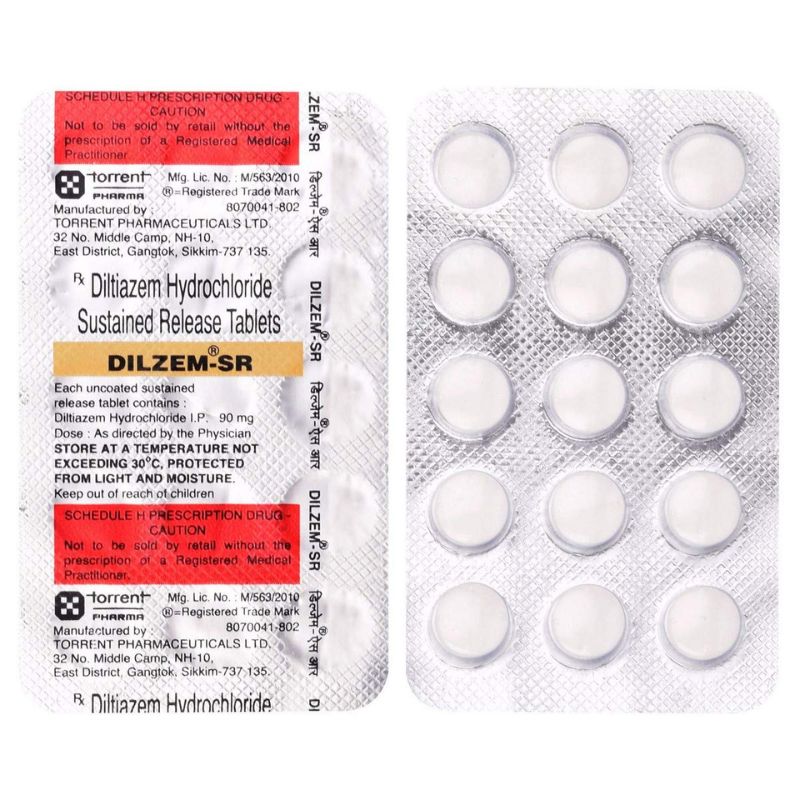
Dilzem-SR Tablet is a calcium channel blocker medicine containing Diltiazem (90mg). It is used to manage high blood pressure, chronic chest pain (angina), and certain heart rhythm disorders. It works by relaxing the muscles of your heart and blood vessels, making it easier for the heart to pump blood and improving the oxygen supply. This helps in lowering blood pressure, reducing chest pain, and preventing heart-related complications such as heart attacks or strokes. The “SR” (Sustained Release) formulation ensures a slow and steady release of the medicine throughout the day for long-lasting control.
Uses:
-
Treatment of high blood pressure (hypertension)
-
Management of chronic stable angina (chest pain)
-
Control of abnormal heart rhythms (like SVT)
-
Prevents complications such as heart attack and stroke
Dosage:
The dosage depends on the patient’s condition and doctor’s prescription. It is usually taken once or twice daily. The tablet must be swallowed whole with water and not chewed or crushed. It should be taken at the same time each day to maintain a consistent level of the drug in the body. Do not skip doses and never stop the medicine suddenly without consulting your doctor.
How to Use:
Take the tablet exactly as prescribed by your doctor. It can be taken with or without food, but take it in the same way every time (either always before or always after meals). Swallow the tablet whole with water. Continue taking it even if you feel well, since high blood pressure often has no symptoms. If you miss a dose, take it when you remember — skip it if it’s almost time for your next dose.
Precautions:
-
Avoid alcohol as it may increase dizziness or drowsiness.
-
Inform your doctor if you have liver, kidney, or heart diseases such as heart block or low blood pressure.
-
Use with caution if taking beta-blockers or other heart medications.
-
Pregnant or breastfeeding women should take only under medical supervision.
-
Avoid driving or operating heavy machinery if you feel dizzy or lightheaded.
-
Do not discontinue suddenly — it may worsen angina or blood pressure.
Side Effects:
Common: Headache, dizziness, flushing, constipation, fatigue, slow heartbeat.
Serious (seek medical attention): Swelling of feet or ankles, severe dizziness, shortness of breath, irregular heartbeat, allergic rash, or fainting.
Uses:
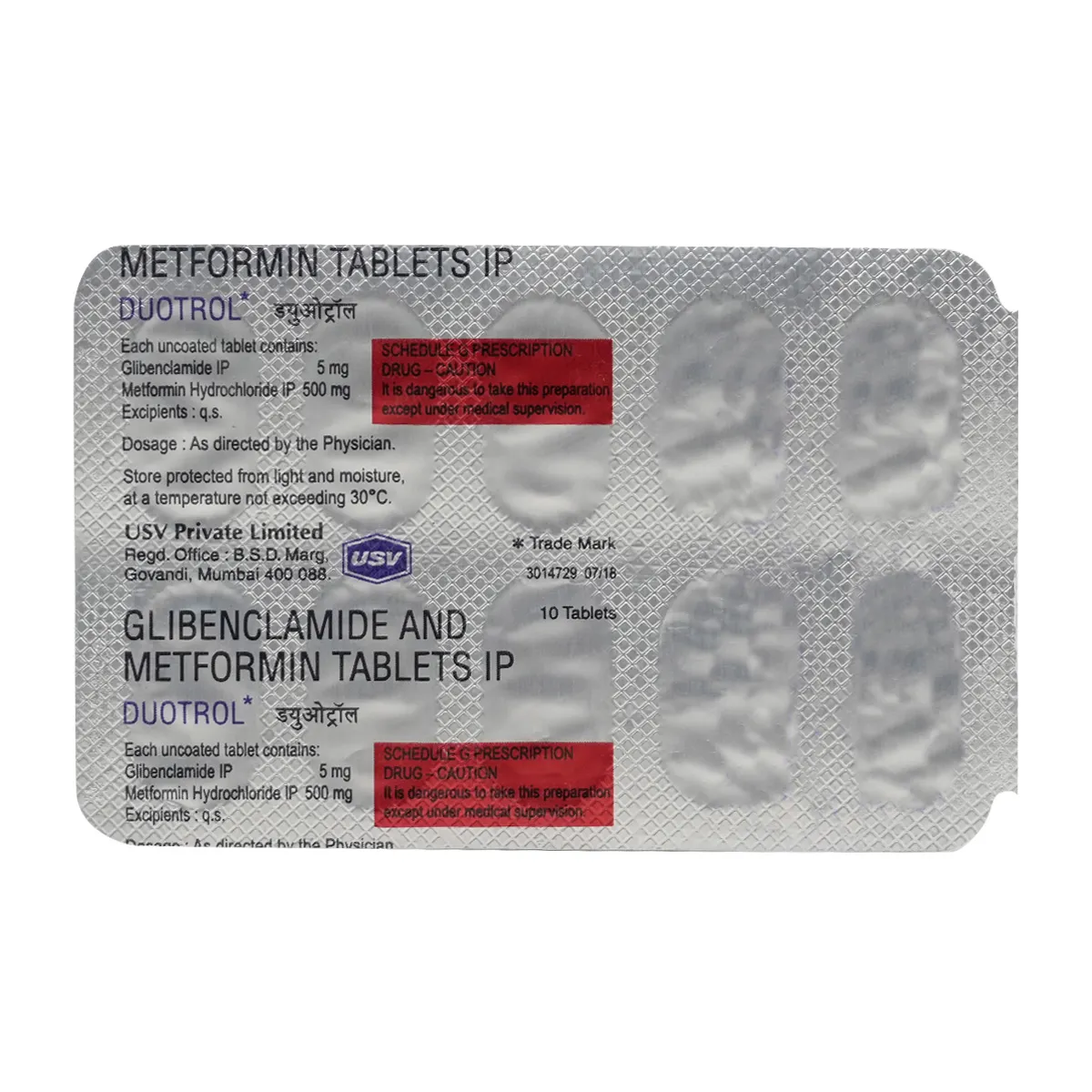
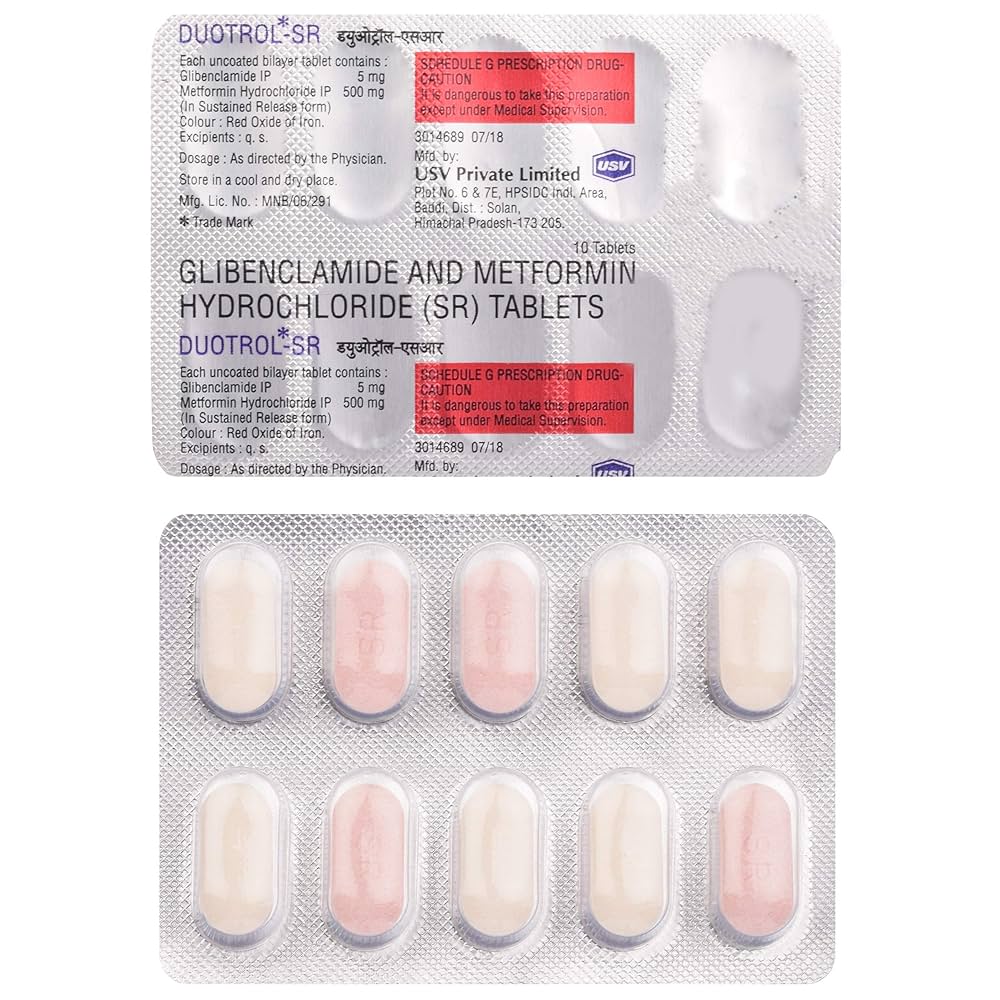
Duotrol Tablet is a combination anti-diabetic medication containing Glibenclamide (a sulfonylurea) and Metformin (a biguanide). It is used to:
-
Control high blood sugar levels in type 2 diabetes
-
Enhance insulin secretion (Glibenclamide) and improve insulin sensitivity (Metformin)
-
Maintain long-term glycemic control
-
Reduce the risk of complications like neuropathy, retinopathy, and cardiovascular disease
Dosage:
-
Dosage depends on patient’s blood sugar levels and doctor’s prescription.
-
Typically, 1 tablet daily with meals or as directed.
-
Swallow the tablet whole with water; do not crush or chew.
Precautions:
-
Avoid if allergic to Glibenclamide, Metformin, or related medications.
-
Use with caution in patients with kidney or liver problems, heart disease, or metabolic acidosis.
-
Not recommended during pregnancy or breastfeeding unless prescribed.
-
Inform your doctor about all medications and supplements to prevent interactions.
-
Regularly monitor blood sugar levels while on therapy.
How to Use:
-
Take the tablet with meals to reduce stomach upset.
-
Maintain consistent diet and exercise along with the medication.
-
Monitor fasting and postprandial blood glucose as advised.
Side Effects:
Common side effects may include:
-
Nausea, vomiting, diarrhea, or stomach upset
-
Hypoglycemia (low blood sugar) causing dizziness, sweating, or shakiness
-
Rare allergic reactions such as rash, itching, or swelling
-
Long-term use may cause vitamin B12 deficiency or lactic acidosis (rare, with Metformin)
Note:
Duotrol Tablet should be used strictly under medical supervision. Proper monitoring and adherence to diet, exercise, and medication schedule are essential for effective diabetes management.
Uses:
Duotrol-SR Tablet is a combination anti-diabetic medication containing Glibenclamide (a sulfonylurea) and Metformin (a biguanide). It is primarily used to:
-
Control high blood sugar levels in patients with type 2 diabetes
-
Enhance insulin secretion (Glibenclamide) and improve insulin sensitivity (Metformin)
-
Maintain long-term glycemic control
-
Reduce the risk of diabetes-related complications such as neuropathy, retinopathy, and cardiovascular disease
Dosage:
-
Dosage depends on patient’s blood sugar levels and doctor’s prescription.
-
Typically, 1 tablet daily with meals or as directed.
-
Swallow the tablet whole with water. Do not crush or chew.
Precautions:
-
Avoid if allergic to Glibenclamide, Metformin, or other sulfonylureas/biguanides.
-
Use with caution in patients with kidney or liver problems, heart disease, or metabolic acidosis.
-
Not recommended during pregnancy or breastfeeding unless advised by a doctor.
-
Inform your doctor about all medications and supplements to prevent interactions.
-
Monitor blood sugar regularly while on therapy.
How to Use:
-
Take the tablet with meals to reduce gastrointestinal side effects.
-
Maintain consistent diet and exercise along with the medication.
-
Regularly monitor fasting and postprandial blood glucose as advised.
Side Effects:
Common side effects may include:
-
Nausea, vomiting, diarrhea, or stomach upset
-
Hypoglycemia (low blood sugar) causing dizziness, sweating, or shakiness
-
Rare allergic reactions such as rash, itching, or swelling
-
Long-term use may cause vitamin B12 deficiency or lactic acidosis (rare, with Metformin)
Note:
Duotrol-SR Tablet should be used strictly under medical supervision. Proper monitoring and adherence to diet, exercise, and medication schedule are essential for effective diabetes management.
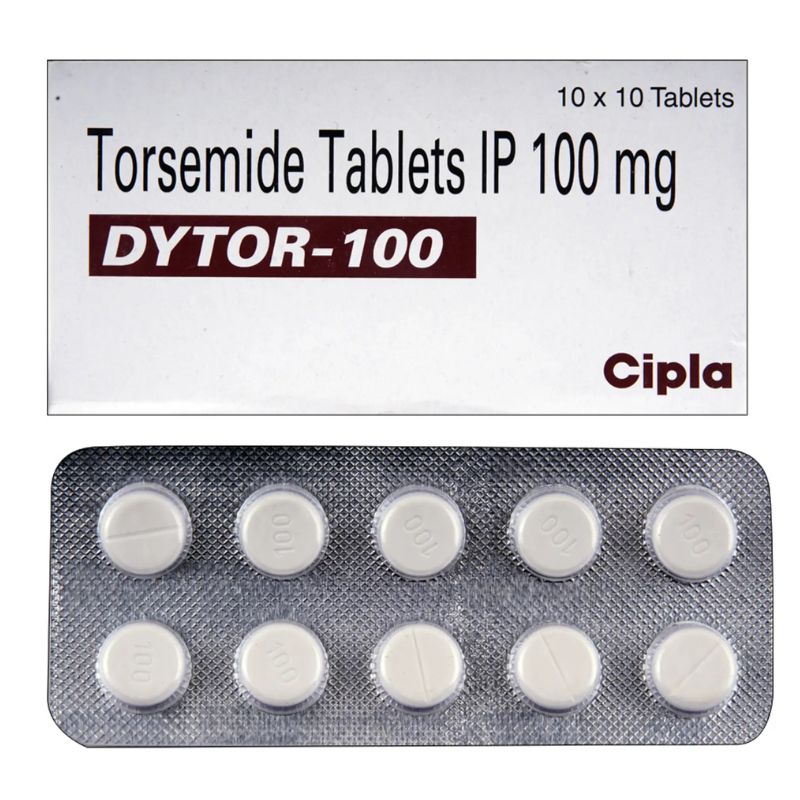
DYtor 100 Tablet contains Torasemide (100mg), a potent loop diuretic (water pill) used for the management of severe fluid retention (edema) and high blood pressure (hypertension). It works by increasing urine output, helping the body remove excess water and salt, thereby reducing swelling and pressure on the heart and blood vessels. This high-strength tablet is generally prescribed in severe cases of heart failure, kidney disease, or liver cirrhosis, under strict medical supervision.
Uses:
-
Severe edema associated with heart failure, kidney disease, or liver cirrhosis
-
Pulmonary edema (fluid accumulation in lungs)
-
Resistant hypertension (high blood pressure not responding to lower doses)
-
Congestive heart failure (CHF) management
Dosage:
-
Taken once daily, preferably in the morning to prevent nighttime urination.
-
The dosage is tailored to the patient’s medical condition and response.
-
High doses like 100mg are prescribed only for severe cases and should be taken under strict medical guidance.
How to Use:
-
Swallow the tablet whole with a glass of water.
-
Can be taken with or without food.
-
Take it at the same time each day for consistent results.
-
Do not stop or change the dose without consulting your doctor.
Precautions:
-
Use cautiously in patients with kidney, liver, or electrolyte imbalance disorders.
-
Not advised during pregnancy or breastfeeding unless clearly prescribed.
-
Avoid alcohol consumption and excessive dehydration.
-
Regular monitoring of blood pressure, kidney function, and electrolyte levels (especially potassium and sodium) is essential.
-
Inform your doctor about all ongoing medications, particularly other diuretics, antihypertensives, or diabetes drugs.
Side Effects:
-
Increased urination
-
Dizziness or lightheadedness (especially when standing)
-
Dry mouth or dehydration
-
Muscle cramps or weakness
-
Headache or fatigue
-
Low blood pressure (hypotension)
-
Rare: electrolyte imbalance or kidney dysfunction

DYtor 2.5mg Tablet contains Torasemide (2.5mg), a loop diuretic (water pill) that helps the body remove excess salt and water through urine. It is mainly prescribed to control high blood pressure (hypertension) and manage edema (fluid retention) associated with heart failure, liver, or kidney disorders. By reducing fluid overload, it helps decrease swelling, ease breathing, and prevent complications related to heart strain.
Uses:
-
Hypertension (high blood pressure)
-
Edema due to heart failure, liver cirrhosis, or kidney disease
-
Pulmonary edema (fluid in lungs)
-
Congestive heart failure (CHF) management
Dosage:
-
Usually taken once daily in the morning, or as directed by the doctor.
-
Dose may vary depending on individual medical condition and response.
-
Avoid taking it at night to prevent frequent urination during sleep.
How to Use:
-
Swallow the tablet whole with water.
-
Can be taken with or without food.
-
Take at the same time each day for better control of symptoms.
-
Do not stop the medication suddenly without consulting your doctor.
Precautions:
-
Use with caution if you have kidney, liver, or electrolyte imbalance issues.
-
Not recommended during pregnancy or breastfeeding unless prescribed.
-
Avoid alcohol consumption and dehydration while on this medicine.
-
Regular monitoring of blood pressure, kidney function, and electrolytes (especially potassium and sodium) is advised.
-
Inform your doctor about any other medications, especially those for blood pressure, diabetes, or other diuretics.
Side Effects:
-
Increased urination
-
Dizziness or lightheadedness
-
Dry mouth or dehydration
-
Muscle cramps or weakness
-
Nausea or headache
-
Rare: low blood pressure or electrolyte imbalance
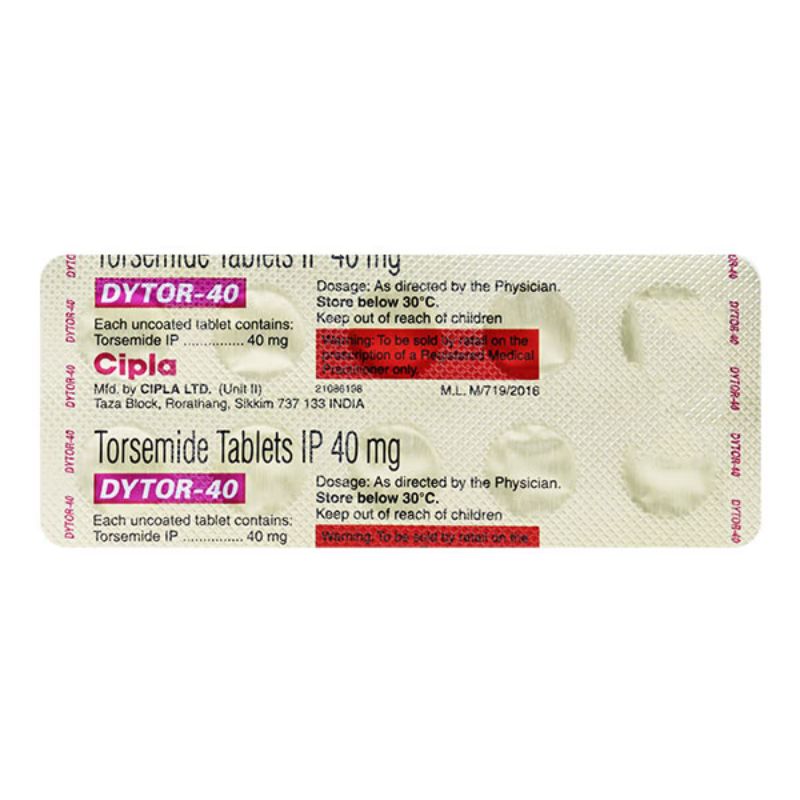
DYtor 40 Tablet contains Torasemide (40mg), a loop diuretic (water pill) that helps eliminate excess salt and water from the body by increasing urine production. It is prescribed for the treatment of severe edema (fluid retention) caused by heart failure, kidney, or liver diseases, and for the management of high blood pressure (hypertension). By reducing fluid overload, DYtor 40 helps relieve swelling, breathlessness, and improve heart efficiency.
Uses:
-
Edema due to heart, liver, or kidney disorders
-
Severe hypertension (high blood pressure)
-
Congestive heart failure (CHF)
-
Pulmonary edema (fluid accumulation in lungs)
Dosage:
-
Typically taken once daily, preferably in the morning to avoid nighttime urination.
-
Dose and duration are determined by the doctor based on medical condition and response.
-
Do not alter or stop the medication without consulting your physician.
How to Use:
-
Swallow the tablet whole with water.
-
Can be taken with or without food.
-
Take at the same time each day for consistent effect.
-
Follow the prescribed dose strictly to avoid dehydration or electrolyte imbalance.
Precautions:
-
Use with caution if you have kidney disease, liver problems, gout, or electrolyte imbalance.
-
Avoid during pregnancy or breastfeeding unless medically necessary.
-
Do not consume alcohol or other medicines that may lower blood pressure excessively.
-
Regular monitoring of blood pressure, electrolytes (sodium, potassium), and kidney function is recommended.
-
Inform your doctor about all ongoing medications (especially other diuretics, antihypertensives, or diabetes drugs).
Side Effects:
-
Increased urination
-
Dizziness or lightheadedness
-
Dehydration or dry mouth
-
Muscle cramps or weakness
-
Nausea or headache
-
Low blood pressure (hypotension)
-
Rare: electrolyte imbalance or kidney function changes