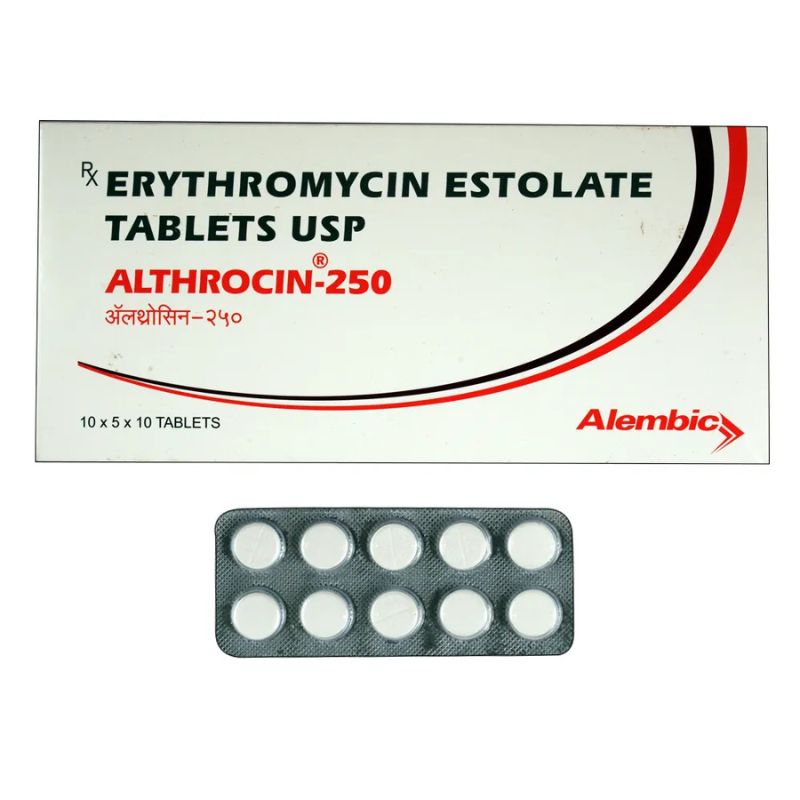
Althrocin 250 Tablet is a macrolide antibiotic used for treating a wide range of bacterial infections, including throat infections, respiratory infections (bronchitis, pneumonia), skin infections, ear infections, dental infections, and some sexually transmitted infections. It works by stopping the growth of bacteria.
Dosage:
Typical dose is 1 tablet 2–4 times a day, depending on the severity of the infection. Follow your doctor’s exact instructions.
How to Use:
Take the tablet before food with a glass of water for better effectiveness. Do not skip doses and complete the full course to prevent antibiotic resistance.
Precautions:
-
Inform your doctor if you have liver disease, heart rhythm problems, or muscle weakness (myasthenia gravis).
-
Avoid antacids within 2 hours of taking this medicine.
-
Not effective for viral infections like cold and flu.
-
Pregnant and breastfeeding women should consult a doctor before use.
-
Avoid alcohol if it worsens stomach irritation.
Side Effects:

Althrocin 500 Tablet is an antibiotic used to treat bacterial infections such as respiratory tract infections, throat infections, skin infections, ear infections, dental infections, and certain sexually transmitted infections. It works by stopping the growth of bacteria in the body.
Dosage:
Common dose is 1 tablet 2–4 times daily, depending on infection type. Always follow your doctor’s exact prescription.
How to Use:
Swallow the tablet with water. Take it before food for best absorption, unless your doctor advises otherwise. Complete the full course even if you feel better.
Precautions:
-
Do not skip doses; incomplete treatment may cause antibiotic resistance.
-
Inform your doctor if you have liver problems, heart rhythm issues, or myasthenia gravis.
-
Avoid taking antacids within 2 hours of this medicine.
-
Safe use in pregnancy should be confirmed with a doctor.
-
Do not self-medicate for viral infections like cold/flu.
Side Effects:
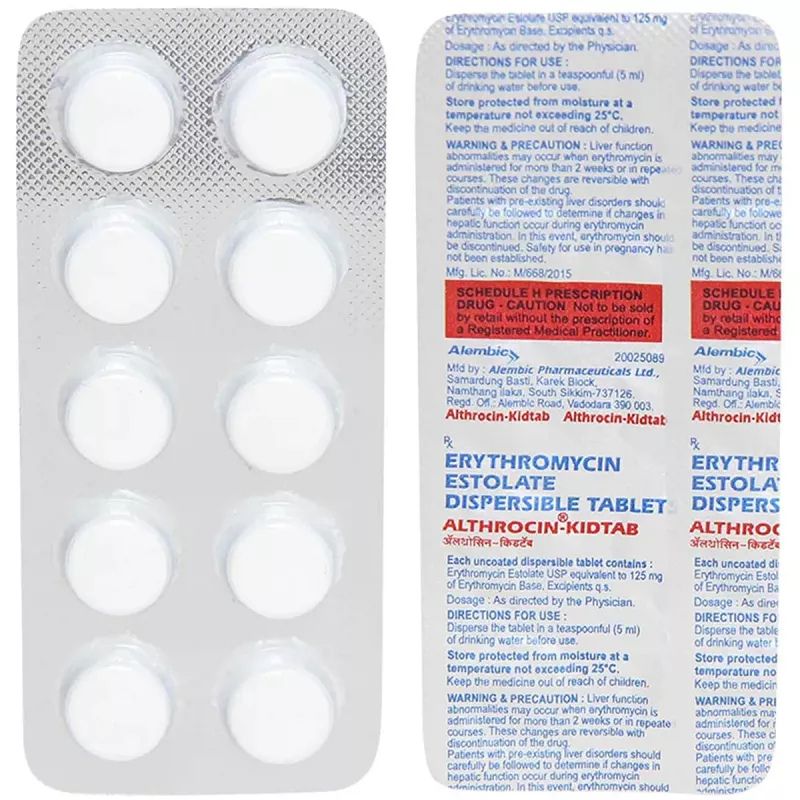
Althrocin Kid 125mg Tablet is an antibiotic used in children to treat bacterial infections such as throat infections, tonsillitis, pneumonia, bronchitis, skin infections, and ear infections. It works by stopping the growth of infection-causing bacteria.
Dosage:
The dose depends on the child’s age and body weight. Usually given 2–4 times a day as advised by the doctor. Do not adjust the dose on your own.
How to Use:
Give the tablet before food with water for better absorption. Follow the full course even if the child feels better early. Do not crush unless advised—use a dispersible or syrup form if the child cannot swallow.
Precautions:
-
Inform the doctor if the child has liver issues or heart rhythm problems.
-
Do not give with antacids; keep at least a 2-hour gap.
-
Not for viral infections like cold or flu.
-
Use carefully in children with myasthenia gravis.
-
Store out of children’s reach.
Side Effects:

Uses
-
Main use: Treats bacterial infections
-
Effective for infections of the throat, lungs, sinuses, ear, urinary tract, teeth, and skin
-
Amoxycillin kills bacteria
-
Clavulanic Acid helps fight resistant bacteria
Dosage
-
Commonly 1 tablet 2–3 times daily, as advised by the doctor
-
Take after food to avoid stomach upset
-
Finish the entire course even if symptoms improve
How to Use
Precautions
-
Avoid if allergic to penicillin or cephalosporins
-
Use carefully in kidney or liver disease
-
Tell doctor if taking: warfarin, allopurinol, methotrexate, probenecid
-
May cause diarrhea—don’t take anti-diarrheal without medical advice
Side Effects
Common:
-
Diarrhea
-
Nausea
-
Vomiting
-
Stomach discomfort
Less common:
-
Skin rash
-
Liver enzyme changes
-
Yeast infections
Seek medical help if you experience severe diarrhea, allergic reaction (rash, swelling, breathing difficulty).
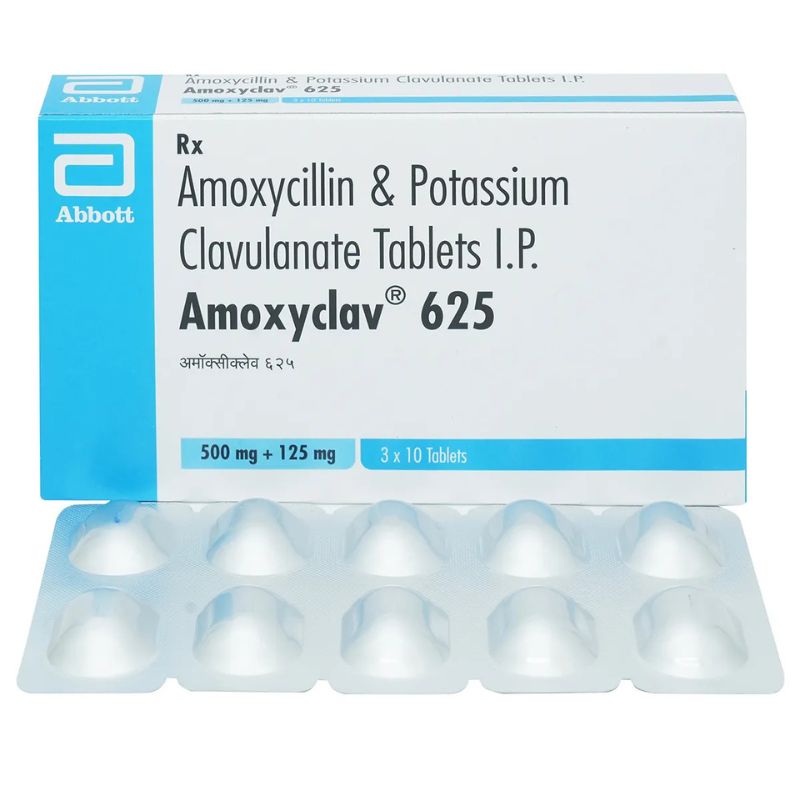
Uses
-
Main use: Treats bacterial infections
-
Effective for infections of the throat, lungs, sinuses, ear, urinary tract, skin, teeth
-
Amoxycillin: kills bacteria
-
Clavulanic Acid: helps fight resistant bacteria
Dosage
-
Typically 1 tablet twice daily, as per doctor’s advice
-
Always take after food to reduce stomach upset
-
Complete the full course even if you feel better
How to Use
Precautions
-
Avoid if allergic to penicillin or cephalosporin antibiotics
-
Use cautiously in kidney or liver problems
-
Tell doctor if taking: warfarin, methotrexate, allopurinol, probenecid
-
May cause diarrhea—consult doctor before taking anti-diarrheal medicines
Side Effects
Common:
-
Diarrhea
-
Nausea
-
Vomiting
-
Stomach pain
Less common:
-
Skin rash
-
Liver enzyme changes
-
Yeast infection
Seek immediate medical attention if you develop severe diarrhea, allergic rash, or breathing difficulty.