


Carnimac Plus Tablet

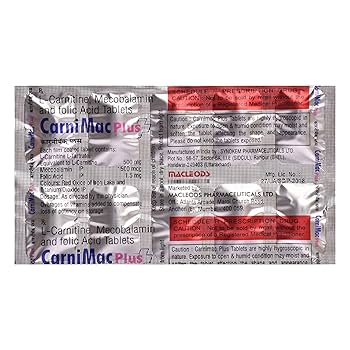
Carnimac Plus Tablet is a nutritional supplement combining Levo-carnitine, Methylcobalamin (Vitamin B12), and Folic Acid to support energy metabolism, nerve health, and red blood cell formation. It is often used in patients with neuropathy, vitamin deficiencies, or fatigue.

Uses / Indications:

  • Management of peripheral neuropathy

  • Support in Vitamin B12 and folate deficiency

  • Enhances energy production and muscle metabolism

  • Helps in red blood cell formation

  • Adjunct therapy in diabetic neuropathy or chronic fatigue

Benefits:

  • Supports nerve regeneration and function

  • Improves energy metabolism and physical endurance

  • Aids in red blood cell synthesis

  • Reduces symptoms of fatigue, weakness, and numbness

  • Methylcobalamin helps in nerve repair and neurological health

How to Use:

  • Take orally as prescribed by your doctor.

  • Usually taken once or twice daily, after meals.

  • Swallow the tablet whole with water; do not crush or chew.

Precautions:

  • Prescription required – use only under medical supervision.

  • Monitor for allergic reactions or gastrointestinal discomfort.

  • Use with caution in patients with kidney disorders.

  • Pregnant or breastfeeding women should take only if prescribed.

Possible Side Effects:

  • Mild: nausea, stomach upset, diarrhea

  • Rare: headache, allergic reactions

  • Very rare: severe hypersensitivity

Storage:

  • Store in a cool, dry place, away from sunlight and moisture.

  • Keep out of reach of children.

Carnimac Q Tablet

Uses:

  • Helps in improving energy production
  • Supports heart health and muscle function
  • Used in carnitine deficiency
  • May help reduce fatigue and weakness

Dosage:

  • Take as prescribed by your doctor
  • Usually once or twice daily depending on condition
  • Do not exceed the recommended dose

How to Use:

  • Take with or without food
  • Swallow whole with water
  • Take regularly at the same time for best results

Precautions:

  • Use under medical supervision only
  • Inform your doctor if you have heart, kidney, or liver problems
  • Pregnant and breastfeeding women should consult a doctor
  • Avoid alcohol unless advised

Side Effects:

  • Nausea
  • Stomach upset
  • Headache
  • Rare allergic reactions

Carnimac Tablet

Uses:

  • Treats carnitine deficiency
  • Helps improve energy production in the body
  • Supports muscle strength and reduces fatigue
  • May be used in kidney disorders and metabolic conditions

Dosage:

  • Take as prescribed by your doctor
  • Usually taken once or twice daily depending on condition
  • Do not exceed recommended dose

How to Use:

  • Take the tablet with or without food
  • Swallow whole with water, do not crush or chew
  • Take it at the same time each day for best results

Precautions:

  • Use only under medical supervision
  • Inform your doctor if you have kidney, liver, or heart problems
  • Pregnant or breastfeeding women should consult a doctor before use
  • Avoid alcohol unless advised

Side Effects:

  • Nausea
  • Vomiting
  • Stomach upset
  • Rarely, body odor or allergic reaction

CARTNIREST C2 PLUS

Cartnirest C2 Plus Capsule is an advanced joint health supplement formulated to promote joint comfort, flexibility, cartilage protection, and mobility.

Uses / Indications

  • Support for joint comfort and structural health in osteoarthritis, rheumatoid arthritis, and other forms of chronic joint pain or degeneration.

  • Relief of stiffness, inflammation, and reduced mobility associated with wear-and-tear, athletic injury, or age-related joint deterioration.

  • Useful for active individuals, elderly population, or those with history of cartilage injuries.

How it Works / Key Benefits

  • Boswellia serrata and Cissus quadrangularis extracts: Anti-inflammatory botanicals that help manage pain, reduce swelling, and promote healthy joint function.

  • Undenatured Collagen Type-II & Hyaluronic Acid: Foster cartilage resilience, repair, and lubrication, supporting shock absorption and flexibility within joints.

  • Curcuma longa (Turmeric) with Piperine: Delivers antioxidant and anti-inflammatory support; piperine (from black pepper) enhances absorption and effectiveness of curcumin.

  • The multifaceted formula acts synergistically to combat both the symptoms of arthritis and the underlying cartilage damage.

Dosage & Administration

  • Usually taken as 1 capsule once or twice daily with water, as prescribed by a healthcare provider.

  • Regular, consistent use is required for sustained benefit; do not exceed recommended dose.

Safety & Precautions

  • Well tolerated when used as advised; rarely gastrointestinal upset, allergic reaction, or mild headache may occur.

  • Caution in patients on anticoagulants, with prior hypersensitivity, or active peptic ulcer; consult your doctor if pregnant, breastfeeding, or on multiple medications.

  • Not a substitute for conventional arthritis therapy without physician guidance.

Note:
Cartnirest C2 Plus is best used in conjunction with exercise, weight management, and medical care to optimize joint health and mobility.

CARTNIREST-C2

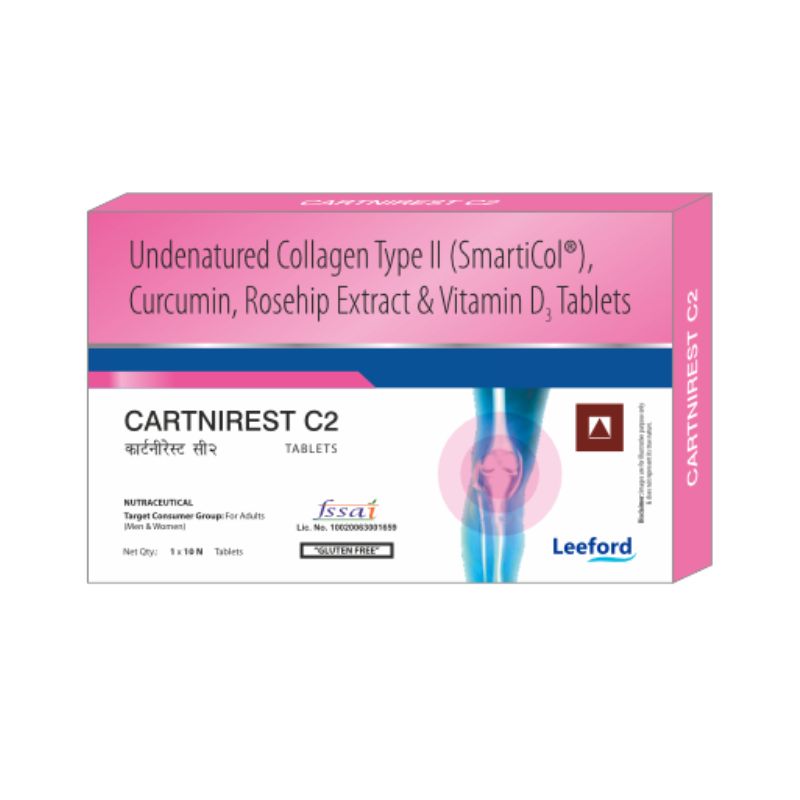
Cartnirest-C2 Tablet is a specialized supplement designed to support joint health and mobility, particularly useful for osteoarthritis, rheumatoid arthritis, and other joint conditions involving pain, stiffness, or cartilage degeneration.

Uses / Indications

  • Management of osteoarthritis, rheumatoid arthritis, tendinopathy, and tendonitis.

  • Relief of joint pain, stiffness, and inflammation in arthritis and related degenerative joint disorders.

  • Support for cartilage repair, joint flexibility, and mobility in active individuals and older adults.

How it Works / Key Benefits

  • Undenatured Collagen Type II: Replenishes joint-specific collagen, rebuilding and protecting cartilage to increase flexibility and comfort.

  • Rosehip Extract: Has anti-inflammatory and antioxidant properties, helping alleviate pain and support joint function.

  • Vitamin D3: Supports calcium absorption, bone density, and joint integrity.

  • Curcumin (from Curcuma longa/turmeric): Reduces inflammation and joint pain, protecting cartilage from further damage.

  • Together, these ingredients provide comprehensive support to joints, reduce discomfort, and improve mobility and quality of life.

Dosage & Administration

  • Usually 1 tablet once or twice daily, as advised by the healthcare provider.

  • Take regularly for optimal benefit and joint protection; do not exceed recommended dose.

Safety & Precautions

  • Well tolerated with minimal reported side effects; consult doctor if you notice allergies or unusual symptoms.

  • Safe for long-term use under medical supervision; check with a physician if you are pregnant, breastfeeding, or on other medications.

Note:
Cartnirest-C2 is best used as part of a complete joint care regimen, including appropriate exercise and weight management, and is not a substitute for prescribed arthritis treatment.

CARVEFORD 12.5

Carveford 12.5 Tablet is a beta-blocker and alpha-1 blocker used mainly for heart failure, hypertension, and cardiac protection post-heart attack.

Uses / Indications

  • Heart failure (chronic, stable): Part of guideline-based therapy to improve symptoms and survival in patients with reduced ejection fraction, titrated as tolerated.

  • Hypertension: Initiated as 12.5 mg once daily for two days, then generally increased to 25 mg once daily for maintenance if needed.

  • Angina and Left Ventricular Dysfunction after MI: Often dosed 12.5 mg twice daily for two days, then increased depending on clinical response.

  • Other uses: Sometimes in portal hypertension or for arrhythmia management.

Dosage & Administration

  • For maintenance in heart failure: Usual titration is 3.125 mg twice daily → 6.25 mg twice daily → 12.5 mg twice daily (i.e., 25 mg/day) as tolerated, with dose increases every 2+ weeks.

  • For hypertension: Often started at 12.5 mg once daily, then increased to 25 mg/day after two days if well tolerated; maximum up to 50 mg/day.

  • For angina: Twice-daily dosing, starting at 12.5 mg, then titrated up.

  • Always take with food to reduce risk of dizziness and hypotension; swallow whole, do not crush or chew.

How it Works / Key Benefits

  • Blocks beta-1, beta-2, and alpha-1 adrenergic receptors, resulting in slower heart rate, reduced cardiac output, and vasodilation (lower blood pressure and heart workload).

  • Provides heart and vessel protection, decreases risk of hospitalization or death in heart failure, and helps prevent further cardiac events after heart attack.

Safety & Side Effects

  • Common: Dizziness, tiredness, slow heart rate, low blood pressure, diarrhea, weight gain, weakness.

  • Serious/rare: Worsening heart failure, severe bradycardia or conduction block, bronchospasm (caution in asthmatics), and liver dysfunction.

  • Do not stop abruptly—dose should be tapered on discontinuation.

  • Adjust/monitor in diabetics, elderly, and those on other heart/BP medicines; contraindicated in certain rhythm and lung disorders.

Note:
Doses are titrated slowly with careful medical monitoring for heart failure. Consistent use, regular check-ups, and not missing doses are essential.

CARVEFORD 3.125

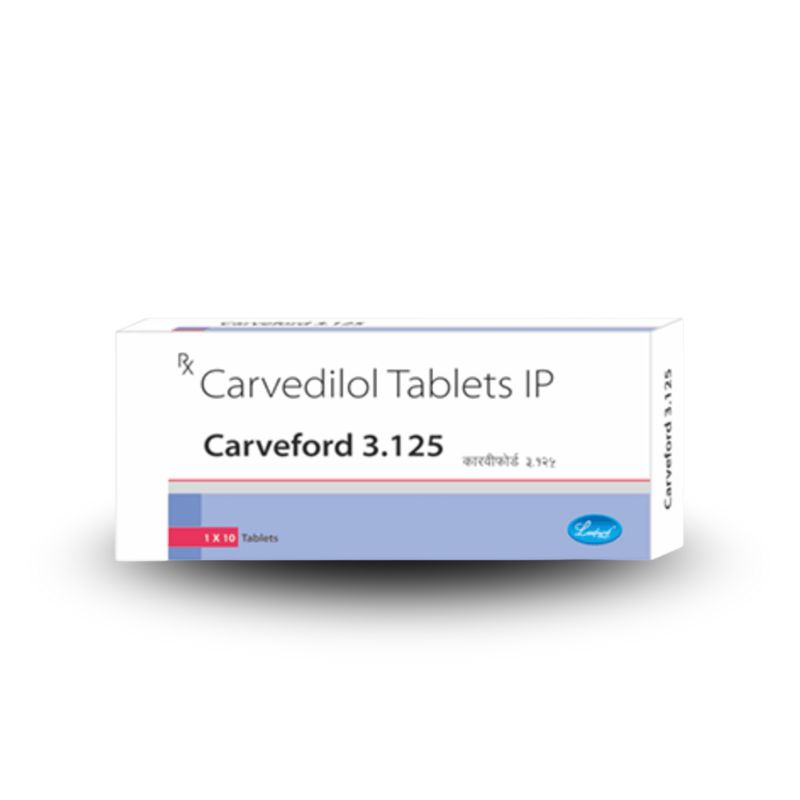
Carveford 3.125 Tablet contains carvedilol, a non-selective beta- and alpha-adrenergic blocker used mainly for heart failure, hypertension, and heart protection after heart attack.

Uses / Indications

  • Heart Failure: First-line therapy for chronic heart failure with reduced ejection fraction (HFrEF), shown to lower mortality and hospitalizations.

  • Hypertension: Helps reduce high blood pressure and related complications (stroke, MI, kidney damage).

  • Post-Myocardial Infarction: Used after a heart attack to reduce further cardiac events, especially with reduced heart function.

  • Also sometimes prescribed for angina and as an adjunct in managing certain arrhythmias or to prevent variceal bleeding in liver disease.

How it Works / Key Benefits

  • Blocks both beta (β1 and β2) and alpha-1 receptors: Lowers heart rate, reduces heart muscle contractility, and relaxes blood vessels, lowering blood pressure and cardiac workload.

  • Improves heart function and oxygen supply while lowering the risk of death and hospitalization in chronic heart failure.

  • Dual action promotes both heart protection and blood pressure control in one agent.

Dosage & Administration

  • Typically started at low doses (3.125 mg twice daily) and gradually increased with monitoring.

  • Take with food to reduce risk of low blood pressure and dizziness.

  • Do not stop suddenly—taper withdrawal to avoid rebound effects.

Safety & Side Effects

  • Common: Dizziness, fatigue, slow heart rate (bradycardia), low blood pressure, diarrhea, weight gain, weakness, nausea, increased blood sugar.

  • Serious: Worsening heart failure, severe bradycardia, AV block, bronchospasm (avoid in asthma), and rare allergic reactions.

  • Contraindicated in severe asthma, significant bradycardia, acute decompensated heart failure, certain heart blocks, severe liver disease, and shock.

  • Caution required in diabetics, those with vascular disease or depression, and those on multiple antihypertensives.

Note:
Carveford 3.125 should always be used as directed, with regular blood pressure, heart rate, and follow-up for dose adjustment and monitoring. Never stop abruptly without doctor guidance, as it can worsen heart failure and increase cardiac risk.

CARVEFORD 6.25

Carveford 6.25 Tablet contains carvedilol, a non-selective beta-blocker and alpha-1 blocker used for heart failure, hypertension, and heart protection after myocardial infarction.

Uses / Indications
Chronic Heart Failure: Commonly used in guideline-directed therapy; improves survival and reduces symptoms in patients with heart failure with reduced ejection fraction.

Hypertension: Reduces blood pressure and helps prevent stroke, heart attack, and kidney damage.

Left Ventricular Dysfunction after Myocardial Infarction: Protects and helps repair the heart after heart attack, especially when ejection fraction is reduced.

Other uses: Sometimes as adjunct for angina or arrhythmias, or to help with portal hypertension in liver disease.

Dosage & Administration
Heart failure: Typical titration: Start at 3.125 mg twice daily, then after 2 weeks (if tolerated) increase to 6.25 mg twice daily.

Hypertension/Myocardial infarction: 6.25 mg twice daily may be used as the initial or first titration dose.

Further increases can be made every 2 weeks if tolerated, up to 25 mg twice daily (maximum dose varies by clinical scenario and weight).

Tablets should be swallowed whole, best taken with food to minimize dizziness and low blood pressure.

How it Works / Key Benefits
Blocks β₁, β₂, and α₁ adrenergic receptors, slowing the heart, decreasing cardiac workload, and relaxing blood vessels.

Reduces symptoms of heart failure, lowers blood pressure, and prevents further cardiac events in post-MI patients.

Safety & Side Effects
Common: Dizziness, slow heartbeat (bradycardia), tiredness, low blood pressure, diarrhea, weight gain, weakness.

Serious (rare): Worsening heart failure, AV block, severe bradycardia, bronchospasm (not for asthmatics), severe liver impairment.

Do not stop carvedilol suddenly—taper on discontinuing. Dosing should always be increased or decreased only as per physician advice.

Note:
Carveford 6.25 is most often used as a step in the titration schedule towards the maintenance dose for heart failure or hypertension. Regular monitoring of blood pressure, heart rate, and symptoms is essential during treatment.

Cefadrox 125mg Dry Syrup

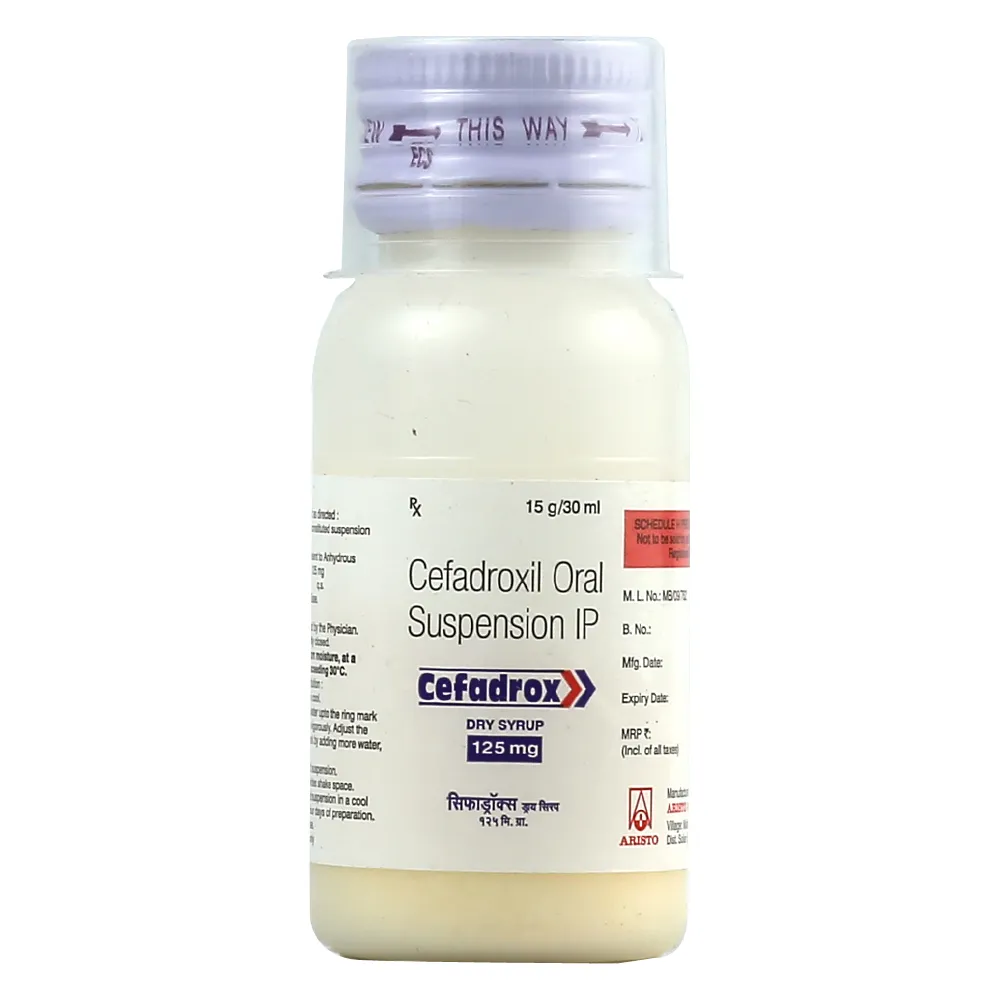
Cefadrox 125mg Dry Syrup contains Cefadroxil, a first-generation cephalosporin antibiotic. It is used to treat bacterial infections in children and infants. Once reconstituted with water, it provides a pediatric-friendly liquid formulation for easier administration.

Uses

  • Treatment of upper and lower respiratory tract infections (tonsillitis, pharyngitis, bronchitis)

  • Management of urinary tract infections (UTIs)

  • Treatment of skin and soft tissue infections

  • Effective against streptococci, staphylococci, and other susceptible bacteria

  • Pediatric patients requiring oral antibiotic therapy

Side Effects

Common side effects:

  • Mild nausea or vomiting

  • Diarrhea

  • Stomach discomfort

  • Rash or mild itching

Serious but rare side effects:

  • Severe allergic reactions (anaphylaxis, swelling, difficulty breathing)

  • Severe diarrhea (possible Clostridium difficile infection)

  • Liver dysfunction (rare)

  • Blood disorders (rare)

Precautions

  • Avoid if allergic to cephalosporins or penicillin

  • Complete the full prescribed course to prevent resistance

  • Inform your doctor about other medications

  • Use cautiously in children with kidney impairment

  • Consult a physician if symptoms persist or worsen

Dosage

  • 5ml of reconstituted syrup 2–3 times daily, or as prescribed by a physician

  • Shake well before each use

  • Administer with a measuring spoon or cup for accurate dosing

Reconstitution Instructions

  • Add the specified amount of water to the dry powder as per the label instructions

  • Shake well until fully dissolved

  • Store the reconstituted syrup in a refrigerator and use within the recommended period

Storage

  • Store dry syrup in a cool, dry place, away from sunlight

  • Keep out of reach of children

  • Once reconstituted, refrigerate and use within the prescribed duration

Cefadrox 250mg Dry Syrup

Cefadrox 250mg Dry Syrup contains Cefadroxil, a first-generation cephalosporin antibiotic. It is intended for pediatric patients and provides a convenient oral liquid form for easier administration. It works by inhibiting bacterial cell wall synthesis, treating infections caused by susceptible bacteria.

Uses

  • Treatment of respiratory tract infections (tonsillitis, pharyngitis, bronchitis, pneumonia)

  • Management of urinary tract infections (UTIs)

  • Treatment of skin and soft tissue infections

  • Effective against streptococci, staphylococci, and other susceptible bacteria

  • Suitable for children requiring moderate-strength antibiotic therapy

Side Effects

Common side effects:

  • Nausea or vomiting

  • Diarrhea

  • Mild stomach discomfort

  • Rash or mild itching

Serious but rare side effects:

  • Severe allergic reactions (anaphylaxis, swelling, difficulty breathing)

  • Severe diarrhea (possible Clostridium difficile infection)

  • Liver dysfunction (rare)

  • Blood disorders (rare)

Precautions

  • Avoid if allergic to cephalosporins or penicillin

  • Complete the full prescribed course to prevent bacterial resistance

  • Inform your doctor about other medications

  • Use cautiously in children with kidney or liver impairment

  • Consult a physician if symptoms persist or worsen

Dosage

  • 5ml of reconstituted syrup 2–3 times daily, or as prescribed by a physician

  • Shake well before each use

  • Use the provided measuring spoon or cup for accurate dosing

Reconstitution Instructions

  • Add the specified amount of water to the dry powder as per the label

  • Shake well until fully dissolved

  • Store the reconstituted syrup in a refrigerator and use within the recommended period

Storage

  • Store the dry syrup in a cool, dry place, away from sunlight

  • Keep out of reach of children

  • Once reconstituted, refrigerate and consume within the prescribed duration

Cefadrox Kid 125 Tablet

Cefadrox Kid 125 Tablet contains Cefadroxil, a first-generation cephalosporin antibiotic. It is used to treat bacterial infections by inhibiting bacterial cell wall synthesis, which leads to the death of susceptible bacteria. This formulation is primarily intended for children, offering a convenient dosage for pediatric patients.

Uses

  • Treatment of upper and lower respiratory tract infections (e.g., tonsillitis, pharyngitis, bronchitis)

  • Treatment of urinary tract infections

  • Management of skin and soft tissue infections

  • Effective against streptococci, staphylococci, and other susceptible bacteria

  • Used in children requiring mild-to-moderate bacterial infection management

Side Effects

Common side effects:

  • Nausea or vomiting

  • Diarrhea

  • Mild stomach discomfort

  • Rash or itching

Serious but rare side effects:

  • Severe allergic reactions (anaphylaxis, swelling, difficulty breathing)

  • Severe diarrhea (possible Clostridium difficile infection)

  • Liver dysfunction (rare)

  • Blood disorders (rare)

Precautions

  • Not recommended for patients with allergy to cephalosporins or penicillin

  • Complete the full course as prescribed to prevent resistance

  • Inform your doctor about other medications being taken

  • Use caution in patients with kidney impairment

  • Consult a doctor if symptoms persist or worsen

Dosage

  • Typically 1 tablet twice daily, or as prescribed by a physician

  • Can be taken with or without food

  • Swallow the tablet whole with water

Storage

  • Store in a cool, dry place, away from sunlight

  • Keep in original packaging

  • Keep out of reach of children

Cefadrox Kid 250 Tablet

Cefadrox Kid 250 Tablet contains Cefadroxil, a first-generation cephalosporin antibiotic. This pediatric-strength tablet is used to treat bacterial infections in children, providing an effective and convenient oral dosage. Cefadroxil works by inhibiting bacterial cell wall synthesis, leading to the death of susceptible bacteria.

Uses

  • Treatment of respiratory tract infections such as tonsillitis, pharyngitis, bronchitis

  • Management of urinary tract infections (UTIs)

  • Treatment of skin and soft tissue infections

  • Effective against streptococci, staphylococci, and other susceptible bacteria

  • Suitable for children needing moderate-strength antibiotic therapy

Side Effects

Common side effects:

  • Nausea or vomiting

  • Diarrhea

  • Mild abdominal discomfort

  • Rash or mild itching

Serious but rare side effects:

  • Severe allergic reactions (anaphylaxis, swelling, difficulty breathing)

  • Severe diarrhea (possible Clostridium difficile infection)

  • Liver dysfunction (rare)

  • Blood disorders (rare)

Precautions

  • Avoid if allergic to cephalosporins or penicillin

  • Complete the full prescribed course to prevent bacterial resistance

  • Inform your doctor about other medications

  • Use cautiously in children with kidney impairment

  • Consult a physician if symptoms persist or worsen

Dosage

  • Typically 1 tablet twice daily, or as directed by a physician

  • Can be taken with or without food

  • Swallow the tablet whole with water

Storage

  • Store in a cool, dry place, away from sunlight

  • Keep tablets in original packaging

  • Keep out of reach of children