FETOGARD contains Allylestrenol 5 mg per tablet. Allylestrenol is a synthetic progestin used in the management of pregnancy-related complications such as threatened miscarriage, recurrent pregnancy loss, premature labor, and intrauterine growth retardation.
How FETOGARD Works
-
Acts as a progesterone receptor agonist, stabilizing uterine lining and preventing premature contractions of the uterus.
-
Supports embryo implantation and development, improves blood flow to the placenta, and prevents rejection or shedding of the embryo.
-
Useful in luteal phase insufficiency and other conditions associated with progesterone deficiency.
Uses of FETOGARD
-
Prevention and treatment of threatened miscarriage
-
Management of recurrent pregnancy loss (habitual abortion)
-
Management of premature labor (preterm delivery risk)
-
Support in luteal phase insufficiency, intrauterine growth retardation.
-
Used occasionally to treat amenorrhea, irregular menstrual cycles, and premenstrual syndrome.
-
Can be adjunct in the management of benign prostatic hyperplasia in men.
Benefits
-
Maintains healthy pregnancy environment, supporting embryo attachment and uterine quiescence.
-
Reduces risk and frequency of early pregnancy complications, miscarriage, and preterm delivery.
-
Balances hormone levels in pregnancy.
Common Side Effects
-
Edema (swelling), bloating, fatigue, headache, nausea, breast tenderness, weight changes, menstrual disturbances, mood changes, gastrointestinal upset.
-
Rare: excessive hair growth, depression, altered libido
Directions for Use and Precautions
-
Take as prescribed, usually once or twice daily, with or without food; do not crush or chew.
-
Only use under direct medical supervision—particularly in pregnancy, history of blood clots, liver disease, hormone-sensitive cancers, undiagnosed vaginal bleeding, or incomplete abortion.
-
Regular monitoring of pregnancy progression and fetal health is recommended
FETOGARD is a prescription progestin tablet for the support and maintenance of high-risk pregnancies and prevention of recurrent pregnancy complications. Use strictly under medical advice.
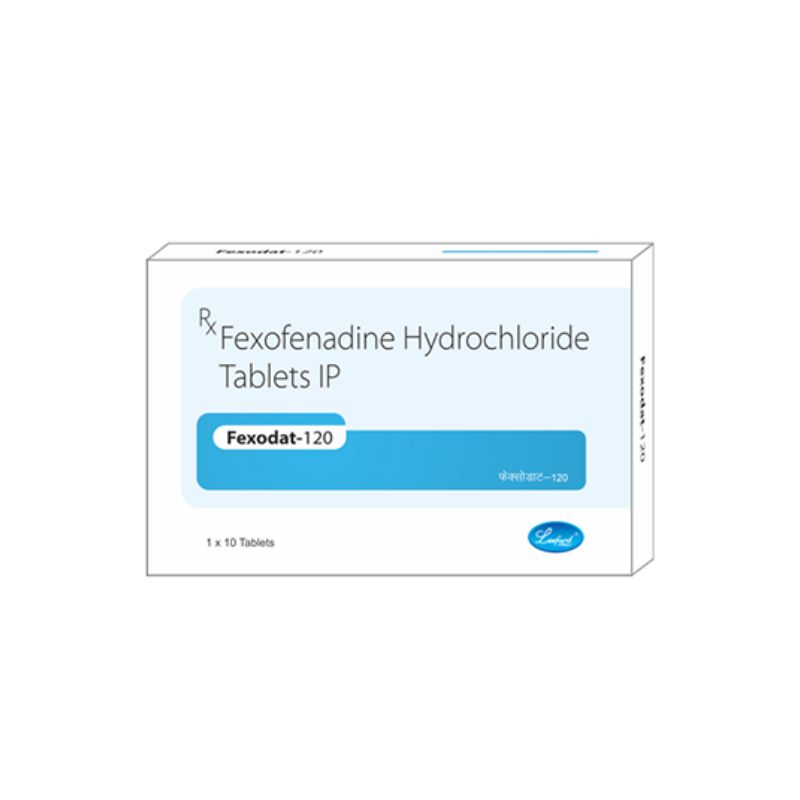
FEXODAT-120 contains Fexofenadine Hydrochloride 120 mg per tablet. Fexofenadine is a second-generation non-sedating antihistamine used for treatment of allergic symptoms, especially seasonal allergic rhinitis (hay fever) and chronic urticaria.
How FEXODAT-120 Works
Fexofenadine works by selectively blocking H1 histamine receptors, reducing the body’s histamine-mediated allergic response. This relieves symptoms like sneezing, runny nose, nasal congestion, watery eyes, itching, and urticaria without significantly crossing the blood-brain barrier or causing sedation.
Uses of FEXODAT-120
-
Relief of seasonal allergic rhinitis (hay fever), including sneezing, runny nose, itchy/watery eyes, and nasal congestion.
-
Treatment of chronic idiopathic urticaria (hives, itching, swelling of skin).
-
Symptomatic management of other allergic disorders as prescribed
Benefits
-
Rapid and long-lasting relief of allergy and urticaria symptoms
-
Minimal sedation, does not cause drowsiness for most users
-
Suitable for daily use and for people with a need for alertness (e.g., driving, studying).
Common Side Effects
-
Headache, dizziness, nausea, mild drowsiness, fatigue, dry mouth, allergic reactions (very rare).
-
Generally well-tolerated and safe for most adults and adolescents
Directions for Use and Precautions
-
Take as prescribed, usually once daily, with or without food; avoid fruit juices (may reduce absorption)
-
Dose adjustments may be needed in severe kidney impairment
-
Not recommended for children under 12 unless specifically prescribed; avoid in pregnancy/breastfeeding unless directed by doctor.
FEXODAT-120 is a prescription non-drowsy antihistamine for effective relief of allergies and urticaria—use strictly according to medical advice.
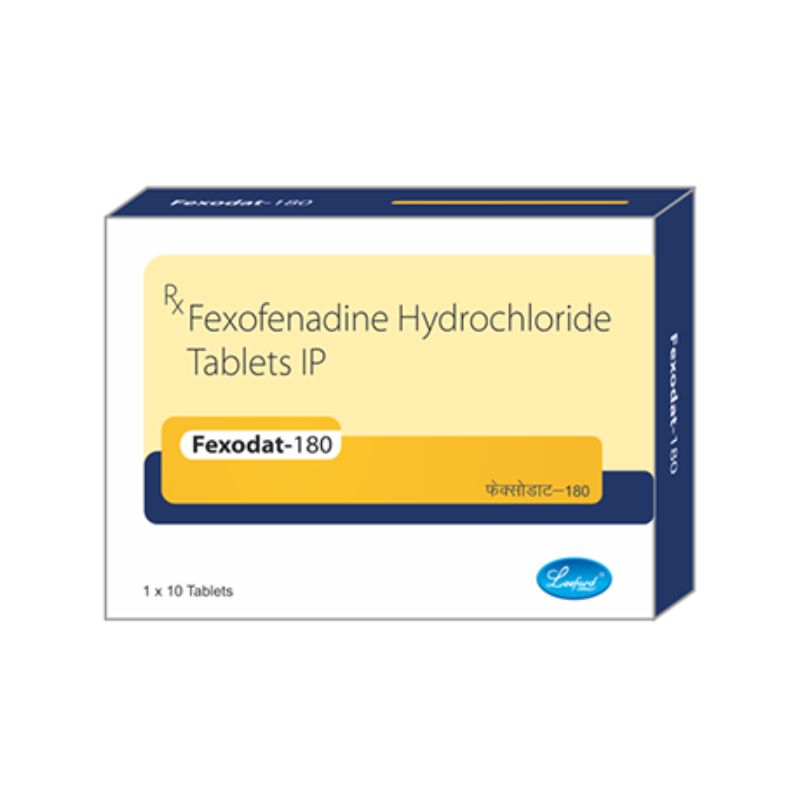
FEXODAT-180 contains Fexofenadine Hydrochloride 180 mg per tablet. Fexofenadine is a non-drowsy, second-generation antihistamine used to treat moderate to severe allergic symptoms and chronic urticaria (hives).
How FEXODAT-180 Works
Fexofenadine blocks H1 histamine receptors, reducing skin and airway reactions to allergens. It rapidly relieves symptoms such as sneezing, runny nose, nasal and eye itching, and hives with minimal brain penetration—so it does not usually cause drowsiness.
Uses of FEXODAT-180
-
Chronic idiopathic urticaria (hives): Reduces itching, swelling, and rash.
-
Moderate-to-severe seasonal allergic rhinitis (hay fever): Relieves sneezing, congestion, nasal/ocular itching, runny nose.
Dosage & Administration
-
Adults and children 12 years and older: 180 mg once daily, taken before a meal with water (not juice).
-
Maximum adult dose: 180 mg/day; do not exceed prescribed dose.
Benefits
-
Fast onset, lasts 24 hours for daily symptom control
-
No significant sedation or impairment of mental alertness
-
Well tolerated; suitable for daily seasonal or year-round allergy management.
Common Side Effects
-
Headache, dizziness, nausea, dry mouth, mild drowsiness, fatigue.
-
Rare: Allergic reactions, increased heart rate
Directions for Use and Precautions
-
Swallow tablet whole with water before a meal; avoid grapefruit, orange, or apple juice
-
Safe for long-term use if needed, but contact doctor if symptoms persist or worsen.
-
Dose adjustment may be needed in severe kidney disorder
FEXODAT-180 is a prescription non-sedating antihistamine for hives and major allergy symptoms—follow medical advice for safe and effective use.

Fibator EZ Tablet is a prescription combination medicine used to manage high cholesterol and triglyceride levels. It contains:
-
Atorvastatin (10mg): A statin that lowers LDL (“bad”) cholesterol
-
Fenofibrate (160mg): Reduces triglycerides and may increase HDL (“good”) cholesterol
-
Ezetimibe (10mg): Inhibits cholesterol absorption from the intestines
This triple combination helps significantly reduce the risk of cardiovascular diseases, including heart attack and stroke, in patients with mixed dyslipidemia.
Uses:
-
Treatment of high LDL cholesterol and triglycerides
-
Management of mixed dyslipidemia
-
Increasing “good” cholesterol (HDL)
-
Reducing total cholesterol and preventing cardiovascular events in high-risk patients
How to Use:
-
Take exactly as prescribed by your doctor.
-
Swallow the tablet whole with water, preferably after meals.
-
Usually taken once daily, following the doctor’s guidance.
-
Maintain a cholesterol-lowering diet and healthy lifestyle alongside treatment.
Precautions:
-
Use strictly under medical supervision.
-
Inform your doctor if you have liver, kidney, or gallbladder problems.
-
Avoid alcohol as it may increase liver-related side effects.
-
Not recommended during pregnancy or breastfeeding.
-
Report any unexplained muscle pain, weakness, or dark urine immediately.
Possible Side Effects:
-
Headache, nausea, or stomach upset
-
Muscle pain, tenderness, or weakness
-
Liver enzyme abnormalities (monitoring may be required)
-
Rare: gallstones, allergic reactions, or severe muscle damage (rhabdomyolysis)
Important:
-
Prescription Required medicine – do not self-medicate.
-
Regular monitoring of blood cholesterol, liver, and kidney function is recommended.
-
Store in a cool, dry place, away from sunlight, and out of reach of children.

Fibator LS Tablet is a prescription combination medicine used to manage high cholesterol and triglyceride levels. It contains:
This combination is used in patients with mixed dyslipidemia to improve lipid profiles and reduce the risk of cardiovascular diseases, such as heart attack and stroke.
Uses:
-
Treatment of high LDL cholesterol and triglycerides
-
Management of mixed dyslipidemia
-
Helps increase “good” cholesterol (HDL)
-
Prevention of cardiovascular events in high-risk patients
How to Use:
-
Take the tablet exactly as prescribed by your doctor.
-
Swallow whole with water, preferably after meals.
-
Usually taken once daily.
-
Maintain a cholesterol-lowering diet and healthy lifestyle alongside medication.
Precautions:
-
Use only under medical supervision.
-
Inform your doctor if you have liver, kidney, or gallbladder problems.
-
Avoid alcohol to reduce risk of liver issues.
-
Not recommended during pregnancy or breastfeeding.
-
Report any unexplained muscle pain, weakness, or dark urine immediately.
Possible Side Effects:
-
Headache, nausea, or stomach upset
-
Muscle pain, tenderness, or weakness
-
Liver enzyme abnormalities (monitoring may be required)
-
Rare: gallstones, allergic reactions, or severe muscle damage (rhabdomyolysis)
Important:
-
Prescription Required medicine – do not self-medicate.
-
Regular monitoring of blood cholesterol, liver, and kidney function is recommended.
-
Store in a cool, dry place, away from sunlight, and out of reach of children.
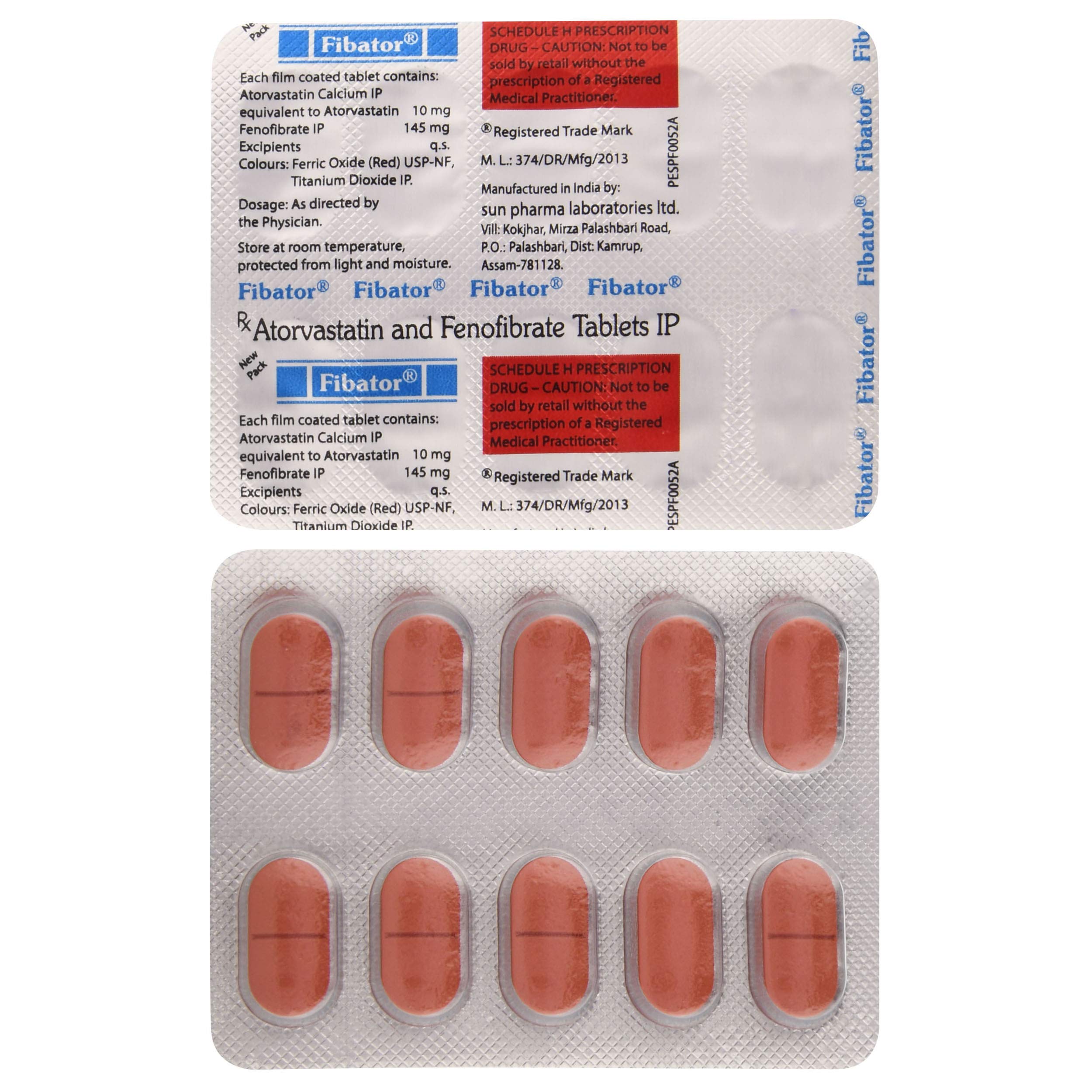
Fibator Tablet is a prescription combination lipid-lowering medicine containing Atorvastatin and Fenofibrate. It is used to manage high cholesterol and triglyceride levels in the blood. Atorvastatin belongs to statins, which reduce LDL cholesterol (“bad cholesterol”), while Fenofibrate helps reduce triglycerides and may modestly increase HDL cholesterol (“good cholesterol”). This combination helps lower the risk of cardiovascular diseases like heart attack and stroke.
Uses:
-
Treatment of high LDL cholesterol and triglycerides
-
Reducing total cholesterol and “bad” cholesterol levels
-
Increasing “good” cholesterol (HDL)
-
Prevention of cardiovascular events in high-risk patients
How to Use:
-
Take exactly as prescribed by your doctor.
-
Swallow the tablet whole with water, preferably after meals.
-
Usually taken once daily, but follow the doctor’s instructions.
-
Maintain a cholesterol-lowering diet and lifestyle alongside medication.
Precautions:
-
Use only under medical supervision.
-
Inform your doctor if you have liver, kidney, or gallbladder problems.
-
Avoid alcohol as it can increase the risk of liver problems.
-
Pregnant or breastfeeding women should not use this medicine.
-
Report any unexplained muscle pain, weakness, or dark urine immediately.
Possible Side Effects:
-
Headache, nausea, or stomach upset
-
Muscle pain or weakness (myopathy)
-
Liver enzyme abnormalities (monitoring may be required)
-
Rare: gallstones, allergic reactions, or severe muscle damage (rhabdomyolysis)
Important:
-
Prescription Required medicine – do not self-medicate.
-
Regular monitoring of blood cholesterol, liver function, and kidney function may be advised.
-
Store in a cool, dry place, away from sunlight and out of reach of children.

Finamac 1000mg Infusion contains Paracetamol, a widely used analgesic and antipyretic agent. It is administered intravenously to provide rapid relief from pain and fever in situations where oral administration is not feasible, such as postoperative care, severe pain episodes, or when the patient is unable to swallow tablets.
Health Benefits & Uses
-
Provides fast and effective relief from mild to moderate pain, including headache, musculoskeletal pain, and postoperative pain
-
Reduces fever associated with infections or inflammatory conditions
-
Suitable for postoperative and hospital settings requiring IV administration
-
Can be used as part of multimodal analgesia in combination with other pain management therapies
How it Works
Dosage & Administration
-
Administered intravenously by a healthcare professional
-
Dose and infusion rate depend on patient age, weight, and clinical condition
-
Follow strict aseptic technique and recommended guidelines for IV infusion
Possible Side Effects
-
Rarely: nausea, vomiting, or mild allergic reactions
-
Very rarely: liver dysfunction or hypersensitivity reactions
-
Overdose may cause hepatotoxicity
Precautions
-
Use with caution in patients with liver disease or chronic alcohol consumption
-
Monitor liver function during prolonged therapy
-
Do not exceed the recommended daily dose
-
Pregnant or breastfeeding women should use under medical supervision
Storage
-
Store in a cool, dry place, protected from light
-
Keep out of reach of children
-
Do not use if the solution is discolored or contains particles

Flagyl 200 Tablet contains Metronidazole, an antibiotic and antiprotozoal drug used to treat a variety of bacterial and parasitic infections. It is particularly effective against anaerobic bacteria and protozoa, making it suitable for infections of the gastrointestinal tract, liver, genital tract, skin, joints, and respiratory tract.
It is a well-established medicine commonly prescribed for amoebiasis, giardiasis, trichomoniasis, and bacterial infections.
Uses of Flagyl 200 Tablet
-
Amoebiasis (intestinal and liver infections caused by amoeba)
-
Giardiasis (diarrheal illness caused by Giardia parasite)
-
Trichomoniasis (sexually transmitted infection)
-
Anaerobic bacterial infections of stomach, intestines, gums, bones, and joints
-
Dental infections and post-dental surgery infections
-
Pelvic and gynecological infections
-
Liver abscess
-
Preventing infections after abdominal or gynecological surgery
How it Works
-
Metronidazole (200mg): Enters the microbial cell and disrupts DNA synthesis, which prevents the organisms from multiplying and eventually kills them.
-
Effective against protozoa and anaerobic bacteria.
Dosage & Administration
-
Dose depends on the type and severity of infection.
-
Typically taken 2–3 times a day with or after food.
-
Swallow the tablet whole with water.
-
Complete the full prescribed course, even if symptoms improve early.
-
Do not skip doses to avoid resistance.
Possible Side Effects
Common:
Less Common but Serious:
-
Allergic reactions (rash, itching, swelling)
-
Dizziness, headache, confusion, seizures
-
Dark or reddish-brown urine (generally harmless but should be reported)
-
Liver function abnormalities
Warnings & Precautions
-
Avoid Alcohol: Do not consume alcohol during treatment and for at least 48 hours after stopping the medicine to prevent severe reactions (nausea, vomiting, flushing, palpitations).
-
Liver Disease: Dose adjustment may be required.
-
Pregnancy & Breastfeeding: Use only if prescribed by the doctor.
-
Neurological Conditions: Patients with seizures or nerve problems should inform their doctor.
Storage Instructions

Flagyl 400 Tablet contains Metronidazole (400mg), a widely used antibiotic and antiprotozoal medicine. It is prescribed to treat and prevent a broad spectrum of bacterial and protozoal infections, especially those caused by anaerobic bacteria and parasites.
It is effective in treating infections of the gastrointestinal tract, genital tract, skin, gums, bones, joints, respiratory tract, and liver. The 400mg strength is often used in moderate to severe infections where higher drug levels are required for faster action.
Uses of Flagyl 400 Tablet
-
Amoebiasis (intestinal & hepatic – liver abscess)
-
Giardiasis (parasitic infection causing diarrhea)
-
Trichomoniasis (sexually transmitted infection)
-
Anaerobic bacterial infections in the abdomen, bones, joints, gums, and soft tissues
-
Pelvic and gynecological infections
-
Dental infections and post-dental surgical prophylaxis
-
Liver abscess and other liver-related infections
-
Post-operative prophylaxis (especially after abdominal or gynecological surgery)
How it Works
-
Metronidazole (400mg): Enters the bacterial or protozoal cell and disrupts DNA structure and function, preventing the microorganisms from reproducing and ultimately killing them.
-
Works against anaerobic bacteria and protozoa, making it useful in a wide range of infections.
Dosage & Administration
-
Dose and duration depend on the type and severity of infection.
-
Usually taken 2–3 times daily with water, preferably after food to avoid stomach upset.
-
Swallow whole; do not crush or chew.
-
Complete the full course even if symptoms improve early.
-
Skipping doses may lead to treatment failure or resistance.
Possible Side Effects
Common:
Less Common but Serious:
-
Allergic reactions (rash, itching, swelling of face/lips)
-
Dizziness, seizures, confusion
-
Liver problems (yellowing of skin/eyes, dark urine)
-
Peripheral neuropathy (tingling or numbness in hands/feet)
-
Urine discoloration (reddish-brown, usually harmless but report if persistent)
Warnings & Precautions
-
Avoid Alcohol: Strictly avoid alcohol during treatment and for 48 hours after the last dose to prevent severe reactions (flushing, nausea, vomiting, palpitations).
-
Liver Disease: Caution in patients with liver impairment.
-
Pregnancy & Breastfeeding: Should only be used if clearly prescribed by the doctor.
-
Neurological Disorders: Patients with epilepsy, seizures, or nerve disorders should inform their doctor.
Storage Instructions
-
Store in a cool, dry place, away from direct heat and sunlight.
-
Keep out of the reach of children.

Flagyl ER Tablet contains Metronidazole 600mg in an extended-release (ER) formulation. It is an antibiotic and antiprotozoal medicine used for the treatment and prevention of a wide range of infections caused by anaerobic bacteria and protozoa.
The extended-release technology allows the drug to be released slowly over time, maintaining a steady level in the bloodstream. This helps in reducing the number of doses needed per day and may improve patient compliance, especially in long-term therapy.
Uses of Flagyl ER Tablet
-
Amoebiasis (intestinal and hepatic infections, including liver abscess)
-
Giardiasis (intestinal infection with diarrhea)
-
Trichomoniasis (sexually transmitted infection)
-
Anaerobic bacterial infections of the abdomen, bones, joints, skin, gums, respiratory tract, and pelvic region
-
Pelvic and gynecological infections
-
Dental infections and prevention after oral/dental surgery
-
Post-operative prophylaxis (especially in abdominal and gynecological procedures)
How it Works
-
Metronidazole (600mg ER): After absorption, it enters the microorganism and disrupts DNA structure and function, preventing replication and leading to cell death.
-
Active against a wide spectrum of anaerobic bacteria and protozoa.
-
The ER formulation ensures prolonged therapeutic levels with fewer daily doses.
Dosage & Administration
-
Taken once or twice daily depending on infection severity, as prescribed.
-
Swallow whole with water; do not crush or chew, as it will destroy the extended-release mechanism.
-
Best taken with food to reduce stomach upset.
-
Complete the entire course even if symptoms improve to prevent resistance.
Possible Side Effects
Common:
Less Common but Serious:
-
Allergic reactions (rash, itching, swelling of lips/face)
-
Seizures, dizziness, confusion
-
Peripheral neuropathy (tingling/numbness in hands or feet)
-
Liver issues (jaundice, dark urine)
-
Urine discoloration (reddish-brown; usually harmless)
Warnings & Precautions
-
Avoid Alcohol: Do not consume alcohol during treatment and for 48 hours after the last dose, as it can cause severe reactions (nausea, flushing, vomiting, palpitations).
-
Liver Disease: Dose adjustment may be needed.
-
Pregnancy & Breastfeeding: Use only if prescribed by the doctor.
-
Neurological Disorders: Caution in epilepsy, seizures, or nerve disorders.
Storage Instructions

Flagyl Suspension contains Metronidazole, an antibiotic and antiprotozoal medication. It is commonly prescribed to treat a wide range of bacterial and parasitic infections, especially those of the gastrointestinal tract, liver, mouth, skin, and reproductive system. The suspension form makes it particularly suitable for children and patients who have difficulty swallowing tablets.
Uses of Flagyl Suspension
-
Treatment of amoebiasis (intestinal and extra-intestinal)
-
Management of giardiasis (Giardia infection)
-
Treatment of trichomoniasis (urogenital infection)
-
Bacterial infections of the stomach, intestines, liver (including liver abscess)
-
Dental infections, gum diseases, and post-dental surgery infections
-
Infections of the respiratory tract, skin, or bones caused by anaerobic bacteria
How it Works
-
Metronidazole (200mg/5ml): Works by entering bacterial and protozoal cells and disrupting their DNA synthesis, which leads to the destruction of infection-causing organisms.
-
It is especially effective against anaerobic bacteria and protozoa.
Dosage & Administration
-
Dose depends on the age, weight, and type of infection.
-
Usually prescribed for 5–10 days, as directed by the doctor.
-
Shake the bottle well before use.
-
Measure the dose accurately using the provided measuring cup or spoon.
-
Complete the full course even if symptoms improve early.
Possible Side Effects
Common:
Less Common but Serious:
-
Allergic reactions (rash, itching, swelling)
-
Seizures, dizziness, confusion
-
Dark-colored urine (harmless but can be alarming)
-
Liver enzyme changes
Warnings & Precautions
-
Avoid Alcohol: Strictly avoid alcohol during treatment and at least 48 hours after the last dose, as it can cause severe reactions (nausea, vomiting, headache, rapid heartbeat).
-
Liver Problems: Dose adjustment may be needed in liver impairment.
-
Neurological Conditions: Patients with seizures or nerve disorders should use with caution.
-
Pregnancy & Breastfeeding: Use only if prescribed by the doctor.
Storage Instructions
-
Store in a cool, dry place away from direct sunlight.
-
Keep tightly closed and out of reach of children.
-
Discard unused suspension after the expiry date or as advised by the doctor.