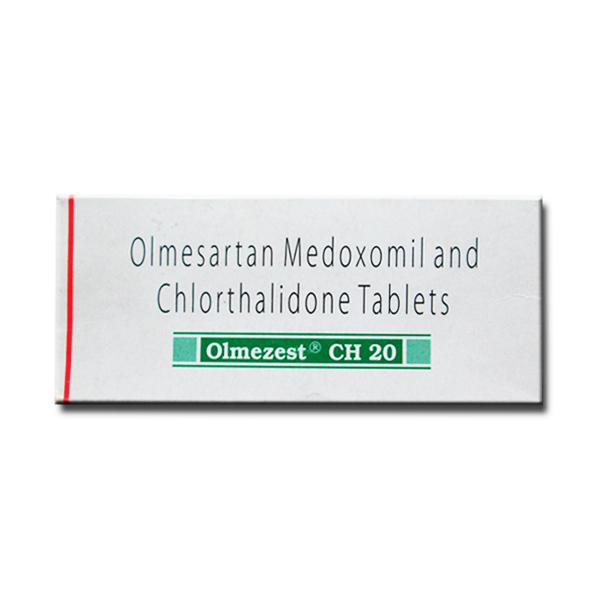
Olmezest CH 20 Tablet is a prescription medicine used for the management of hypertension (high blood pressure). It combines Olmesartan Medoxomil (20mg), an angiotensin II receptor blocker (ARB), and Chlorthalidone (12.5mg), a thiazide-like diuretic, which work together to relax blood vessels, reduce fluid retention, lower blood pressure, and improve blood flow, reducing the risk of cardiovascular complications.
Uses:
-
Treatment of hypertension, especially in patients needing dual therapy
-
Helps reduce risk of stroke, heart attack, and kidney complications
-
Improves blood pressure control by combining two complementary mechanisms
How to Use:
-
Take the tablet orally as prescribed by your doctor, usually once daily.
-
Can be taken with or without food.
-
Swallow whole with water.
Dosage:
Precautions:
-
Inform your doctor if you have kidney disease, liver disease, heart problems, or low blood pressure.
-
Monitor electrolytes, especially potassium and sodium, regularly.
-
Use with caution during pregnancy and breastfeeding.
-
Avoid potassium supplements or salt substitutes unless prescribed.
Possible Side Effects:
-
Dizziness, headache, or fatigue
-
Increased urination or mild electrolyte imbalance
-
Rare: severe allergic reactions, hypotension, or kidney impairment

Olmezest CH 40 Tablet is a prescription medicine used for the management of hypertension (high blood pressure). It combines Olmesartan Medoxomil (40mg), an angiotensin II receptor blocker (ARB), and Chlorthalidone (12.5mg), a thiazide-like diuretic, which work together to relax blood vessels, reduce fluid retention, lower blood pressure, and improve blood flow, reducing the risk of cardiovascular complications.
Uses:
-
Treatment of hypertension, especially in patients requiring combination therapy
-
Reduces risk of stroke, heart attack, and kidney complications
-
Improves blood pressure control by combining two complementary mechanisms
How to Use:
-
Take the tablet orally as prescribed by your doctor, usually once daily.
-
Can be taken with or without food.
-
Swallow whole with water.
Dosage:
Precautions:
-
Inform your doctor if you have kidney disease, liver disease, heart problems, or low blood pressure.
-
Monitor electrolytes, especially potassium and sodium, regularly.
-
Use with caution during pregnancy and breastfeeding.
-
Avoid potassium supplements or salt substitutes unless prescribed.
Possible Side Effects:
-
Dizziness, headache, or fatigue
-
Increased urination or mild electrolyte imbalance
-
Rare: severe allergic reactions, hypotension, or kidney impairment
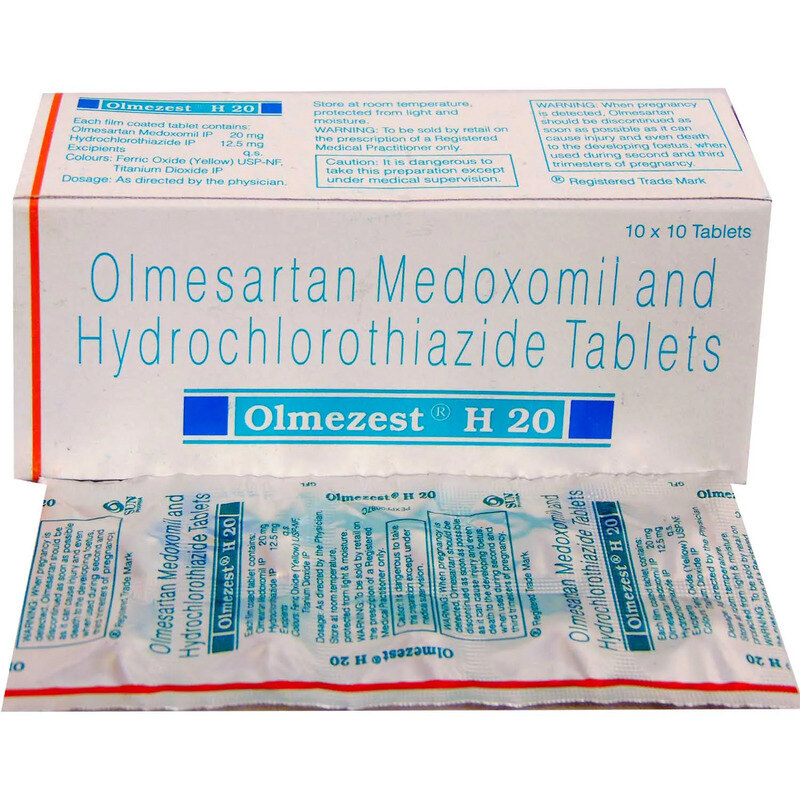
Olmezest H 20 Tablet is a prescription medicine used for the management of hypertension (high blood pressure). It contains Olmesartan Medoxomil (20mg), an angiotensin II receptor blocker (ARB), and Hydrochlorothiazide (12.5mg), a thiazide diuretic, which work together to relax blood vessels, reduce fluid retention, lower blood pressure, and improve blood flow, decreasing the risk of cardiovascular complications.
Uses:
-
Treatment of hypertension, especially in patients needing combination therapy
-
Reduces risk of heart attack, stroke, and kidney complications
-
Helps achieve better blood pressure control through complementary mechanisms
How to Use:
-
Take the tablet orally as prescribed by your doctor, usually once daily.
-
Can be taken with or without food.
-
Swallow whole with water.
Dosage:
Precautions:
-
Inform your doctor if you have kidney disease, liver disease, heart problems, or low blood pressure.
-
Monitor electrolytes (potassium, sodium) regularly.
-
Use with caution during pregnancy and breastfeeding.
-
Avoid potassium supplements or salt substitutes unless prescribed.
Possible Side Effects:
-
Dizziness, headache, or fatigue
-
Increased urination or mild electrolyte imbalance
-
Rare: severe allergic reactions, hypotension, or kidney impairment

Olmezest H 40 Tablet is a prescription medicine used for the management of hypertension (high blood pressure). It combines Olmesartan Medoxomil (40mg), an angiotensin II receptor blocker (ARB), and Hydrochlorothiazide (12.5mg), a thiazide diuretic, which work together to relax blood vessels, reduce fluid retention, lower blood pressure, and improve blood flow, reducing the risk of cardiovascular complications.
Uses:
-
Treatment of hypertension, especially in patients needing combination therapy
-
Reduces risk of heart attack, stroke, and kidney complications
-
Helps achieve better blood pressure control by combining two complementary mechanisms
How to Use:
-
Take the tablet orally as prescribed by your doctor, usually once daily.
-
Can be taken with or without food.
-
Swallow whole with water.
Dosage:
Precautions:
-
Inform your doctor if you have kidney disease, liver disease, heart problems, or low blood pressure.
-
Monitor electrolytes (potassium, sodium) regularly.
-
Use with caution during pregnancy and breastfeeding.
-
Avoid potassium supplements or salt substitutes unless prescribed.
Possible Side Effects:
-
Dizziness, headache, or fatigue
-
Increased urination or mild electrolyte imbalance
-
Rare: severe allergic reactions, hypotension, or kidney impairment
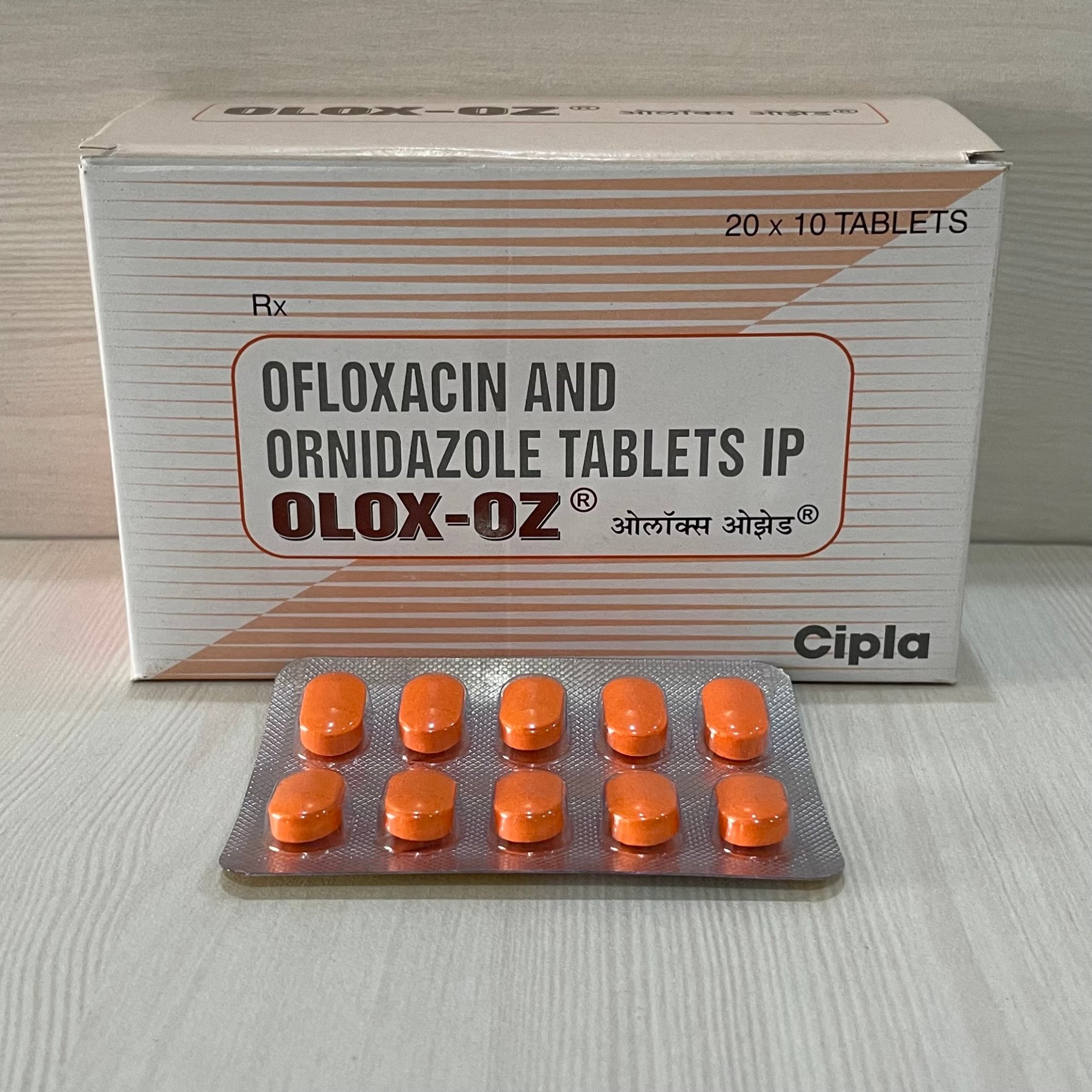
OLOX OZ is a combination antibiotic manufactured by Cipla Ltd., containing Ofloxacin 200 mg and Ornidazole 500 mg. This dual formulation provides broad-spectrum antibacterial and antiprotozoal activity, making it effective against a wide range of mixed infections.
-
Ofloxacin is a fluoroquinolone antibiotic that inhibits bacterial DNA gyrase, preventing bacterial replication.
-
Ornidazole is effective against anaerobic bacteria and protozoa, targeting infections that may not respond to standard antibiotics alone.
This combination is particularly useful in treating infections where both aerobic and anaerobic organisms are suspected.
Uses:
-
Gastrointestinal infections such as diarrhea, dysentery, and gastroenteritis
-
Urinary tract infections (UTIs)
-
Respiratory tract infections
-
Skin and soft tissue infections
-
Mixed bacterial and protozoal infections
Key Benefits:
-
Broad-spectrum coverage against Gram-positive, Gram-negative, and anaerobic bacteria
-
Effective against protozoal infections
-
Provides relief from fever, abdominal pain, diarrhea, and infection-related discomfort
-
Trusted formulation from Cipla Ltd.
How to Take:
-
Take as prescribed by your doctor
-
Swallow the tablet whole with water, preferably after meals
-
Complete the full prescribed course, even if symptoms improve early
Precautions:
-
Not effective for viral infections
-
Avoid if allergic to fluoroquinolones or nitroimidazoles
-
Use with caution in kidney or liver disorders
-
Not recommended in pregnancy or breastfeeding unless advised by a doctor
Possible Side Effects:
-
Nausea, vomiting, diarrhea
-
Abdominal discomfort, headache, dizziness
-
Rare: Tendonitis, tendon rupture, severe allergic reactions, neurotoxicity
Storage:
-
Store in a cool, dry place below 25°C
-
Protect from light and moisture
-
Keep out of reach of children
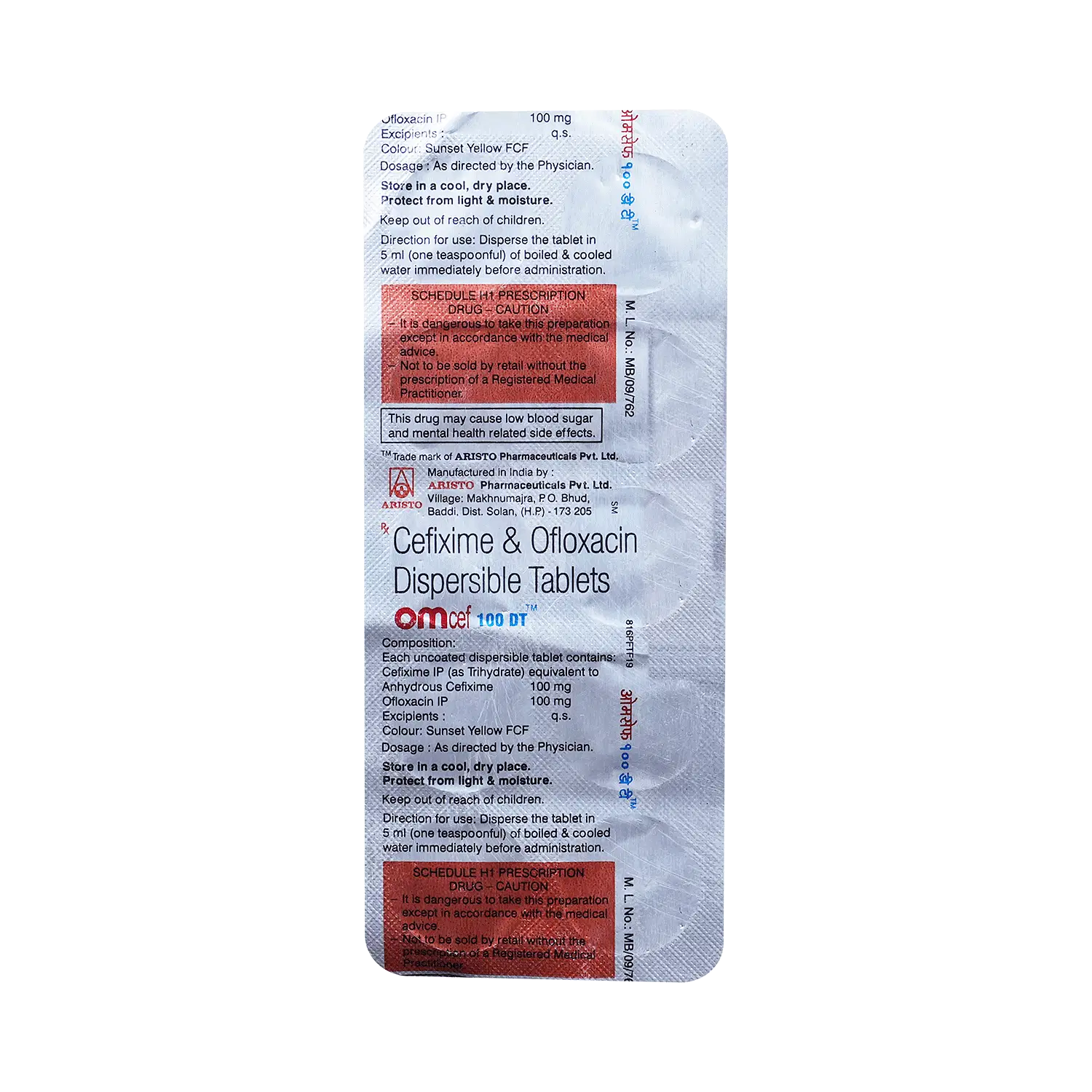
Omcef 100mg/100mg Tablet DT is a dispersible combination antibiotic containing Cefixime, a third-generation cephalosporin, and Ofloxacin, a fluoroquinolone. It is used to treat bacterial infections, particularly those resistant to single antibiotics. Being a DT (dispersible tablet), it can be dissolved in water for easier administration, especially in children and patients who have difficulty swallowing tablets.
Uses
-
Respiratory tract infections – bronchitis, pneumonia, sinusitis, tonsillitis
-
Urinary tract infections (UTIs)
-
Gastrointestinal infections – enteric fever, gastroenteritis
-
Skin and soft tissue infections
-
Ear infections (otitis media)
-
Bone and joint infections
-
Other bacterial infections resistant to monotherapy
How It Works
-
Cefixime (100mg): Inhibits bacterial cell wall synthesis, causing bacterial death.
-
Ofloxacin (100mg): Inhibits bacterial DNA gyrase and topoisomerase IV, preventing bacterial replication.
The combination provides broader antibacterial coverage than either drug alone.
Side Effects
Common:
-
Nausea, vomiting, diarrhea
-
Stomach discomfort or abdominal pain
-
Headache, dizziness
-
Mild skin rash
Serious (rare):
-
Severe allergic reactions (swelling, difficulty breathing, anaphylaxis)
-
Tendonitis or tendon rupture (linked to Ofloxacin)
-
Liver enzyme abnormalities
-
Blood disorders (low platelets, anemia, leukopenia)
-
Clostridium difficile-associated diarrhea
Precautions
-
Avoid in patients allergic to cephalosporins or fluoroquinolones
-
Use with caution in renal or hepatic impairment (dose adjustment may be required)
-
Not recommended in pregnancy and breastfeeding unless prescribed
-
Avoid excessive sun exposure due to photosensitivity risk (from Ofloxacin)
-
Not for use in children under a certain age unless specifically prescribed
Administration
-
Dispersible tablet: Can be dissolved in a small amount of water before intake
-
Usually taken twice daily or as prescribed by a doctor
-
Complete the full course to prevent antibiotic resistance

Omcef 200 Tablet is a combination antibiotic containing Cefixime, a third-generation cephalosporin, and Ofloxacin, a fluoroquinolone. This combination is used to treat moderate to severe bacterial infections, particularly when infections are resistant to a single antibiotic.
The higher 200mg/200mg strength is generally prescribed for adults or older children with more severe infections.
Uses
-
Respiratory tract infections – bronchitis, pneumonia, sinusitis, tonsillitis
-
Urinary tract infections (UTIs)
-
Gastrointestinal infections – enteric fever, gastroenteritis
-
Skin and soft tissue infections
-
Ear infections (otitis media)
-
Bone and joint infections
-
Other bacterial infections resistant to monotherapy
How It Works
-
Cefixime (200mg): Inhibits bacterial cell wall synthesis, causing bacterial death.
-
Ofloxacin (200mg): Inhibits bacterial DNA gyrase and topoisomerase IV, preventing bacterial replication.
Together, they provide broad-spectrum antibacterial activity, effective against Gram-positive and Gram-negative bacteria.
Side Effects
Common:
-
Nausea, vomiting, diarrhea
-
Stomach discomfort or abdominal pain
-
Headache, dizziness
-
Mild skin rash
Serious (rare):
-
Severe allergic reactions (swelling, difficulty breathing, anaphylaxis)
-
Tendonitis or tendon rupture (linked to Ofloxacin)
-
Liver enzyme abnormalities
-
Blood disorders (low platelets, anemia, leukopenia)
-
Clostridium difficile-associated diarrhea
Precautions
-
Avoid in patients allergic to cephalosporins or fluoroquinolones
-
Dose adjustment may be needed in renal or hepatic impairment
-
Not recommended in pregnancy or breastfeeding unless prescribed
-
Avoid excessive sun exposure due to photosensitivity risk (from Ofloxacin)
-
Use caution in elderly patients or those with pre-existing tendon or joint problems
Administration
-
Taken orally, usually twice daily or as prescribed by a doctor
-
Swallow with water, do not crush or chew
-
Complete the full prescribed course to prevent antibiotic resistance

Omecip 20 Capsule is a proton pump inhibitor (PPI) used to reduce excessive stomach acid. It helps in relieving heartburn, acid reflux, and stomach ulcers by blocking the action of proton pumps in the stomach lining, thereby reducing acid secretion.
Uses
-
Gastroesophageal reflux disease (GERD)
-
Peptic ulcers (gastric and duodenal)
-
Erosive esophagitis
-
Zollinger–Ellison syndrome (excessive acid production)
-
NSAID-induced ulcers
How It Works
Omeprazole, the active ingredient, inhibits the H⁺/K⁺ ATPase enzyme in stomach lining cells, preventing acid formation and allowing healing of the esophagus, stomach, and duodenum.
Side Effects
Common side effects may include:
-
Headache
-
Nausea or vomiting
-
Abdominal pain
-
Constipation or diarrhea
-
Flatulence and dizziness
Precautions & Warnings
-
Avoid use if allergic to omeprazole or similar medicines.
-
Long-term use may cause vitamin B12 deficiency, low magnesium levels, or risk of bone fractures.
-
Use cautiously in patients with liver disease.
-
May cause dizziness; avoid driving if affected.
-
Use during pregnancy or breastfeeding only under medical advice.
Dosage & Administration
-
Usually taken once daily on an empty stomach, at least 30–60 minutes before a meal.
-
Swallow capsule whole—do not crush or chew.
-
If a dose is missed, skip it if it’s almost time for the next one.

Omecip D Capsule is a combination medicine that helps in treating acidity, reflux, indigestion, nausea, and bloating. It provides dual benefits by reducing excess stomach acid and improving gastric motility.
-
Omeprazole (20 mg): A proton pump inhibitor (PPI) that blocks acid production in the stomach, giving relief from heartburn and acid reflux.
-
Domperidone (10 mg): A prokinetic agent that increases stomach and intestinal movement, preventing nausea, vomiting, and bloating.
Uses
-
Gastroesophageal reflux disease (GERD)
-
Heartburn and acidity
-
Indigestion and bloating
-
Nausea and vomiting related to reflux
-
Stomach and duodenal ulcers
How It Works
Omecip D Capsule works by:
-
Reducing stomach acid secretion (Omeprazole action).
-
Enhancing stomach emptying and gut motility (Domperidone action).
This combined effect gives faster and longer-lasting relief from acidity-related discomfort.
Side Effects
Common side effects may include:
-
Headache
-
Abdominal pain
-
Diarrhea or constipation
-
Flatulence
-
Dry mouth
-
Dizziness
Most side effects are mild and temporary. Seek medical advice if you notice chest pain, irregular heartbeat, or persistent stomach pain.
Precautions & Warnings
-
Avoid if allergic to omeprazole or domperidone.
-
Not recommended for patients with severe heart, liver, or kidney problems.
-
Prolonged use may lead to vitamin/mineral deficiencies.
-
Avoid alcohol and smoking as they worsen reflux.
-
Safe use in pregnancy and breastfeeding should be guided by a doctor.
Dosage & Administration
-
Usually taken once daily before meals, as directed by a doctor.
-
Swallow capsule whole with water; do not crush or chew.

Omecip D SR Capsule is a modified-release combination medicine used for the treatment of acid reflux, heartburn, indigestion, nausea, and bloating. The sustained release (SR) formulation of Domperidone ensures a longer duration of action, providing extended relief from gastrointestinal discomfort.
-
Omeprazole (20 mg): A proton pump inhibitor (PPI) that reduces stomach acid by blocking proton pumps in the stomach lining.
-
Domperidone (30 mg SR): A prokinetic agent in sustained-release form that helps in faster gastric emptying, relieves nausea, and prevents bloating.
Uses
-
Gastroesophageal reflux disease (GERD)
-
Acid peptic disorders
-
Indigestion, bloating, and fullness after meals
-
Nausea and vomiting due to reflux or motility issues
-
Peptic ulcers (gastric and duodenal)
How It Works
-
Omeprazole: Reduces excessive stomach acid, allowing healing of the food pipe, stomach, and duodenum.
-
Domperidone SR: Enhances gut motility and stomach emptying, prevents nausea and vomiting.
Together, they provide long-lasting relief from acidity-related symptoms and protect the stomach lining.
Side Effects
Some common side effects may include:
-
Headache
-
Abdominal pain
-
Constipation or diarrhea
-
Dry mouth
-
Flatulence
-
Dizziness or drowsiness
Serious but rare side effects: irregular heartbeat, severe stomach pain, or allergic reaction.
Precautions & Warnings
-
Avoid in patients with severe heart, liver, or kidney disease.
-
Long-term use may cause vitamin B12 and magnesium deficiency.
-
Avoid alcohol and smoking as they worsen acid reflux.
-
Pregnant and breastfeeding women should take only on doctor’s advice.
-
May cause dizziness; avoid driving if affected.
Dosage & Administration

Omesec 20 Capsule is a proton pump inhibitor (PPI) used to reduce excess stomach acid. It contains Omeprazole (20mg), which works by blocking the enzyme in the stomach lining responsible for acid production. This helps relieve symptoms of heartburn, acid reflux, and gastroesophageal reflux disease (GERD), and promotes healing of ulcers in the stomach and duodenum.
Uses:
-
Treatment of acid reflux and heartburn
-
Management of GERD (Gastroesophageal Reflux Disease)
-
Healing and prevention of stomach and duodenal ulcers
-
Prevention of acid-related damage in long-term NSAID users
Dosage:
The usual recommended dose is one capsule daily, preferably before breakfast, or as prescribed by your doctor. Dosage may vary depending on the condition being treated.
How to Use:
Swallow the capsule whole with water, preferably on an empty stomach, at least 30 minutes before a meal. Do not crush or chew. Take it at the same time each day for best results.
Precautions:
-
Inform your doctor if you have liver disease or are taking other medications.
-
Pregnant or breastfeeding women should use it only under medical supervision.
-
Avoid prolonged use without doctor’s guidance.
-
Report any unusual symptoms such as persistent diarrhea, severe abdominal pain, or allergic reactions.
Side Effects:
Common side effects may include headache, nausea, diarrhea, stomach pain, or mild dizziness. Rare side effects include allergic reactions, vitamin B12 deficiency with long-term use, or severe stomach issues.