



Description
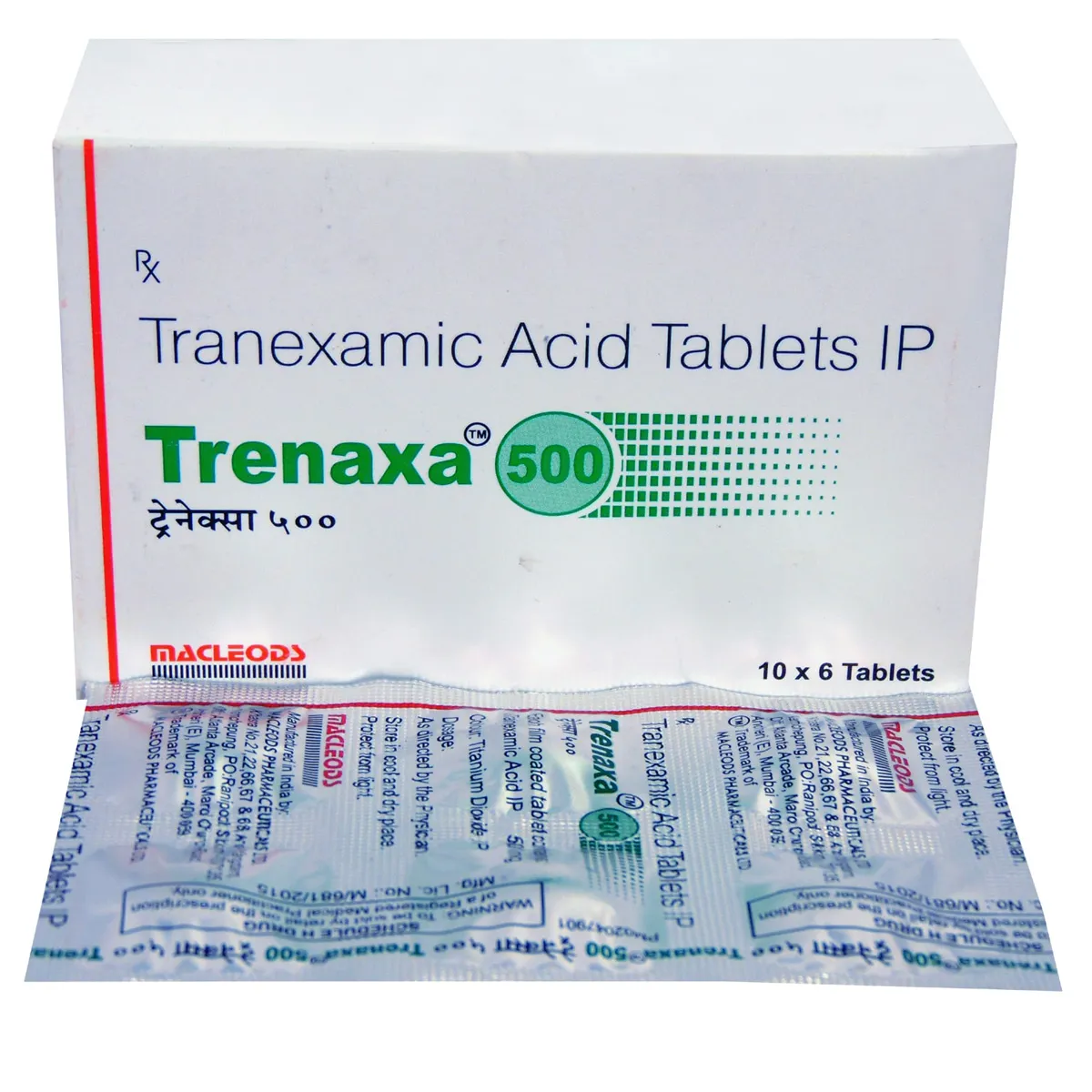
Trenaxa 500 Tablet contains Tranexamic Acid (500 mg), an antifibrinolytic medicine. It works by helping the blood clot more effectively and preventing the breakdown of clots. This action helps reduce excessive or prolonged bleeding.
It is commonly prescribed for conditions such as heavy menstrual bleeding (menorrhagia), bleeding after surgery, dental procedures in patients with bleeding disorders, nosebleeds, trauma-related bleeding, and certain hereditary conditions that cause excessive bleeding.
Uses of Trenaxa 500 Tablet
-
Heavy menstrual bleeding (menorrhagia) – reduces the amount and duration of bleeding.
-
Post-surgical bleeding – helps control bleeding after surgery (including dental procedures).
-
Nosebleeds and trauma-related bleeding – prevents excessive blood loss.
-
Hereditary angioedema & bleeding disorders – reduces recurrent bleeding episodes.
-
Other causes of abnormal bleeding as determined by a doctor.
Dosage & Administration
-
Dose is individualized depending on the type and severity of bleeding, age, and clinical condition.
-
Commonly taken 2–3 times daily, preferably with or after meals to reduce stomach irritation.
-
Swallow whole with a glass of water; do not crush or chew.
-
Duration of use is usually short-term (only during active bleeding episodes) unless otherwise advised.
-
If a dose is missed, take it as soon as remembered. If it is close to the next scheduled dose, skip the missed one. Do not double dose.
Possible Side Effects
Most people tolerate Trenaxa well. Possible side effects may include:
-
Nausea, vomiting, or upset stomach
-
Diarrhea
-
Headache or dizziness
-
Fatigue or weakness
-
Nasal congestion
Rare but serious:
-
Vision changes (especially color vision disturbances)
-
Blood clots (deep vein thrombosis, pulmonary embolism, stroke, heart attack)
-
Seizures (in very rare cases)
Seek immediate medical attention if you experience chest pain, difficulty breathing, swelling in legs, or sudden vision problems.
Precautions
-
Clotting disorders: Should not be used in patients with a history of blood clots unless advised by a specialist.
-
Kidney problems: Dose adjustment may be required, as Tranexamic Acid is eliminated through the kidneys.
-
Vision issues: Long-term use may rarely affect eyesight; eye check-ups may be recommended.
-
Pregnancy & breastfeeding: Use only if clearly needed and prescribed by a doctor.
-
Drug interactions: Caution if taken with hormonal contraceptives, blood thinners (anticoagulants), or medicines that affect clotting.
Key Points to Remember
-
Trenaxa 500 helps control abnormal or heavy bleeding by preventing clot breakdown.
-
Take with food to minimize stomach upset.
-
Usually prescribed for short-term use during bleeding episodes.
-
Do not use if you have a history of serious clotting disorders without medical guidance.
-
Regular medical supervision is important if used repeatedly or long-term.



Leave a Reply