



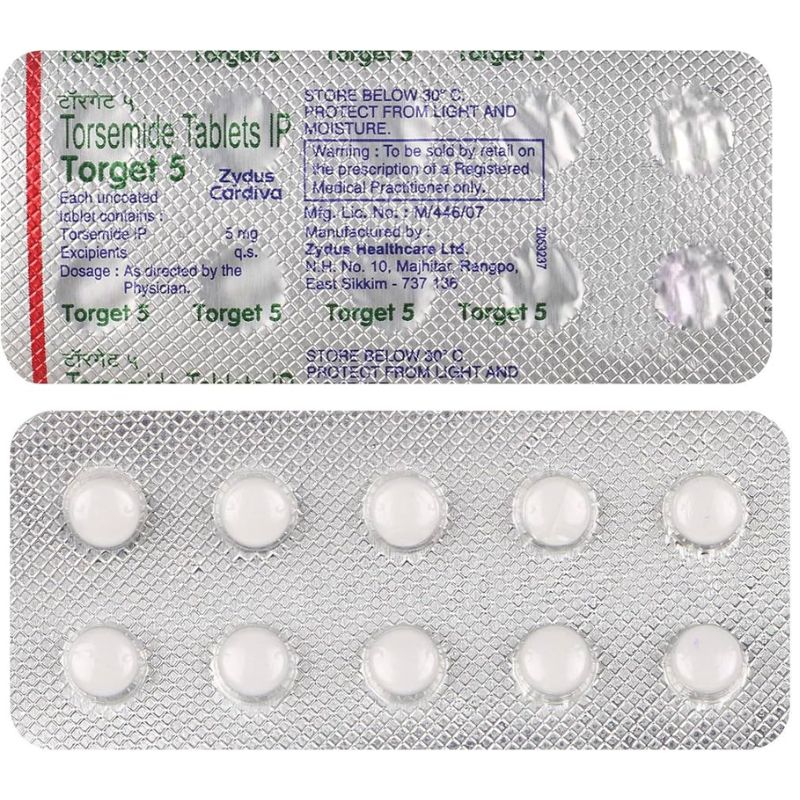
Description
1. Uses
-
Helps remove excess fluid (water retention) from the body.
-
Used to treat edema caused by:
-
Heart failure
-
Kidney disease
-
Liver disease
-
-
Helps control high blood pressure (hypertension).
-
Reduces swelling in legs, ankles, and lungs (fluid overload).
2. How It Works
-
Torasemide is a loop diuretic (“water pill”).
-
Increases urine output by acting on kidneys.
-
Helps reduce fluid overload, swelling, and BP.
-
Provides longer action and better effect than furosemide in many patients.
3. Dosage
-
Usually taken once daily, or as directed by doctor.
-
Dose may vary depending on swelling or BP condition.
-
Best taken in the morning to avoid frequent urination at night.
4. How to Use
-
Take with or without food.
-
Swallow the tablet whole with water.
-
Maintain proper hydration—do not get dehydrated.
-
Follow diet advice if given:
-
Low-salt diet
-
Potassium-rich foods (unless doctor restricts)
-
-
Avoid taking the tablet late in the evening.
5. Precautions
-
Avoid if you are dehydrated or have low blood pressure.
-
Use carefully in:
-
Kidney problems
-
Liver cirrhosis
-
Electrolyte imbalance (low potassium/sodium)
-
Diabetes
-
-
Inform doctor if you take:
-
BP medicines
-
Heart medicines
-
Steroids
-
Antibiotics like gentamicin
-
-
Not recommended in pregnancy unless necessary.
-
Use caution while driving — may cause dizziness.
-
Regular monitoring needed:
-
Kidney function
-
Electrolytes (especially potassium)
-
BP levels
-
6. Side Effects
Common:
-
Frequent urination
-
Dizziness or weakness
-
Dehydration
-
Low potassium (muscle cramps)
-
Headache
-
Increased thirst
Less common:
-
Low blood pressure
-
Nausea
-
Dry mouth
Serious (rare):
-
Severe dehydration
-
Irregular heartbeat
-
Kidney issues
-
Allergic reactions (rash, swelling)
7. Seek Immediate Medical Help If:
-
Severe dizziness or fainting
-
Muscle cramps with weakness (low potassium)
-
Very little or no urine output
-
Swelling of face, lips, or breathing difficulty


Leave a Reply