



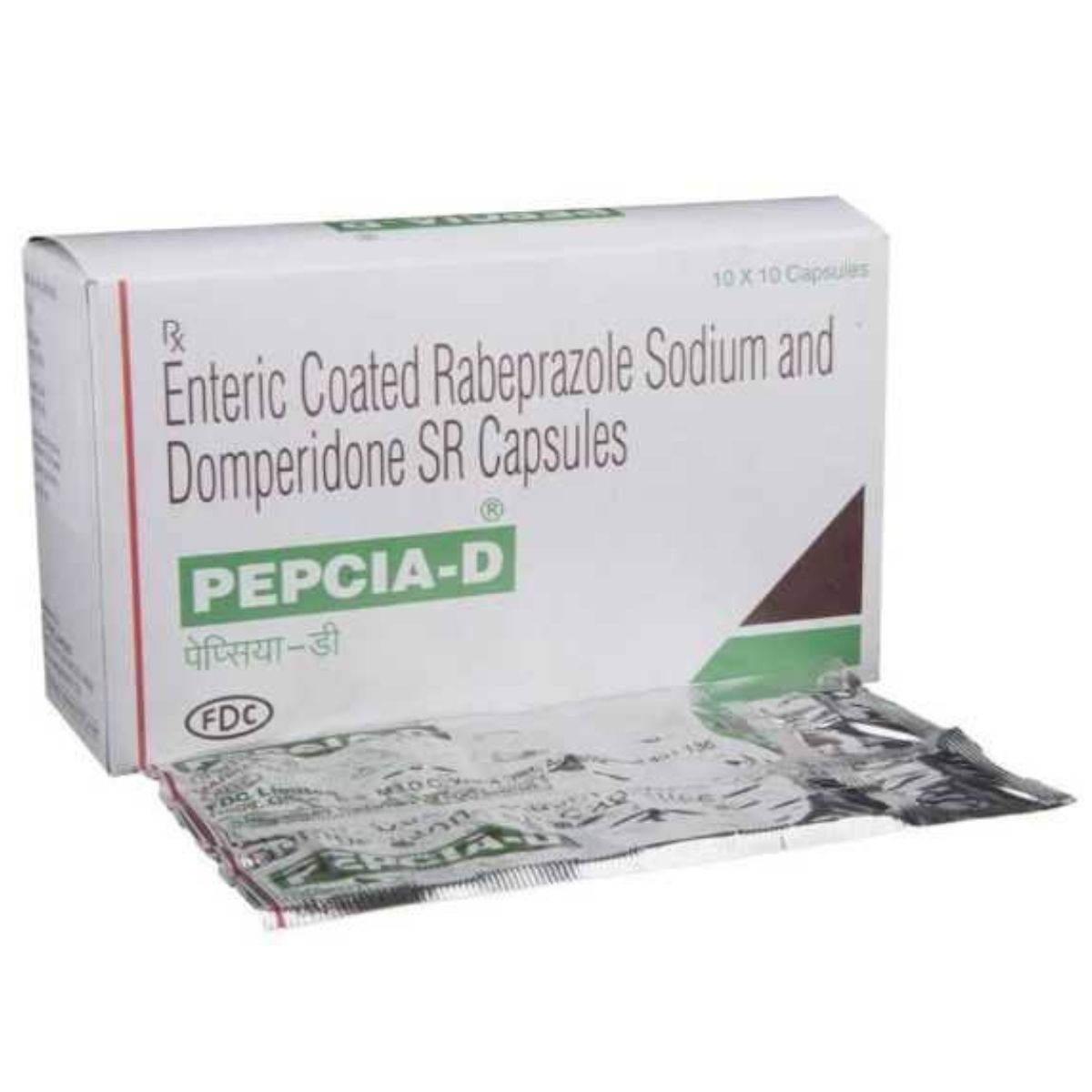
Description
Pepcia-D Capsule SR is a prescription medicine that combines Rabeprazole, a proton pump inhibitor (PPI), with Domperidone SR, a prokinetic and antiemetic medicine. This combination is commonly prescribed for patients suffering from acid reflux, gastroesophageal reflux disease (GERD), gastritis, peptic ulcers, and persistent acidity accompanied by nausea or bloating.
Rabeprazole reduces the amount of acid produced in the stomach, while Domperidone improves stomach motility, helping food move more easily through the digestive tract and reducing nausea.
Uses of Pepcia-D Capsule SR
- Gastroesophageal reflux disease (GERD)
- Acid reflux
- Heartburn
- Hyperacidity
- Gastritis
- Peptic and duodenal ulcers
- Indigestion (Dyspepsia)
- Nausea and vomiting associated with acid-related disorders
Benefits of Pepcia-D Capsule SR
- Provides long-lasting relief from acidity and heartburn
- Reduces stomach acid production
- Improves stomach emptying
- Relieves nausea, vomiting, and bloating
- Helps heal acid-related damage to the food pipe and stomach
How Pepcia-D Capsule SR Works
- Rabeprazole blocks the proton pumps in the stomach lining, significantly reducing acid production.
- Domperidone increases the movement of the stomach and intestines, allowing food to pass more quickly and helping prevent nausea and reflux.
Together, they relieve acid-related symptoms and improve digestive comfort.
Dosage
- Take Pepcia-D Capsule SR exactly as prescribed by your doctor.
- Do not exceed the recommended dose.
- Continue treatment for the duration advised by your healthcare provider.
How to Use
- Take the capsule 30–60 minutes before a meal, preferably before breakfast.
- Swallow the capsule whole with a glass of water.
- Do not crush, chew, or open the capsule.
Side Effects
Common side effects include:
- Dry mouth
- Headache
- Diarrhea
- Constipation
- Dizziness
- Abdominal pain
- Flatulence
Rare but serious side effects include:
- Irregular heartbeat (QT prolongation)
- Severe allergic reactions
- Liver problems
- Persistent diarrhea
- Low magnesium levels with prolonged use
Seek immediate medical attention if you experience chest pain, fainting, severe allergic reactions, or an irregular heartbeat.
Precautions
- Inform your doctor if you have liver disease, kidney disease, heart rhythm disorders, or osteoporosis.
- Long-term use of proton pump inhibitors may increase the risk of vitamin B12 deficiency, low magnesium levels, and bone fractures.
- Avoid alcohol and spicy or fatty foods, as they may worsen acidity.
- Use during pregnancy or breastfeeding only if prescribed.


Leave a Reply