



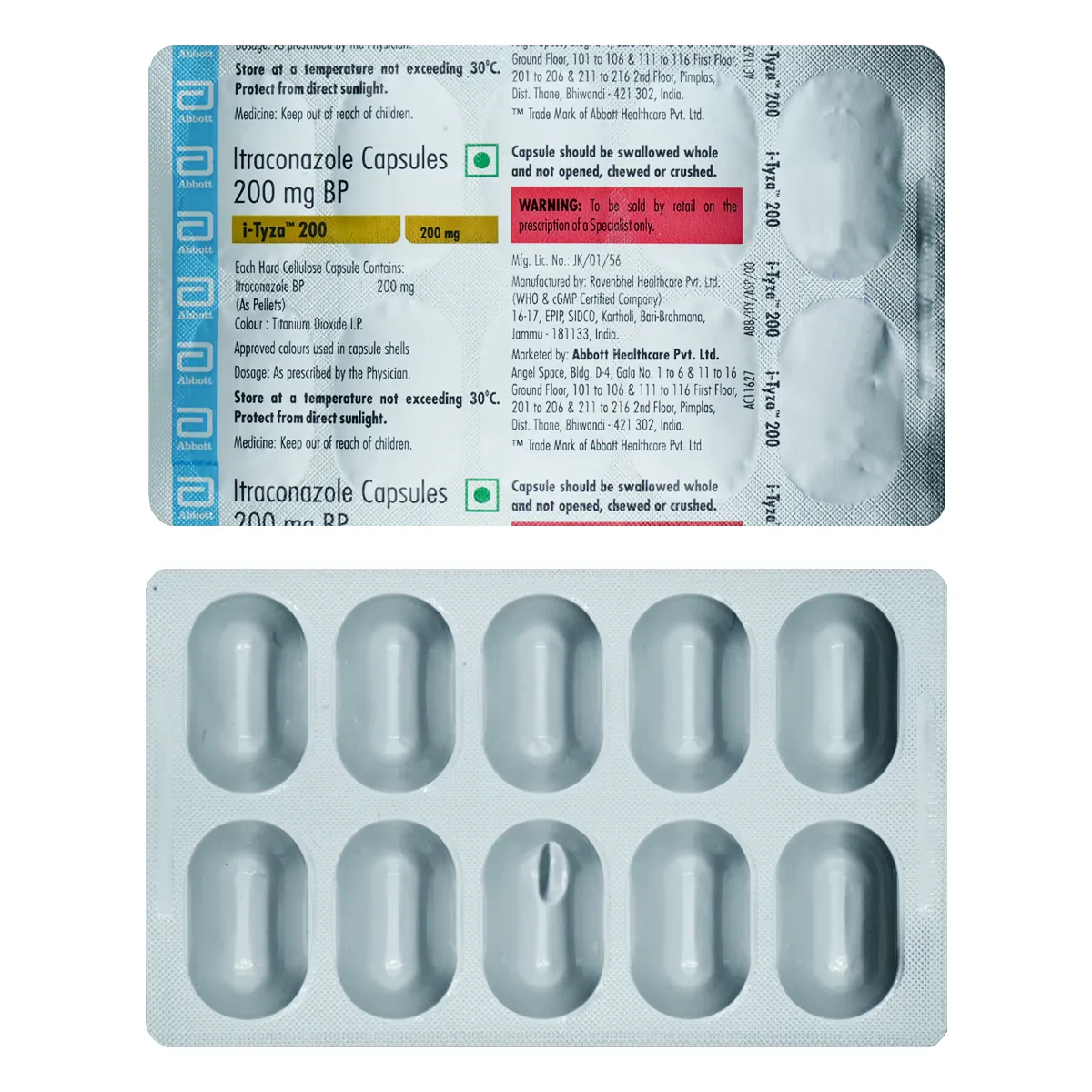
Description
I-Tyza 200 Capsule contains Itraconazole (200mg), a broad-spectrum triazole antifungal. It is prescribed for the treatment of moderate to severe systemic and superficial fungal infections that cannot be managed by topical therapy alone. By blocking ergosterol synthesis, Itraconazole weakens the fungal cell wall and causes fungal cell death.
This higher-strength capsule (200mg) is especially useful for serious infections like systemic mycoses and resistant fungal infections where higher doses are required for effective control.
Uses
-
Onychomycosis (fungal nail infections)
-
Dermatophytosis (ringworm, athlete’s foot, jock itch)
-
Oral and esophageal candidiasis
-
Recurrent vaginal candidiasis
-
Pulmonary and systemic fungal infections – histoplasmosis, aspergillosis, blastomycosis
-
Fungal infections of mucous membranes, skin, and internal organs
How It Works
Itraconazole targets the fungal cell wall by inhibiting the enzyme lanosterol 14α-demethylase, preventing ergosterol production. Ergosterol is vital for maintaining fungal cell membrane structure. Its absence makes the membrane fragile, leading to leakage of cell contents and ultimately fungal death.
Benefits
-
Higher strength (200mg) for severe or systemic infections
-
Treats both superficial (skin, nails) and deep (lungs, organs) fungal infections
-
Effective against a wide range of fungal species
-
Provides faster relief in chronic or resistant cases
-
Reduces recurrence of fungal infections when taken as directed
Directions for Use
-
Take after a meal to enhance absorption.
-
Swallow whole with water; do not crush or chew.
-
Dosage and duration are determined by infection severity (may be once or twice daily).
-
Complete the prescribed course even if symptoms improve early.
Safety Information
-
Common side effects: nausea, stomach pain, diarrhea, headache, dizziness.
-
Can cause liver enzyme elevation – periodic liver function tests are advised for prolonged use.
-
Avoid alcohol during therapy.
-
Inform your doctor about pre-existing liver, kidney, or heart disease.
-
Can interact with medicines like statins, warfarin, antacids, rifampicin, and some antihistamines.
-
Not recommended in pregnancy unless essential; use with caution during breastfeeding.


Leave a Reply