Acitrom 1 Tablet is an oral anticoagulant (blood thinner) manufactured by Abbott, containing Acenocoumarol 1 mg as its active ingredient. It is primarily prescribed for the prevention and treatment of blood clots in conditions such as deep vein thrombosis (DVT), pulmonary embolism (PE), and stroke prevention in patients with atrial fibrillation, artificial heart valves, or other clotting disorders.
How it works:
Acenocoumarol belongs to the class of Vitamin K antagonists (VKA). It works by blocking the action of Vitamin K, which is necessary for producing clotting factors in the liver. By reducing these clotting proteins, Acitrom thins the blood and prevents harmful clot formation.
Uses:
-
Treatment & prevention of deep vein thrombosis (DVT)
-
Prevention of pulmonary embolism (PE)
-
Prevention of stroke and systemic embolism in patients with atrial fibrillation or heart valve replacement
-
Reducing the risk of clot-related complications in high-risk patients
How to take:
-
Take at the same time daily, with or without food.
-
Swallow whole with water; do not crush or chew.
-
Do not stop abruptly without consulting a doctor.
-
Regular blood tests (INR monitoring) are essential to maintain safe and effective anticoagulation.
Common side effect:
-
The most frequent and serious side effect is bleeding (nosebleeds, gum bleeding, blood in stool/urine, unusual bruising).
-
Patients should immediately inform their doctor if they notice pinpoint rashes, vomiting blood, or black/tarry stools.
Safety precautions:
-
Alcohol: Unsafe; increases bleeding risk.
-
Pregnancy: Highly unsafe – can harm the baby.
-
Breastfeeding: Generally safe if prescribed.
-
Kidney/Liver: Use with caution; dose adjustment may be required, especially in severe disease.
-
Surgery/Dental treatment: Inform the doctor, as Acitrom may need to be stopped temporarily.
Missed dose:
If a dose is missed, take it as soon as remembered. If it’s almost time for the next dose, skip the missed dose. Do not double the dose.
In summary, Acitrom 1 Tablet is a well-established anticoagulant that plays a vital role in preventing dangerous clot formation and protecting against life-threatening events like stroke and pulmonary embolism. It requires strict compliance, regular INR monitoring, and medical supervision for safe and effective use.
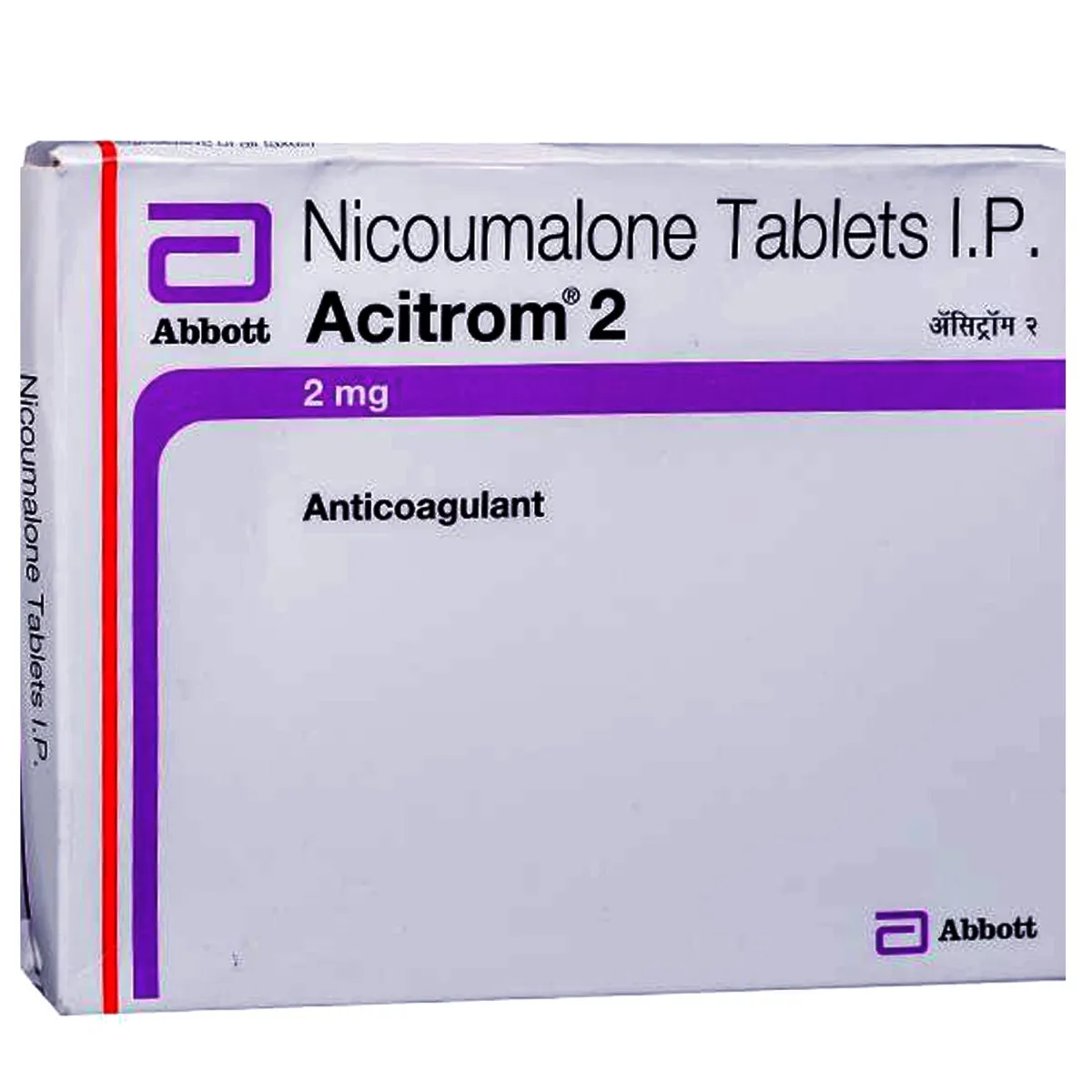
Acitrom 2 Tablet is an oral anticoagulant (blood thinner) manufactured by Abbott, containing Acenocoumarol 2 mg as its active ingredient. It is commonly prescribed to prevent and treat harmful blood clots in conditions like deep vein thrombosis (DVT), pulmonary embolism (PE), and stroke prevention in patients with atrial fibrillation, artificial heart valves, or clotting disorders.
How it works:
Acenocoumarol belongs to the class of Vitamin K antagonists (VKA). It works by blocking Vitamin K activity, which is essential for producing clotting factors in the liver. By reducing clotting proteins, Acitrom 2 Tablet keeps blood thinner, thereby reducing the risk of clot formation in veins, lungs, brain, or heart.
Uses:
-
Prevention & treatment of deep vein thrombosis (DVT)
-
Prevention of pulmonary embolism (PE)
-
Stroke prevention in patients with atrial fibrillation
-
Prevention of clot-related complications in mechanical heart valve patients
Benefits:
-
Prevents recurrence of dangerous clots
-
Improves blood flow and reduces leg pain/swelling in DVT
-
Lowers risk of pulmonary embolism and stroke
-
Supports long-term vascular health with proper monitoring
How to take:
-
Take the tablet at the same time every day with or without food.
-
Swallow whole with water; do not crush or chew.
-
Do not stop suddenly without medical advice.
-
Regular INR blood tests are essential to monitor effectiveness and avoid complications.
Common side effect:
-
The main risk is bleeding (unusual bruising, gum bleeding, blood in stool/urine, nosebleeds).
-
Inform your doctor immediately if you experience vomiting blood, pinpoint rashes, or black stools.
Safety precautions:
-
Alcohol: Unsafe – increases risk of bleeding.
-
Pregnancy: Unsafe – can harm the unborn baby.
-
Breastfeeding: Considered safe if prescribed.
-
Kidney/Liver disease: Use with caution; dose adjustment may be required.
-
Surgery/Dental procedures: Inform your doctor in advance, as Acitrom may need to be paused temporarily.
Missed dose:
If you forget a dose, take it as soon as possible. If it’s nearly time for the next dose, skip the missed one and continue as scheduled. Do not double the dose.
In conclusion, Acitrom 2 Tablet is a vital medicine for managing and preventing blood clots, helping to protect against life-threatening events like pulmonary embolism and stroke. With strict adherence, regular INR monitoring, and medical supervision, it ensures effective and safe long-term treatment.

Acitrom 3 Tablet is an oral anticoagulant (blood thinner) manufactured by Abbott, containing Acenocoumarol 3 mg as the active ingredient. It is prescribed to prevent and treat blood clots in conditions such as deep vein thrombosis (DVT), pulmonary embolism (PE), and for stroke prevention in patients with atrial fibrillation, artificial heart valves, or clotting disorders.
How it works:
Acitrom 3 belongs to the class of Vitamin K antagonists (VKA). It works by blocking Vitamin K activity, which is essential for producing clotting proteins in the liver. This reduction in clotting proteins helps thin the blood, preventing harmful clots in veins, lungs, brain, or heart.
Uses:
-
Treatment & prevention of deep vein thrombosis (DVT)
-
Prevention of pulmonary embolism (PE)
-
Stroke prevention in atrial fibrillation patients
-
Preventing clot-related risks in patients with mechanical heart valves
Benefits:
-
Prevents recurrence of life-threatening blood clots
-
Reduces leg pain, swelling, and discomfort caused by DVT
-
Lowers risk of pulmonary embolism and stroke
-
Improves long-term vascular health with regular monitoring
How to take:
-
Take exactly as prescribed by your doctor.
-
Can be taken with or without food, preferably at the same time every day.
-
Swallow whole; do not crush or chew.
-
Do not stop suddenly without consulting your doctor.
-
INR blood monitoring is necessary to ensure safe and effective dosing.
Common side effect:
-
The most common risk is bleeding (unusual bruising, gum/nose bleeding, blood in urine/stool, vomiting blood).
-
Seek medical attention if you notice pinpoint rashes, black stools, or prolonged bleeding.
Safety precautions:
-
Alcohol: Unsafe – increases risk of bleeding.
-
Pregnancy: Unsafe – can cause harm to the baby.
-
Breastfeeding: Safe if prescribed – passes into breast milk in insignificant amounts.
-
Kidney disease: Use with caution; dose adjustment may be needed.
-
Liver disease: Use with caution; not recommended in severe cases.
-
Before surgery/dental work: Inform your doctor; you may need to pause Acitrom temporarily.
Missed dose:
If you forget a dose, take it as soon as possible. If it is nearly time for the next dose, skip the missed dose and resume your regular schedule. Do not take a double dose.
✅ Overall, Acitrom 3 Tablet is a critical medicine for clot prevention and long-term management of vascular health. With proper medical supervision and regular INR monitoring, it helps protect against serious complications like pulmonary embolism and stroke.
Acitrom 4 Tablet is an oral anticoagulant (blood thinner) manufactured by Abbott, containing Acenocoumarol 4 mg as the active ingredient. It is prescribed to prevent and treat harmful blood clots in conditions such as deep vein thrombosis (DVT), pulmonary embolism (PE), stroke prevention, and in patients with artificial heart valves or atrial fibrillation.
How it works:
Acitrom 4 belongs to the class of Vitamin K antagonists (VKA). It blocks the action of Vitamin K, which is essential for producing clotting proteins in the liver. By lowering these proteins, Acitrom 4 thins the blood, thereby reducing the risk of dangerous clots in the legs, lungs, brain, or heart.
Uses:
-
Treatment and prevention of deep vein thrombosis (DVT)
-
Prevention of pulmonary embolism (PE)
-
Stroke prevention in atrial fibrillation patients
-
Prevention of clotting in patients with mechanical heart valves
Benefits:
-
Prevents recurrence of life-threatening blood clots
-
Improves blood flow and reduces leg pain/swelling caused by DVT
-
Lowers the risk of pulmonary embolism and ischemic stroke
-
Supports long-term vascular health with regular INR monitoring
How to take:
-
Take only as prescribed by your doctor.
-
Can be taken with or without food, but ideally at the same time daily.
-
Swallow whole; do not chew, crush, or break.
-
Do not stop abruptly without medical advice.
-
Regular INR (blood clotting time) monitoring is essential.
Common side effect:
-
The primary risk is bleeding (unusual bruising, gum/nose bleeding, blood in urine/stool, vomiting blood).
-
Report immediately if you notice pinpoint rash, black stools, or prolonged bleeding.
Safety precautions:
-
Alcohol: Unsafe – may increase bleeding risk.
-
Pregnancy: Unsafe – can cause harm to the developing baby.
-
Breastfeeding: Safe if prescribed – drug passes into breast milk in insignificant amounts.
-
Kidney disease: Use with caution; dose adjustment may be required. Not recommended in severe kidney disease.
-
Liver disease: Use with caution; avoid in severe liver disease.
-
Before surgery/dental work: Inform your doctor; you may need to stop temporarily.
Missed dose:
If a dose is missed, take it as soon as you remember. If it’s nearly time for the next dose, skip the missed one and continue your regular schedule. Do not double the dose.
✅ In summary, Acitrom 4 Tablet is a higher-strength oral anticoagulant used in patients who require stronger clot prevention. With strict medical supervision and regular INR monitoring, it plays a key role in preventing complications like pulmonary embolism, recurrent DVT, and stroke.