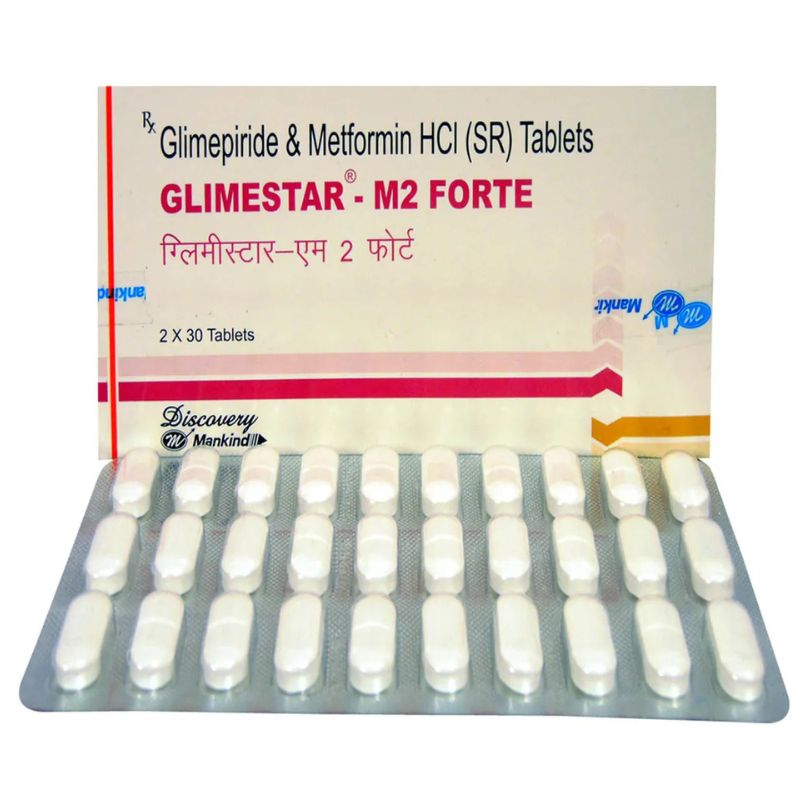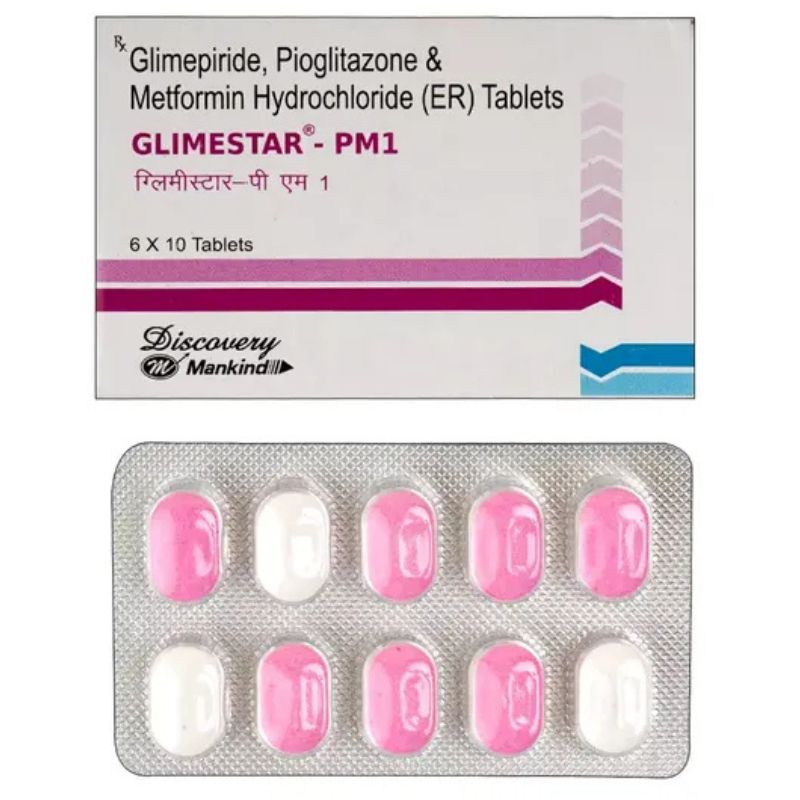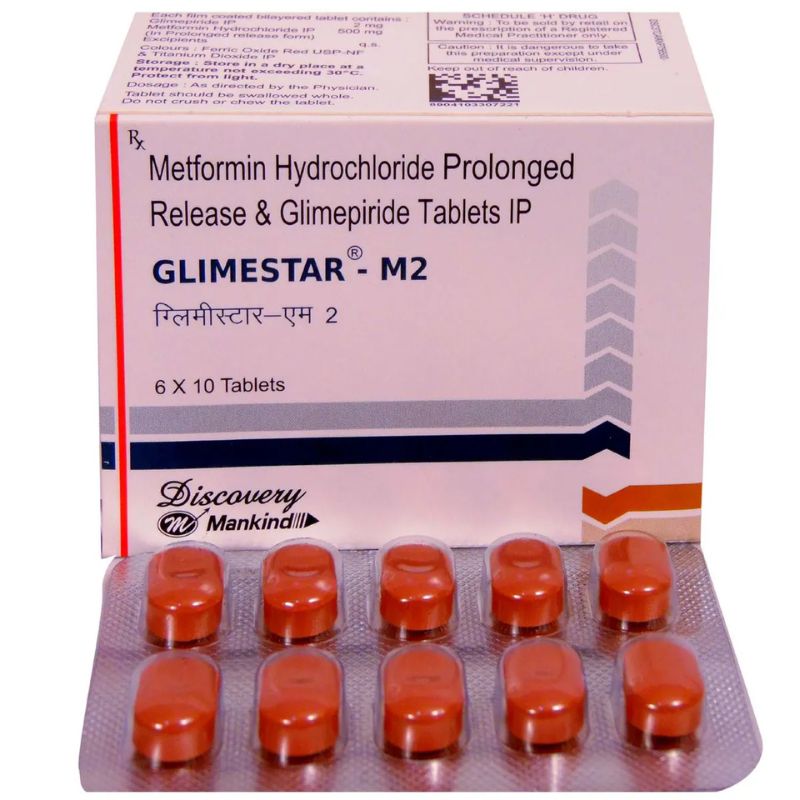
Glimestar-M 2 Tablet PR is a combination medicine used to treat type 2 diabetes mellitus. It contains Glimepiride, which helps the pancreas release more insulin, and Metformin, which lowers glucose production in the liver and improves insulin sensitivity. The prolonged-release (PR) form allows the medicine to act steadily, ensuring long-lasting control of blood sugar levels throughout the day.
Uses:
-
Type 2 diabetes mellitus
-
Helps control high blood sugar levels
-
Prevents long-term diabetes complications like kidney damage, nerve issues, and heart disease
Dosage:
Take the dose as advised by your doctor, usually once daily with a meal, preferably breakfast. The dose depends on your blood sugar levels and response to therapy.
How to Use:
-
Take with or immediately after food to reduce stomach irritation.
-
Swallow the tablet whole with water; do not crush or chew.
-
Follow a balanced diet and exercise plan for effective blood sugar control.
Precautions:
-
Take under medical supervision only.
-
Inform your doctor if you have liver, kidney, or heart conditions.
-
Avoid alcohol, as it can increase the risk of low blood sugar or lactic acidosis.
-
Regularly monitor blood sugar levels.
-
Do not skip meals to avoid hypoglycemia.
Side Effects:
-
Low blood sugar (hypoglycemia)
-
Nausea, vomiting, or diarrhea
-
Stomach pain or discomfort
-
Dizziness or headache
-
Metallic taste
-
Mild weight gain
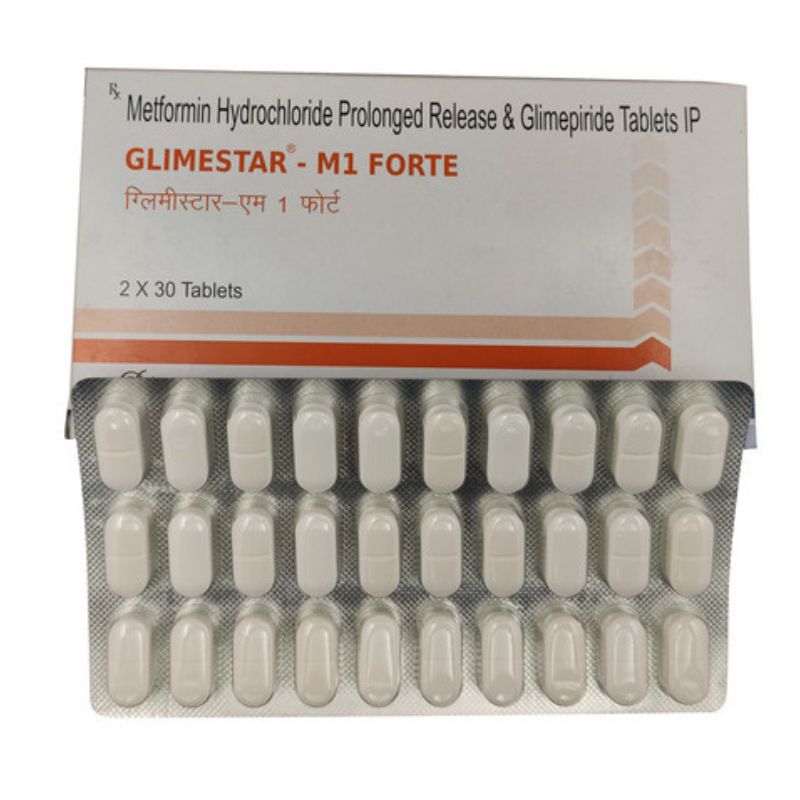
Glimestar-M1 Forte Tablet PR is a combination antidiabetic medicine used to manage type 2 diabetes mellitus. It contains Glimepiride, which increases insulin secretion from the pancreas, and Metformin, which decreases glucose production in the liver and enhances insulin sensitivity. The prolonged-release (PR) formulation ensures a slow and steady release of medicine, providing long-lasting blood sugar control throughout the day.
Uses:
-
Type 2 diabetes mellitus
-
Helps control high blood sugar levels
-
Prevents complications such as nerve damage, kidney issues, and heart problems
Dosage:
Take the dose as directed by your doctor, usually once daily with a meal, preferably breakfast. Dosage depends on blood sugar levels and medical condition.
How to Use:
-
Take the tablet with or immediately after food to avoid stomach upset.
-
Swallow whole with water; do not crush or chew.
-
Continue regular diet, exercise, and blood sugar monitoring as advised.
Precautions:
-
Use under medical supervision only.
-
Inform your doctor if you have kidney, liver, or heart problems.
-
Avoid alcohol consumption, as it may increase the risk of lactic acidosis or hypoglycemia.
-
Do not skip meals after taking the tablet.
-
Monitor blood sugar levels regularly.
Side Effects:
-
Low blood sugar (hypoglycemia)
-
Nausea, vomiting, or diarrhea
-
Stomach pain or discomfort
-
Headache or dizziness
-
Metallic taste
-
Mild weight gain or fatigue
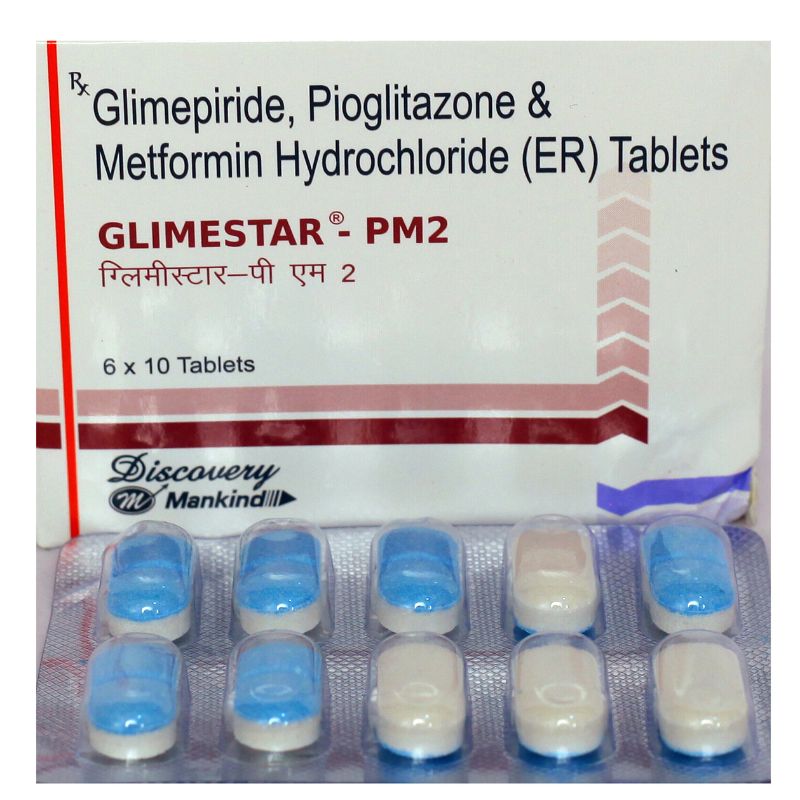
Glimestar-PM2 Tablet ER is a combination antidiabetic medicine for managing type 2 diabetes mellitus. It contains:
-
Glimepiride (2mg): Stimulates insulin release from the pancreas.
-
Metformin (500mg): Reduces glucose production in the liver and improves insulin sensitivity.
-
Pioglitazone (15mg): Enhances the body’s response to insulin, helping to lower blood sugar.
The ER (Extended Release) formulation ensures steady and long-lasting blood sugar control.
Uses:
-
Type 2 diabetes mellitus
-
Maintains stable blood sugar levels throughout the day
-
Reduces the risk of diabetes-related complications like nerve, kidney, and heart problems
Dosage:
Take the dose as prescribed by your doctor, usually once daily with a meal. Dosage may vary based on blood sugar levels and overall health.
How to Use:
-
Take with or immediately after food to minimize stomach upset.
-
Swallow the tablet whole; do not crush or chew.
-
Continue with a balanced diet and exercise plan as recommended by your doctor.
Precautions:
-
Use only under medical supervision.
-
Inform your doctor if you have liver, kidney, or heart conditions.
-
Avoid alcohol, as it may increase the risk of hypoglycemia or fluid retention.
-
Monitor blood sugar levels regularly.
-
Watch for signs of low blood sugar such as shakiness, sweating, or dizziness.
Side Effects:
-
Low blood sugar (hypoglycemia)
-
Nausea, vomiting, or diarrhea
-
Stomach discomfort
-
Headache or dizziness
-
Weight gain or fluid retention (due to Pioglitazone)
-
Rarely, allergic reactions or liver function changes

Uses:
Glimiprex 1 Tablet is used for:
-
Managing type 2 diabetes mellitus in adults
-
Helps control blood sugar levels when diet and exercise alone are not sufficient
-
Can be used alone or in combination with other antidiabetic medications
How It Works:
-
Glimepiride (1mg): A sulfonylurea that:
-
Helps reduce high blood sugar levels, minimizing risks of diabetes-related complications like kidney, eye, and nerve damage
Dosage & Administration:
-
Usually taken once daily, preferably before breakfast
-
Swallow the tablet whole with water
-
Dosage may vary depending on blood sugar levels and doctor’s advice
Side Effects:
Common:
Rare:
-
Allergic reactions (rash, itching, swelling)
-
Liver or kidney dysfunction
-
Severe hypoglycemia (symptoms: sweating, confusion, rapid heartbeat)
Precautions & Warnings:
-
Monitor blood sugar regularly
-
Use with caution in patients with kidney, liver, or heart problems
-
Avoid alcohol, which may increase risk of hypoglycemia
-
Inform your doctor about other medications you are taking
-
Do not skip meals after taking the tablet to prevent low blood sugar
Storage:
-
Store in a cool, dry place, away from sunlight and moisture
-
Keep out of reach of children
Uses:
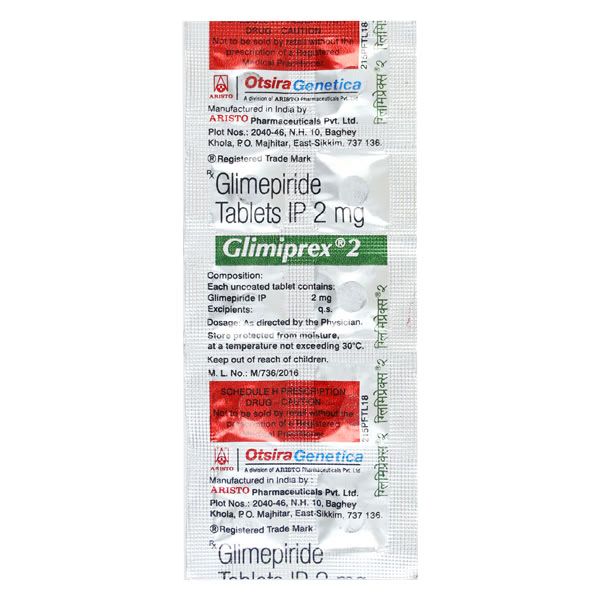
Glimiprex 2 Tablet is used for:
-
Managing type 2 diabetes mellitus in adults
-
Controlling high blood sugar levels when diet and exercise alone are insufficient
-
Can be used alone or in combination with other antidiabetic medications to achieve better glycemic control
-
Reduces the risk of diabetes-related complications like neuropathy, kidney disease, and eye damage
How It Works:
Dosage & Administration:
-
Usually taken once daily, preferably before breakfast
-
Swallow the tablet whole with water
-
Dose may be adjusted depending on blood sugar levels and medical guidance
Side Effects:
Common:
Rare:
-
Allergic reactions (rash, itching, swelling)
-
Severe hypoglycemia (sweating, confusion, rapid heartbeat)
-
Liver or kidney dysfunction
Precautions & Warnings:
-
Regularly monitor blood sugar levels
-
Use with caution in patients with kidney, liver, or heart conditions
-
Avoid alcohol, as it may increase the risk of hypoglycemia
-
Inform your doctor about all other medications being taken
-
Do not skip meals after taking the tablet to prevent low blood sugar
Storage:
-
Store in a cool, dry place, away from direct sunlight and moisture
-
Keep out of reach of children
Uses:
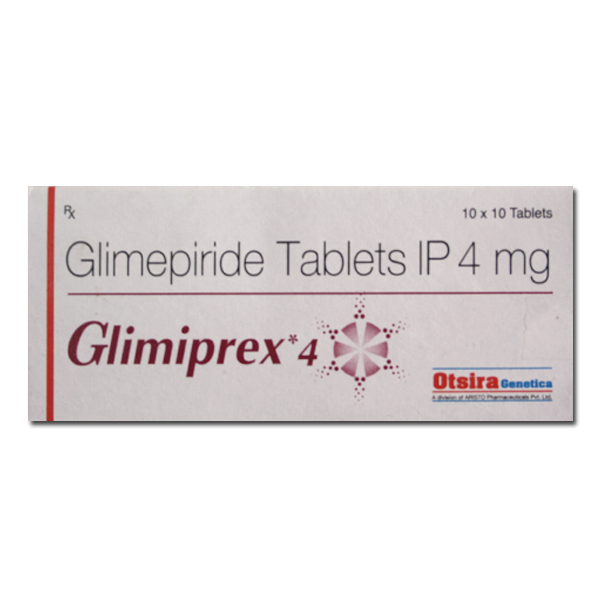
Glimiprex 4 Tablet is used for:
-
Managing type 2 diabetes mellitus in adults
-
Controlling elevated blood sugar levels when diet and exercise alone are insufficient
-
Can be used alone or in combination with other antidiabetic medications to improve glycemic control
-
Helps reduce the risk of diabetes-related complications such as neuropathy, kidney disease, and eye damage
How It Works:
Dosage & Administration:
-
Usually taken once daily, preferably before breakfast
-
Swallow the tablet whole with water
-
Dose may be adjusted depending on blood sugar levels and medical guidance
Side Effects:
Common:
Rare:
-
Allergic reactions (rash, itching, swelling)
-
Severe hypoglycemia (sweating, confusion, rapid heartbeat)
-
Liver or kidney dysfunction
Precautions & Warnings:
-
Regularly monitor blood sugar levels
-
Use with caution in patients with kidney, liver, or heart conditions
-
Avoid alcohol, as it may increase the risk of hypoglycemia
-
Inform your doctor about all other medications being taken
-
Do not skip meals after taking the tablet to prevent low blood sugar
Storage:
-
Store in a cool, dry place, away from direct sunlight and moisture
-
Keep out of reach of children
Uses:
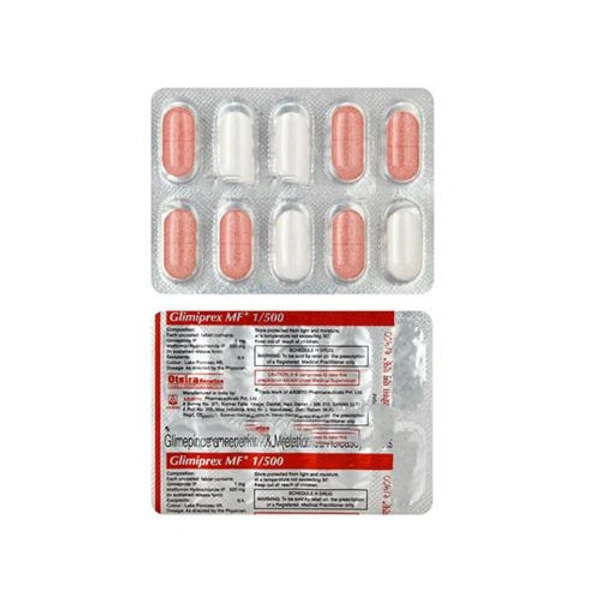
Glimiprex MF 1/500 Tablet PR is used to manage type 2 diabetes mellitus. It helps control high blood sugar by combining Glimepiride, which stimulates insulin release from the pancreas, and Metformin, which reduces glucose production in the liver and improves insulin sensitivity.
Dosage:
-
Take 1 tablet orally daily or as prescribed by your doctor.
-
Usually taken with meals to reduce stomach upset.
-
Dosage may vary depending on blood sugar levels and patient condition.
Precautions:
-
Not suitable for type 1 diabetes or severe kidney/liver issues.
-
Inform your doctor about other medications or health conditions.
-
Avoid excessive alcohol consumption.
-
Maintain a proper diet and exercise routine.
Side Effects:
-
Hypoglycemia (low blood sugar)
-
Nausea, vomiting, diarrhea, or stomach upset
-
Rarely, lactic acidosis (serious condition – seek medical help immediately)
-
Skin reactions or allergic responses in some patients
Uses:
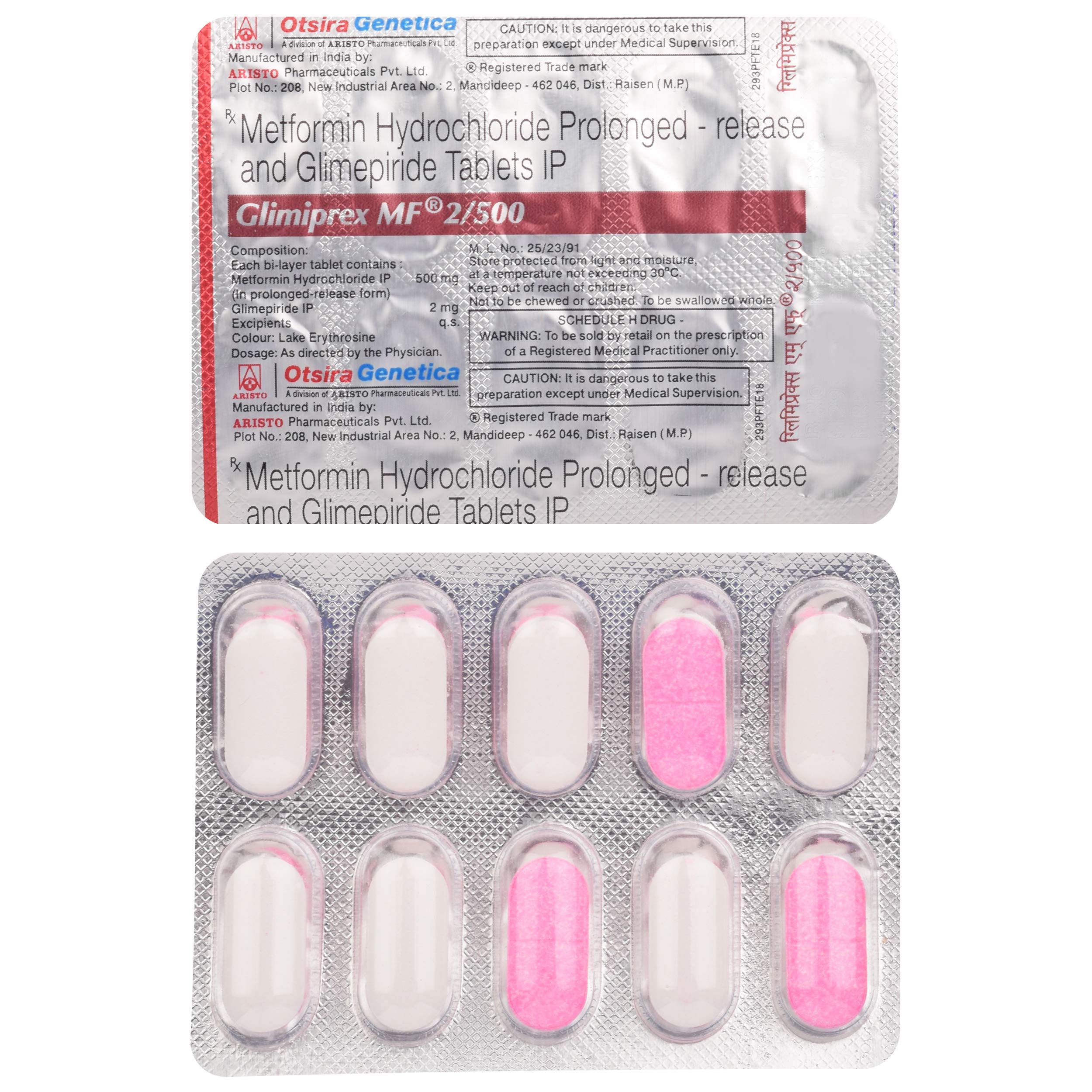
Glimiprex MF 2/500 Tablet PR is used to manage type 2 diabetes mellitus. It helps control blood sugar by combining Glimepiride, which stimulates insulin release from the pancreas, and Metformin, which reduces glucose production in the liver and improves insulin sensitivity.
Dosage:
-
Take 1 tablet orally daily or as prescribed by your doctor.
-
Usually taken with meals to reduce stomach upset.
-
Dosage may vary depending on blood sugar levels and patient condition.
Precautions:
-
Not suitable for type 1 diabetes or severe kidney/liver issues.
-
Inform your doctor about other medications or health conditions.
-
Avoid excessive alcohol consumption.
-
Maintain a proper diet and exercise routine.
Side Effects:
-
Hypoglycemia (low blood sugar)
-
Nausea, vomiting, diarrhea, or stomach upset
-
Rarely, lactic acidosis (serious condition – seek medical help immediately)
-
Skin reactions or allergic responses in some patients

Glimiprex MF Forte 1 Tablet PR is a combination antidiabetic medicine that contains Glimepiride (1 mg) and Metformin (1000 mg) in a prolonged-release (PR) formulation. It is prescribed for the management of type 2 diabetes mellitus (T2DM) when diet, exercise, and single-drug therapy are not sufficient to control blood sugar levels. The dual mechanism helps in improving insulin response and lowering glucose production in the liver, providing better long-term glycemic control.
Uses / Indications
-
Management of type 2 diabetes mellitus
-
Helps control blood glucose levels in patients not adequately managed with Metformin or Glimepiride alone
-
Reduces risk of diabetes-related complications such as kidney damage, nerve problems, eye damage, and heart disease
How It Works (Mechanism of Action)
-
Glimepiride (1 mg): A sulfonylurea that stimulates the pancreas to release more insulin.
-
Metformin (1000 mg): A biguanide that reduces glucose production in the liver, decreases intestinal absorption of glucose, and improves the body’s sensitivity to insulin.
-
The prolonged-release (PR) form ensures gradual release, maintaining stable blood sugar control with fewer gastrointestinal side effects.
Dosage & Administration
-
Usually taken once daily with food to reduce stomach upset.
-
The exact dose and timing depend on blood sugar levels, response, and doctor’s advice.
-
Regular monitoring of blood glucose and HbA1c is recommended.
-
Do not skip or double doses; consistency is key in diabetes management.
Side Effects
Common:
-
Nausea, vomiting, diarrhea
-
Abdominal discomfort, bloating
-
Headache, dizziness
-
Hypoglycemia (low blood sugar) – sweating, tremors, hunger, palpitations
Less common but possible:
Serious (rare):
-
Lactic acidosis (very rare but serious, linked to Metformin; symptoms include muscle pain, tiredness, difficulty breathing)
-
Severe allergic reaction
-
Liver or kidney dysfunction
Precautions & Warnings
-
Not recommended in type 1 diabetes or diabetic ketoacidosis.
-
Use with caution in patients with kidney, liver, or heart disease.
-
Alcohol intake should be limited, as it increases the risk of hypoglycemia and lactic acidosis.
-
Pregnant or breastfeeding women should consult their doctor before use.
-
Regular blood sugar monitoring is essential to avoid both hyperglycemia and hypoglycemia.
Summary
Glimiprex MF Forte 1 Tablet PR combines Glimepiride (1 mg) and Metformin (1000 mg) to provide dual action in controlling type 2 diabetes mellitus. It helps lower blood sugar effectively, reducing the risk of diabetes complications, but requires careful monitoring to prevent hypoglycemia and gastrointestinal side effects.
Uses:
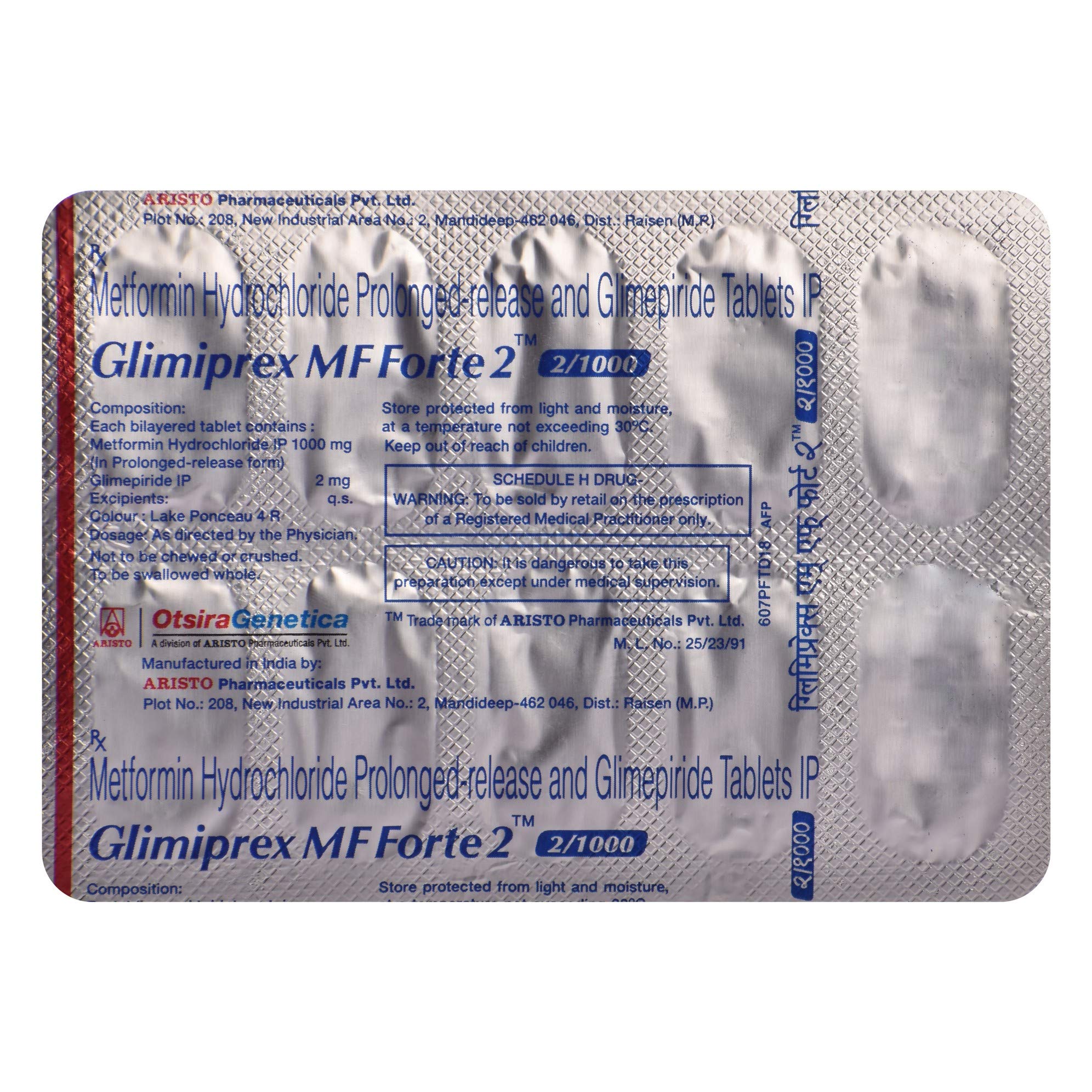
Glimiprex MF Forte 2 Tablet PR is used for:
-
Managing type 2 diabetes mellitus in adults
-
Controlling high blood sugar levels when diet and exercise alone are insufficient
-
Provides dual-action blood sugar control by combining two effective antidiabetic agents
-
Reduces the risk of diabetes-related complications like neuropathy, kidney disease, and eye damage
How It Works:
-
Glimepiride (2mg): Stimulates the pancreas to release insulin, helping lower blood glucose levels
-
Metformin (1000mg): Improves insulin sensitivity and reduces glucose production by the liver
-
The combination provides better glycemic control than either drug alone, addressing both insulin deficiency and resistance
Dosage & Administration:
-
Usually taken once or twice daily, depending on doctor’s guidance
-
Swallow the tablet whole with water, preferably with meals to reduce gastrointestinal side effects
-
Do not crush or chew the prolonged-release (PR) tablet
Side Effects:
Common:
Rare:
-
Allergic reactions (rash, itching, swelling)
-
Severe hypoglycemia (sweating, confusion, rapid heartbeat)
-
Liver or kidney dysfunction
Precautions & Warnings:
-
Regularly monitor blood sugar levels
-
Use with caution in patients with kidney, liver, or heart conditions
-
Avoid alcohol, which may increase the risk of hypoglycemia or lactic acidosis
-
Inform your doctor about all other medications being taken
-
Do not skip meals after taking the tablet to prevent low blood sugar
Storage:
-
Store in a cool, dry place, away from direct sunlight and moisture
-
Keep out of reach of children