GLINIL Tablet is an oral antidiabetic medicine manufactured by Cipla Ltd, containing Glibenclamide (5mg) as its active ingredient. It belongs to the sulfonylurea class of medicines and is prescribed for the management of type 2 diabetes mellitus.
How it works:
Glibenclamide lowers blood glucose levels by stimulating the pancreas to release more insulin. The increased insulin secretion helps the body utilize glucose more effectively, thereby reducing high blood sugar.
Key Benefits:
-
Effective in lowering blood sugar in type 2 diabetes.
-
Helps reduce the risk of diabetes-related complications such as kidney damage, nerve problems, and vision impairment.
-
Can be prescribed alone or in combination with other antidiabetic medicines.
Usage & Dosage:
-
Taken orally, usually once or twice daily before meals.
-
Dosage is individualized by the doctor based on the patient’s blood sugar levels and response.
-
Regular use with proper diet and exercise ensures better diabetes control.
Safety Advice:
-
Not suitable for type 1 diabetes or diabetic ketoacidosis.
-
May cause hypoglycemia if meals are missed, after excessive exercise, or with alcohol consumption.
-
Caution required in patients with kidney, liver, or heart conditions.
-
Blood sugar levels should be monitored regularly during treatment.
Possible Side Effects:
-
Low blood sugar (shakiness, sweating, hunger, palpitations)
-
Headache, dizziness
-
Nausea, stomach upset
-
Weight gain in some patients
-
Rarely, skin rash or allergic reaction
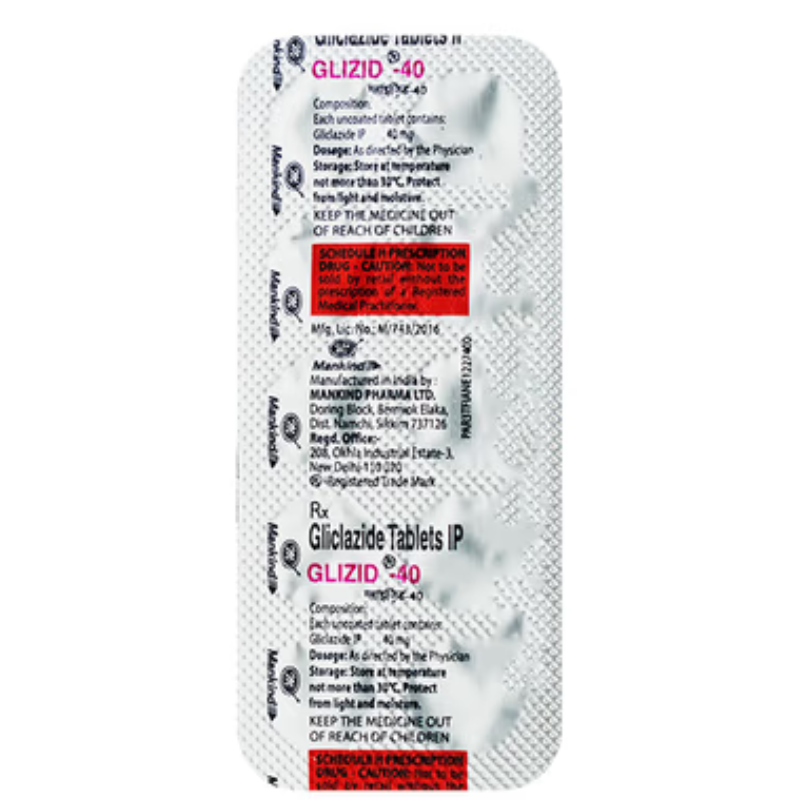
Glizid 40 Tablet contains Gliclazide 40 mg, an oral antidiabetic medicine belonging to the class of sulfonylureas. It helps control blood sugar levels by stimulating the pancreas to release insulin and improving the body’s response to insulin.
Uses
Dosage
-
Dosage should be taken as prescribed by the doctor
-
Dose depends on blood glucose levels and patient response
-
Usually taken once or twice daily
How to Use
-
Take the tablet orally with water
-
Preferably take it with or just before meals
-
Swallow whole; do not crush or chew
-
Follow diet and exercise advice given by your doctor
Precautions
-
Not recommended for Type 1 diabetes or diabetic ketoacidosis
-
Inform your doctor if you have kidney or liver disease
-
Avoid skipping meals to prevent low blood sugar
-
Use with caution in elderly patients
-
Avoid excessive alcohol consumption
Side Effects
Common side effects may include:
Consult your doctor if side effects persist or if you experience symptoms of severe hypoglycemia.
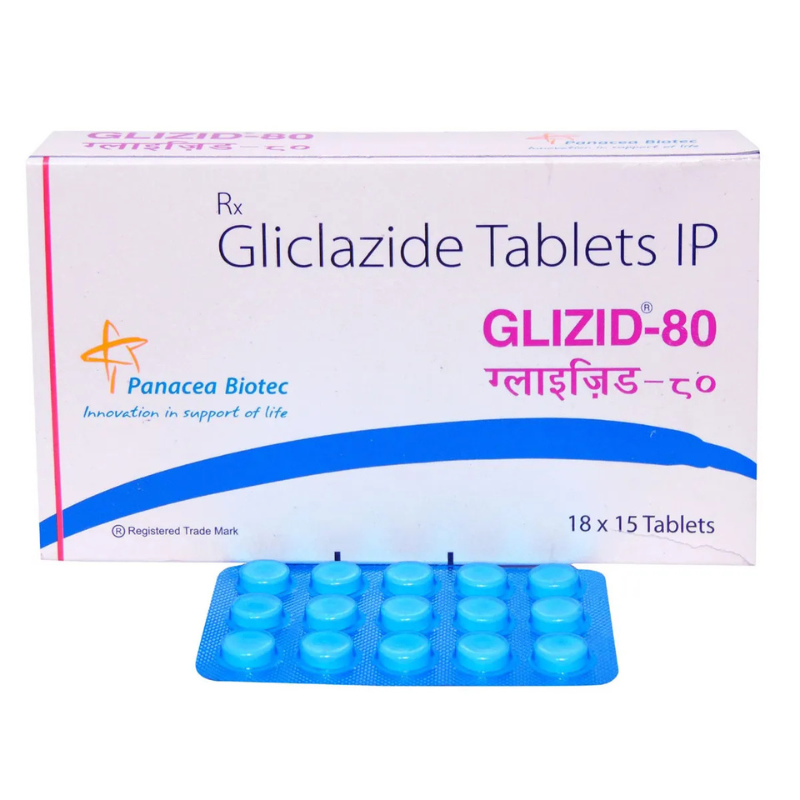
Glizid 80 Tablet contains Gliclazide 80 mg, an oral antidiabetic medicine from the sulfonylurea class. It helps control blood sugar levels in patients with Type 2 diabetes by stimulating insulin release from the pancreas and improving glucose utilization by the body.
Uses
Dosage
-
Dosage should be taken as directed by a doctor
-
Dose depends on blood sugar levels and patient response
-
Usually taken once or twice daily
How to Use
-
Take orally with water
-
Take with or just before meals
-
Swallow the tablet whole; do not crush or chew
-
Follow prescribed diet and exercise plan
Precautions
-
Not suitable for Type 1 diabetes or diabetic ketoacidosis
-
Inform your doctor if you have kidney or liver disease
-
Avoid skipping meals to reduce the risk of hypoglycemia
-
Use with caution in elderly patients
-
Limit alcohol intake
Side Effects
Common side effects may include:
Seek medical advice if side effects persist or if symptoms of severe low blood sugar occur.
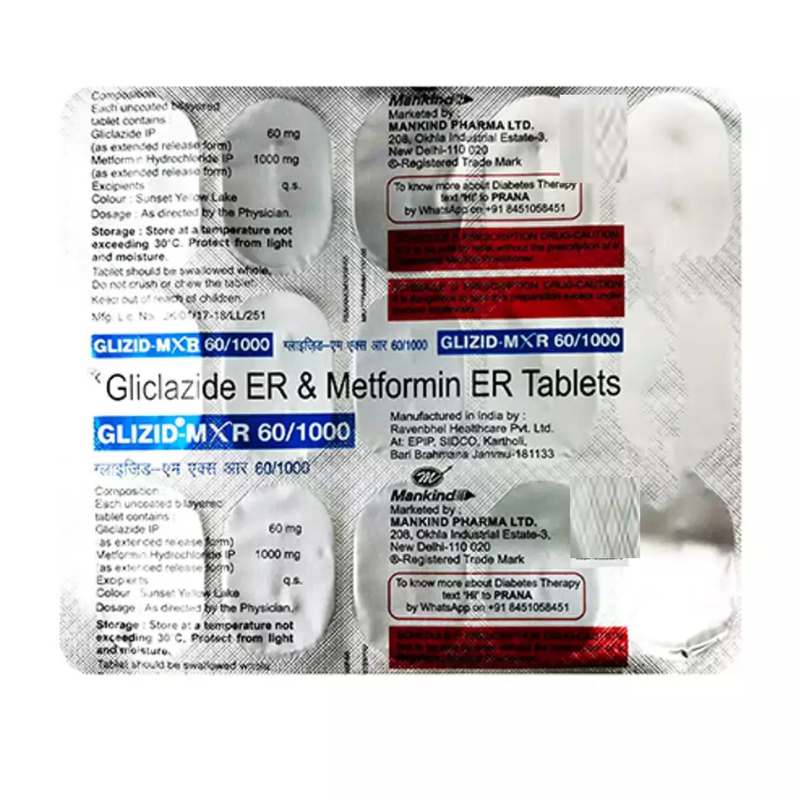
Glizid-M 60 mg / 1000 mg Tablet XR is a combination oral antidiabetic medicine containing Gliclazide 60 mg and Metformin 1000 mg in an extended-release (XR) formulation. It helps manage Type 2 Diabetes Mellitus by providing gradual and stable blood glucose control throughout the day. Gliclazide stimulates insulin secretion, while Metformin improves insulin sensitivity and reduces hepatic glucose production.
Uses
Dosage
-
Take as prescribed by your doctor
-
Usually taken once daily, depending on blood glucose levels and individual response
-
Dose adjustments may be required based on blood sugar monitoring
How to Use
-
Take orally with water
-
Preferably with breakfast to minimize gastrointestinal side effects
-
Swallow the tablet whole; do not crush or chew
-
Follow dietary and exercise recommendations provided by your doctor
Precautions
-
Not suitable for Type 1 diabetes or diabetic ketoacidosis
-
Inform your doctor if you have kidney or liver disease
-
Monitor blood sugar regularly
-
Limit alcohol consumption during treatment
-
Use cautiously during pregnancy or breastfeeding
Side Effects
Common side effects may include:
-
Hypoglycemia (low blood sugar, mainly from Gliclazide)
-
Nausea, vomiting, diarrhea, or stomach discomfort (mainly from Metformin)
-
Headache
-
Bloating or mild abdominal discomfort
-
Weight gain
Seek immediate medical advice if severe hypoglycemia or unusual symptoms occur.
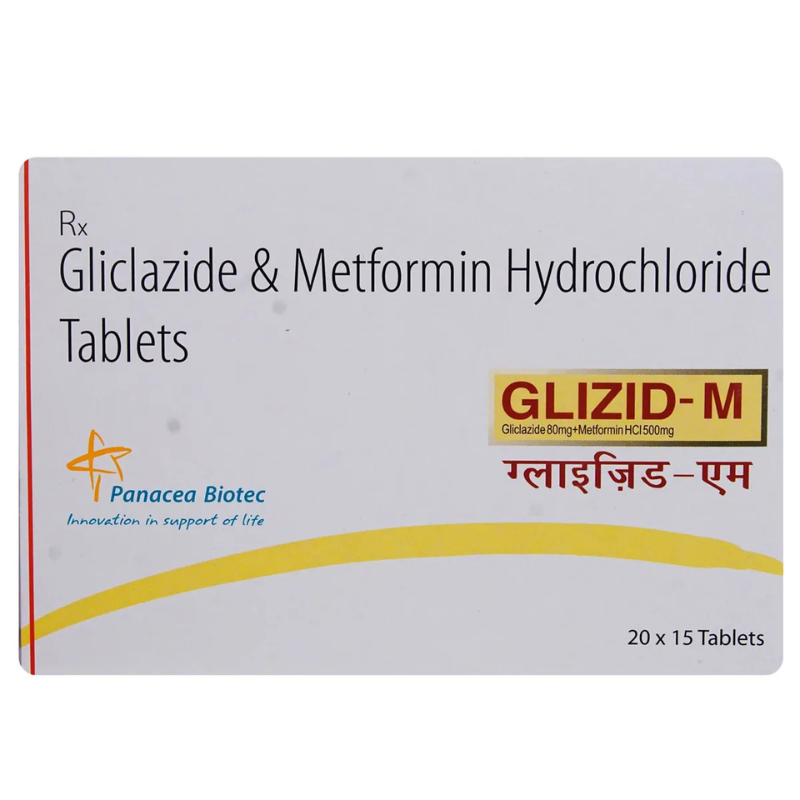
Glizid-M Tablet is a combination oral antidiabetic medicine containing Gliclazide 80 mg and Metformin 500 mg. It is used to manage Type 2 Diabetes Mellitus by both stimulating insulin release (Gliclazide) and improving insulin sensitivity (Metformin), helping control blood sugar levels effectively.
Uses
Dosage
How to Use
-
Take orally with water
-
Preferably with meals to reduce gastrointestinal side effects
-
Swallow whole; do not crush or chew
-
Follow the diet and exercise plan recommended by your doctor
Precautions
-
Not for Type 1 diabetes or diabetic ketoacidosis
-
Inform your doctor if you have kidney or liver problems
-
Monitor blood sugar regularly
-
Avoid excessive alcohol consumption
-
Use caution if pregnant or breastfeeding
Side Effects
Common side effects may include:
-
Hypoglycemia (low blood sugar, mainly from Gliclazide)
-
Nausea, vomiting, or diarrhea (mainly from Metformin)
-
Stomach discomfort or bloating
-
Headache
-
Weight gain
Seek medical attention if severe hypoglycemia occurs or if you experience unusual symptoms.
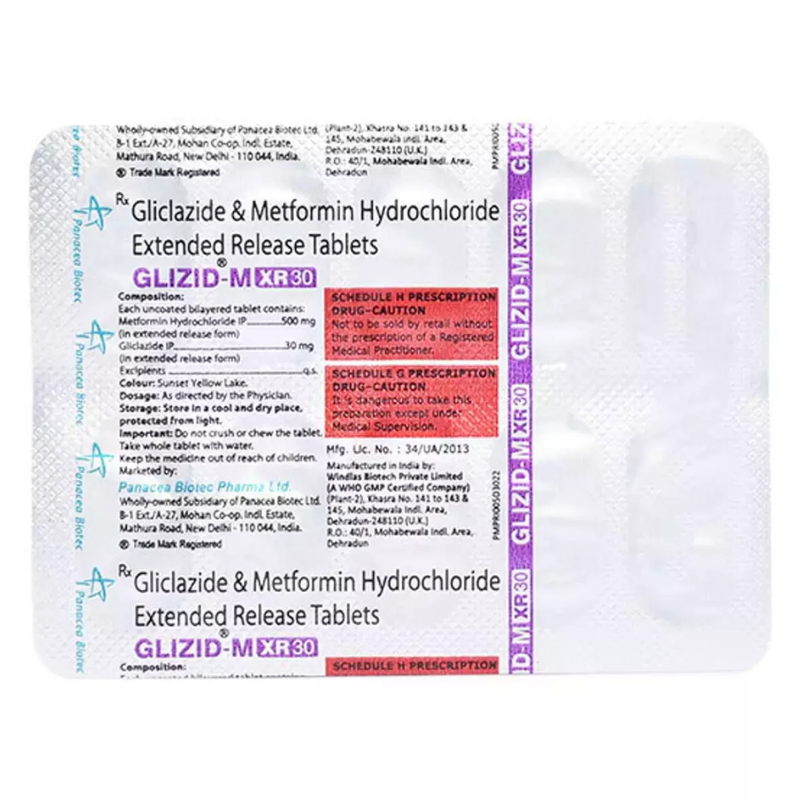
Glizid-M XR 30 Tablet is a combination oral antidiabetic medicine containing Gliclazide 30 mg and Metformin 500 mg in an extended-release (XR) formulation. It helps manage Type 2 Diabetes Mellitus by gradually releasing the active ingredients, providing stable blood glucose control throughout the day. Gliclazide stimulates insulin release, while Metformin improves insulin sensitivity and reduces glucose production in the liver.
Uses
Dosage
-
Take as prescribed by your doctor
-
Usually taken once daily, depending on blood sugar levels and individual response
-
Dose adjustments may be needed based on blood sugar monitoring
How to Use
-
Take orally with water
-
Preferably with breakfast to reduce gastrointestinal side effects
-
Swallow the tablet whole; do not crush or chew
-
Follow dietary and exercise recommendations provided by your doctor
Precautions
-
Not for Type 1 diabetes or diabetic ketoacidosis
-
Inform your doctor if you have kidney or liver problems
-
Monitor blood sugar regularly
-
Avoid excessive alcohol consumption
-
Use with caution during pregnancy or breastfeeding
Side Effects
Common side effects may include:
-
Hypoglycemia (low blood sugar, mainly due to Gliclazide)
-
Nausea, vomiting, diarrhea, or stomach discomfort (mainly due to Metformin)
-
Headache
-
Bloating or mild abdominal discomfort
-
Weight gain
Seek immediate medical advice if severe hypoglycemia occurs or if unusual symptoms appear.
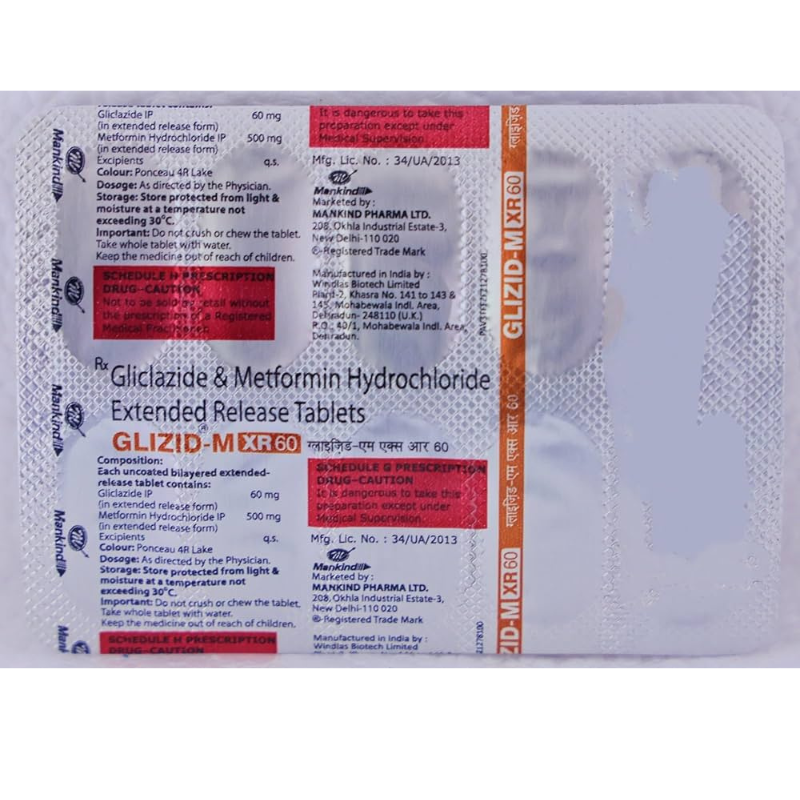
Glizid-M XR 60 Tablet is a combination oral antidiabetic medicine containing Gliclazide 60 mg and Metformin 500 mg in an extended-release (XR) formulation. It is used to manage Type 2 Diabetes Mellitus by providing gradual, stable blood sugar control throughout the day. Gliclazide stimulates insulin secretion, while Metformin improves insulin sensitivity and reduces glucose production in the liver.
Uses
Dosage
-
Take as prescribed by your doctor
-
Usually taken once daily, depending on blood sugar levels and patient response
-
Dose may be adjusted based on blood glucose monitoring
How to Use
-
Take orally with water
-
Preferably with breakfast to minimize gastrointestinal discomfort
-
Swallow the tablet whole; do not crush or chew
-
Follow dietary and exercise guidelines given by your doctor
Precautions
-
Not suitable for Type 1 diabetes or diabetic ketoacidosis
-
Inform your doctor if you have kidney or liver disease
-
Monitor blood glucose regularly
-
Limit alcohol consumption during treatment
-
Use with caution during pregnancy or breastfeeding
Side Effects
Common side effects may include:
-
Hypoglycemia (low blood sugar, mainly due to Gliclazide)
-
Nausea, vomiting, diarrhea, or stomach discomfort (mainly due to Metformin)
-
Headache
-
Bloating or mild abdominal discomfort
-
Weight gain
Seek immediate medical advice if severe hypoglycemia or unusual symptoms occur.
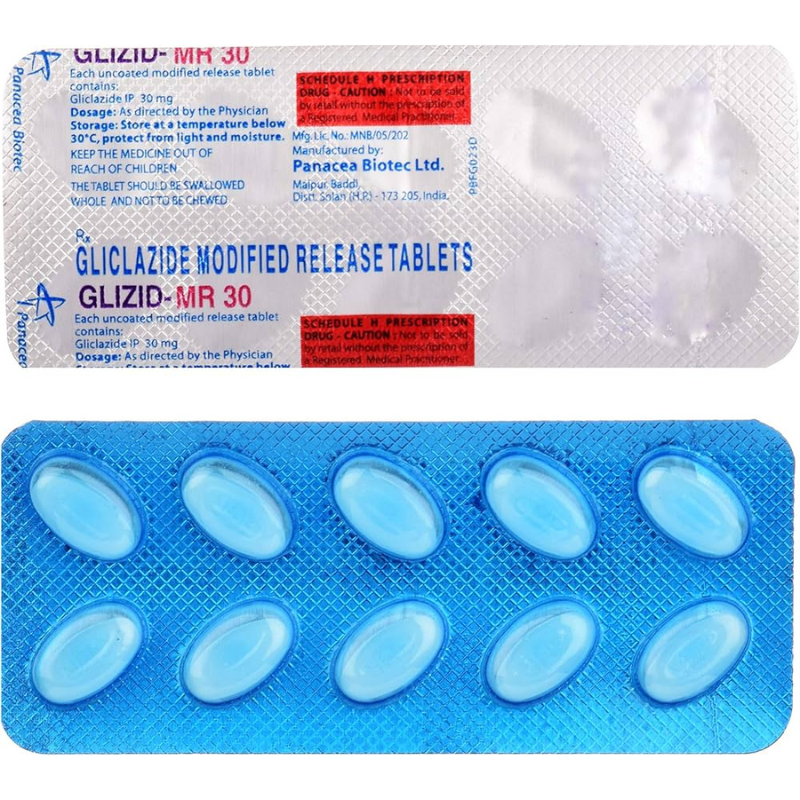
Glizid-MR 30 Tablet contains Gliclazide 30 mg in a modified-release (MR) formulation. It is an oral antidiabetic medicine belonging to the sulfonylurea class, used to control blood sugar levels in patients with Type 2 Diabetes Mellitus. The modified-release formulation allows gradual release of the medicine, providing better blood glucose control throughout the day.
Uses
Dosage
How to Use
-
Take the tablet orally with water
-
Preferably take it with breakfast
-
Swallow whole; do not crush or chew
-
Follow dietary and exercise recommendations given by your doctor
Precautions
-
Not recommended for Type 1 diabetes or diabetic ketoacidosis
-
Inform your doctor if you have kidney or liver disease
-
Avoid skipping meals to prevent hypoglycemia
-
Use with caution in elderly patients
-
Limit alcohol consumption during treatment
Side Effects
Common side effects may include:
Consult your doctor if side effects persist or if symptoms of severe low blood sugar occur.
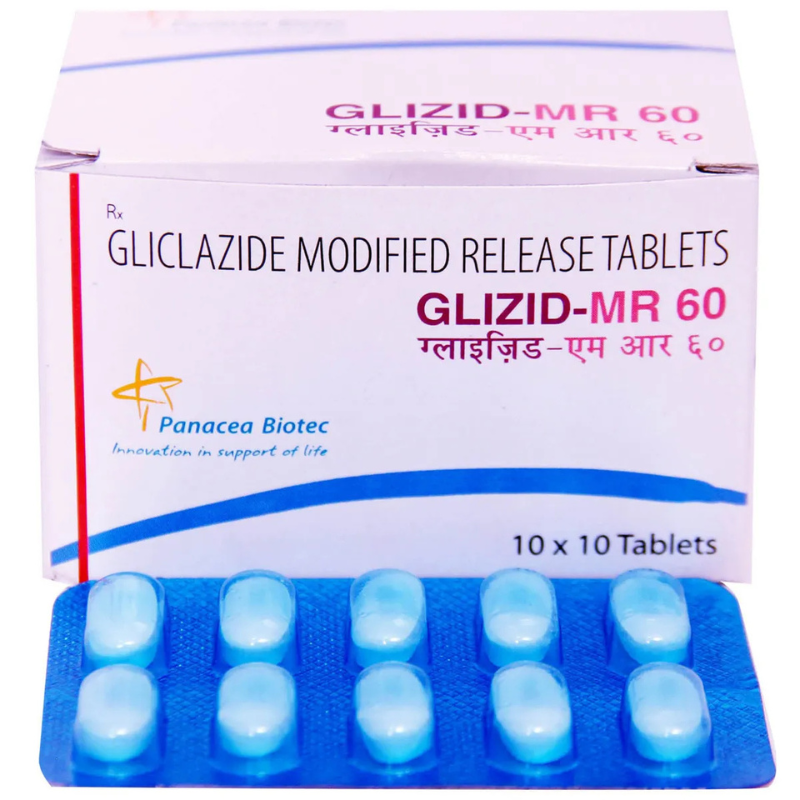
Glizid-MR 60 Tablet contains Gliclazide 60 mg in a modified-release (MR) formulation. It is an oral antidiabetic medicine from the sulfonylurea class, used to manage Type 2 Diabetes Mellitus by gradually releasing the active ingredient, providing stable blood sugar control throughout the day.
Uses
Dosage
How to Use
-
Take orally with water
-
Preferably with breakfast
-
Swallow the tablet whole; do not crush or chew
-
Follow the diet and exercise plan recommended by your doctor
Precautions
-
Not suitable for Type 1 diabetes or diabetic ketoacidosis
-
Inform your doctor if you have kidney or liver issues
-
Avoid skipping meals to reduce risk of hypoglycemia
-
Use cautiously in elderly patients
-
Limit alcohol consumption
Side Effects
Common side effects may include:
Seek immediate medical attention if severe hypoglycemia or unusual symptoms occur.
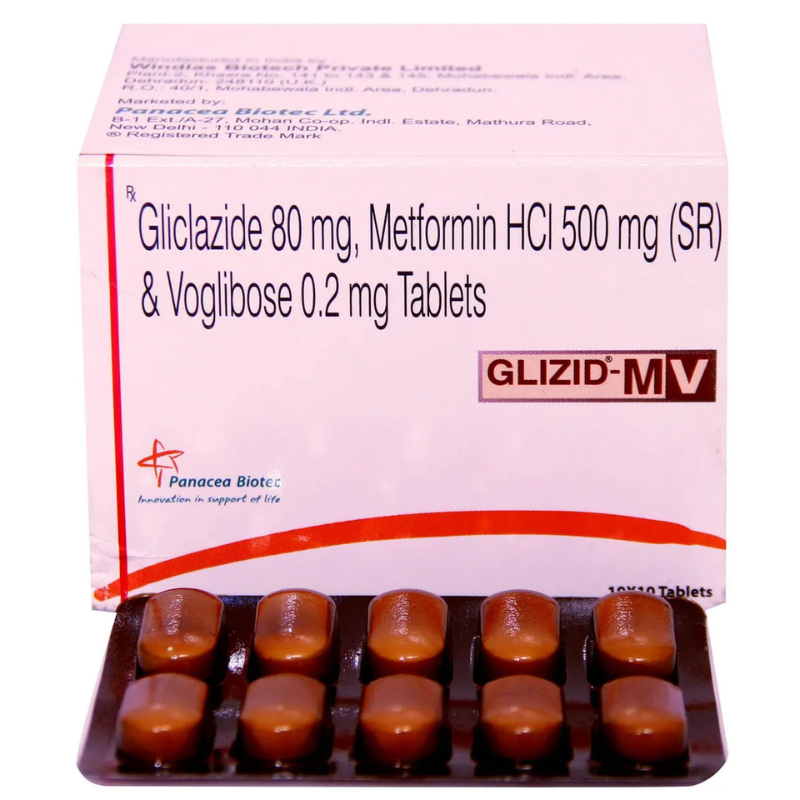
Glizid-MV Tablet SR is a combination oral antidiabetic medicine containing Voglibose 0.2 mg, Metformin 500 mg, and Gliclazide 80 mg in a sustained-release (SR) formulation. It is designed to manage Type 2 Diabetes Mellitus by targeting multiple pathways:
-
Gliclazide stimulates insulin secretion from the pancreas.
-
Metformin improves insulin sensitivity and reduces glucose production in the liver.
-
Voglibose slows carbohydrate absorption in the intestines, preventing post-meal blood sugar spikes.
The SR formulation ensures gradual and steady release of the active ingredients for better blood glucose control.
Uses
-
Management of Type 2 Diabetes Mellitus
-
For patients needing triple-action therapy when diet, exercise, or dual therapy is insufficient
Dosage
-
Take as prescribed by your doctor
-
Usually taken once daily or as advised
-
Dose may be adjusted according to blood sugar monitoring
How to Use
-
Take orally with water
-
Preferably with meals to reduce gastrointestinal side effects
-
Swallow the tablet whole; do not crush or chew
-
Follow diet and exercise plan recommended by your doctor
Precautions
-
Not for Type 1 diabetes or diabetic ketoacidosis
-
Inform your doctor if you have kidney or liver disease
-
Monitor blood glucose regularly
-
Limit alcohol consumption
-
Use with caution during pregnancy or breastfeeding
Side Effects
Common side effects may include:
-
Hypoglycemia (mainly due to Gliclazide)
-
Nausea, vomiting, diarrhea, or abdominal discomfort (mainly due to Metformin and Voglibose)
-
Headache
-
Bloating or mild abdominal discomfort
-
Weight gain
Seek immediate medical attention if severe hypoglycemia or unusual symptoms occur.
Glizone 15mg Tablet contains Pioglitazone which belongs to a group of medicines known as antidiabetic agents It is used to control high blood sugar levels in adults with type 2 diabetes mellitus This medicine works by increasing the body’s sensitivity to insulin helping the cells use glucose more effectively and lowering blood sugar levels Glizone is usually prescribed along with proper diet and regular exercise and may be used alone or in combination with other antidiabetic medicines to achieve better blood sugar control It helps prevent complications of diabetes such as kidney damage nerve problems and blindness when taken regularly as advised by the doctor
Uses
Glizone 15mg Tablet is used for the management of type 2 diabetes mellitus It helps in controlling blood glucose levels when diet and exercise alone are not enough The main purpose of this medicine is to improve insulin sensitivity in the body and help maintain stable blood sugar throughout the day It also reduces the risk of diabetes related complications in long term treatment
How to Use
Glizone 15mg Tablet should be taken exactly as prescribed by the doctor It can be taken with or without food at the same time each day for best results Swallow the tablet whole with a glass of water and do not crush or chew it The dose may vary depending on the patient’s response to treatment and blood sugar levels It is important to follow a healthy diet plan exercise regularly and monitor blood sugar as recommended by the healthcare provider
Precautions
Before taking Glizone 15mg Tablet inform your doctor if you have any heart liver or kidney problems or if you have a history of bladder cancer This medicine should not be used in patients with severe heart failure Pregnant or breastfeeding women should consult their doctor before use Regular monitoring of blood sugar and liver function is advised during treatment Avoid alcohol as it may increase the risk of low blood sugar and other side effects Always take this medicine under the supervision of a healthcare professional
Side Effects
Some people may experience mild side effects such as weight gain swelling in the feet or ankles headache or muscle pain In rare cases it may cause vision changes or liver function abnormalities Serious side effects are uncommon but if you notice unusual tiredness dark urine or shortness of breath you should seek medical advice immediately
Regulatory Information
Glizone 15mg Tablet is manufactured by Zydus Cadila under strict quality standards to ensure safety and effectiveness It is available only with a doctor’s prescription to ensure proper medical supervision and safe use
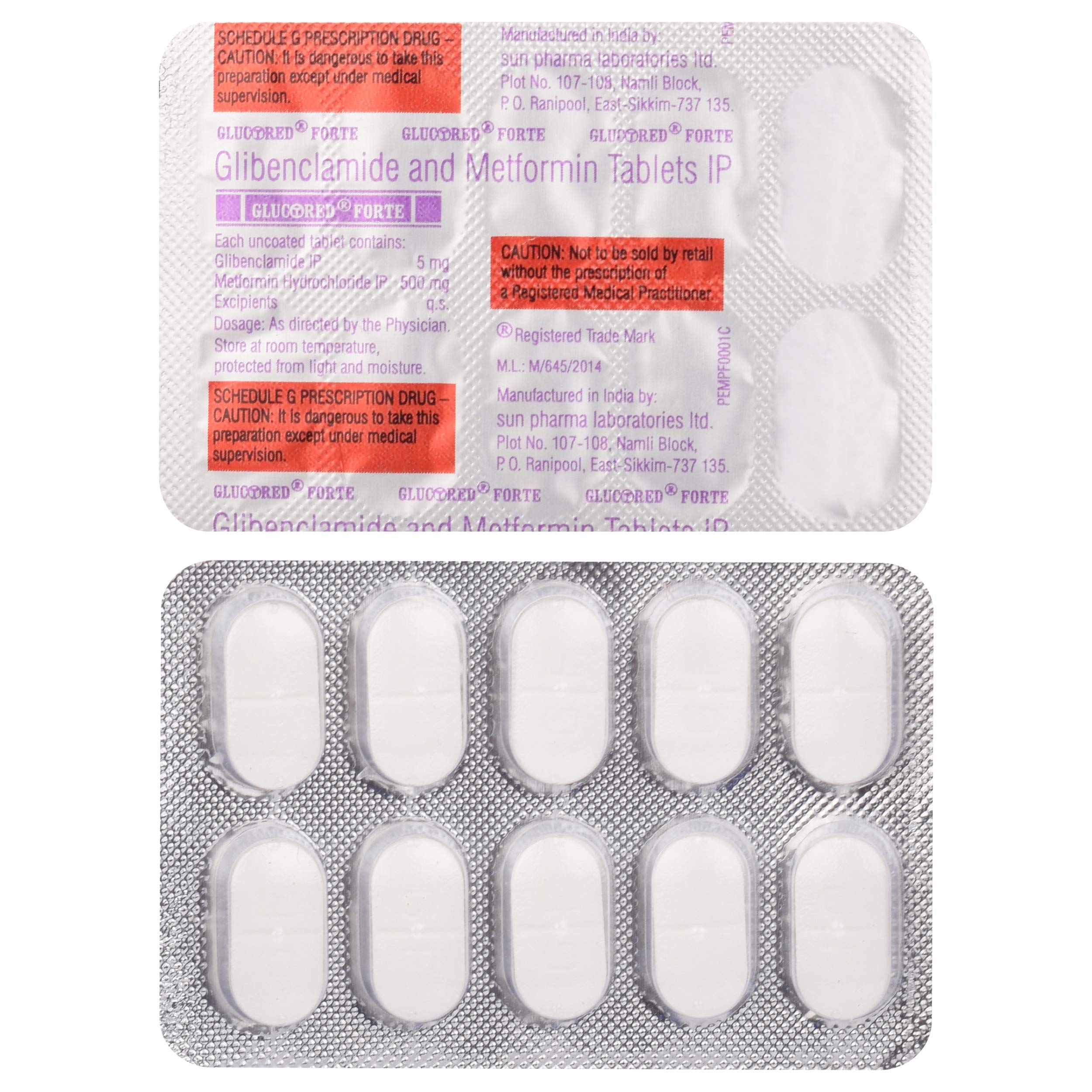
Glucored Forte Tablet is a prescription anti-diabetic medication that combines Glibenclamide, a sulfonylurea that stimulates insulin secretion, with Metformin (500mg), a biguanide that reduces glucose production in the liver. This combination is used for managing type 2 diabetes mellitus, particularly in patients who need higher doses for effective blood sugar control.
Uses:
-
Management of type 2 diabetes mellitus
-
Helps lower fasting and post-meal blood sugar levels
-
Reduces the risk of diabetes-related complications
-
Improves insulin sensitivity and glucose utilization
How to Use:
-
Take exactly as prescribed by your doctor
-
Usually taken once or twice daily with meals
-
Swallow the tablet whole with water
-
Regularly monitor blood sugar levels as instructed
Precautions:
-
Use under strict medical supervision
-
Inform your doctor if you have kidney or liver problems, heart disease, or a history of hypoglycemia
-
Pregnant or breastfeeding women should use only if prescribed
Possible Side Effects:
-
Low blood sugar (hypoglycemia)
-
Nausea, vomiting, diarrhea, or mild gastrointestinal discomfort
-
Dizziness or headache
-
Rare: allergic reactions or severe hypoglycemia
Important:
-
Prescription Required – do not self-medicate
-
Maintain a proper diet and exercise regimen as advised by your doctor
-
Store in a cool, dry place, away from sunlight and out of reach of children