



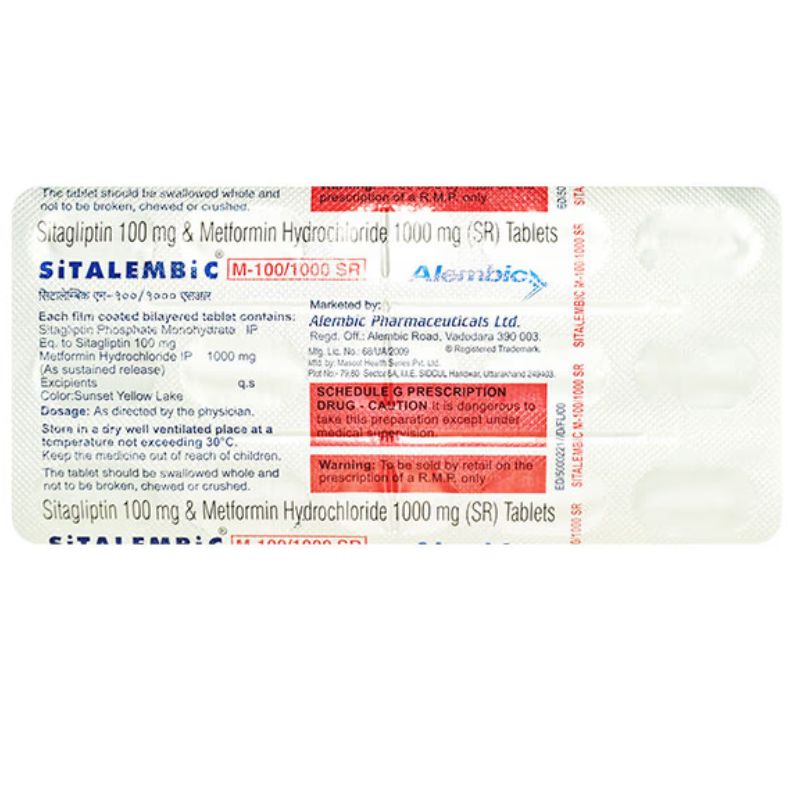
-
Uses:
-
Used for the management of type 2 diabetes mellitus.
-
Sitagliptin increases incretin hormones, stimulating insulin secretion after meals.
-
Metformin reduces glucose production in the liver and improves insulin sensitivity.
-
The extended-release (SR) formulation provides a gradual release of metformin for better blood sugar control and reduced gastrointestinal side effects.
-
Can be combined with diet, exercise, and other antidiabetic medications for optimal management.
-
-
Dosage:
-
Usually taken once daily, or as prescribed by a doctor.
-
Dose may vary depending on blood sugar levels, kidney function, and individual response.
-
-
How to Use:
-
Take orally with meals to reduce gastrointestinal discomfort.
-
Swallow the tablet whole; do not crush, chew, or break, as it is a sustained-release formulation.
-
Take at the same time each day to maintain consistent blood levels.
-
-
Precautions:
-
Inform your doctor if you have kidney or liver problems, heart issues, or a history of lactic acidosis.
-
Regular monitoring of blood sugar, kidney, and liver function is recommended.
-
Not suitable for type 1 diabetes or diabetic ketoacidosis.
-
Avoid excessive alcohol consumption while on this medication.
-
-
Side Effects:
-
Common: nausea, vomiting, stomach upset, diarrhea, mild headache.
-
Rare but serious: lactic acidosis, pancreatitis, severe allergic reactions.
-
Seek medical attention immediately if severe side effects occur.
-
-
Drug Interactions:
-
May interact with other antidiabetic drugs, diuretics, contrast dyes, or medications affecting kidney function.
-
Inform your healthcare provider about all medications, supplements, or herbal products being taken.
-
-
Storage:
-
Store in a cool, dry place away from direct sunlight.
-
Keep out of reach of children.
-
Category: Diabetes
Sitalembic M 100mg/500mg Tablet
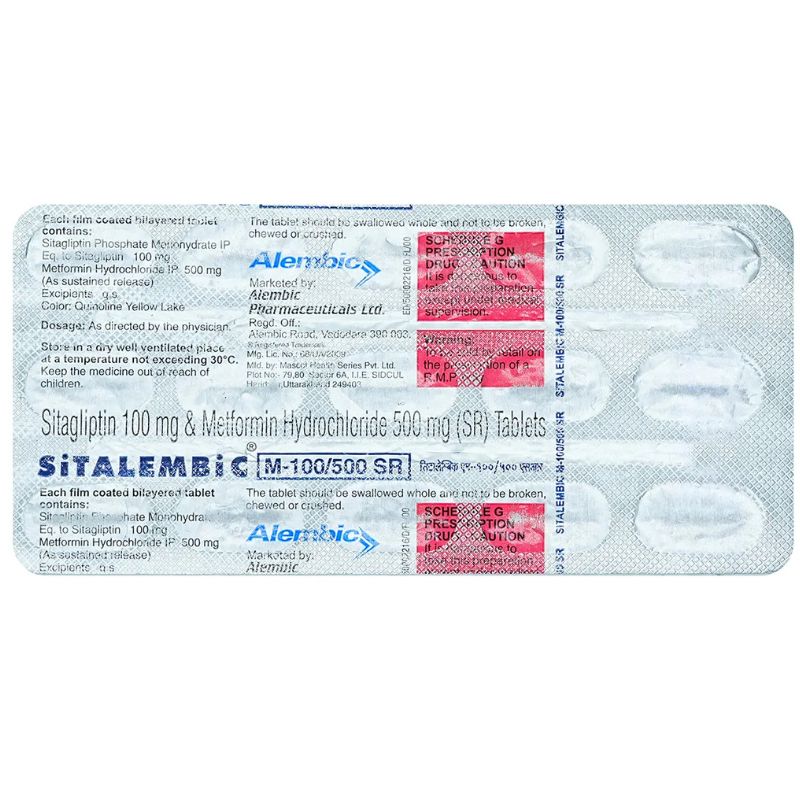
-
Uses:
-
Helps manage type 2 diabetes mellitus.
-
Sitagliptin increases incretin hormones, stimulating insulin secretion after meals.
-
Metformin lowers blood sugar by decreasing liver glucose production and improving insulin sensitivity.
-
Can be used along with diet, exercise, or other antidiabetic medications for better blood sugar control.
-
-
Dosage:
-
Usually taken once or twice daily, as prescribed by a doctor.
-
Dose may be adjusted based on blood sugar levels, kidney function, and individual response.
-
-
How to Use:
-
Take orally with meals to reduce gastrointestinal side effects.
-
Swallow the tablet whole; do not crush, chew, or break.
-
Take at the same time each day for consistent effect.
-
-
Precautions:
-
Inform your doctor if you have kidney or liver problems, heart issues, or a history of lactic acidosis.
-
Regular monitoring of blood sugar, kidney, and liver function is recommended.
-
Not for type 1 diabetes or diabetic ketoacidosis.
-
Avoid excessive alcohol consumption during treatment.
-
-
Side Effects:
-
Common: nausea, vomiting, stomach upset, diarrhea, mild headache.
-
Rare but serious: lactic acidosis, pancreatitis, allergic reactions.
-
Seek medical attention immediately if severe side effects occur.
-
-
Drug Interactions:
-
May interact with other antidiabetic drugs, diuretics, contrast dyes, or kidney-affecting medications.
-
Inform your healthcare provider about all medications, supplements, or herbal products being taken.
-
-
Storage:
-
Store in a cool, dry place away from direct sunlight.
-
Keep out of reach of children.
-
Sitalembic M 50mg/1000mg Tablet
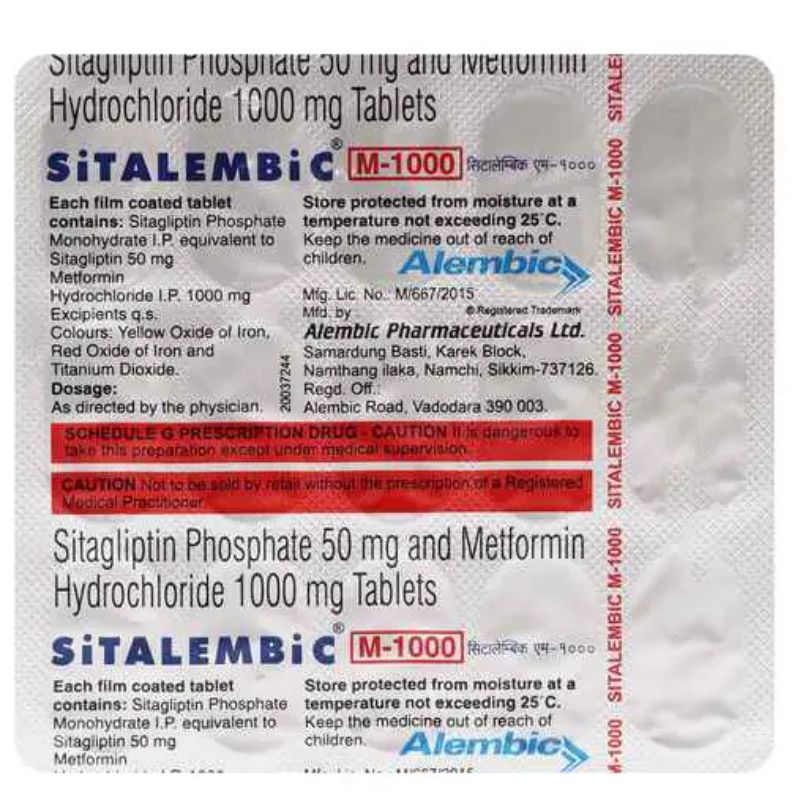
-
Uses:
-
Used for the management of type 2 diabetes mellitus.
-
Sitagliptin increases incretin hormones, stimulating insulin secretion after meals.
-
Metformin lowers blood sugar by reducing glucose production in the liver and improving insulin sensitivity.
-
Can be used with diet, exercise, or other antidiabetic medications for optimal blood sugar control.
-
-
Dosage:
-
Usually taken once or twice daily, as directed by a doctor.
-
Dose may vary depending on blood sugar levels, kidney function, and individual response.
-
-
How to Use:
-
Take orally with meals to reduce gastrointestinal side effects.
-
Swallow the tablet whole; do not crush or chew.
-
Take at the same time each day to maintain consistent blood levels.
-
-
Precautions:
-
Inform your doctor if you have kidney or liver problems, heart issues, or history of lactic acidosis.
-
Regular monitoring of blood sugar, kidney, and liver function is recommended.
-
Not suitable for type 1 diabetes or diabetic ketoacidosis.
-
Avoid excessive alcohol consumption while on this medication.
-
-
Side Effects:
-
Common: nausea, vomiting, stomach upset, diarrhea, mild headache.
-
Rare but serious: lactic acidosis, pancreatitis, or severe allergic reactions.
-
Seek medical attention immediately if severe side effects occur.
-
-
Drug Interactions:
-
May interact with other antidiabetic drugs, diuretics, contrast dyes, or medications affecting kidney function.
-
Always inform your healthcare provider about all medications, supplements, or herbal products you are taking.
-
-
Storage:
-
Store in a cool, dry place away from direct sunlight.
-
Keep out of reach of children.
-
Sitalembic M 50mg/500mg Tablet
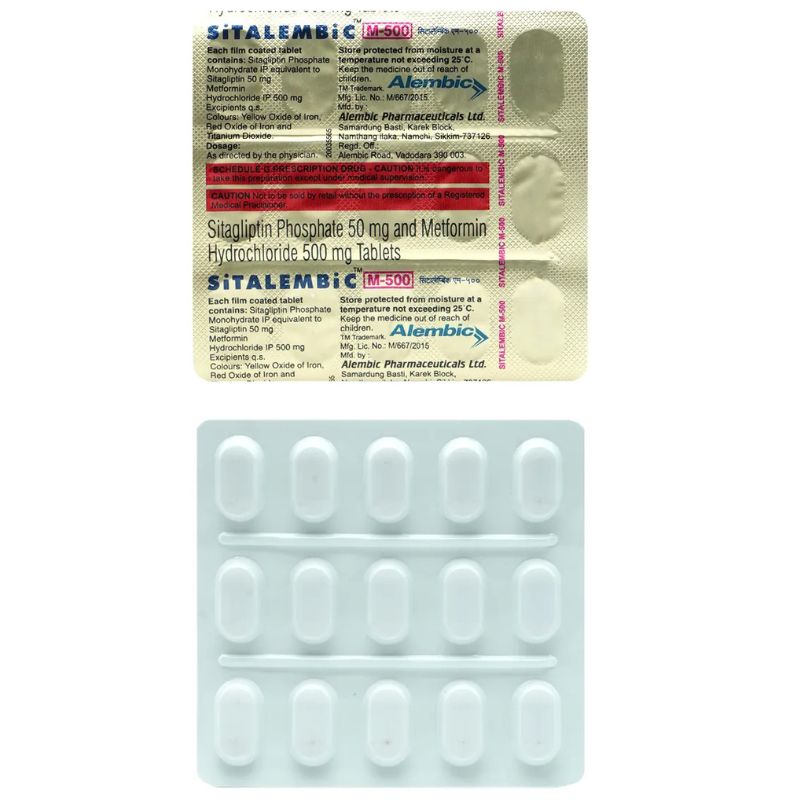
-
Uses:
-
Helps manage type 2 diabetes mellitus.
-
Sitagliptin increases incretin hormones, stimulating insulin release after meals.
-
Metformin reduces glucose production in the liver and improves insulin sensitivity.
-
Can be used alone or with diet, exercise, or other antidiabetic medications.
-
-
Dosage:
-
Usually taken once or twice daily, as prescribed by a doctor.
-
Dose may vary based on blood sugar levels, kidney function, and individual response.
-
-
How to Use:
-
Take orally with meals to reduce gastrointestinal side effects.
-
Swallow the tablet whole with water; do not crush or chew.
-
Take at the same time each day for consistent effect.
-
-
Precautions:
-
Inform your doctor if you have kidney or liver problems, heart issues, or history of lactic acidosis.
-
Regular monitoring of blood sugar, kidney, and liver function is recommended.
-
Not suitable for type 1 diabetes or diabetic ketoacidosis.
-
Avoid excessive alcohol consumption while on this medication.
-
-
Side Effects:
-
Common: nausea, vomiting, stomach upset, diarrhea, mild headache.
-
Rare but serious: lactic acidosis (extremely rare but serious), pancreatitis, allergic reactions.
-
Seek medical attention if severe side effects occur.
-
-
Drug Interactions:
-
May interact with other antidiabetic drugs, diuretics, contrast dyes, or kidney-affecting medications.
-
Inform your healthcare provider about all medications, supplements, or herbal products you are taking.
-
-
Storage:
-
Store in a cool, dry place away from direct sunlight.
-
Keep out of reach of children.
-
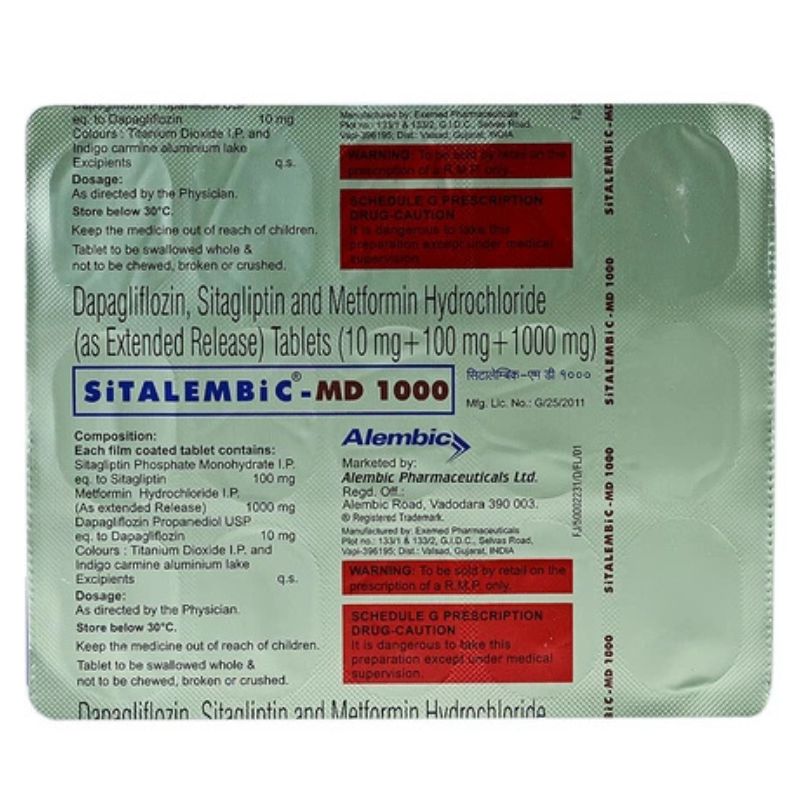
Sitalembic MD 10mg/1000mg/100mg Tablet
-
Uses:
-
Helps manage type 2 diabetes mellitus.
-
Dapagliflozin promotes glucose excretion via urine, lowering blood sugar levels.
-
Metformin decreases glucose production in the liver and improves insulin sensitivity.
-
Sitagliptin increases incretin hormones, stimulating insulin release after meals.
-
Can be used with diet, exercise, and other antidiabetic medications for optimal blood sugar control.
-
-
Dosage:
-
Typically taken once or twice daily as prescribed by a doctor.
-
Dose may vary depending on blood sugar levels, kidney function, and individual response.
-
-
How to Use:
-
Take orally with meals to reduce gastrointestinal discomfort.
-
Swallow the tablet whole; do not crush or chew.
-
Take at the same time each day to maintain consistent blood sugar levels.
-
-
Precautions:
-
Inform your doctor if you have kidney or liver issues, heart disease, or history of lactic acidosis.
-
Regular monitoring of blood sugar, kidney, and liver function is recommended.
-
Not suitable for type 1 diabetes or diabetic ketoacidosis.
-
Maintain adequate hydration while on this medication.
-
Avoid excessive alcohol consumption.
-
-
Side Effects:
-
Common: nausea, vomiting, stomach upset, diarrhea, urinary tract infections, mild headache.
-
Rare but serious: lactic acidosis, pancreatitis, severe allergic reactions, low blood pressure.
-
Seek medical attention immediately if severe side effects occur.
-
-
Drug Interactions:
-
May interact with other antidiabetic drugs, diuretics, blood pressure medications, or kidney-affecting medications.
-
Inform your healthcare provider about all medications, supplements, or herbal products being taken.
-
-
Storage:
-
Store in a cool, dry place away from direct sunlight.
-
Keep out of reach of children.
-
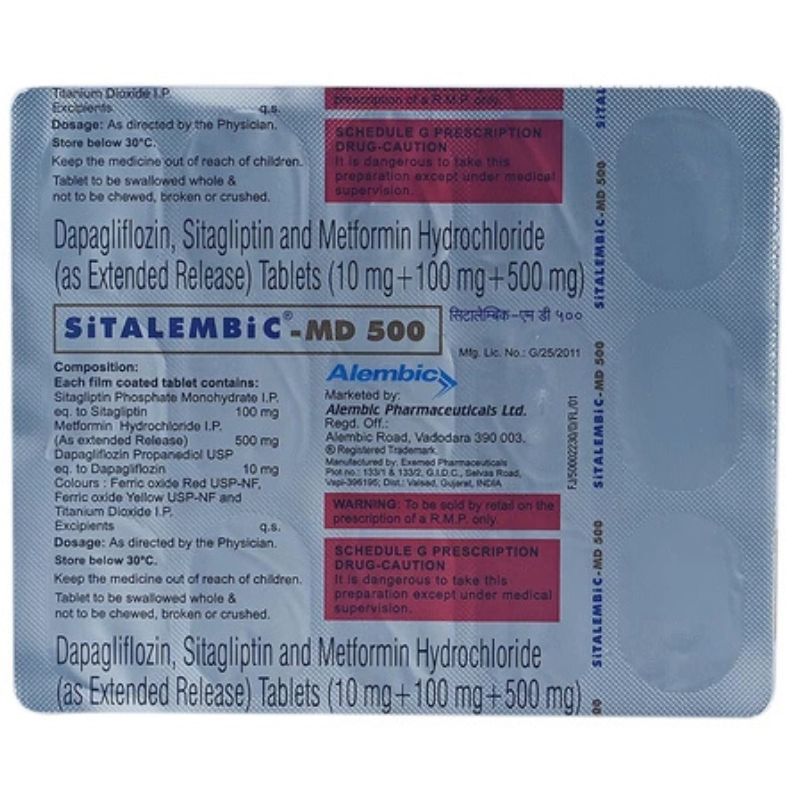
Sitalembic MD 10mg/500mg/100mg Tablet
-
Uses:
-
Used for the management of type 2 diabetes mellitus.
-
Dapagliflozin helps lower blood sugar by promoting glucose excretion through urine.
-
Metformin reduces glucose production in the liver and improves insulin sensitivity.
-
Sitagliptin increases incretin hormones, stimulating insulin release after meals.
-
Can be used along with diet, exercise, and other antidiabetic medications for optimal blood sugar control.
-
-
Dosage:
-
Usually taken once or twice daily, as prescribed by a doctor.
-
Dose may vary depending on blood sugar levels, kidney function, and individual response.
-
-
How to Use:
-
Take orally with meals to reduce gastrointestinal side effects.
-
Swallow the tablet whole; do not crush or chew.
-
Take at the same time each day for consistent blood sugar control.
-
-
Precautions:
-
Inform your doctor if you have kidney or liver problems, heart disease, or history of lactic acidosis.
-
Regular monitoring of blood sugar, kidney, and liver function is recommended.
-
Not suitable for type 1 diabetes or diabetic ketoacidosis.
-
Maintain adequate hydration while on this medication.
-
Avoid excessive alcohol consumption.
-
-
Side Effects:
-
Common: nausea, vomiting, stomach upset, diarrhea, urinary tract infections, mild headache.
-
Rare but serious: lactic acidosis, pancreatitis, severe allergic reactions, low blood pressure.
-
Seek medical attention immediately if severe side effects occur.
-
-
Drug Interactions:
-
May interact with other antidiabetic medications, diuretics, blood pressure medications, or kidney-affecting drugs.
-
Inform your healthcare provider about all medications, supplements, or herbal products you are taking.
-
-
Storage:
-
Store in a cool, dry place away from direct sunlight.
-
Keep out of reach of children.
-
Sitara DM 10mg/500mg/100mg Tablet
Sitara DM 10mg/500mg/100mg Tablet is a prescription medicine used for the treatment of Type 2 Diabetes Mellitus in adults. It combines three effective antidiabetic medicines—Dapagliflozin, Metformin, and Sitagliptin—to help control blood sugar levels through different mechanisms. This combination improves glycemic control when diet, exercise, and single-drug therapy are not sufficient.
Dapagliflozin helps remove excess glucose through urine, Metformin decreases glucose production in the liver and improves insulin sensitivity, while Sitagliptin enhances the body’s natural insulin response after meals.
Uses
Sitara DM 10mg/500mg/100mg Tablet is used for:
- Management of Type 2 Diabetes Mellitus.
- Improving blood glucose control in adults.
- Reducing HbA1c levels.
- Supporting diabetes treatment alongside diet and exercise.
- Helping prevent diabetes-related complications associated with uncontrolled blood sugar.
Dosage
- Take this medicine exactly as prescribed by your doctor.
- The usual dosage is one tablet once daily or as directed by your healthcare provider.
- Dosage may vary based on blood sugar levels, kidney function, and overall health condition.
- Do not stop taking the medication without medical advice.
How to Use
- Take the tablet whole with water.
- Preferably take it with food to reduce stomach-related side effects.
- Do not crush, chew, or break the tablet.
- Take it at the same time each day for better blood sugar control.
- Continue following a healthy diet and regular exercise routine.
Precautions
Before using Sitara DM Tablet, inform your doctor if you:
- Have kidney or liver disease.
- Have a history of pancreatitis.
- Have heart disease or heart failure.
- Are dehydrated or prone to low blood pressure.
- Consume alcohol frequently.
- Are pregnant, planning pregnancy, or breastfeeding.
- Are taking other medications for diabetes or chronic illnesses.
Additional precautions:
- Monitor blood sugar levels regularly.
- Stay adequately hydrated during treatment.
- Avoid excessive alcohol intake.
- Inform your doctor before undergoing surgery or medical procedures.
Side Effects
Common side effects may include:
- Nausea
- Vomiting
- Diarrhea
- Stomach discomfort
- Frequent urination
- Urinary tract infection
- Genital fungal infection
- Headache
- Dizziness
- Increased thirst
Serious side effects (seek immediate medical attention):
- Lactic acidosis
- Severe allergic reactions
- Pancreatitis
- Diabetic ketoacidosis
- Severe dehydration
- Kidney function problems
Storage
- Store in a cool and dry place.
- Keep away from direct sunlight and moisture.
- Keep out of reach of children.
- Do not use after the expiry date mentioned on the package.
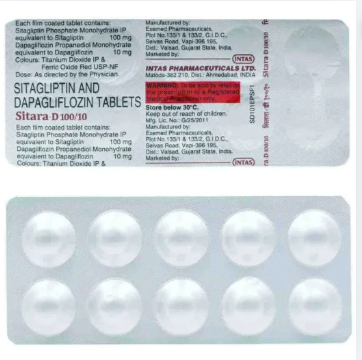
Sitara-D 100/10 Tablet
Uses
Sitara-D 100/10 Tablet is used for:
- Treatment of Type 2 Diabetes Mellitus.
- Improving blood sugar control in adults.
- Reducing elevated HbA1c levels.
- Supporting diabetes management along with a healthy diet and regular exercise.
Dosage
- Take the medicine exactly as prescribed by your doctor.
- The usual dose is one tablet once daily.
- Dosage may vary depending on your medical condition and response to treatment.
- Do not alter the dose without consulting your healthcare provider.
How to Use
- Swallow the tablet whole with a glass of water.
- It can be taken with or without food.
- Take it at the same time every day for maximum benefit.
- Do not crush, chew, or break the tablet.
- Continue taking the medicine even if you feel well unless advised otherwise by your doctor.
Precautions
Before taking Sitara-D 100/10 Tablet, inform your doctor if you:
- Have kidney or liver disease.
- Have a history of pancreatitis.
- Suffer from recurrent urinary tract infections.
- Are dehydrated or have low blood pressure.
- Are pregnant, planning pregnancy, or breastfeeding.
- Are taking other medicines for diabetes or blood pressure.
Additional precautions:
- Maintain adequate hydration throughout treatment.
- Monitor blood glucose levels regularly.
- Follow a diabetes-friendly diet and exercise plan.
- Avoid excessive alcohol consumption.
Side Effects
Common side effects may include:
- Frequent urination
- Urinary tract infection
- Genital fungal infection
- Headache
- Nasopharyngitis (common cold symptoms)
- Increased thirst
- Dizziness
- Low blood sugar (especially when used with other antidiabetic medicines)
Serious side effects (seek medical attention immediately):
- Severe allergic reactions
- Pancreatitis
- Severe dehydration
- Ketoacidosis
- Significant kidney problems
Storage
- Store at room temperature.
- Keep away from direct sunlight and moisture.
- Keep out of reach of children.
- Do not use after the expiry date.
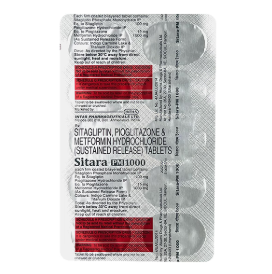
Sitara-PM 1000 Tablet SR
Uses
Sitara-PM 1000 Tablet SR is used for:
- Management of Type 2 Diabetes Mellitus.
- Improving blood sugar control in adults.
- Lowering HbA1c levels.
- Enhancing insulin sensitivity.
- Supporting diabetes management alongside diet and exercise.
- Reducing the risk of diabetes-related complications caused by uncontrolled blood sugar.
Dosage
- Take this medicine exactly as prescribed by your doctor.
- The usual dosage is one tablet daily or as directed by your healthcare provider.
- Dosage may be adjusted based on blood glucose levels and individual response.
- Do not discontinue the medication without consulting your doctor.
How to Use
- Take the tablet with food to minimize stomach upset.
- Swallow the tablet whole with water.
- Do not crush, chew, or break the sustained-release tablet.
- Take it at the same time each day for optimal results.
- Continue following your prescribed diet and exercise plan.
Precautions
Before taking Sitara-PM 1000 Tablet SR, inform your doctor if you:
- Have kidney or liver disease.
- Have heart failure or other heart conditions.
- Have a history of pancreatitis.
- Experience swelling in the legs or fluid retention.
- Consume alcohol regularly.
- Are pregnant, planning to become pregnant, or breastfeeding.
- Are taking other medications for diabetes or chronic illnesses.
Additional precautions:
- Monitor blood glucose levels regularly.
- Maintain a healthy diet and exercise routine.
- Avoid excessive alcohol consumption.
- Inform your doctor before any surgery or diagnostic procedure involving contrast dye.
Side Effects
Common side effects may include:
- Nausea
- Vomiting
- Diarrhea
- Stomach pain
- Loss of appetite
- Headache
- Upper respiratory tract infection
- Weight gain
- Swelling of hands, feet, or ankles
- Dizziness
Serious side effects (seek immediate medical attention):
- Lactic acidosis
- Severe allergic reactions
- Pancreatitis
- Heart failure symptoms
- Severe liver problems
- Significant fluid retention or edema
Storage
- Store in a cool, dry place away from direct sunlight.
- Keep out of reach of children.
- Protect from moisture.
- Do not use after the expiry date mentioned on the packaging.
Sitawick Met 100 Tablet
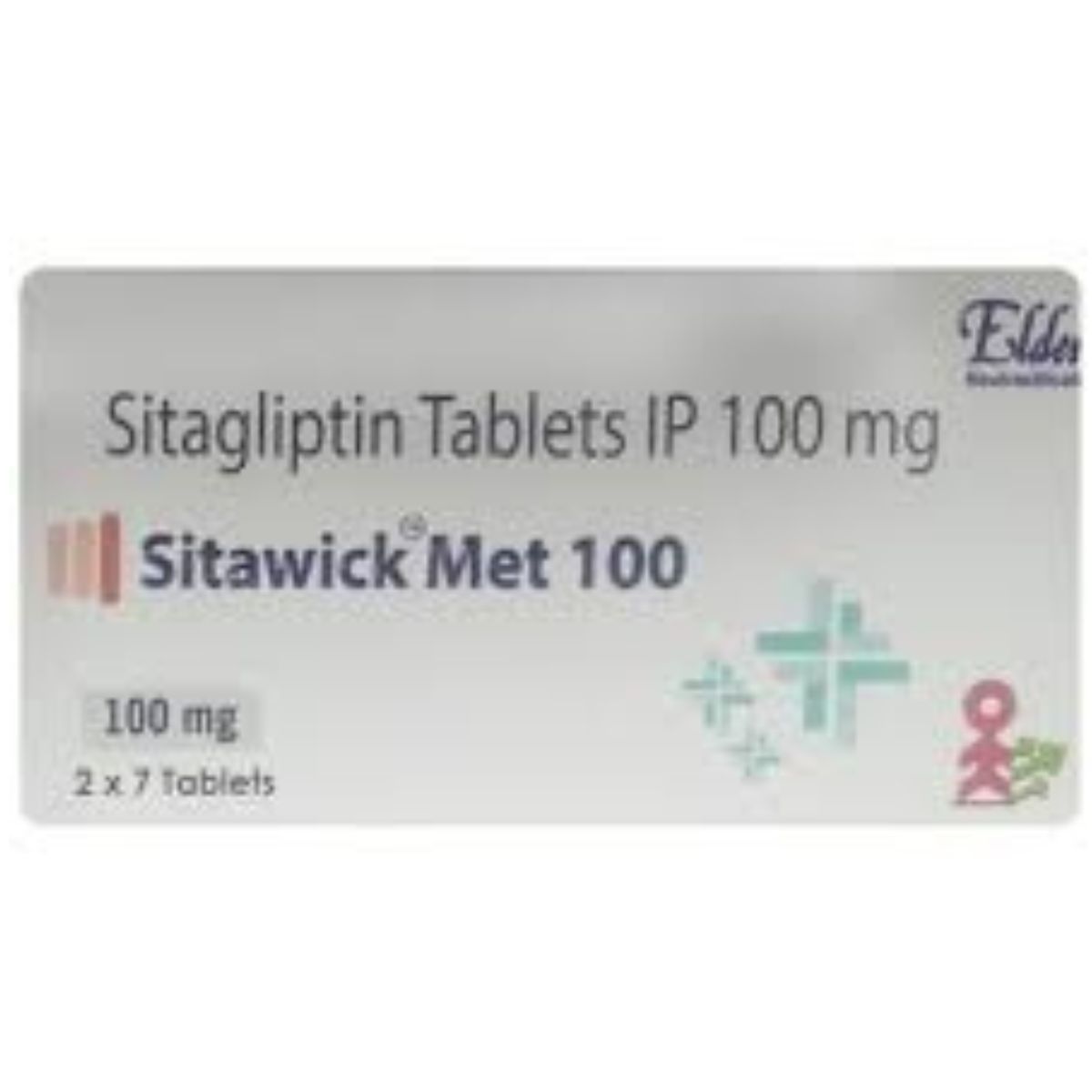
Uses
- Type 2 diabetes mellitus
- Helps control high blood glucose levels
- May be used alone or with other diabetes medicines as prescribed
Benefits
- Helps lower blood sugar levels
- Improves blood glucose control after meals
- Supports better long-term diabetes management
- Can be used alongside diet and exercise
How It Works
Sitagliptin belongs to the DPP-4 inhibitor class. It increases the activity of incretin hormones, which helps the pancreas release more insulin when blood sugar is elevated and reduces the amount of glucose released by the liver.
Dosage & How to Use
Take Sitawick Met 100 Tablet exactly as prescribed by your doctor.
- Swallow the tablet whole with water.
- It can generally be taken with or without food.
- Take it at the same time each day.
- Do not stop the medicine without consulting your doctor.
Important: Sitagliptin dosage may need adjustment in people with reduced kidney function.
Side Effects
Common side effects may include:
- Headache
- Upper respiratory tract symptoms
- Nasal congestion or sore throat
- Nausea
- Stomach discomfort
Rare but serious reactions include pancreatitis, severe allergic reactions, and significant joint pain. Seek medical attention for severe abdominal pain, facial swelling, breathing difficulty, or persistent severe joint pain.
Precautions
Inform your doctor if you have:
- Kidney disease
- Pancreatitis or a history of pancreatitis
- Gallstones
- Heart failure
- Any allergy to Sitagliptin
If Sitagliptin is taken with insulin or sulfonylureas, the risk of low blood sugar (hypoglycemia) may increase.
Drug Interactions
Tell your doctor if you take other medicines for diabetes, particularly:
- Insulin
- Sulfonylureas
- Other DPP-4 inhibitors
- Certain medicines affecting kidney function
SitaXA 100mg Tablet
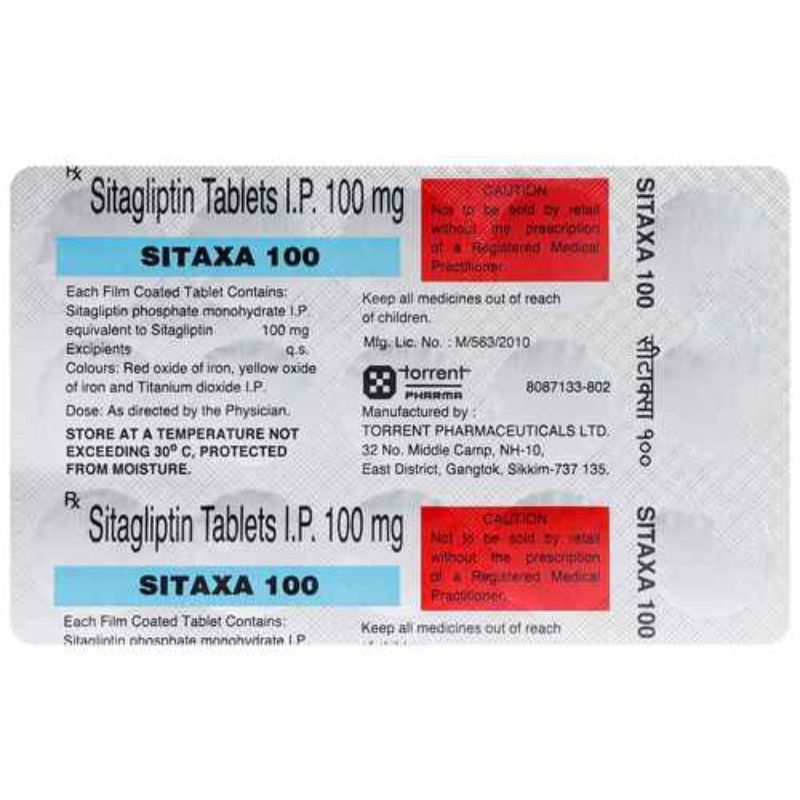
SitaXA 100mg Tablet contains Sitagliptin, a DPP-4 inhibitor used to manage blood sugar levels in adults with Type 2 Diabetes Mellitus. It increases the activity of incretin hormones, which stimulate insulin release after meals and decrease glucose production by the liver.
This medication helps maintain stable blood glucose levels throughout the day and is often used along with diet, exercise, or other anti-diabetic drugs for optimal glycemic control.
Uses:
-
Controls high blood sugar in Type 2 diabetes
-
Enhances insulin secretion
-
Reduces glucose production by the liver
-
Helps prevent diabetes-related complications
Dosage:
-
Typically one tablet daily, with or without food
-
Follow the doctor’s instructions precisely
How to Use:
-
Swallow the tablet whole with water
-
Take at the same time each day
-
Maintain diet and exercise routine as prescribed
Precautions:
-
Not suitable for Type 1 diabetes or diabetic ketoacidosis
-
Dose adjustment may be necessary in kidney impairment
-
Inform doctor if history of pancreatitis exists
-
Consult doctor if pregnant or breastfeeding
Side Effects:
-
Headache
-
Low blood sugar (especially when used with other anti-diabetic drugs)
-
Stomach discomfort
-
Upper respiratory tract infections
-
Rare: allergic reactions
SitaXA 25mg Tablet
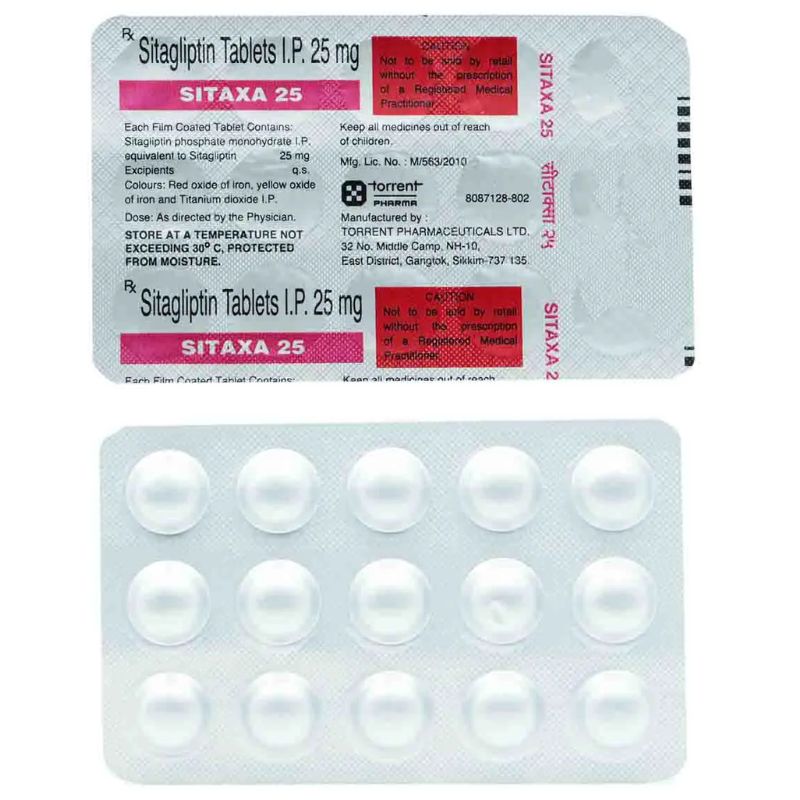
SitaXA 25mg Tablet contains Sitagliptin, an anti-diabetic medicine belonging to the DPP-4 inhibitor class. It helps control blood sugar levels in adults with Type 2 Diabetes Mellitus by increasing insulin release and reducing glucose production in the body. Sitagliptin works by enhancing the activity of incretin hormones, which improve pancreatic function and help maintain stable blood sugar throughout the day.
This medicine is often prescribed along with diet, exercise, or in combination with other anti-diabetic drugs to achieve better glycemic control.
Uses:
-
Helps manage Type 2 diabetes
-
Improves insulin secretion
-
Reduces excess glucose production
-
Helps control blood sugar spikes after meals
-
Helps prevent complications of diabetes
Dosage:
-
Typically one tablet daily, with or without food.
-
Follow the dosage exactly as advised by the doctor.
How to Use:
-
Swallow the tablet whole with water.
-
Take it at the same time every day for best results.
-
Continue with a controlled diet and regular exercise.
Precautions:
-
Not recommended for Type 1 diabetes or diabetic ketoacidosis.
-
Use cautiously in kidney problems; dose adjustment may be required.
-
Inform doctor about any history of pancreatitis.
-
Pregnant or breastfeeding women should consult a doctor.
Side Effects:
-
Headache
-
Low blood sugar (when combined with other anti-diabetic drugs)
-
Stomach discomfort
-
Sore throat
-
Upper respiratory infection