



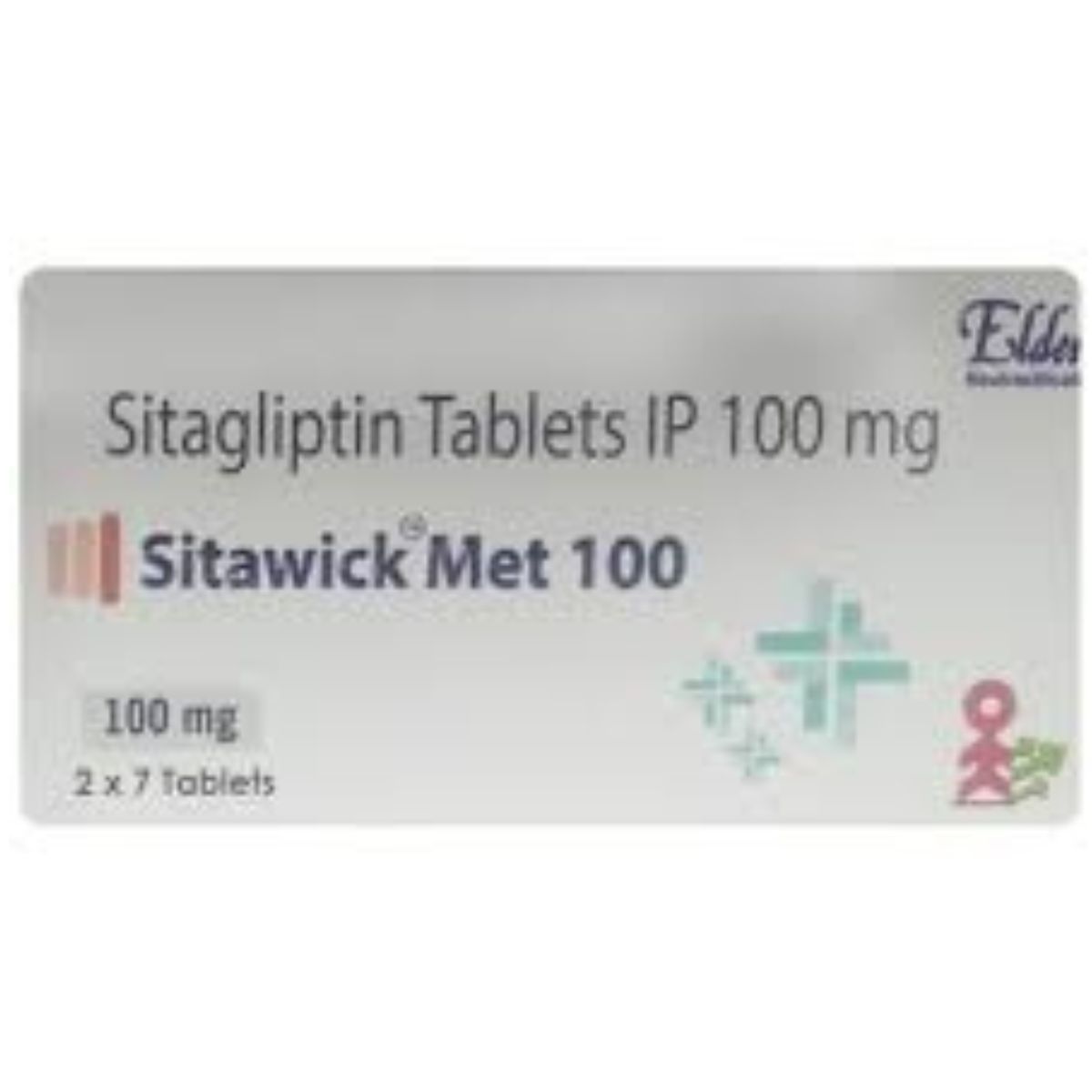
Description
Uses
- Type 2 diabetes mellitus
- Helps control high blood glucose levels
- May be used alone or with other diabetes medicines as prescribed
Benefits
- Helps lower blood sugar levels
- Improves blood glucose control after meals
- Supports better long-term diabetes management
- Can be used alongside diet and exercise
How It Works
Sitagliptin belongs to the DPP-4 inhibitor class. It increases the activity of incretin hormones, which helps the pancreas release more insulin when blood sugar is elevated and reduces the amount of glucose released by the liver.
Dosage & How to Use
Take Sitawick Met 100 Tablet exactly as prescribed by your doctor.
- Swallow the tablet whole with water.
- It can generally be taken with or without food.
- Take it at the same time each day.
- Do not stop the medicine without consulting your doctor.
Important: Sitagliptin dosage may need adjustment in people with reduced kidney function.
Side Effects
Common side effects may include:
- Headache
- Upper respiratory tract symptoms
- Nasal congestion or sore throat
- Nausea
- Stomach discomfort
Rare but serious reactions include pancreatitis, severe allergic reactions, and significant joint pain. Seek medical attention for severe abdominal pain, facial swelling, breathing difficulty, or persistent severe joint pain.
Precautions
Inform your doctor if you have:
- Kidney disease
- Pancreatitis or a history of pancreatitis
- Gallstones
- Heart failure
- Any allergy to Sitagliptin
If Sitagliptin is taken with insulin or sulfonylureas, the risk of low blood sugar (hypoglycemia) may increase.
Drug Interactions
Tell your doctor if you take other medicines for diabetes, particularly:
- Insulin
- Sulfonylureas
- Other DPP-4 inhibitors
- Certain medicines affecting kidney function



Leave a Reply