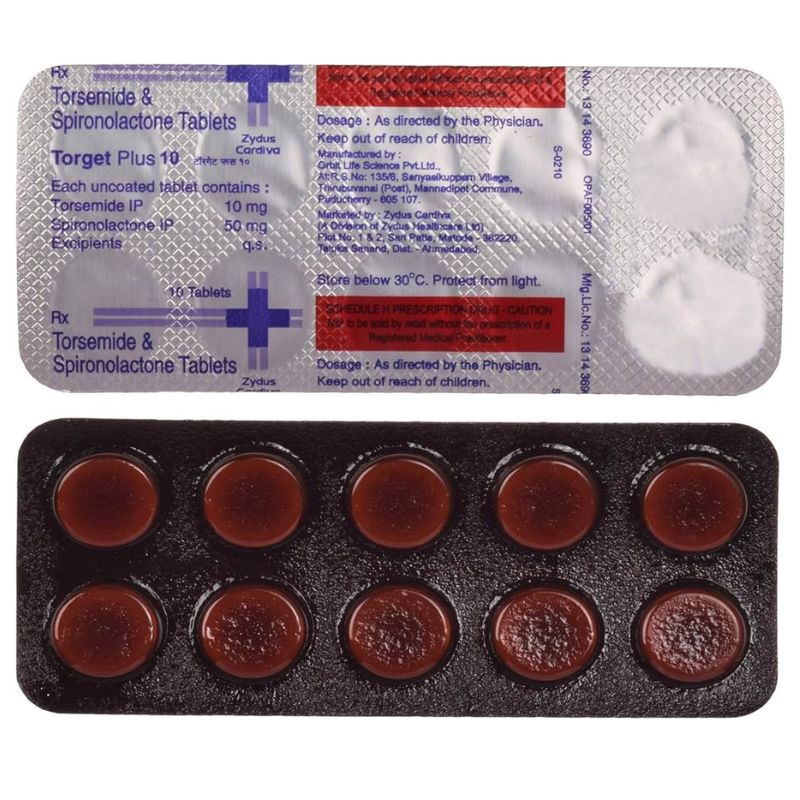
Uses:
• Used to treat edema (water retention) caused by heart failure, liver cirrhosis, or kidney diseases.
• Helps reduce swelling in legs, lungs, and abdomen.
• Controls resistant hypertension (BP not controlled by usual medicines).
• Combination gives balanced diuretic action – Torasemide removes excess water; Spironolactone prevents loss of potassium.
Dosage:
• Take exactly as prescribed by your doctor.
• Usually once daily; timing may vary depending on condition.
• Do not increase or decrease dose on your own.
How to Use:
• Swallow tablet with water.
• Best taken in the morning to avoid nighttime urination.
• Can be taken with or without food.
Precautions:
• Tell your doctor if you have kidney problems, liver failure, high potassium levels, or dehydration.
• Avoid potassium supplements unless doctor advises.
• Avoid alcohol – may increase dizziness or low BP.
• Regular monitoring of potassium, sodium, kidney function, and BP is important.
• Use carefully in elderly due to higher dehydration risk.
• Not recommended in pregnancy unless strictly needed.
Side Effects:
• Frequent urination
• Dizziness or weakness
• Low blood pressure
• High potassium (due to spironolactone)
• Electrolyte imbalance
• Nausea, stomach upset
• Muscle cramps
• Breast tenderness or enlargement (rare, due to spironolactone)
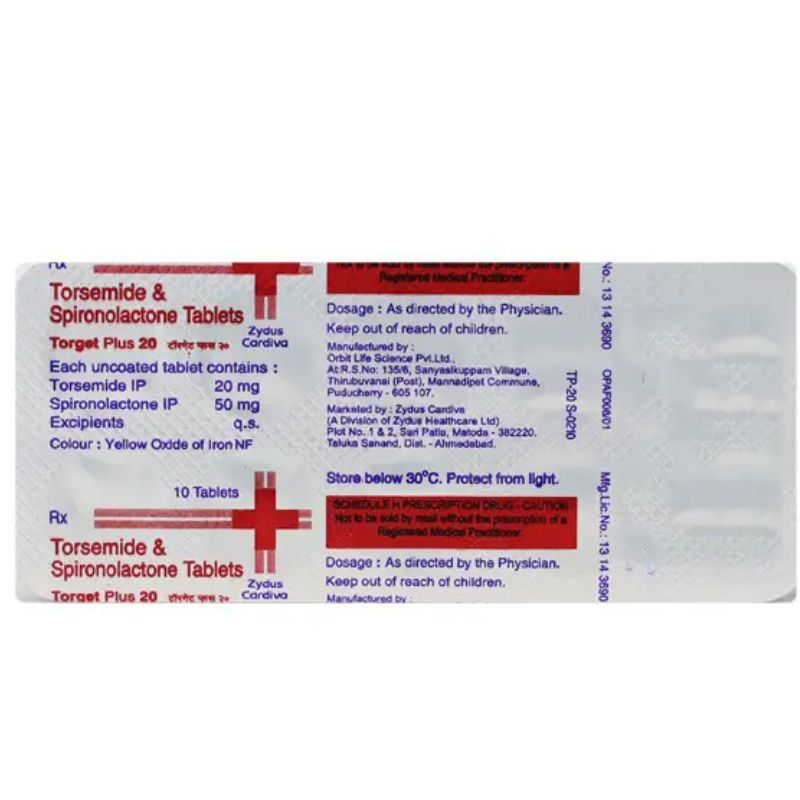
Uses:
• Treats edema (water retention) caused by heart failure, liver cirrhosis, and kidney disorders.
• Helps reduce swelling in legs, lungs, abdomen (ascites).
• Useful in resistant or difficult-to-control hypertension.
• Combination action:
– Torasemide removes extra water and salt.
– Spironolactone prevents potassium loss and reduces fluid buildup.
Dosage:
• Take the dose strictly as prescribed by your doctor.
• Usually once daily; your doctor may adjust based on your condition.
• Do not self-increase or skip doses.
How to Use:
• Swallow with water, morning time preferred to avoid excess urination at night.
• Can be taken with or without food.
• Maintain good hydration unless doctor restricts fluids.
Precautions:
• Inform doctor if you have kidney disease, liver failure, high potassium, dehydration, or electrolyte imbalance.
• Avoid potassium supplements, coconut water, or salt substitutes unless instructed.
• Avoid alcohol — may cause low BP or dizziness.
• Regular tests may be needed: Electrolytes (K+, Na+), Kidney function (creatinine), BP.
• Use with caution in elderly patients.
• Consult doctor before use in pregnancy or breastfeeding.
Side Effects:
• Increased urination
• Low blood pressure, dizziness
• Electrolyte imbalance (especially high potassium from spironolactone)
• Nausea, stomach discomfort
• Muscle cramps or weakness
• Headache
• Breast tenderness or enlargement (rare, hormonal effect of spironolactone)
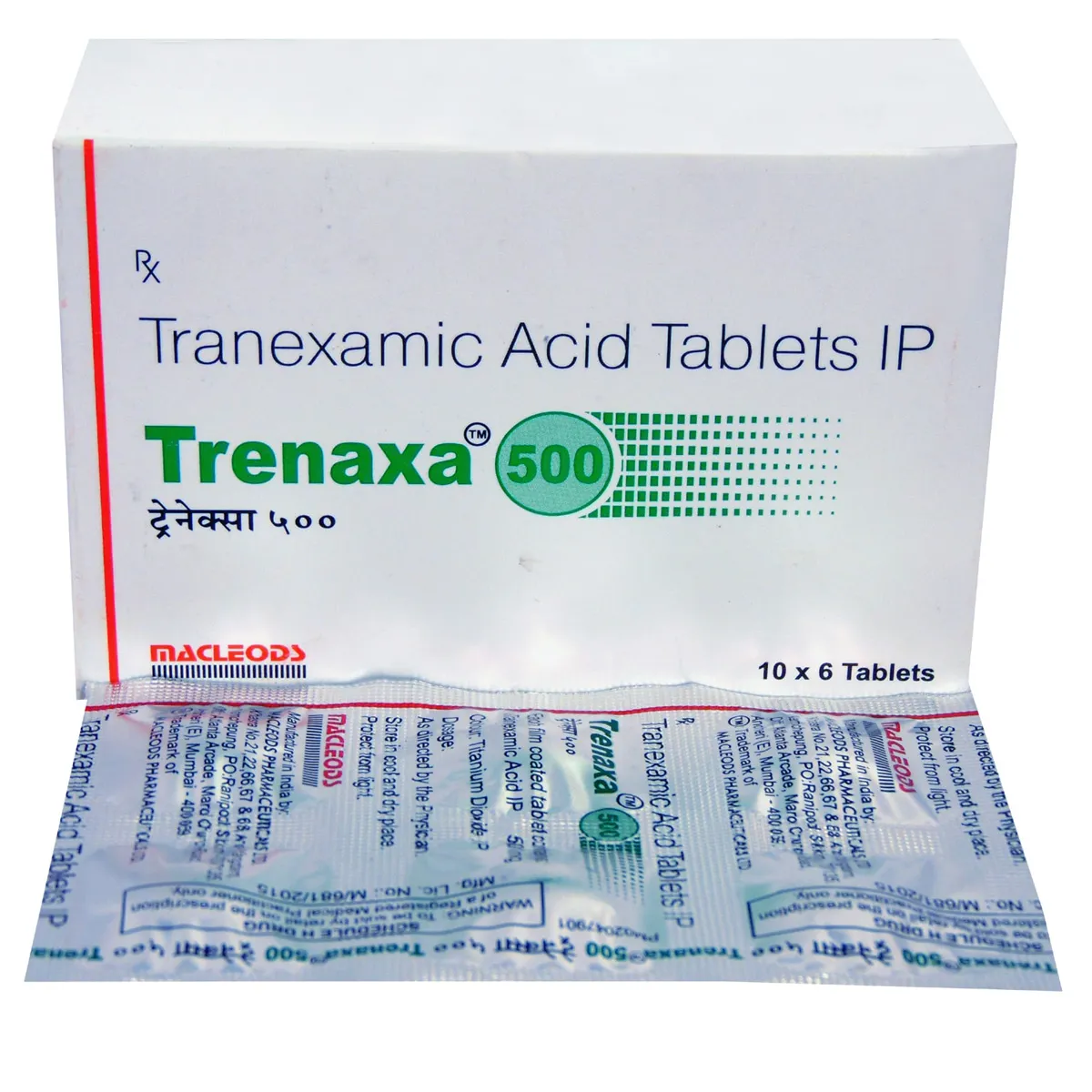
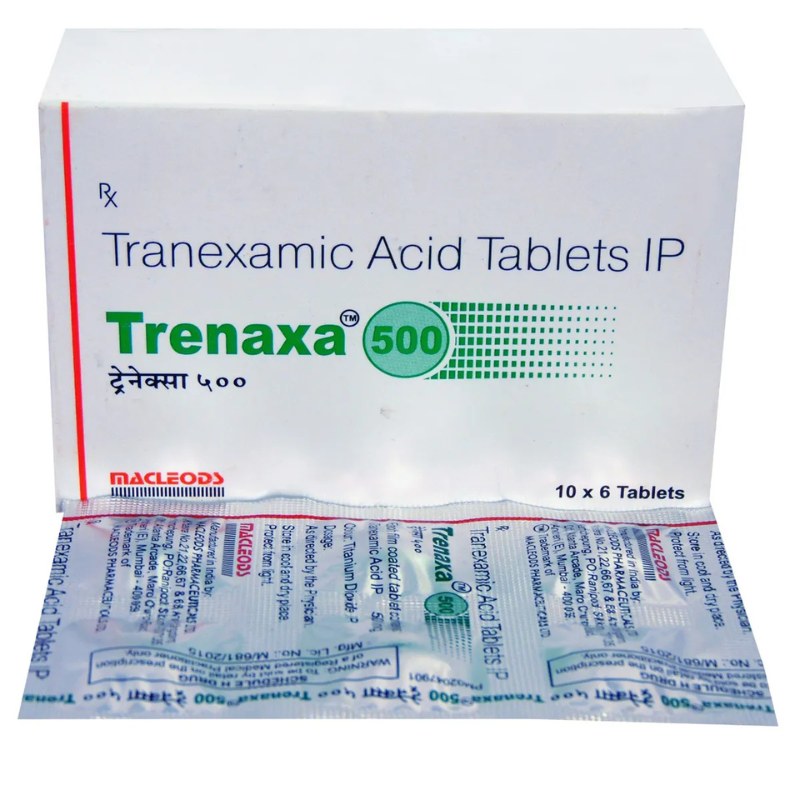
Trenaxa 500 Tablet contains Tranexamic Acid (500 mg), an antifibrinolytic medicine. It works by helping the blood clot more effectively and preventing the breakdown of clots. This action helps reduce excessive or prolonged bleeding.
It is commonly prescribed for conditions such as heavy menstrual bleeding (menorrhagia), bleeding after surgery, dental procedures in patients with bleeding disorders, nosebleeds, trauma-related bleeding, and certain hereditary conditions that cause excessive bleeding.
Uses of Trenaxa 500 Tablet
-
Heavy menstrual bleeding (menorrhagia) – reduces the amount and duration of bleeding.
-
Post-surgical bleeding – helps control bleeding after surgery (including dental procedures).
-
Nosebleeds and trauma-related bleeding – prevents excessive blood loss.
-
Hereditary angioedema & bleeding disorders – reduces recurrent bleeding episodes.
-
Other causes of abnormal bleeding as determined by a doctor.
Dosage & Administration
-
Dose is individualized depending on the type and severity of bleeding, age, and clinical condition.
-
Commonly taken 2–3 times daily, preferably with or after meals to reduce stomach irritation.
-
Swallow whole with a glass of water; do not crush or chew.
-
Duration of use is usually short-term (only during active bleeding episodes) unless otherwise advised.
-
If a dose is missed, take it as soon as remembered. If it is close to the next scheduled dose, skip the missed one. Do not double dose.
Possible Side Effects
Most people tolerate Trenaxa well. Possible side effects may include:
Rare but serious:
-
Vision changes (especially color vision disturbances)
-
Blood clots (deep vein thrombosis, pulmonary embolism, stroke, heart attack)
-
Seizures (in very rare cases)
Seek immediate medical attention if you experience chest pain, difficulty breathing, swelling in legs, or sudden vision problems.
Precautions
-
Clotting disorders: Should not be used in patients with a history of blood clots unless advised by a specialist.
-
Kidney problems: Dose adjustment may be required, as Tranexamic Acid is eliminated through the kidneys.
-
Vision issues: Long-term use may rarely affect eyesight; eye check-ups may be recommended.
-
Pregnancy & breastfeeding: Use only if clearly needed and prescribed by a doctor.
-
Drug interactions: Caution if taken with hormonal contraceptives, blood thinners (anticoagulants), or medicines that affect clotting.
Key Points to Remember
-
Trenaxa 500 helps control abnormal or heavy bleeding by preventing clot breakdown.
-
Take with food to minimize stomach upset.
-
Usually prescribed for short-term use during bleeding episodes.
-
Do not use if you have a history of serious clotting disorders without medical guidance.
-
Regular medical supervision is important if used repeatedly or long-term.
Uses:
-
Helps control and prevent excessive bleeding
-
Used for heavy menstrual bleeding (menorrhagia)
-
Useful in nosebleeds
-
Helps reduce bleeding after surgeries or dental procedures
-
Used in certain bleeding disorders where clot breakdown is increased
Dosage:
-
Typically taken 2–3 times a day, depending on doctor’s advice
-
Dose may vary based on the type and severity of bleeding
How to Use:
-
Take the tablet after food to avoid stomach upset
-
Swallow whole with a glass of water
-
Do not crush or chew
-
Follow the exact dose and duration prescribed by your doctor
Precautions:
-
Avoid if you have a history of blood clots (DVT, PE)
-
Use cautiously in kidney disease
-
Inform your doctor if you have had seizures
-
Not recommended in cases of unexplained irregular bleeding without medical evaluation
-
Tell your doctor if pregnant or breastfeeding
-
Inform about all medicines, especially blood thinners or hormonal pills
-
Stay well hydrated to prevent urinary crystals
Side Effects:
Storage: Store below 30°C.
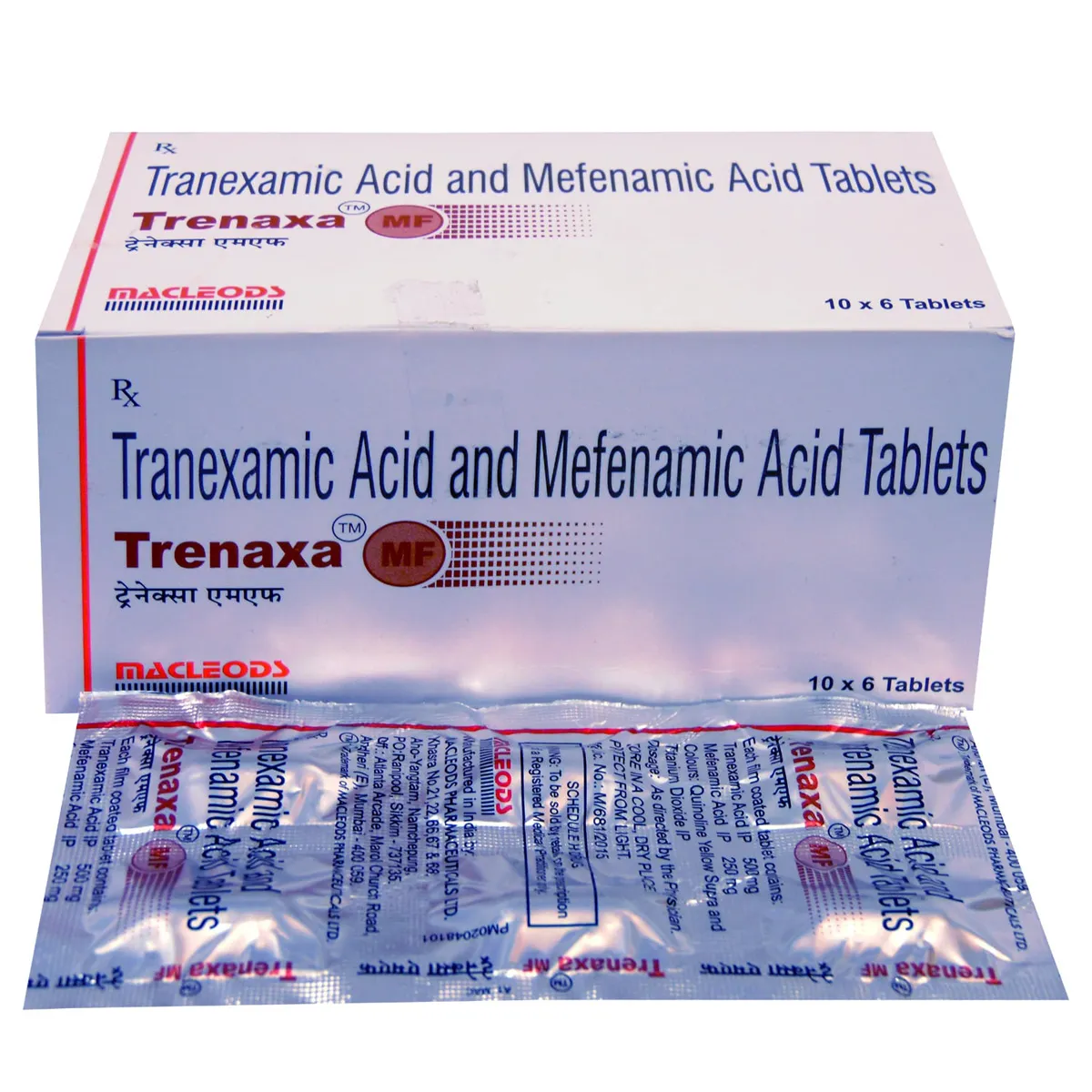
Trenaxa MF Tablet combines Tranexamic Acid (500 mg) and Mefenamic Acid (250 mg) to control excessive bleeding while also reducing pain and inflammation associated with menstrual cycles or other bleeding conditions.
-
Tranexamic Acid prevents the breakdown of blood clots, reducing excessive or prolonged bleeding.
-
Mefenamic Acid is a non-steroidal anti-inflammatory drug (NSAID) that relieves pain, cramps, and inflammation.
This combination is particularly effective in treating heavy menstrual bleeding with associated pain.
Uses of Trenaxa MF Tablet
-
Heavy menstrual bleeding (menorrhagia): Reduces blood loss and shortens bleeding duration.
-
Dysmenorrhea (painful periods): Alleviates cramps and menstrual pain.
-
Post-surgical or trauma-related bleeding: Helps control bleeding while providing pain relief.
-
Other conditions with abnormal bleeding accompanied by pain as advised by a doctor.
Dosage & Administration
-
Dose is individualized based on the severity of bleeding and pain.
-
Commonly taken 2–3 times daily with meals to reduce stomach irritation.
-
Swallow tablets whole with water; do not crush or chew.
-
Duration is typically during the period of heavy bleeding or as prescribed.
-
If a dose is missed, take it as soon as possible. If near the next dose, skip the missed one. Do not double dose.
Possible Side Effects
Most patients tolerate Trenaxa MF well. Possible side effects include:
-
Nausea, vomiting, or diarrhea
-
Stomach upset or indigestion
-
Headache or dizziness
-
Fatigue or mild weakness
-
Rare allergic reactions (rash, itching, swelling)
Serious but rare:
-
Blood clot formation (deep vein thrombosis, pulmonary embolism, stroke, or heart attack)
-
Severe stomach bleeding or ulcers (due to Mefenamic Acid, an NSAID)
-
Vision changes or seizures (rare with Tranexamic Acid)
Seek immediate medical attention if you notice chest pain, leg swelling, severe stomach pain, vomiting blood, or vision disturbances.
Precautions
-
Clotting disorders: Use cautiously in patients with a history of thrombosis.
-
Kidney or liver problems: Dose adjustment may be required.
-
Stomach ulcers or GI bleeding: Mefenamic Acid can worsen these conditions.
-
Pregnancy & breastfeeding: Only use under medical supervision.
-
Drug interactions: Avoid concurrent use with other NSAIDs, anticoagulants, or medications affecting blood clotting.
-
Allergies: Do not use if allergic to Tranexamic Acid, Mefenamic Acid, or other NSAIDs.
Key Points to Remember
-
Combines Tranexamic Acid to reduce bleeding and Mefenamic Acid for pain relief.
-
Take with meals to prevent stomach irritation.
-
Usually prescribed during periods of heavy bleeding.
-
Avoid self-medication if you have a history of clotting disorders, ulcers, or kidney/liver problems.
-
Regular medical supervision is recommended if treatment is repeated or long-term.
Uses:
-
Controls and prevents excessive bleeding
-
Commonly used for heavy menstrual bleeding (menorrhagia)
-
Helps in nosebleeds
-
Reduces bleeding after surgeries or dental procedures
-
Useful in certain bleeding disorders where clots break down too quickly
Dosage:
-
Being an SR (sustained-release) tablet, it is usually taken once or twice daily as advised by the doctor
-
Dose depends on the severity and type of bleeding
How to Use:
-
Take the tablet after food
-
Swallow whole with water; do not break, crush, or chew, as it affects the SR release
-
Follow the exact dosage prescribed by the doctor
-
Do not exceed recommended duration
Precautions:
-
Avoid if you have a history of blood clots (DVT, pulmonary embolism)
-
Use cautiously in kidney problems
-
Not suitable for unexplained irregular bleeding without medical check-up
-
Inform doctor if you have a history of seizures
-
Tell your doctor if pregnant or breastfeeding
-
Avoid combining with blood thinners or hormonal pills unless advised
-
Maintain proper hydration to avoid urinary crystals
Side Effects:
Storage: Store below 30°C.

- Trental 400 Tablet PR is a prescription medicine manufactured by Sanofi India Ltd. It contains Pentoxifylline (400mg), a vasodilator that improves blood flow by reducing blood viscosity and enhancing oxygen delivery to tissues. The PR (prolonged release) formulation allows for once-daily dosing with sustained effects throughout the day.
Trental is commonly prescribed for patients with peripheral arterial disease, intermittent claudication, or other conditions causing poor blood circulation in the legs. By improving circulation, it helps reduce symptoms such as leg pain, cramps, and fatigue during walking or exercise.
Uses
-
Improves blood flow in peripheral vascular diseases
-
Relieves leg pain and cramps caused by poor circulation
-
Supports oxygen delivery to tissues
-
Can help improve walking distance and mobility in patients with intermittent claudication
Dosage
-
Take one tablet orally, usually once daily, or as prescribed by your doctor
-
Swallow the tablet whole; do not crush or chew
-
Can be taken with or without food
-
Follow the prescribed schedule for best results
Side Effects
-
Nausea, vomiting, or stomach upset
-
Dizziness or headache
-
Rare: allergic reactions, low blood pressure, or irregular heartbeat
Precautions
-
Use cautiously in patients with bleeding disorders or severe heart conditions
-
Inform the doctor about other medications to prevent interactions
-
Not recommended during pregnancy or breastfeeding unless prescribed
-
Avoid alcohol if it worsens dizziness or blood pressure changes
-
Regular monitoring may be required for long-term use

Tribet 1 Tablet ER is a triple-combination oral antidiabetic medicine used to manage type 2 diabetes mellitus. It combines three different mechanisms to control blood glucose levels effectively:
-
Glimepiride (1mg): A sulfonylurea that stimulates the pancreas to produce more insulin.
-
Metformin (500mg): A biguanide that decreases glucose production in the liver and improves insulin sensitivity.
-
Pioglitazone (15mg): A thiazolidinedione that enhances peripheral insulin sensitivity and helps cells use glucose more efficiently.
The ER (Extended Release) formulation ensures a steady release of the medicine over time, helping maintain consistent blood sugar control throughout the day.
Uses:
-
Management of type 2 diabetes mellitus when diet and exercise alone are insufficient
-
Helps control fasting and post-meal blood sugar levels
-
Reduces the risk of diabetes-related complications like neuropathy, kidney damage, and cardiovascular issues
How to Use:
-
Take the tablet once daily with meals to reduce gastrointestinal side effects.
-
Swallow whole; do not crush or chew the ER tablet.
-
Follow your doctor’s instructions regarding diet, exercise, and blood sugar monitoring.
Side Effects:
Common:
-
Nausea, vomiting, diarrhea, stomach upset
-
Headache, dizziness, fatigue
-
Weight gain (from Pioglitazone)
-
Hypoglycemia (low blood sugar, especially due to Glimepiride)
Serious (seek medical attention):
-
Severe hypoglycemia (confusion, sweating, shakiness, fainting)
-
Liver dysfunction (yellowing of skin/eyes, dark urine)
-
Fluid retention or swelling (from Pioglitazone)
-
Heart failure exacerbation
Safety Advice:
-
Alcohol: Avoid excessive alcohol as it may increase risk of lactic acidosis and hypoglycemia.
-
Pregnancy & Breastfeeding: Consult your doctor; generally not recommended.
-
Kidney/Liver Disease: Use with caution; regular monitoring required.
-
Blood Sugar Monitoring: Regular monitoring is essential to avoid hypoglycemia or hyperglycemia.
-
Drug Interactions: Inform your doctor if taking other antidiabetic drugs, diuretics, steroids, or heart medications.
Storage:
-
Store in a cool, dry place, away from sunlight and moisture.
-
Keep out of reach of children.
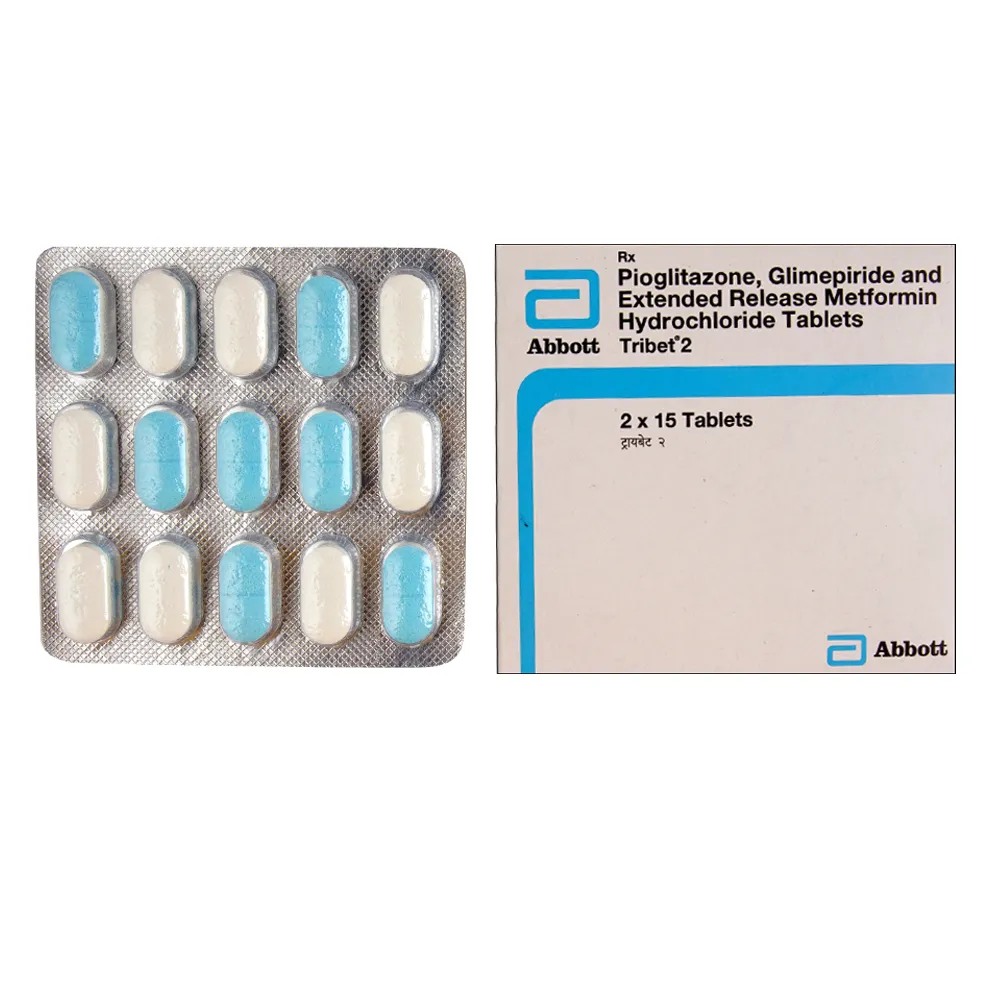
Tribet 2 Tablet ER is a triple-combination oral antidiabetic medicine used to manage type 2 diabetes mellitus. It combines three complementary mechanisms to achieve better blood sugar control:
-
Glimepiride (2mg): A sulfonylurea that stimulates pancreatic insulin secretion to lower blood glucose.
-
Metformin (500mg): A biguanide that reduces hepatic glucose production and improves insulin sensitivity.
-
Pioglitazone (15mg): A thiazolidinedione that enhances peripheral insulin sensitivity, helping cells utilize glucose efficiently.
The ER (Extended Release) formulation ensures a gradual release of the active ingredients, maintaining consistent blood glucose control throughout the day.
Uses:
-
Management of type 2 diabetes mellitus when diet and exercise alone are insufficient
-
Controls fasting and postprandial blood sugar levels
-
Reduces risk of long-term diabetes complications such as neuropathy, retinopathy, kidney damage, and cardiovascular disease
How to Use:
-
Take once daily with meals, preferably at the same time every day.
-
Swallow the ER tablet whole; do not crush or chew.
-
Combine with diet and exercise plan as advised by your healthcare provider.
-
Monitor blood sugar levels regularly to avoid hypo- or hyperglycemia.
Side Effects:
Common:
-
Gastrointestinal upset: nausea, vomiting, diarrhea
-
Headache, dizziness, fatigue
-
Weight gain (mainly due to Pioglitazone)
-
Hypoglycemia (especially due to Glimepiride)
Serious (seek medical attention):
-
Severe hypoglycemia (confusion, sweating, shakiness, fainting)
-
Liver dysfunction (yellowing of eyes/skin, dark urine)
-
Fluid retention or swelling (Pioglitazone)
-
Heart failure exacerbation
Safety Advice:
-
Alcohol: Avoid excessive intake; may worsen lactic acidosis or hypoglycemia risk.
-
Pregnancy & Breastfeeding: Consult a doctor; generally not recommended.
-
Kidney or Liver Disease: Use with caution; frequent monitoring required.
-
Monitoring: Regular blood sugar and liver function checks are essential.
-
Drug Interactions: Inform your doctor about other antidiabetic drugs, steroids, diuretics, or heart medications.
Storage:
-
Store in a cool, dry place, protected from sunlight and moisture.
-
Keep out of reach of children.