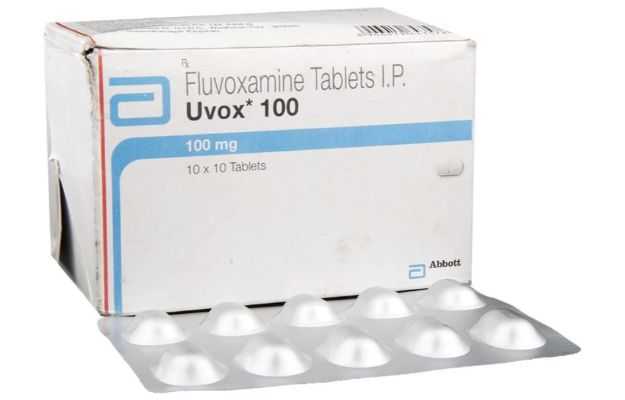
Uvox 100 Tablet contains Fluvoxamine (100mg), a selective serotonin reuptake inhibitor (SSRI). It is primarily prescribed for the treatment of depressive disorders and anxiety-related conditions, helping to restore the balance of serotonin in the brain.
This medication is often used for obsessive-compulsive disorder (OCD), social anxiety disorder, and major depressive disorder. By increasing serotonin levels, Fluvoxamine helps improve mood, reduce obsessive thoughts, and alleviate anxiety.
Uses:
-
Management of Obsessive-Compulsive Disorder (OCD)
-
Treatment of major depressive disorder
-
Relief from social anxiety disorder and other anxiety-related conditions
-
Helps reduce intrusive thoughts, anxiety, and low mood
How to Use:
-
Take the tablet once daily or as prescribed by your doctor.
-
Can be taken with or without food.
-
Swallow whole; do not crush or chew.
-
Follow your doctor’s guidance regarding dose adjustments and duration of therapy.
Side Effects:
Common:
-
Nausea, vomiting, or diarrhea
-
Dizziness, headache, or fatigue
-
Dry mouth, sweating, or insomnia
Serious (seek medical attention):
-
Severe mood changes or suicidal thoughts
-
Allergic reactions (rash, swelling, difficulty breathing)
-
Serotonin syndrome (agitation, hallucinations, rapid heartbeat, fever)
Safety Advice:
-
Pregnancy & Breastfeeding: Use only if prescribed; consult your doctor.
-
Liver or kidney disease: Dose adjustments may be required.
-
Avoid alcohol as it may increase side effects.
-
Do not stop suddenly; taper under medical supervision to avoid withdrawal symptoms.
-
Inform your doctor about other medications, especially antidepressants, anticoagulants, or seizure medications.
Storage:
-
Store in a cool, dry place, away from sunlight and moisture.
-
Keep out of reach of children.
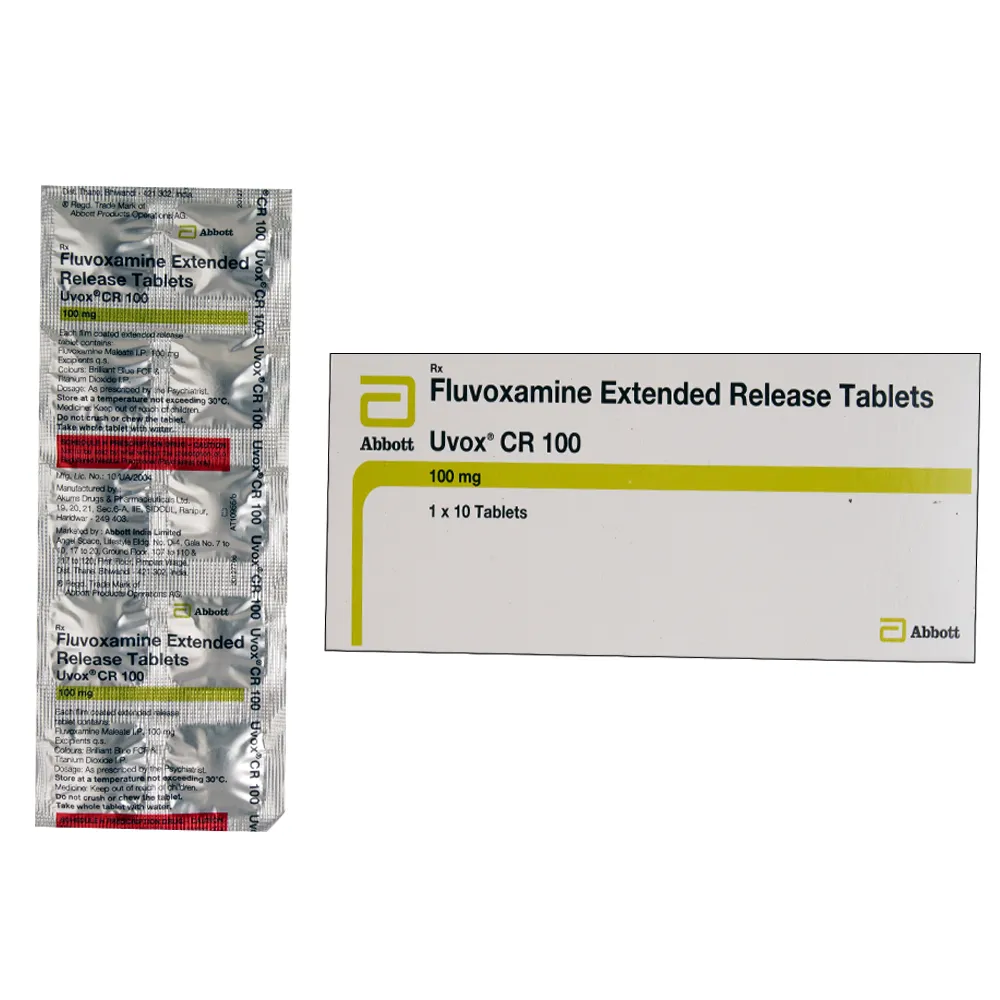
Uvox CR 100 Tablet is a controlled-release formulation containing Fluvoxamine (100mg), a selective serotonin reuptake inhibitor (SSRI). The controlled-release (CR) formulation allows gradual release of the medication, ensuring steady blood levels throughout the day and reducing the frequency of dosing.
It is primarily used for Obsessive-Compulsive Disorder (OCD), major depressive disorder, and anxiety-related conditions, helping to restore serotonin balance in the brain, improve mood, and reduce obsessive thoughts and anxiety.
Uses:
-
Management of Obsessive-Compulsive Disorder (OCD)
-
Treatment of major depressive disorder
-
Relief from social anxiety disorder and other anxiety-related conditions
-
Helps reduce intrusive thoughts, anxiety, and low mood
-
Suitable for patients who benefit from once-daily dosing due to CR formulation
How to Use:
-
Take the tablet once daily, preferably at the same time each day, as prescribed by your doctor.
-
Swallow whole; do not crush, chew, or split the tablet.
-
Can be taken with or without food.
-
Follow your doctor’s instructions regarding dose adjustments and duration of therapy.
Side Effects:
Common:
-
Nausea, vomiting, diarrhea
-
Dizziness, headache, fatigue
-
Dry mouth, sweating, insomnia
Serious (seek medical attention):
-
Severe mood changes or suicidal thoughts
-
Allergic reactions (rash, swelling, difficulty breathing)
-
Serotonin syndrome (agitation, hallucinations, rapid heartbeat, fever)
Safety Advice:
-
Pregnancy & Breastfeeding: Use only if prescribed; consult your doctor.
-
Liver or kidney disease: Dose adjustments may be required.
-
Avoid alcohol as it may increase side effects.
-
Do not stop suddenly; taper under medical supervision to avoid withdrawal.
-
Inform your doctor about other medications, especially antidepressants, anticoagulants, or seizure medicines.
Storage:
-
Store in a cool, dry place, away from sunlight and moisture.
-
Keep out of reach of children.

Uvox CR 150 Tablet is a controlled-release (CR) formulation containing Fluvoxamine (150mg), a selective serotonin reuptake inhibitor (SSRI). The CR formulation ensures gradual release of the active ingredient, maintaining steady blood levels throughout the day and allowing for once-daily dosing.
It is commonly prescribed for Obsessive-Compulsive Disorder (OCD), major depressive disorder, and anxiety-related disorders, helping restore serotonin balance in the brain, reduce intrusive thoughts, improve mood, and alleviate anxiety.
Uses:
-
Management of Obsessive-Compulsive Disorder (OCD)
-
Treatment of major depressive disorder
-
Relief from social anxiety disorder and other anxiety-related conditions
-
Reduces intrusive thoughts, anxiety, and low mood
-
Suitable for patients who need once-daily dosing due to CR formulation
How to Use:
-
Take the tablet once daily at the same time each day, as prescribed.
-
Swallow whole; do not crush, chew, or split the tablet.
-
Can be taken with or without food.
-
Follow your doctor’s instructions for dose adjustments and treatment duration.
Side Effects:
Common:
-
Nausea, vomiting, diarrhea
-
Dizziness, headache, fatigue
-
Dry mouth, sweating, insomnia
Serious (seek medical attention):
-
Severe mood changes or suicidal thoughts
-
Allergic reactions (rash, swelling, difficulty breathing)
-
Serotonin syndrome (agitation, hallucinations, rapid heartbeat, fever)
Safety Advice:
-
Pregnancy & Breastfeeding: Use only if prescribed by a doctor.
-
Liver or kidney disease: Dose adjustments may be necessary.
-
Avoid alcohol as it may worsen side effects.
-
Do not stop suddenly; taper under medical supervision to prevent withdrawal.
-
Inform your doctor about other medications, especially antidepressants, anticoagulants, or seizure medicines.
Storage:
-
Store in a cool, dry place, away from sunlight and moisture.
-
Keep out of reach of children.
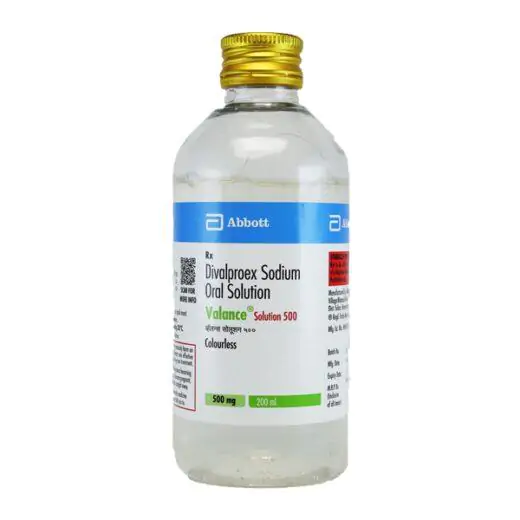
Valance 500 Oral Solution Colourless contains Divalproex (500mg/5ml), an anticonvulsant and mood stabilizer. Divalproex increases gamma-aminobutyric acid (GABA) levels in the brain, which helps calm overactive nerve activity and stabilizes mood.
This higher-strength solution is ideal for patients requiring larger doses of Divalproex in liquid form, including children, adults, or patients who have difficulty swallowing tablets. It is used for epilepsy, bipolar disorder, and migraine prevention.
Uses:
-
Treatment of epileptic seizures (generalized, partial, absence)
-
Bipolar disorder: Stabilizes mood and reduces manic episodes
-
Migraine prophylaxis: Helps prevent migraine attacks
-
Flexible liquid formulation for accurate dosing
How to Use:
-
Use exactly as prescribed by your doctor.
-
Measure the dose accurately using the provided measuring cup or syringe.
-
Can be taken with or without food.
-
Follow the doctor’s instructions regarding dose adjustments and therapy duration.
Side Effects:
Common:
-
Nausea, vomiting, abdominal discomfort
-
Drowsiness, dizziness, or fatigue
-
Tremors or mild hair loss
Serious (seek medical attention):
-
Liver dysfunction (yellow eyes/skin, dark urine)
-
Severe allergic reactions (rash, swelling, difficulty breathing)
-
Pancreatitis (severe abdominal pain, vomiting)
-
Unusual bleeding or bruising
Safety Advice:
-
Pregnancy & Breastfeeding: Only use if prescribed; may cause birth defects.
-
Liver or kidney issues: Regular monitoring required.
-
Avoid alcohol to reduce risk of side effects.
-
Do not stop suddenly; taper under medical supervision.
-
Regular blood tests may be required to monitor liver function and drug levels.
Storage:
-
Store in a cool, dry place, away from sunlight.
-
Keep the bottle tightly closed.
-
Keep out of reach of children.
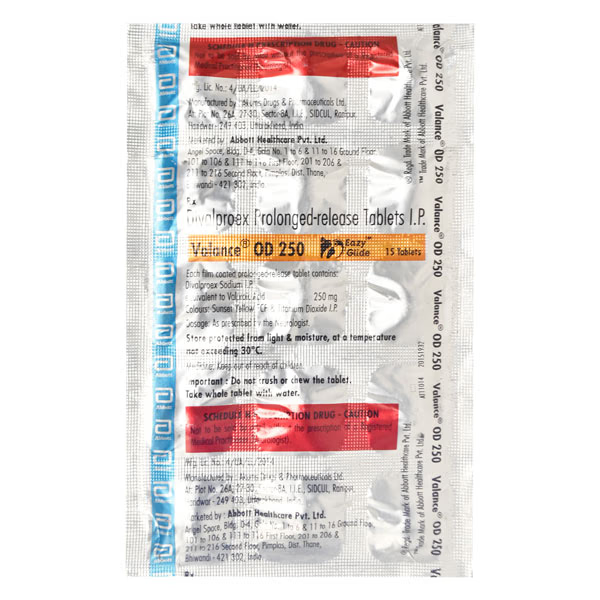
Valance OD 250 Eazy Glide Tablet PR is an antiepileptic medicine containing Divalproex Sodium (250mg), formulated as a prolonged-release (PR) tablet. It works by stabilizing abnormal electrical activity in the brain, which helps in controlling seizures, mood swings, and preventing migraine headaches. The “Eazy Glide” design makes swallowing easier and ensures slow, steady release of the medicine in the body for prolonged effect.
Uses
-
Treatment of epilepsy (controls different types of seizures)
-
Management of bipolar disorder (stabilizes mood swings and reduces manic episodes)
-
Prevention of migraine headaches
How it Works
Divalproex increases the levels of gamma-aminobutyric acid (GABA), a calming chemical messenger in the brain, which reduces excessive nerve activity and prevents abnormal electrical signals that trigger seizures, mood changes, or migraines.
Dosage & Administration
-
Take the tablet as prescribed by your doctor.
-
Swallow whole with water; do not crush or chew.
-
Usually taken once daily due to prolonged-release formulation.
-
Dosage depends on age, weight, and medical condition.
Side Effects
Common:
Serious (seek medical help immediately):
-
Liver problems (jaundice, dark urine, abdominal pain)
-
Pancreatitis (severe stomach pain, nausea, vomiting)
-
Unusual bleeding or bruising
-
Severe allergic reactions (rash, swelling, difficulty breathing)
Precautions
-
Not recommended during pregnancy, especially in the first trimester (risk of birth defects).
-
Regular liver function and blood tests may be required.
-
Avoid alcohol while taking this medicine.
-
Use with caution in patients with liver disease, pancreatitis, or bleeding disorders.
Storage
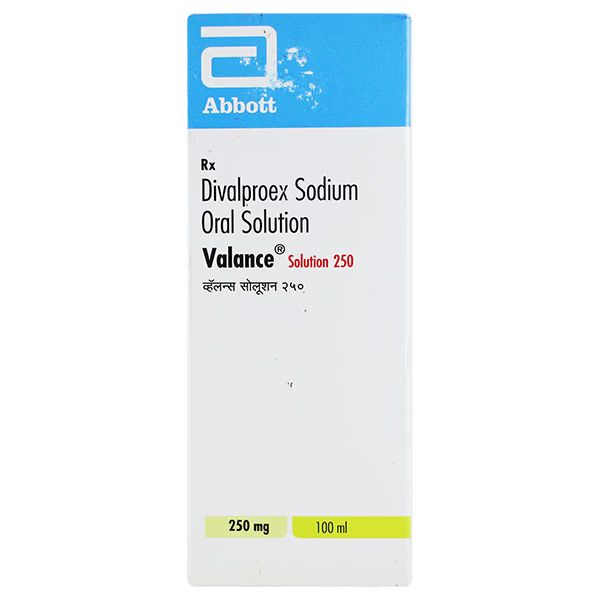
Valance Oral Solution contains Divalproex (250mg/5ml), an anticonvulsant and mood-stabilizing agent. Divalproex works by increasing the levels of gamma-aminobutyric acid (GABA) in the brain, which helps calm overactive nerve activity.
This solution is primarily used for the treatment of epilepsy, bipolar disorder, and migraine prophylaxis, providing flexible dosing for children, adults, and patients who have difficulty swallowing tablets.
Uses:
-
Management of epileptic seizures (generalized, partial, or absence seizures)
-
Bipolar disorder: Stabilizes mood and reduces manic episodes
-
Migraine prophylaxis: Helps prevent migraine attacks
-
Suitable for patients who require oral liquid formulation for easier administration
How to Use:
-
Take the oral solution exactly as prescribed by your doctor.
-
Use the measuring cup or syringe provided for accurate dosing.
-
Can be taken with or without food.
-
Follow your doctor’s instructions for dose adjustments and duration of therapy.
Side Effects:
Common:
-
Nausea, vomiting, stomach upset
-
Drowsiness, dizziness, or fatigue
-
Tremors or mild hair loss
Serious (seek medical attention):
-
Liver dysfunction (yellowing of eyes/skin, dark urine)
-
Severe allergic reactions (rash, swelling, difficulty breathing)
-
Pancreatitis (severe abdominal pain, vomiting)
-
Unusual bleeding or bruising
Safety Advice:
-
Pregnancy & Breastfeeding: Use only if prescribed; may cause birth defects.
-
Liver or kidney disease: Use with caution; regular monitoring required.
-
Avoid alcohol as it can worsen side effects.
-
Do not stop abruptly; taper under medical supervision to prevent seizures or mood destabilization.
-
Regular blood tests may be required to monitor liver function and blood levels.
Storage:
-
Store in a cool, dry place, away from sunlight.
-
Keep the bottle tightly closed.
-
Keep out of reach of children.
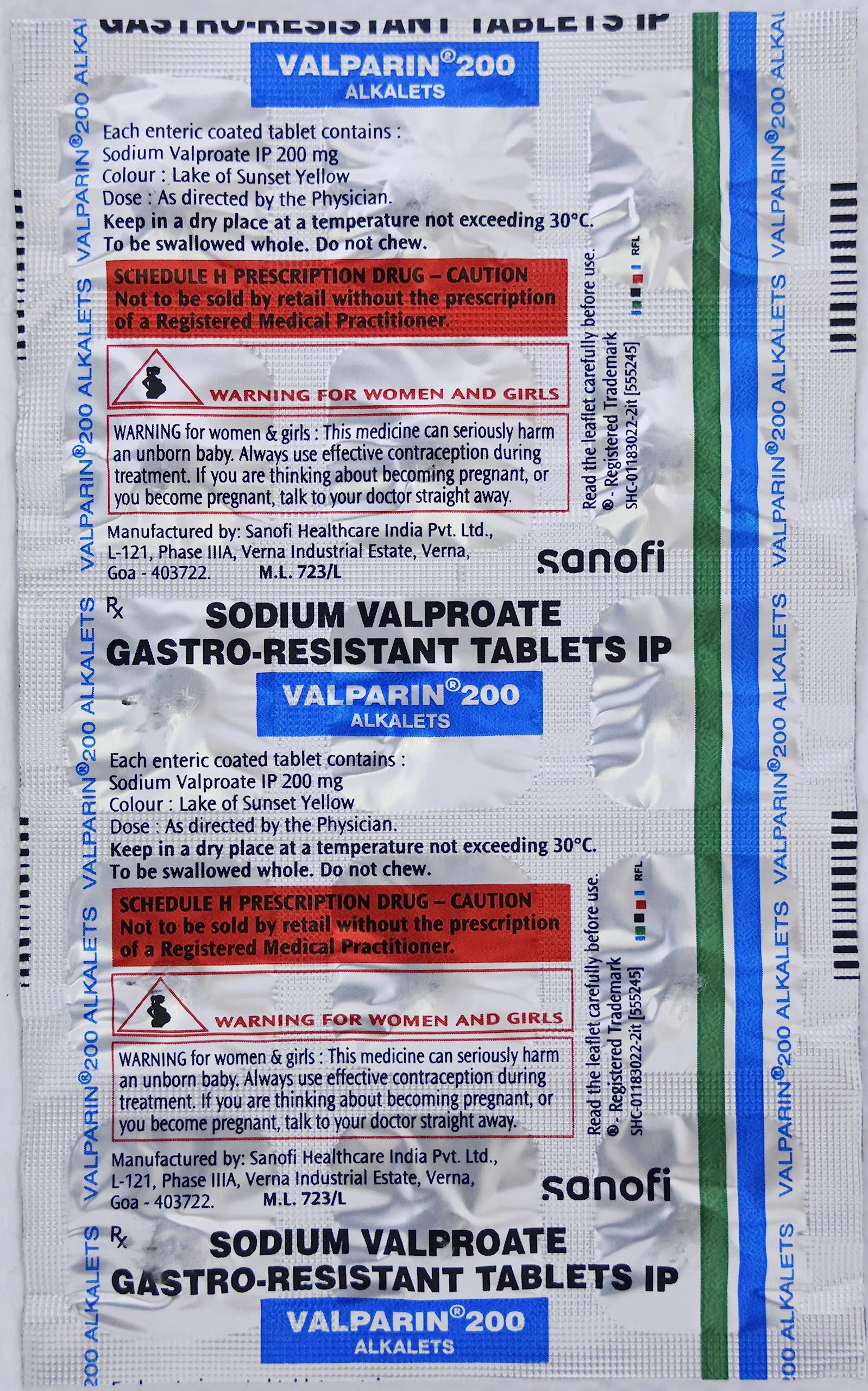
Valparin 200 Alkalets is a prescription medicine manufactured by Sanofi India Ltd. It contains Sodium Valproate (200mg) in an effervescent or fast-dissolving tablet form, making it easier to ingest and gentle on the stomach.
This medicine is used to treat various types of epilepsy, including generalized, partial, and absence seizures. It works by stabilizing abnormal electrical activity in the brain, thereby reducing the frequency and severity of seizures.
Uses
-
Management of epileptic seizures (generalized, partial, absence)
-
Prevents recurring seizure episodes
-
Suitable for patients who prefer dissolvable or effervescent tablets
-
Supports overall neurological stability in patients with epilepsy
Dosage
-
Take as prescribed by your doctor
-
Dissolve the tablet in water or take as directed
-
Usually taken once or twice daily, depending on the condition and response
-
Regular monitoring of liver function and blood counts is recommended
Side Effects
-
Nausea, vomiting, or stomach upset
-
Drowsiness or dizziness
-
Tremors, mild hair loss, or weight gain
-
Rare: liver damage, pancreatitis, or severe allergic reactions
Precautions
-
Regular blood tests and liver function monitoring are essential
-
Avoid alcohol as it may worsen drowsiness or affect liver function
-
Inform your doctor about other medications to prevent interactions
-
Not recommended during pregnancy unless strictly prescribed
-
Use cautiously in patients with liver, kidney, or heart disorders
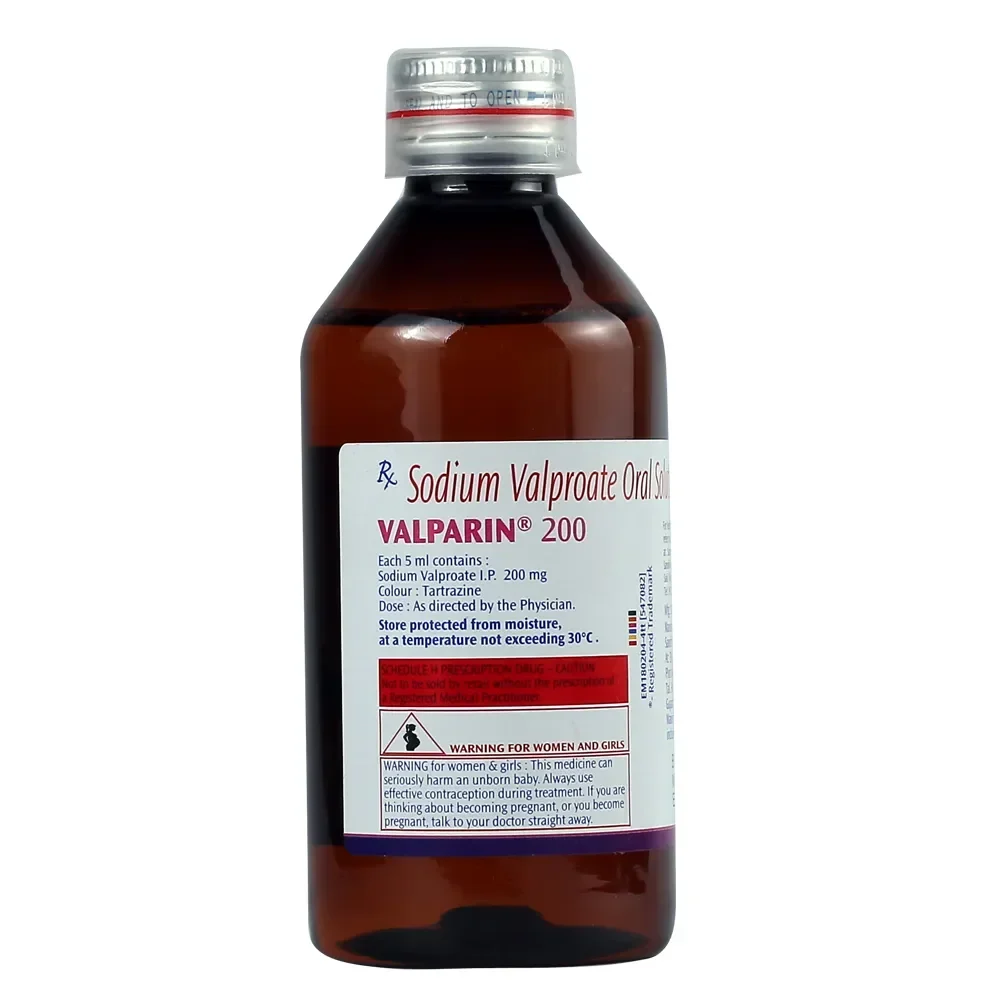
Valparin 200 Oral Solution is a prescription medicine manufactured by Sanofi India Ltd. It contains Sodium Valproate (200mg/5ml) in a liquid formulation with a delicious pineapple flavor, making it easier for children and adults who have difficulty swallowing tablets.
This solution is used to manage various types of epilepsy, including generalized, partial, and absence seizures. It works by stabilizing electrical activity in the brain, reducing seizure frequency and severity.
Uses
-
Management of epileptic seizures (generalized, partial, absence)
-
Prevents recurring seizure episodes
-
Suitable for children and adults who cannot swallow tablets
-
Supports overall neurological stability in patients with epilepsy
Dosage
-
Measure the dose carefully using a calibrated measuring device
-
Usually prescribed once or twice daily depending on the condition and response
-
Shake well before use
-
Follow the prescribed schedule and do not alter the dose without consulting the doctor
Side Effects
-
Nausea, vomiting, or stomach upset
-
Drowsiness or dizziness
-
Tremors, mild hair loss, or weight gain
-
Rare: liver damage, pancreatitis, or allergic reactions
Precautions
-
Regular blood tests and liver function monitoring are recommended
-
Avoid alcohol as it may worsen drowsiness and affect liver function
-
Inform the doctor about other medications to prevent interactions
-
Not recommended during pregnancy unless strictly prescribed
-
Use cautiously in patients with liver, kidney, or heart disorders

Valparin Alkalets 500 Tablet is a prescription medicine manufactured by Sanofi India Ltd. It contains Sodium Valproate (500mg) in an effervescent or fast-dissolving tablet form, designed to be easy on the stomach and convenient to take.
This medicine is used to manage various types of epilepsy, including generalized, partial, and absence seizures. By stabilizing abnormal electrical activity in the brain, it reduces seizure frequency and severity, helping patients maintain better neurological health.
Uses
-
Management of epileptic seizures (generalized, partial, absence)
-
Prevention of recurring seizure episodes
-
Suitable for patients who prefer dissolvable or effervescent tablets
-
Supports overall neurological stability
Dosage
-
Take as prescribed by your doctor
-
Dissolve the tablet in water or take as directed
-
Usually taken once or twice daily, depending on the patient’s condition
-
Regular monitoring of liver function and blood counts is recommended
Side Effects
-
Nausea, vomiting, or stomach upset
-
Drowsiness or dizziness
-
Tremors, mild hair loss, or weight gain
-
Rare: liver damage, pancreatitis, or severe allergic reactions
Precautions
-
Regular blood tests and liver function monitoring are essential
-
Avoid alcohol as it may worsen drowsiness or affect liver function
-
Inform the doctor about other medications to prevent interactions
-
Not recommended during pregnancy unless strictly prescribed
-
Use cautiously in patients with liver, kidney, or heart disorders