Valparin Chrono 200 Tablet CR is a prescription medicine manufactured by Sanofi India Ltd. It contains a combination of Sodium Valproate (133mg) and Valproic Acid (58mg) in a controlled-release (CR) formulation, allowing for sustained blood levels and convenient once- or twice-daily dosing.
This medicine is primarily used to treat various types of epilepsy, including generalized, partial, and absence seizures. By stabilizing electrical activity in the brain, it helps prevent seizures and reduces their frequency and severity.
Uses
-
Treatment of epileptic seizures (generalized, partial, and absence seizures)
-
Helps prevent recurring seizure episodes
-
May be used as part of combination therapy for better seizure control
-
Supports overall neurological stability in patients with epilepsy
Dosage
-
Take as prescribed by your doctor
-
Usually taken once or twice daily, depending on the patient’s condition
-
Swallow the tablet whole; do not crush or chew
-
Regular monitoring of liver function and blood counts is recommended
Side Effects
-
Nausea, vomiting, or stomach upset
-
Drowsiness or dizziness
-
Tremors or mild hair loss
-
Rare: liver problems, pancreatitis, or allergic reactions
Precautions
-
Regular blood tests and liver function monitoring are essential
-
Inform your doctor of other medications to avoid interactions
-
Not recommended during pregnancy unless strictly prescribed
-
Avoid alcohol, as it may increase drowsiness or liver strain
-
Use caution in patients with liver or kidney disorders
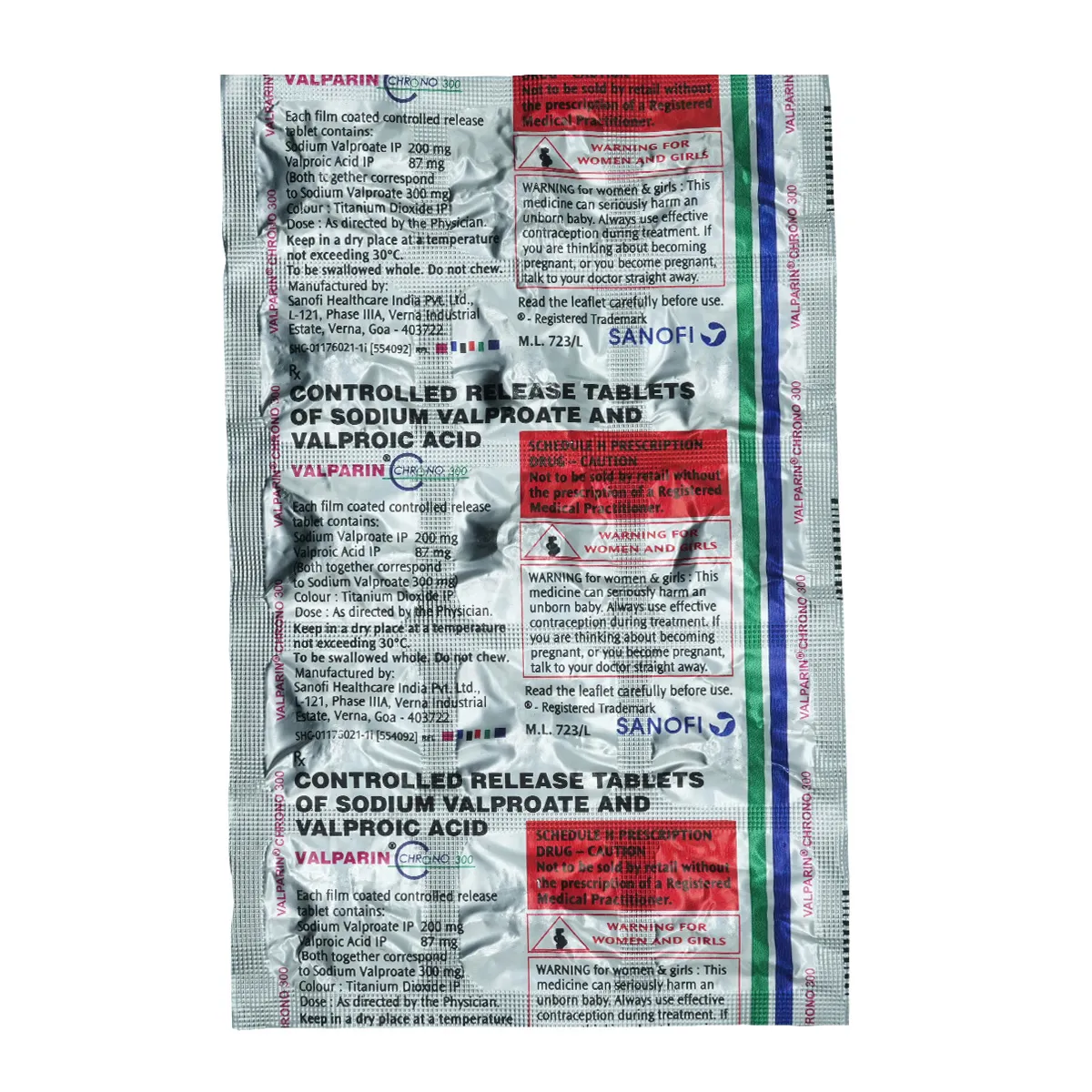
Valparin Chrono 300 Tablet CR is a prescription medicine manufactured by Sanofi India Ltd. It contains a combination of Sodium Valproate (200mg) and Valproic Acid (87mg) in a controlled-release (CR) formulation, which ensures sustained therapeutic blood levels and allows for convenient once- or twice-daily dosing.
This tablet is used to manage various types of epilepsy, including generalized, partial, and absence seizures. By stabilizing abnormal electrical activity in the brain, it reduces seizure frequency and severity, helping patients maintain better neurological health and daily functioning.
Uses
-
Management of epileptic seizures (generalized, partial, absence)
-
Prevents recurring seizure episodes
-
Can be used in combination therapy with other antiepileptic medicines
-
Supports overall neurological stability in patients with epilepsy
Dosage
-
Take as prescribed by your doctor
-
Usually taken once or twice daily depending on condition and response
-
Swallow the tablet whole; do not crush or chew
-
Regular monitoring of liver function, blood counts, and therapeutic levels is advised
Side Effects
-
Nausea, vomiting, or stomach upset
-
Drowsiness or dizziness
-
Tremors, mild hair loss, or weight gain
-
Rare: liver damage, pancreatitis, or severe allergic reactions
Precautions
-
Regular blood tests and liver function monitoring are essential
-
Avoid alcohol as it may increase drowsiness and affect liver function
-
Inform the doctor about all other medications to prevent interactions
-
Not recommended during pregnancy unless strictly prescribed
-
Use cautiously in patients with liver, kidney, or heart disorders
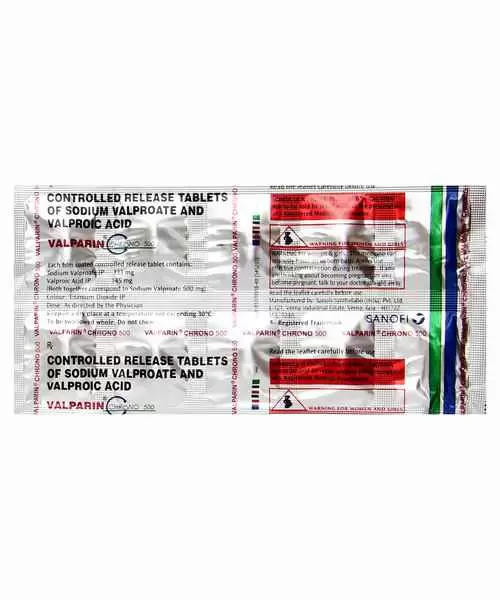
Valparin Chrono 500 Tablet CR is a prescription medicine manufactured by Sanofi India Ltd. It contains a combination of Sodium Valproate (333mg) and Valproic Acid (145mg) in a controlled-release (CR) formulation, which allows for sustained therapeutic levels in the blood and convenient once- or twice-daily dosing.
This medicine is used to treat various types of epilepsy, including generalized, partial, and absence seizures. By stabilizing electrical activity in the brain, it helps reduce the frequency and severity of seizures, improving overall quality of life for patients with epilepsy.
Uses
-
Management of epileptic seizures (generalized, partial, and absence seizures)
-
Prevention of recurring seizure episodes
-
May be used in combination with other antiepileptic medicines for better control
-
Supports neurological stability in patients with epilepsy
Dosage
-
Take as prescribed by your doctor
-
Usually taken once or twice daily, depending on the condition and response
-
Swallow the tablet whole; do not crush or chew
-
Regular monitoring of liver function, blood counts, and therapeutic levels is recommended
Side Effects
-
Nausea, vomiting, or stomach upset
-
Drowsiness or dizziness
-
Tremors, mild hair loss, or weight gain
-
Rare: liver damage, pancreatitis, or severe allergic reactions
Precautions
-
Regular blood tests and liver function monitoring are essential
-
Avoid alcohol as it may worsen drowsiness or affect liver function
-
Inform the doctor about other medications to prevent interactions
-
Not recommended during pregnancy unless strictly prescribed
-
Use caution in patients with liver, kidney, or heart disorders
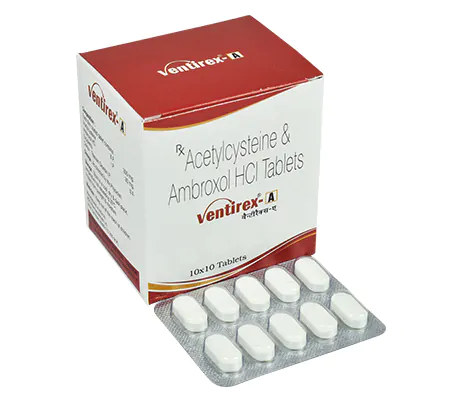
Uses:
Ventirex-A Tablet is prescribed for:
-
Acute and chronic bronchitis
-
Respiratory conditions with thick or sticky mucus
-
Cough with phlegm
-
Supporting treatment in chronic obstructive pulmonary disease (COPD) or asthma where mucus clearance is needed
How It Works:
-
Acetylcysteine (300mg): Breaks down the chemical structure of mucus, reducing its thickness and stickiness, making it easier to expel.
-
Ambroxol (30mg): Stimulates mucus secretion and enhances ciliary movement in the respiratory tract, helping to clear airways efficiently.
How to Use:
-
Take orally with water, preferably after food.
-
Swallow the tablet whole; do not crush or chew.
-
Follow the dosage prescribed by your doctor.
Precautions:
-
Use only under medical supervision.
-
Inform your doctor if you have asthma, peptic ulcers, or liver/kidney issues.
-
Pregnant or breastfeeding women should use only if advised by a physician.
-
Store in a cool, dry place, away from direct sunlight and moisture.
Dosage:
Typically 1 tablet 2–3 times daily, depending on the severity of the condition and doctor’s recommendation.
Side Effects:
-
Nausea, vomiting, or gastrointestinal discomfort
-
Mild headache or dizziness
-
Rare allergic reactions like rash, itching, or swelling
Discontinue use and consult your doctor if severe or persistent side effects occur.

Verbet 16 Tablet contains Betahistine (16mg), a medicine used to manage Ménière’s disease and vertigo. It works by improving blood flow in the inner ear, which helps in reducing pressure build-up, thereby relieving symptoms such as dizziness, ringing in the ears (tinnitus), nausea, and hearing loss.
Betahistine is a histamine analogue that enhances microcirculation in the inner ear, leading to better balance and reduction of vertigo episodes.
Uses
Verbet 16 Tablet is prescribed for the treatment of:
-
Ménière’s disease (inner ear disorder)
-
Vertigo (spinning sensation)
-
Tinnitus (ringing in the ears)
-
Hearing loss associated with inner ear dysfunction
-
Balance disorders
Benefits
-
Reduces frequency and severity of vertigo attacks
-
Improves balance and stability
-
Relieves tinnitus and ear fullness
-
Prevents progression of Ménière’s disease symptoms
-
Enhances quality of life in patients with inner ear problems
Side Effects
Common side effects may include:
Most side effects are mild and temporary.
Precautions
-
Use only under medical supervision.
-
Caution advised in patients with:
-
Not recommended in patients with pheochromocytoma (rare adrenal tumor).
-
Safe use in pregnancy and breastfeeding requires doctor’s consultation.
Dosage & Administration
-
Usual dose: One tablet (16mg) two to three times daily, or as prescribed.
-
Should be taken with food to reduce stomach upset.
-
Duration of treatment varies depending on the patient’s condition and response.

Verbet 24 Tablet contains Betahistine (24mg), a medicine used in the treatment of Ménière’s disease and vertigo-related disorders. It works by improving blood flow in the inner ear and reducing the pressure caused by excess fluid build-up. This helps relieve symptoms such as vertigo (spinning sensation), tinnitus (ringing in the ears), hearing loss, and balance disturbances.
Betahistine acts as a histamine analogue that enhances microcirculation in the inner ear, reduces abnormal fluid accumulation, and improves balance signals to the brain.
Uses
Verbet 24 Tablet is prescribed for:
-
Ménière’s disease (inner ear disorder)
-
Vertigo and dizziness
-
Tinnitus (ringing or buzzing in ears)
-
Hearing loss associated with inner ear dysfunction
-
Balance disorders
Benefits
-
Reduces frequency and intensity of vertigo attacks
-
Improves stability and balance
-
Relieves ear fullness and tinnitus
-
Prevents worsening of Ménière’s disease symptoms
-
Enhances daily functioning and quality of life
Side Effects
Common side effects may include:
Precautions
-
Use only under medical advice.
-
Caution required in patients with:
-
Contraindicated in patients with pheochromocytoma (adrenal gland tumor).
-
Use in pregnancy and breastfeeding should be guided by a doctor.
Dosage & Administration
-
Usual dose: One tablet (24mg) once or twice daily, or as directed by the physician.
-
Should be taken with food to minimize stomach upset.
-
Treatment duration depends on condition severity and response.

Verbet 8 Tablet contains Betahistine (8mg), a medicine used to treat Ménière’s disease and vertigo disorders. It helps by increasing blood flow in the inner ear and reducing excess fluid pressure, which in turn improves balance and hearing while reducing symptoms like vertigo, tinnitus (ringing in ears), nausea, and dizziness.
Uses
Verbet 8 Tablet is recommended for:
-
Ménière’s disease (inner ear condition)
-
Vertigo and dizziness
-
Tinnitus (buzzing/ringing in ears)
-
Hearing loss due to inner ear problems
-
Balance disorders
Benefits
-
Relieves spinning sensation (vertigo)
-
Reduces ear ringing and pressure
-
Improves hearing and balance
-
Prevents worsening of Ménière’s disease symptoms
-
Supports better quality of life in patients with ear/balance issues
Side Effects
Most side effects are mild and temporary. They may include:
Precautions
-
Should be taken under a doctor’s supervision.
-
Use with caution if you have:
-
Not recommended in patients with pheochromocytoma (rare adrenal tumor).
-
Use in pregnancy and breastfeeding requires medical advice.
Dosage & Administration
-
Typical dose: One tablet (8mg), two to three times daily, or as directed by the physician.
-
Best taken with food to avoid stomach upset.
-
Treatment duration depends on medical condition and doctor’s advice.

Verna 16 MD Tablet contains Betahistine (16mg), a histamine analogue used to treat vertigo, dizziness, and balance disorders, especially those associated with Ménière’s disease. It works by improving blood flow in the inner ear, reducing the pressure build-up that causes symptoms like spinning sensation (vertigo), ringing in the ears (tinnitus), nausea, and hearing loss. The “MD” form means the tablet dissolves in the mouth, offering faster relief.
Uses:
-
Treatment of vertigo and dizziness
-
Management of Ménière’s disease
-
Relief from tinnitus (ringing in ears) and hearing imbalance
-
Helps improve ear circulation and balance control
How to Use:
-
Take the tablet as prescribed by your doctor, usually 2–3 times a day.
-
Place the MD tablet on your tongue and let it dissolve; no need to swallow with water.
-
Take it at the same time daily for better symptom control.
Dosage:
-
Typical dose: 16mg two or three times daily, depending on your condition.
-
Do not stop treatment suddenly without consulting your doctor, even if symptoms improve.
Precautions:
-
Inform your doctor if you have a history of asthma, stomach ulcers, or low blood pressure.
-
Use cautiously in pregnant or breastfeeding women—only if clearly advised by a physician.
-
Avoid alcohol, as it may worsen dizziness.
-
If you experience severe headaches or stomach discomfort, inform your doctor promptly.
Side Effects:
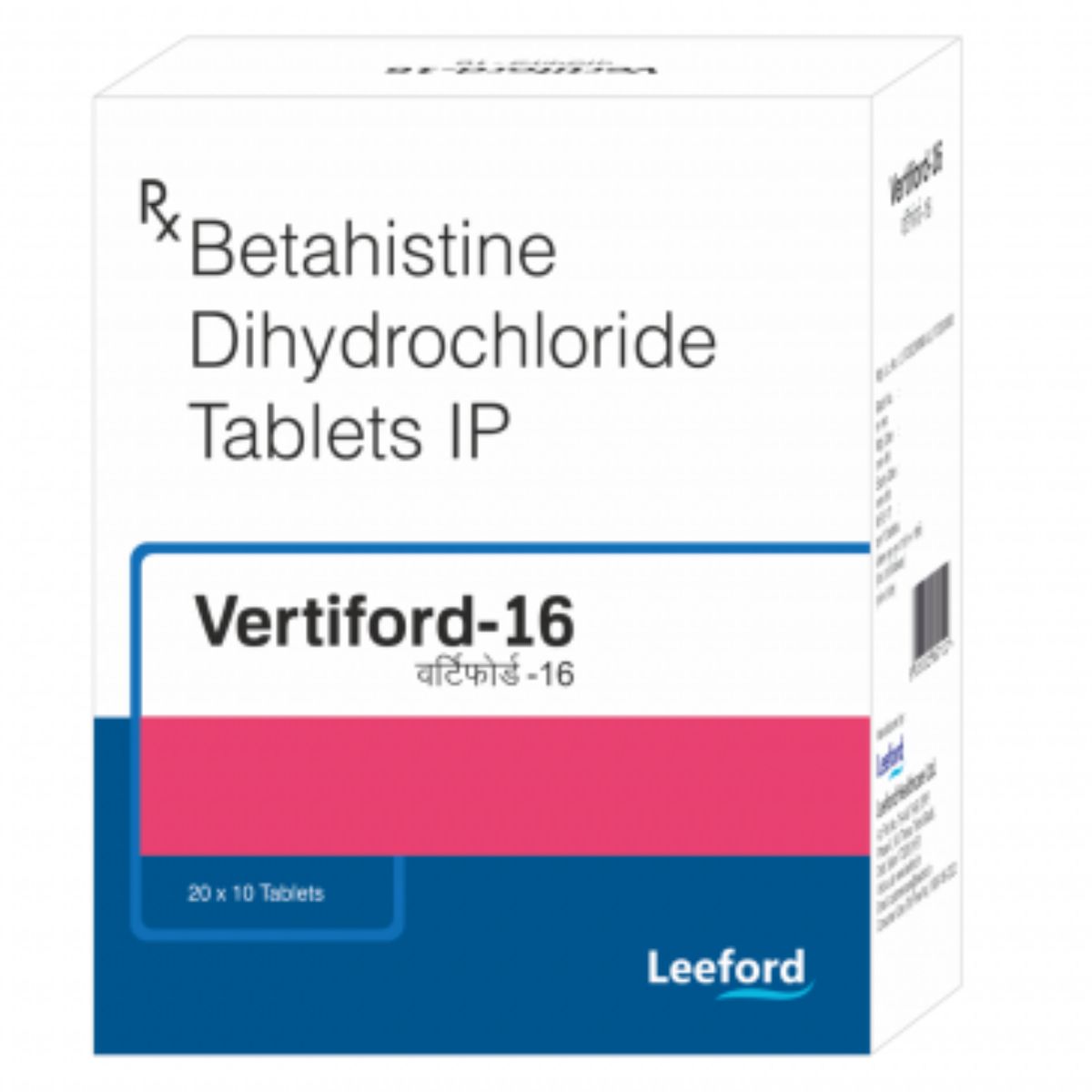
Uses of Vertiford 16 Tablet
Vertiford 16 Tablet is used for:
- Ménière’s disease
- Vertigo (spinning sensation)
- Dizziness
- Balance disorders
- Ringing in the ears (Tinnitus)
- Hearing problems associated with Ménière’s disease
- Nausea caused by vertigo
How Vertiford 16 Tablet Works
Betahistine is a histamine analogue that improves blood flow in the inner ear by dilating blood vessels and reducing fluid pressure within the vestibular system. This helps normalize inner ear function, reducing the frequency and severity of vertigo attacks while improving balance and relieving associated symptoms.
Dosage
- Take Vertiford 16 Tablet exactly as prescribed by your doctor.
- It is usually taken 2–3 times daily, depending on your condition.
- Swallow the tablet whole with water.
- It is preferable to take the medicine after meals to reduce stomach discomfort.
- Continue treatment for the duration advised by your doctor.
How to Use
- Swallow the tablet whole with a glass of water.
- Take it after food if advised.
- Take it at the same time each day.
- Do not skip doses for the best therapeutic effect.
- Avoid stopping the medicine without consulting your doctor.
Benefits of Vertiford 16 Tablet
- Helps relieve vertigo and dizziness.
- Reduces the frequency of Ménière’s disease attacks.
- Improves balance and coordination.
- Relieves ringing in the ears (tinnitus).
- May help improve hearing symptoms associated with Ménière’s disease.
- Improves overall quality of life in people with recurrent vertigo.
Possible Side Effects
Common side effects include:
- Headache
- Nausea
- Indigestion
- Stomach discomfort
- Bloating
Seek immediate medical attention if you experience:
- Severe allergic reactions
- Difficulty breathing
- Swelling of the face, lips, tongue, or throat
- Severe skin rash
Precautions
Before taking Vertiford 16 Tablet, inform your doctor if you:
- Have asthma
- Have a stomach ulcer or a history of peptic ulcer disease
- Have low blood pressure
- Are pregnant or breastfeeding
- Have liver or kidney disease
- Are allergic to Betahistine or any of its ingredients
Use this medicine only under medical supervision.