DINCERIN C2 PLUS is a comprehensive nutraceutical formulation aimed at promoting joint health and managing osteoarthritis. It integrates anti-inflammatory, analgesic, and cartilage-supportive nutrients to provide synergistic relief from joint pain, stiffness, and cartilage degeneration.
How DINCERIN C2 PLUS Works
-
Rosehip Oil: Possesses natural anti-inflammatory and antioxidant properties, helping reduce joint inflammation and pain.
-
Glucosamine Sulphate: Supports cartilage repair, helps lubricate joints, and decreases cartilage breakdown.
-
Curcuminoid: Active component of turmeric, known for potent anti-inflammatory and antioxidant effects that contribute to pain and swelling relief in joints.
-
Chondroitin Sulphate: Aids in cartilage elasticity and resists cartilage breakdown, essential for healthy joint structure.
-
Boswellia serrata: Botanical extract with evidence for reducing pain and stiffness in osteoarthritis via anti-inflammatory action.
-
UC Type-II Collagen: Helps maintain cartilage integrity and reduces autoimmune-driven cartilage degradation, improving joint function and reducing pain.
-
Hyaluronic Acid: Enhances joint lubrication and shock absorption, improving mobility and comfort.
Uses of DINCERIN C2 PLUS
-
Osteoarthritis and degenerative joint diseases
-
Joint pain, stiffness, and decreased mobility
-
Maintenance and repair of cartilage and joint lining
-
Adjunct to other therapies for comprehensive joint support.
Benefits
-
Synergistic reduction in joint pain, swelling, and morning stiffness
-
Protection against cartilage degeneration and joint space narrowing
-
Improved joint lubrication and flexibility, supporting daily movement.
Side Effects
Generally well-tolerated, but some may experience:
-
Mild digestive upset: bloating, nausea, diarrhea, or constipation
-
Allergic reactions are rare but possible, especially in those allergic to shellfish-derived glucosamine or botanical extracts
-
Inform a healthcare provider about ongoing supplements and medicines before starting.
Directions for Use and Precautions
-
Take DINCERIN C2 PLUS as advised by a healthcare provider, preferably with meals.
-
Use for intended duration to achieve best symptom relief and joint health benefits.
-
Seek advice if pregnant, breastfeeding, taking anticoagulants, or with known shellfish or plant extract allergies.
DINCERIN C2 PLUS is designed for joint health maintenance and symptomatic support in osteoarthritis, under medical supervision and guidance.

DINCERIN PLUS is a combination medicine formulated to manage osteoarthritis and chronic inflammatory conditions affecting the joints. It contains Diacerein, Glucosamine, and Methylsulfonylmethane (MSM), each contributing to joint health, pain relief, and cartilage repair.
How DINCERIN PLUS Works
-
Diacerein: A disease-modifying osteoarthritis drug (DMOAD) with anti-inflammatory properties, specifically targeting joint inflammation by inhibiting interleukin-1. It helps relieve joint pain and reduces swelling and stiffness.
-
Glucosamine: A natural compound that aids the formation, repair, and maintenance of cartilage (the cushioning tissue in joints). It promotes joint lubrication and flexibility, thereby reducing pain and improving mobility.
-
MSM (Methylsulfonylmethane): An organosulfur compound with anti-inflammatory effects, MSM helps decrease pain, supports joint function, and aids in protecting connective tissue integrity.
Uses of DINCERIN PLUS
-
Osteoarthritis (especially of knee and hip)
-
Relief of joint pain, stiffness, and swelling
-
Cartilage repair and improvement of joint function
-
May also support management of other connective tissue disorders.
Benefits
-
Reduces joint pain, swelling, and morning stiffness
-
Improves joint mobility and comfort during movement
-
Supports cartilage health and may delay further progression of joint degeneration.
Side Effects
Common side effects may include:
-
Nausea, diarrhea, constipation, indigestion, heartburn
-
Urine discoloration (from Diacerein)
-
Rare: Headache, itching, allergic reactions, or worsening of allergy symptoms
If side effects are persistent or severe, consult a healthcare professional.
Directions for Use and Precautions
-
Take DINCERIN PLUS as prescribed, usually with food to avoid gastric discomfort.
-
Not suitable for everyone—inform your doctor about medical history and ongoing medications.
-
Use with caution in pregnancy, breastfeeding, diabetes, liver or kidney disease.
-
Continue therapy as recommended for best results and do not stop without medical advice.
DINCERIN PLUS is a prescription-only product intended for use under medical supervision in joint health and degenerative joint disease.
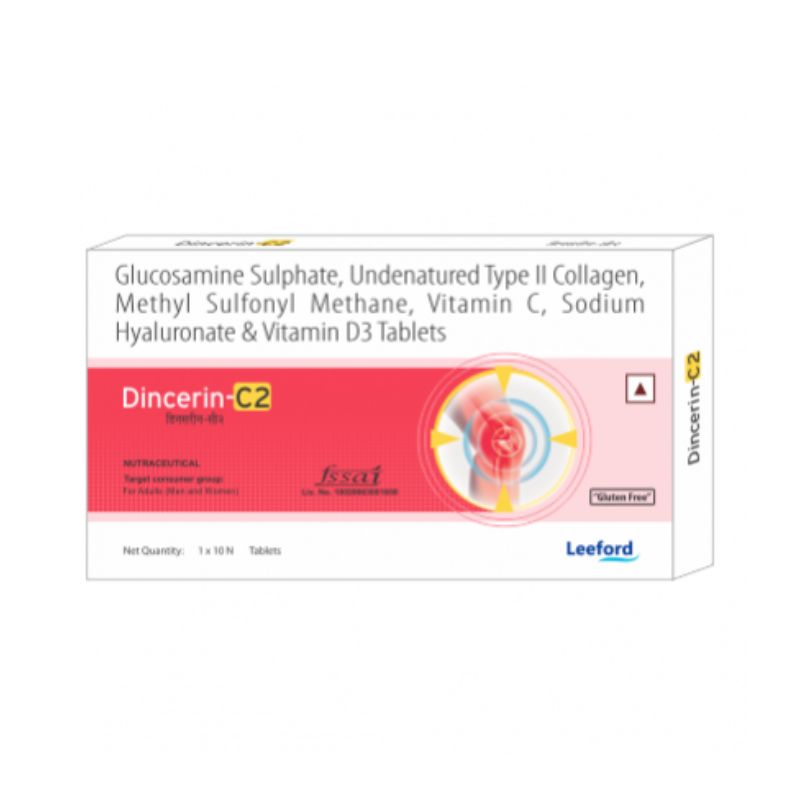
DINCERIN-C2 is a comprehensive joint health supplement designed for people with osteoarthritis, joint degeneration, or those seeking to improve cartilage integrity and function. The specialized combination of glucosamine, MSM, collagen peptides type-II, sodium hyaluronate, vitamin C, and vitamin D3 addresses both joint structure and comfort.
How DINCERIN-C2 Works
-
Glucosamine Sulphate: Helps rebuild and maintain healthy cartilage, reducing joint pain and improving mobility.
-
Methylsulfonylmethane (MSM): Provides organic sulfur, reducing inflammation and supporting connective tissue resilience.
-
Collagen Peptides Type-II: Supports cartilage reformation and structure, vital for healthy joints.
-
Sodium Hyaluronate: Lubricates joints, supports cartilage, and aids in shock absorption.
-
Vitamin C: Essential for collagen synthesis and cartilage repair, also acts as an antioxidant.
-
Vitamin D3: Promotes bone health and aids calcium absorption, vital for joint support.
Uses of DINCERIN-C2
-
Management of osteoarthritis and joint pain
-
Support for cartilage regeneration and joint repair
-
Improvement of joint comfort, movement, and daily functioning
-
May help with symptoms of chronic joint conditions and assist during rehabilitation after joint injury.
Benefits
-
Reduces joint pain, inflammation, and discomfort
-
Promotes cartilage health and resilience, slowing down cartilage degeneration
-
Enhances joint lubrication and shock absorption, resulting in improved movement
-
Supports bone strength and overall joint function.
Side Effects
Generally well-tolerated, but may cause:
-
Gastrointestinal complaints: mild nausea, diarrhea, bloating, or stomach upset
-
Rare: Allergic reactions, especially if allergic to shellfish (glucosamine is usually derived from shellfish).
-
Report any new or unusual symptoms to a healthcare provider.
Directions for Use and Precautions
-
Take DINCERIN-C2 as directed, usually with food and water for best absorption and to reduce stomach upset.
-
Suitable for long-term support under medical guidance.
-
Not recommended during pregnancy or breastfeeding, or for those allergic to any component, unless advised by a doctor.
DINCERIN-C2 is intended for use under medical supervision for optimal joint health and osteoarthritis management.

DINCERIN-CT is a combination tablet formulated to maintain and support joint health. It contains Glucosamine and Chondroitin, both of which are naturally occurring compounds essential for cartilage structure and function.
How DINCERIN-CT Works
-
Glucosamine: Promotes the formation and repair of cartilage, enhances joint lubrication, and supports flexibility. It may help slow cartilage breakdown and support joint movement.
-
Chondroitin Sulphate: Contributes to cartilage elasticity and inhibits enzymes responsible for cartilage degradation. It aids in reduction of pain and joint swelling by maintaining joint resilience.
Uses of DINCERIN-CT
-
Osteoarthritis (commonly knees, hips, hands, and spine)
-
Joint pain and stiffness
-
Maintenance of joint space and prevention of cartilage wear
-
Potentially helps reduce swelling and improve joint mobility in degenerative joint diseases.
Benefits
-
Reduces symptoms of osteoarthritis including pain, stiffness, and swelling
-
Promotes cartilage repair and slows further joint degeneration
-
Supports overall joint health and function, improving comfort and mobility.
Side Effects
Most people tolerate Glucosamine/Chondroitin well. Potential side effects include:
-
Mild stomach upset, bloating, nausea, constipation, or diarrhea
-
Rare: Headache, allergic reactions (especially in those allergic to shellfish, as glucosamine is often derived from shellfish)
-
Interactions can occur with certain medications (especially blood thinners), so consult a healthcare professional before starting.
Directions for Use and Precautions
-
Take as prescribed, with food and plenty of water to minimize gastric side effects.
-
Use caution in people with shellfish allergy, diabetes, or those taking anticoagulants.
-
Not recommended during pregnancy or breastfeeding unless advised by a doctor.
-
Continued, regular use as advised by a physician for optimal benefits.
DINCERIN-CT is intended for prescription-based use under medical guidance for joint health and osteoarthritis management.

Dipsalic F Ointment is a combination medicine used to treat eczema and psoriasis. It works by reducing redness, swelling, itching, and irritation, while also helping to remove dead skin cells and soften rough patches of skin.
It contains two active ingredients:
-
Clobetasol (steroid): Reduces skin inflammation and itching by blocking the release of chemicals that cause irritation.
-
Salicylic Acid (keratolytic): Gently removes dead skin cells, softens rough skin, and helps Clobetasol absorb better into the skin.
This makes Dipsalic F Ointment especially effective in controlling flare-ups of eczema and psoriasis.
Key Benefits
-
Relieves itching, redness, and swelling in eczema
-
Helps manage psoriasis by removing rough, scaly patches
-
Softens skin and makes it smoother
-
Improves skin appearance, boosting comfort and confidence
Common Side Effects
Most are mild and temporary:
If irritation persists or worsens, consult your doctor.
Directions for Use
-
For external use only.
-
Clean and dry the affected area before applying.
-
Gently massage a thin layer of ointment as directed by your doctor.
-
Wash your hands after use (unless applying on hands).
-
Do not use more than the recommended dose or for longer than prescribed.
Safety Advice
-
Pregnancy: Use only if prescribed by your doctor.
-
Breastfeeding: Probably safe, but avoid applying on the chest to prevent accidental contact with the baby.
-
Alcohol / Driving / Kidney / Liver: No known issues.
Missed Dose
Apply as soon as you remember. If it’s nearly time for the next application, skip the missed dose. Do not double apply.

Dirifa 550 Tablet is an antibiotic medicine containing Rifaximin (550mg). It is commonly prescribed for the treatment of hepatic encephalopathy (a complication of liver disease that affects brain function) and irritable bowel syndrome with diarrhea (IBS-D). Rifaximin works locally in the gut to reduce harmful bacteria and toxins without significantly affecting the beneficial gut flora.
Uses
-
Management of hepatic encephalopathy (reduces ammonia-producing gut bacteria).
-
Treatment of Irritable Bowel Syndrome with Diarrhea (IBS-D).
-
May be prescribed for traveler’s diarrhea caused by certain bacteria.
-
Helps in improving digestive symptoms like bloating, gas, and loose stools associated with bacterial imbalance.
How It Works
Rifaximin is a broad-spectrum, gut-selective antibiotic. It works by:
-
Stopping the growth of harmful bacteria in the intestine.
-
Reducing production of toxins (such as ammonia) that affect brain function in liver patients.
-
Restoring balance in the intestinal microbiota.
Dosage & Administration
-
Usually taken orally with or without food.
-
Dose depends on the condition being treated (commonly 550 mg twice daily for hepatic encephalopathy).
-
Must be taken at the same time each day for best results.
-
Do not stop the medicine without consulting your doctor.
Side Effects
Common side effects may include:
-
Nausea
-
Headache
-
Flatulence (gas)
-
Abdominal pain
-
Fatigue
Serious but rare side effects:
-
Severe diarrhea (may indicate Clostridium difficile infection)
-
Allergic reactions such as rash, itching, swelling
Precautions
-
Use with caution in patients with severe liver impairment.
-
Not effective against viral or fungal infections.
-
Inform your doctor if you are taking other antibiotics or laxatives.
-
Pregnant or breastfeeding women should take only if clearly advised by a doctor.
-
Long-term use should be monitored by a

Divalpro 250 Tablet contains Divalproex Sodium (250mg), an anticonvulsant and mood-stabilizing agent. It is primarily used to manage epilepsy, bipolar disorder, and migraine prophylaxis. Divalproex works by stabilizing electrical activity in the brain, preventing abnormal firing of neurons that can lead to seizures or mood swings.
This medication is effective for a wide range of seizure types and also helps in reducing the frequency and severity of migraine attacks and stabilizing mood in patients with bipolar disorder.
Uses of Divalpro 250 Tablet
-
Epilepsy: Management of generalized, partial, and absence seizures
-
Bipolar disorder: To control mania and mood swings
-
Migraine prophylaxis: Reduces the frequency and severity of migraine attacks
-
Other neurological conditions: May be used for certain neuropathic pain disorders under medical supervision
How It Works
Divalproex acts by:
-
Increasing GABA (gamma-aminobutyric acid) levels in the brain, an inhibitory neurotransmitter that reduces nerve excitability
-
Stabilizing neuronal membranes, preventing excessive firing of nerve signals
-
Modulating brain chemical balance, which helps in mood stabilization and seizure control
This mechanism makes it effective in controlling seizures, mood disorders, and migraine attacks.
Dosage and Administration
-
Dosage is determined by the medical condition, age, and patient response.
-
Typically taken orally, with or after food to reduce stomach upset.
-
Swallow the tablet whole; do not crush, chew, or break unless specified by a doctor.
-
Follow the prescribed schedule strictly; abrupt discontinuation may trigger seizures or mood instability.
Side Effects
Common side effects:
Serious side effects (rare):
-
Liver toxicity or abnormal liver function
-
Pancreatitis
-
Severe allergic reactions (rash, swelling, or difficulty breathing)
-
Thrombocytopenia (low platelet count)
-
Suicidal thoughts or mood changes
Seek immediate medical attention if severe symptoms occur.
Precautions
-
Inform your doctor if you have liver disease, kidney disease, pancreatitis, or metabolic disorders.
-
Regular liver function and blood tests may be required during treatment.
-
Use cautiously in pregnancy or breastfeeding — Divalproex may cause birth defects.
-
Avoid alcohol, as it may increase the risk of side effects.
-
Do not stop treatment abruptly without medical supervision.
Drug Interactions
Divalpro 250 Tablet may interact with:
-
Other anticonvulsants (e.g., Phenytoin, Carbamazepine) – may require dose adjustments
-
Anticoagulants (e.g., Warfarin) – may alter blood clotting
-
Aspirin and NSAIDs – may increase risk of bleeding
-
Certain antibiotics and antifungals – may alter Divalproex levels
-
Sedatives or alcohol – may increase drowsiness
Always inform your healthcare provider about all medications and supplements being taken.
Storage Instructions
-
Store below 25°C, in a cool and dry place.
-
Protect from light and moisture.
-
Keep out of reach of children.
Key Benefits of Divalpro 250 Tablet
-
Effective seizure control for various types of epilepsy
-
Helps stabilize mood in bipolar disorder
-
Prevents or reduces migraine attacks
-
Provides long-term management of neurological and psychiatric conditions
-
Improves quality of life by reducing episodes of seizures, mania, or migraine

Divalpro XR 250 Tablet is a extended-release (XR) formulation of Divalproex Sodium (250mg). It is used to manage epilepsy, bipolar disorder, and migraine prophylaxis. The extended-release formulation allows slow and sustained release of the active ingredient, providing longer-lasting therapeutic effects and reducing the frequency of dosing compared to regular tablets.
This formulation is particularly helpful in maintaining stable blood levels of the medication, which helps in preventing seizures, controlling mood swings, and reducing migraine frequency.
Uses of Divalpro XR 250 Tablet
-
Epilepsy: Management of generalized, partial, and absence seizures
-
Bipolar disorder: Stabilizes mood and prevents mania
-
Migraine prophylaxis: Reduces frequency and severity of migraine attacks
-
Maintenance therapy for neurological and psychiatric conditions requiring steady drug levels
How It Works
Divalproex acts by:
-
Increasing GABA (gamma-aminobutyric acid) levels in the brain, an inhibitory neurotransmitter that reduces nerve excitability
-
Stabilizing neuronal membranes, preventing excessive firing of nerve signals
-
Maintaining balanced brain chemistry, aiding mood stabilization and seizure control
The extended-release mechanism ensures gradual absorption, minimizing peaks and troughs in drug concentration and improving tolerability.
Dosage and Administration
-
Taken orally, once or twice daily, depending on the doctor’s prescription.
-
Swallow the tablet whole; do not crush, chew, or break.
-
Can be taken with or after food to reduce gastrointestinal discomfort.
-
Follow the prescribed schedule strictly; abrupt discontinuation may lead to seizures or mood instability.
Side Effects
Common side effects:
-
Nausea, vomiting, or abdominal discomfort
-
Drowsiness or dizziness
-
Tremors or unsteady movements
-
Weight gain
-
Hair loss (temporary)
Serious side effects (rare):
-
Liver toxicity or abnormal liver function
-
Pancreatitis
-
Severe allergic reactions (rash, swelling, difficulty breathing)
-
Thrombocytopenia (low platelet count)
-
Suicidal thoughts or mood changes
Seek immediate medical attention if severe symptoms occur.
Precautions
-
Use cautiously in patients with liver disease, kidney disease, pancreatitis, or metabolic disorders.
-
Regular liver function tests and blood counts may be required during treatment.
-
Use with caution in pregnancy or breastfeeding, as Divalproex may cause birth defects.
-
Avoid alcohol; it can increase drowsiness and risk of side effects.
-
Do not stop therapy abruptly without medical supervision.
Drug Interactions
Divalpro XR 250 Tablet may interact with:
-
Other anticonvulsants (Phenytoin, Carbamazepine) – dose adjustment may be needed
-
Anticoagulants (Warfarin) – may affect clotting
-
NSAIDs or Aspirin – may increase bleeding risk
-
Certain antibiotics or antifungals – may alter Divalproex levels
-
Sedatives or alcohol – may increase drowsiness
Always inform your doctor about all medications being taken.
Storage Instructions
-
Store below 25°C, in a cool and dry place.
-
Protect from light and moisture.
-
Keep out of reach of children.
Key Benefits of Divalpro XR 250 Tablet
-
Provides long-lasting seizure control
-
Helps stabilize mood in bipolar disorder
-
Reduces migraine frequency and severity
-
Minimizes peaks and troughs in drug levels for better tolerability
-
Convenient once-daily or twice-daily dosing

Diziron Tablet contains Cinnarizine (25mg), an antihistamine and calcium channel blocker commonly used for the treatment of motion sickness, vertigo, and balance disorders. It works by reducing inner ear activity, thereby controlling nausea, dizziness, and spinning sensations (vertigo).
Cinnarizine also improves blood flow to the brain and inner ear, which helps relieve symptoms related to labyrinthine and vestibular disorders.
Uses
-
Treatment and prevention of motion sickness
-
Relief from vertigo, dizziness, and balance disorders
-
Management of Meniere’s disease (inner ear disorder with tinnitus, vertigo, and hearing loss)
-
Adjunct therapy in cerebrovascular disorders with impaired blood circulation
Dosage & Directions for Use
-
Usual adult dose: 1–2 tablets (25–50mg) two to three times daily, or as prescribed by the physician.
-
For motion sickness: Take 1 tablet 2 hours before travel, followed by 1 tablet every 8 hours during the journey if required.
-
Swallow with water after meals.
-
Do not exceed the recommended dose without medical advice.
Possible Side Effects
Common:
Rare but serious:
-
Allergic skin reactions (rash, itching, swelling)
-
Tremors or movement disorders (with long-term/high-dose use)
-
Low blood pressure or irregular heartbeat
Avoid alcohol while taking Diziron, as it may increase drowsiness. Use caution while driving or operating machinery.

Uses
- Rheumatoid arthritis
- Active inflammatory arthritis, as prescribed
- Helps control joint inflammation and disease progression
Benefits
- Reduces joint inflammation
- Helps relieve pain and stiffness
- Reduces swelling in affected joints
- Helps improve physical function
- Helps slow the progression of rheumatoid arthritis
How DM Lef Works
Leflunomide is a disease-modifying antirheumatic drug (DMARD). It blocks an enzyme involved in the production of certain immune cells. By reducing excessive immune-system activity, it helps decrease inflammation and slows the progression of rheumatoid arthritis.
Dosage & How to Use
Take DM Lef 10mg Tablet exactly as prescribed by your rheumatologist or doctor.
- Swallow the tablet whole with water.
- It may be taken with or without food.
- Take it at the same time each day.
- Do not stop treatment without medical advice.
Leflunomide may require regular blood tests during treatment.
Side Effects
Common side effects may include:
- Diarrhea
- Nausea
- Headache
- Indigestion
- Hair loss
- Skin rash
- Increased blood pressure
Important serious side effects include:
- Liver damage
- Low blood cell counts
- Serious infections
- Severe skin reactions
- Lung problems
- Peripheral nerve problems
Contact your doctor promptly if you develop yellowing of the skin/eyes, persistent cough or breathing difficulty, unusual bruising, severe rash, or signs of infection.
Precautions
Liver: Leflunomide can cause liver injury. Liver function tests are generally required during treatment.
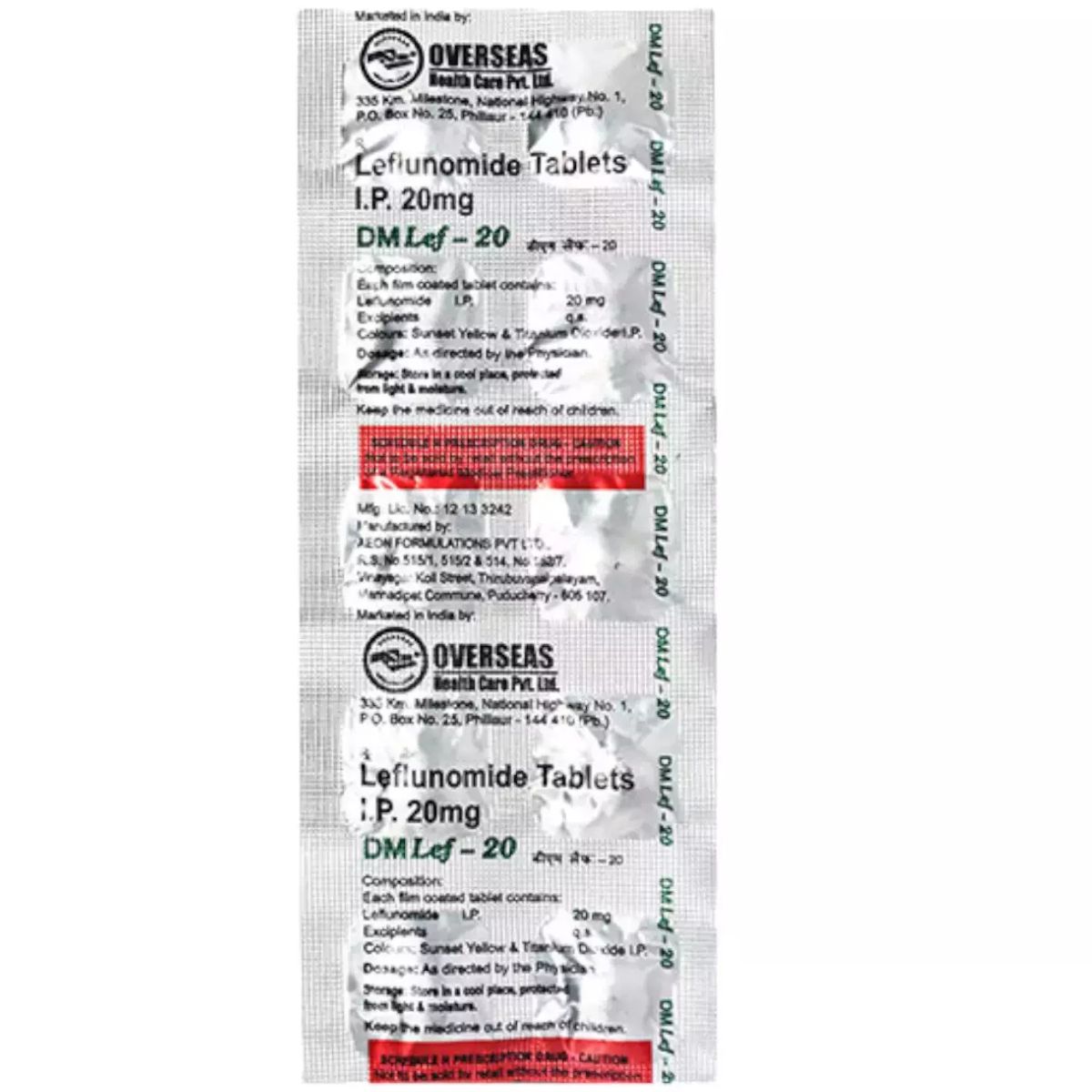
Uses
- Rheumatoid arthritis
- Active inflammatory arthritis, as prescribed
- Helps reduce joint inflammation and disease activity
- Helps slow progression of joint damage
Benefits
- Reduces joint inflammation
- Helps relieve pain and stiffness
- Reduces swelling in affected joints
- Improves joint function
- Helps slow the progression of rheumatoid arthritis
How DM Lef 20 Works
Leflunomide is a DMARD that suppresses excessive immune-system activity. It blocks an enzyme needed for the production of certain immune cells, thereby reducing the inflammation responsible for rheumatoid arthritis and helping slow disease progression.
Dosage & How to Use
Take DM Lef 20 Tablet exactly as prescribed by your doctor.
- Swallow the tablet whole with water.
- It may be taken with or without food.
- Take it at the same time each day.
- Do not stop treatment without consulting your doctor.
Regular blood tests may be required during treatment to monitor liver function and blood cell counts.
Side Effects
Common side effects may include:
- Diarrhea
- Nausea
- Headache
- Indigestion
- Hair loss
- Skin rash
- Increased blood pressure
Serious side effects can include:
- Liver injury
- Low blood cell counts
- Serious infections
- Severe skin reactions
- Lung problems
- Peripheral neuropathy
Contact your doctor promptly if you develop yellowing of the skin or eyes, persistent cough, breathing difficulty, unusual bruising, severe rash, or signs of infection.
Precautions
Inform your doctor if you have:
- Liver disease
- Kidney disease
- Recurrent infections
- Blood disorders
- Immune-system disorders
- High blood pressure