



Description
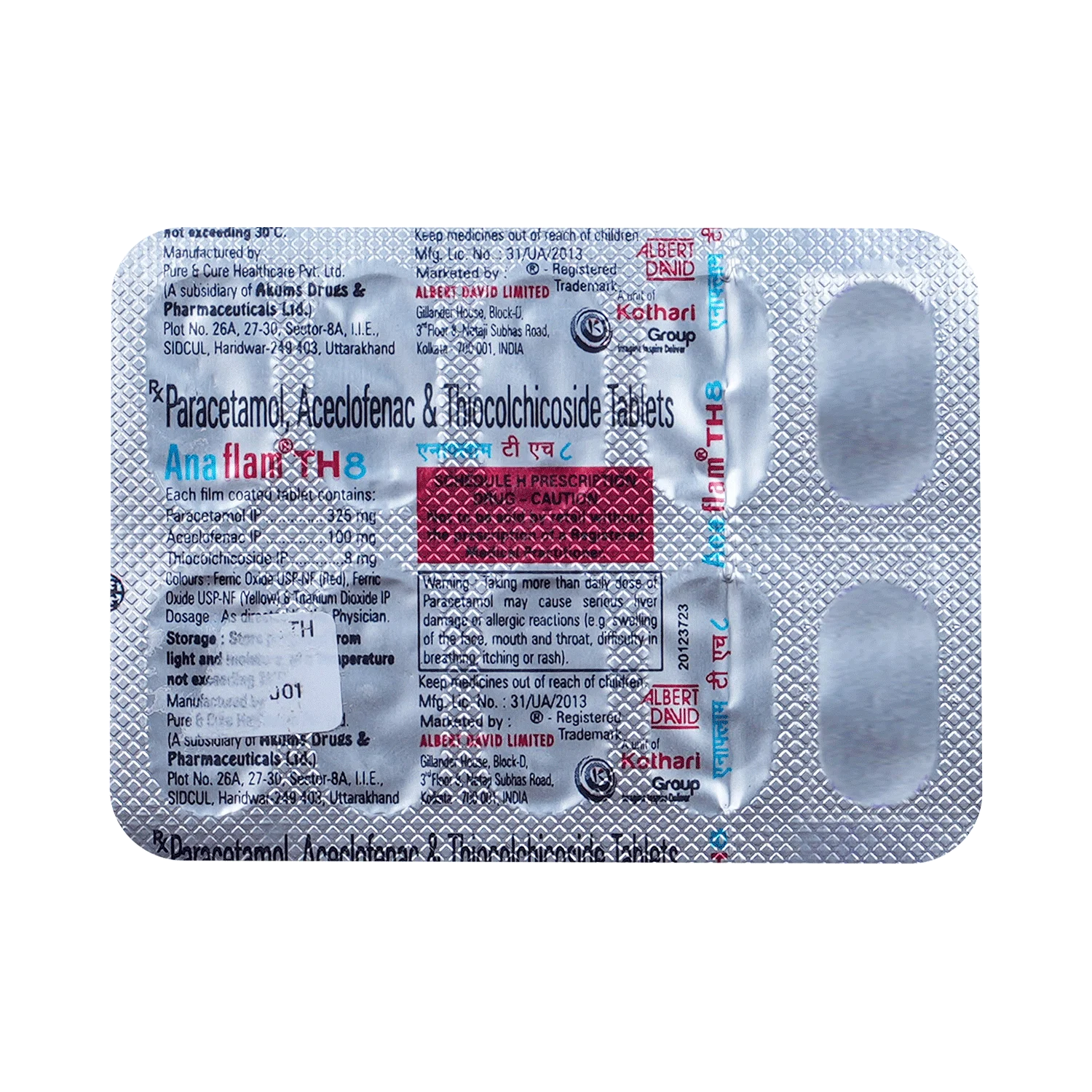
Anaflam TH 8 Tablet is a combination medicine that provides comprehensive relief from painful muscle spasms, inflammation, and associated fever or discomfort. It is especially useful in orthopedic and musculoskeletal conditions where both pain management and muscle relaxation are necessary.
This formulation contains three active ingredients, each working synergistically:
-
Thiocolchicoside (8mg):
-
A semi-synthetic muscle relaxant derived from colchicoside (found in Gloriosa superba).
-
Works by acting on the gamma-aminobutyric acid (GABA) receptors in the central nervous system, reducing muscle hyperexcitability.
-
Provides relief from muscle stiffness, rigidity, and spasms, improving mobility and flexibility.
-
At 8mg strength, it is prescribed for more severe muscle spasm conditions compared to the 4mg dose.
-
-
Aceclofenac (100mg):
-
A non-steroidal anti-inflammatory drug (NSAID) belonging to the phenylacetic acid group.
-
Inhibits cyclooxygenase (COX) enzymes, reducing prostaglandin synthesis responsible for pain, swelling, and inflammation.
-
Offers effective relief in conditions such as osteoarthritis, rheumatoid arthritis, ankylosing spondylitis, and sports injuries.
-
-
Paracetamol (325mg):
-
Acts as an analgesic (pain reliever) and antipyretic (fever reducer).
-
Works by blocking pain signals in the brain and regulating body temperature.
-
Enhances the pain-relieving effect of Aceclofenac, making the combination more effective.
-
Together, these three components make Anaflam TH 8 Tablet a potent therapy for musculoskeletal pain where simple painkillers or muscle relaxants alone may not be sufficient.
Therapeutic Uses
Anaflam TH 8 Tablet is prescribed for a wide range of acute and chronic painful conditions, such as:
-
Muscle Spasms & Injuries: Back pain, cervical pain, shoulder stiffness, torticollis (wry neck), sciatica, and post-exercise muscle strain.
-
Orthopedic Disorders: Spondylitis, spondylosis, herniated disc-related muscle pain.
-
Arthritic Conditions: Rheumatoid arthritis, osteoarthritis, ankylosing spondylitis with associated stiffness.
-
Post-Traumatic Pain: Sports injuries, sprains, ligament tears, and fractures.
-
Post-Surgical Pain: Helps in faster recovery by reducing both inflammation and muscle stiffness.
Benefits
-
Provides fast-acting relief from severe muscle pain and spasms.
-
Reduces inflammation, swelling, and joint stiffness.
-
Improves mobility, posture, and daily activity in patients with musculoskeletal disorders.
-
Works as a comprehensive pain management therapy, combining anti-inflammatory, analgesic, and muscle relaxant actions.
Side Effects
Like all medicines, Anaflam TH 8 may cause some side effects, although not everyone experiences them. Common side effects include:
-
Gastrointestinal: Nausea, vomiting, abdominal pain, indigestion, heartburn, diarrhea, constipation.
-
Neurological: Drowsiness, dizziness, headache, or fatigue.
-
Skin Reactions: Rashes, itching, redness (rare).
-
Liver-Related: Elevated liver enzymes or jaundice with prolonged use.
-
Other: Gastric ulceration or bleeding (rare, usually with long-term use).
Seek urgent medical advice if you notice severe abdominal pain, black/tarry stools, persistent vomiting, skin yellowing, or allergic swelling.
Precautions & Warnings
-
Alcohol: Avoid alcohol consumption as it increases the risk of liver damage and gastric irritation.
-
Pregnancy & Breastfeeding: Not recommended, especially in the third trimester due to risk of complications. Consult a doctor before use.
-
Liver/Kidney Disorders: Use with caution in patients with liver disease, kidney impairment, or chronic alcoholism.
-
Heart Patients: Aceclofenac may increase the risk of cardiovascular events; caution is advised in patients with hypertension, heart disease, or history of stroke.
-
Drug Interactions: Avoid combining with other NSAIDs, steroids, anticoagulants, or additional paracetamol-containing products without medical advice.
Dosage & Administration
-
The dose is usually one tablet twice daily, or as directed by the physician.
-
Should be taken after meals to minimize stomach irritation.
-
Do not self-medicate or exceed the prescribed duration, as long-term use of NSAIDs and muscle relaxants may cause side effects.



Leave a Reply