



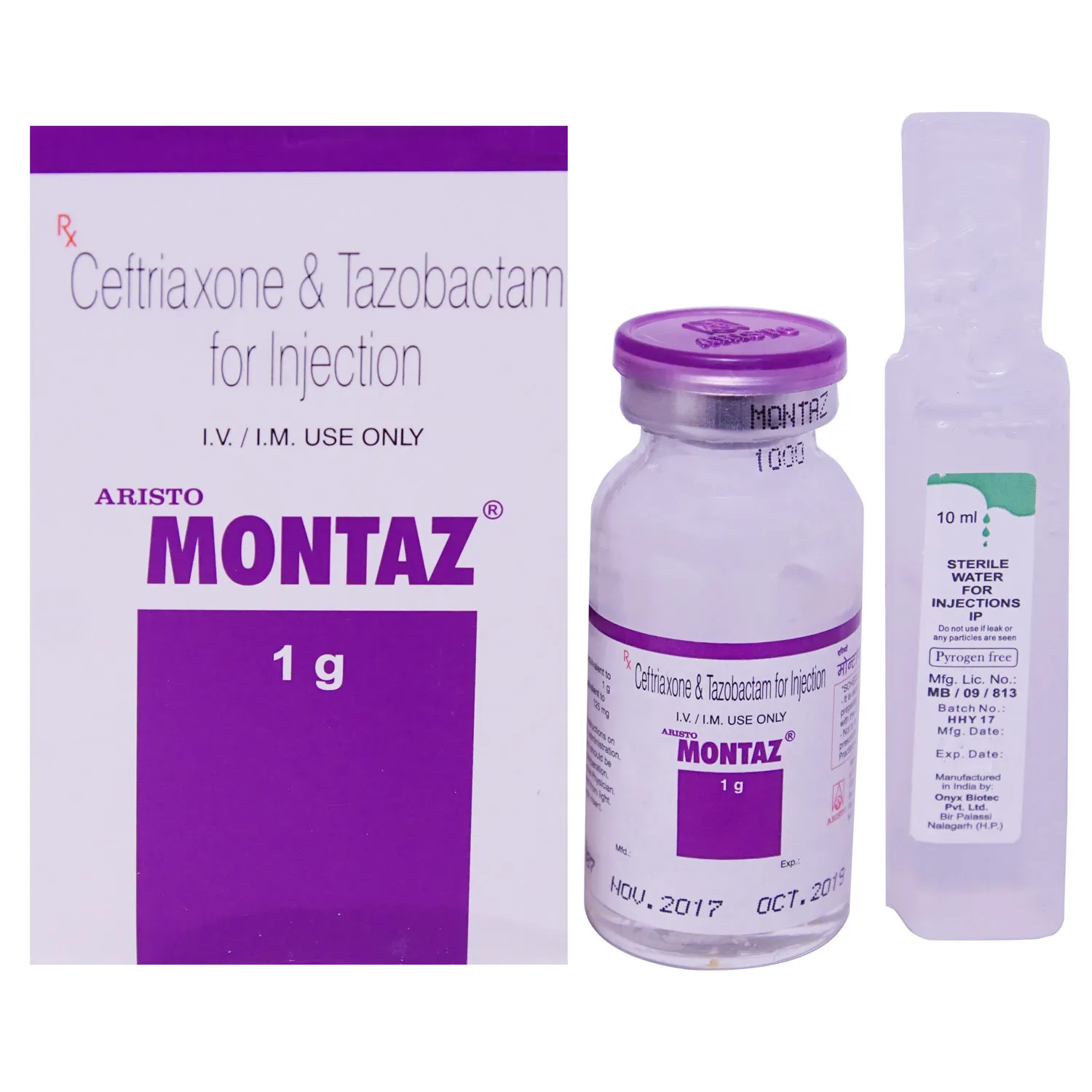
Description
Montaz 1g Injection is a broad-spectrum antibiotic combination containing Ceftriaxone (a third-generation cephalosporin) and Tazobactam (a beta-lactamase inhibitor). Ceftriaxone kills bacteria by preventing cell wall formation, while Tazobactam prevents bacterial resistance by blocking beta-lactamase enzymes. This synergistic effect makes Montaz effective against a wide range of Gram-positive and Gram-negative infections, including resistant strains.
The 1g strength is widely used in adult patients with moderate to severe infections.
Uses
-
Lower respiratory tract infections (pneumonia, bronchitis)
-
Urinary tract infections (UTIs)
-
Intra-abdominal infections (peritonitis, post-surgical infections)
-
Skin and soft tissue infections
-
Bone and joint infections
-
Septicemia (bloodstream infections)
-
Meningitis (in adults and children)
-
Gynecological infections (pelvic inflammatory disease, post-partum infections)
-
Hospital-acquired infections caused by resistant organisms
How It Works
-
Ceftriaxone: Inhibits bacterial cell wall synthesis, leading to bacterial death.
-
Tazobactam: Inactivates beta-lactamase enzymes, which would otherwise destroy Ceftriaxone.
Together, they provide enhanced antibacterial activity and prevent treatment failure due to resistance.
Side Effects
Common:
-
Pain, swelling, or redness at injection site
-
Diarrhea, nausea, vomiting
-
Headache, mild fever, rash
Serious (rare):
-
Severe allergic reactions (anaphylaxis, swelling, difficulty breathing)
-
Persistent or bloody diarrhea (Clostridium difficile infection)
-
Abnormal liver function or jaundice
-
Blood count changes (low platelets, anemia, leukopenia)
Precautions
-
Avoid in patients allergic to cephalosporins or penicillins
-
Dose adjustment may be required in kidney or liver impairment
-
Neonates with hyperbilirubinemia should not receive Ceftriaxone
-
Use in pregnancy and breastfeeding only under medical supervision
Administration
-
Given by a healthcare professional via intravenous (IV) or intramuscular (IM) route
-
Dosage depends on patient’s age, weight, and severity of infection
-
The 1g injection is generally prescribed for adults and sometimes older children in severe infections

Leave a Reply