



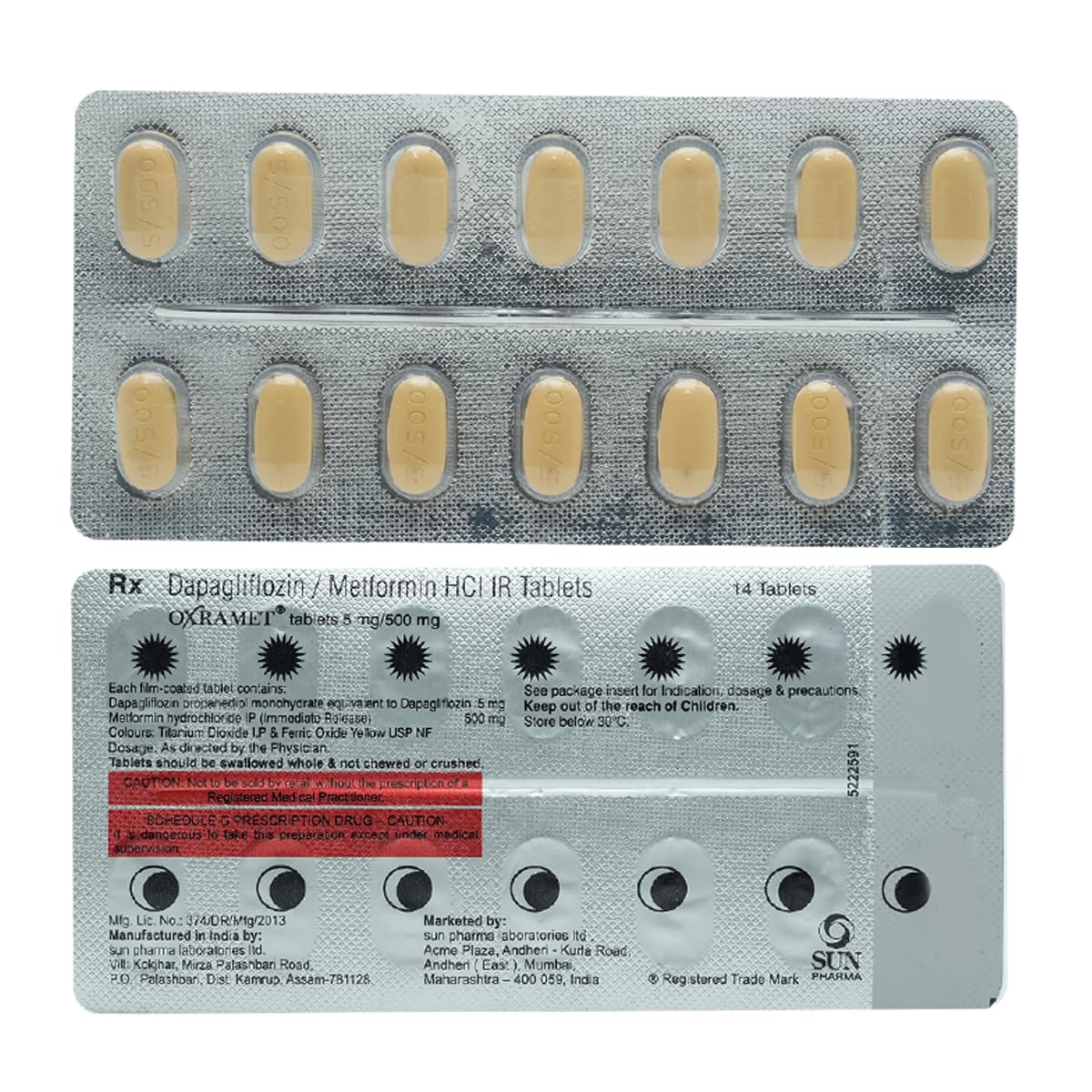
Description
Oxramet 5mg/500mg Tablet IR is a combination of Dapagliflozin (5mg) and Metformin (500mg), used for the management of type 2 diabetes mellitus. It is prescribed when diet, exercise, and single-drug treatment do not provide adequate blood sugar control.
-
Dapagliflozin is an SGLT2 inhibitor that reduces blood sugar by removing excess glucose from the body through urine.
-
Metformin is a biguanide that decreases glucose production in the liver and enhances the body’s sensitivity to insulin.
This dual therapy helps achieve better glycemic control, reduces the risk of long-term diabetes complications, and may also provide additional benefits for heart and kidney health.
Uses:
-
Treatment of type 2 diabetes mellitus
-
Improves blood sugar control when monotherapy is inadequate
-
May reduce risk of cardiovascular and kidney-related complications in diabetic patients
How to Use:
Take the tablet with meals to minimize stomach irritation. Swallow it whole with water. Always follow your doctor’s advice on diet and lifestyle along with medication.
Dosage:
The dose depends on your blood sugar levels, overall health, and doctor’s recommendations. Do not self-adjust or discontinue the medicine without medical supervision.
Precautions:
-
Not intended for type 1 diabetes or diabetic ketoacidosis.
-
Inform your doctor if you have kidney, liver, or heart problems.
-
Metformin may rarely cause lactic acidosis; seek urgent care if you experience unusual tiredness, muscle pain, or breathing difficulty.
-
Dapagliflozin may increase the risk of urinary tract and genital infections.
-
Stay hydrated to avoid dehydration.
-
Use cautiously during pregnancy and breastfeeding.
-
Regular monitoring of blood sugar, kidney function, and vitamin B12 levels is recommended.
Side Effects:
-
Nausea, diarrhea, abdominal pain (Metformin-related)
-
Increased urination, urinary or genital infections (Dapagliflozin-related)
-
Low blood sugar when combined with insulin or other diabetes medicines
-
Dizziness, dehydration
-
Rare but serious: lactic acidosis, severe allergic reactions




Leave a Reply