



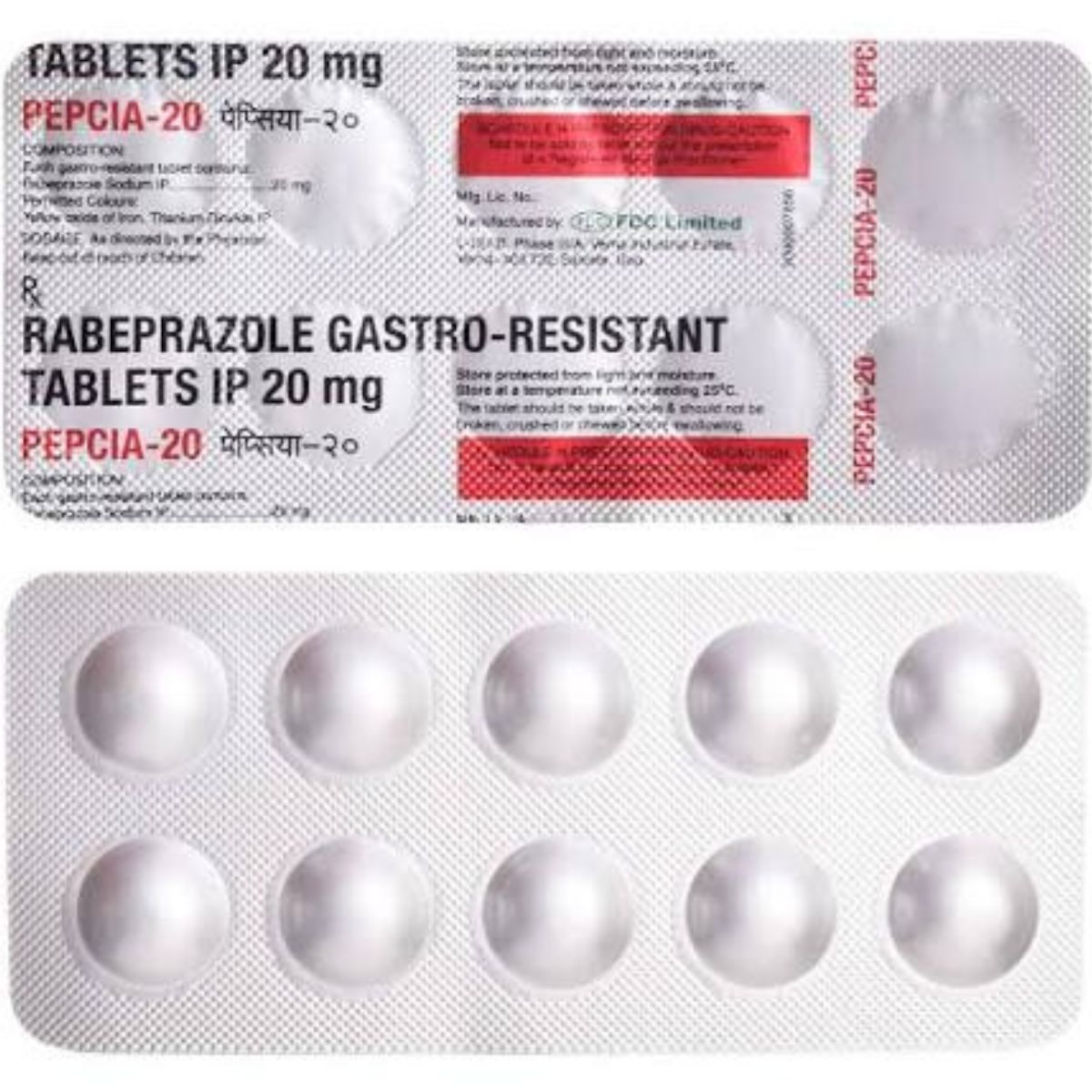
Description
Pepcia 20 Tablet is a prescription medicine containing Rabeprazole 20mg, which belongs to the proton pump inhibitor (PPI) class. It works by reducing the amount of acid produced in the stomach, helping relieve symptoms such as heartburn, acid reflux, and indigestion. It also promotes healing of ulcers and protects the stomach lining from acid damage.
Uses of Pepcia 20 Tablet
- Gastroesophageal reflux disease (GERD)
- Acid reflux
- Heartburn
- Hyperacidity
- Gastritis
- Gastric ulcer
- Duodenal ulcer
- Zollinger-Ellison syndrome
- Part of Helicobacter pylori (H. pylori) eradication therapy when used with antibiotics
Benefits of Pepcia 20 Tablet
- Reduces excess stomach acid
- Relieves heartburn and acid reflux
- Promotes healing of stomach and duodenal ulcers
- Protects the stomach lining from acid damage
- Provides long-lasting relief from acid-related disorders
How Pepcia 20 Tablet Works
Rabeprazole blocks the proton pumps (H+/K+ ATPase) in the stomach lining, significantly reducing the production of stomach acid. Lower acid levels help relieve symptoms, heal ulcers, and prevent further damage to the stomach and esophagus.
Dosage
- Take Pepcia 20 Tablet exactly as prescribed by your doctor.
- Do not stop taking the medicine without medical advice, even if symptoms improve.
- The duration of treatment depends on your medical condition.
How to Use
- Take the tablet 30–60 minutes before a meal, preferably before breakfast.
- Swallow the tablet whole with a glass of water.
- Do not crush, chew, or break the tablet.
Side Effects
Common side effects include:
- Headache
- Nausea
- Diarrhea
- Constipation
- Abdominal pain
- Flatulence
- Dizziness
Rare but serious side effects include:
- Severe allergic reactions
- Liver problems
- Low magnesium levels (with prolonged use)
- Vitamin B12 deficiency (long-term use)
- Increased risk of bone fractures with prolonged therapy
Seek immediate medical attention if you experience severe allergic reactions, persistent diarrhea, or symptoms of liver problems such as yellowing of the skin or eyes.
Precautions
- Inform your doctor if you have liver disease, osteoporosis, low magnesium levels, or vitamin B12 deficiency.
- Long-term use should only be under medical supervision.
- Avoid alcohol, smoking, spicy foods, and large late-night meals, as they may worsen acidity.
- Use during pregnancy or breastfeeding only if prescribed.


Leave a Reply