LEvipil Injection contains Levetiracetam 100mg and is used to treat epilepsy and control seizures, especially in emergency situations or when oral administration is not possible. It stabilizes electrical activity in the brain, helping to reduce the frequency and severity of seizures.
Uses
-
Emergency treatment of seizures in epilepsy
-
Helps prevent partial-onset, tonic-clonic, and myoclonic seizures
-
Provides rapid seizure control when oral tablets cannot be taken
Dosage / How to Use
-
Administered only by a healthcare professional
-
Dosage depends on the patient’s condition and response
-
Not for self-administration
-
Follow medical instructions strictly
Precautions
-
Inform your doctor if you have kidney or liver problems
-
May cause dizziness or drowsiness; avoid driving or operating machinery until effects are known
-
Use during pregnancy or breastfeeding only if prescribed
-
Avoid alcohol as it may increase side effects
Side Effects

Lmwx 60 Injection contains Enoxaparin 60mg, a low molecular weight heparin (LMWH) used as an anticoagulant for the prevention and treatment of blood clots. It is commonly prescribed for patients at risk of deep vein thrombosis (DVT), pulmonary embolism (PE), or other thromboembolic disorders, including those undergoing surgery or immobilized due to illness.
This subcutaneous injectable formulation provides rapid and predictable anticoagulant effects, offering a safer alternative to unfractionated heparin with lower monitoring requirements.
Uses
-
Prevention of deep vein thrombosis (DVT) in surgical or bedridden patients
-
Treatment of DVT and pulmonary embolism (PE)
-
Prevention of clot formation in acute coronary syndrome (ACS)
-
Reducing risk of thromboembolic events in high-risk patients
-
Suitable for patients with limited mobility or post-surgical recovery
How It Works
-
Enoxaparin is a low molecular weight heparin that potentiates antithrombin III, inhibiting clotting factors Xa and IIa.
-
Reduces formation of pathological blood clots while maintaining predictable anticoagulation.
-
Subcutaneous administration ensures rapid absorption and effectiveness.
-
Often requires less frequent monitoring than standard heparin therapy.
Benefits
-
Effective in preventing and treating thromboembolic disorders
-
Lower risk of heparin-induced thrombocytopenia (HIT) compared to unfractionated heparin
-
Convenient subcutaneous injection for hospital or home use
-
Predictable anticoagulant effect with less frequent blood monitoring
-
Helps reduce complications related to surgery, immobility, or cardiovascular risk
Directions for Use
-
Administer only under medical supervision.
-
Inject subcutaneously as directed by a physician.
-
Dosage depends on patient weight, clinical condition, and risk factors.
-
Do not self-adjust the dose without consultation.
-
Avoid intravenous or intramuscular injection unless specifically prescribed.
Safety Information
-
Common side effects: mild pain, bruising, or redness at injection site.
-
Serious side effects (rare): bleeding, thrombocytopenia, severe allergic reactions.
-
Use with caution in patients with bleeding disorders, kidney impairment, or recent surgery.
-
Avoid concomitant use of other anticoagulants or antiplatelet drugs unless prescribed.
-
Seek immediate medical attention if unusual bleeding, excessive bruising, or severe pain occurs.

Uses:
LuPRIDE Depot 3.75mg Injection is used in the treatment of hormone-dependent conditions such as prostate cancer, breast cancer, endometriosis, uterine fibroids, and precocious puberty. It works by lowering hormone levels (testosterone in men and estrogen in women), helping control disease progression and symptoms.
Dosage:
The dosage is determined by the doctor based on the condition. LuPRIDE Depot 3.75mg is usually given once every 4 weeks as an intramuscular injection by a healthcare professional.
How to Use:
-
Administered only by a trained healthcare professional.
-
Given as a depot (long-acting) injection into the muscle.
-
Do not self-inject unless specifically instructed and trained.
Precautions:
-
Inform your doctor if you have liver, kidney, heart disease, or diabetes.
-
Long-term use may cause decreased bone mineral density—your doctor may suggest supplements.
-
Women should not use this medicine if pregnant or breastfeeding.
-
Regular medical monitoring, including hormone levels and bone health, is required.
Side Effects:
-
Common: Hot flashes, headache, mood swings, sweating, injection site pain
-
Less common: Fatigue, nausea, joint pain, dizziness
-
Rare but serious: Bone thinning, severe allergic reaction, liver function changes, cardiovascular risks
Uses:
LuPRIDE Injection is used to treat hormone-sensitive conditions such as prostate cancer, endometriosis, uterine fibroids, and precocious puberty. It works by regulating the production of certain hormones like testosterone and estrogen.
Dosage:
The dosage and frequency depend on the condition being treated and patient response. Typically, the injection is administered by a healthcare professional as per the prescribed schedule.
How to Use:
-
Administered as a subcutaneous or intramuscular injection by a healthcare professional.
-
Follow the prescribed schedule carefully to maintain effective hormone levels.
-
Do not self-administer unless specifically trained by a doctor.
Precautions:
-
Inform your doctor if you have liver disease, diabetes, or heart problems.
-
Regular monitoring of hormone levels and blood tests may be required.
-
May cause bone density loss with long-term use; discuss preventive measures with your doctor.
-
Report any signs of allergic reaction or unusual side effects immediately.
Side Effects:
-
Common: Hot flashes, headache, mood changes, injection site reactions
-
Less common: Nausea, fatigue, joint pain
-
Rare but serious: Severe allergic reactions, liver problems, cardiovascular events

Macfast Infusion contains Paracetamol (1000mg) in an intravenous (IV) formulation.
It is used for rapid relief of moderate to severe pain and fever, especially in patients who cannot take oral medications due to nausea, vomiting, or surgery.
Uses of Macfast Infusion
-
Relief from severe pain (postoperative, musculoskeletal, or migraine)
-
Reduces high fever when oral medications are not feasible
-
Provides fast-acting pain relief in hospital settings
-
Supportive therapy for pain associated with infection or injury
How to Use
-
Administered only under medical supervision by a healthcare professional.
-
Dose and infusion rate depend on patient’s age, weight, and clinical condition.
-
Do not self-administer.
-
Ensure correct dilution and monitoring during infusion.
Side Effects
Generally well-tolerated; rare side effects may include:
-
Allergic reactions (rash, itching, swelling)
-
Low blood pressure if infused too rapidly
-
Liver toxicity if cumulative dose exceeds safe limits
-
Injection site reactions (pain, redness)
Precautions
-
For intravenous use only.
-
Monitor patients with liver or kidney impairment.
-
Avoid other medications containing paracetamol to prevent overdose.
-
Pregnant or breastfeeding women should use only under supervision.
-
Store according to hospital or pharmacy guidelines, away from direct sunlight.
Macgest 100mg Injection contains natural micronized progesterone, a hormone essential for regulating menstrual cycles, supporting pregnancy, and hormonal balance.
It is commonly used in fertility treatments, hormone replacement therapy, and prevention of preterm birth in women with progesterone deficiency.
Uses of Macgest 100mg Injection
-
Support in assisted reproductive technologies (ART) such as IVF
-
Prevention of preterm labor in high-risk pregnancies
-
Treatment of luteal phase deficiency
-
Hormonal support in menstrual irregularities or amenorrhea
-
Part of hormone replacement therapy in specific conditions
How to Use
-
Administered intramuscularly (IM) or as directed by the doctor.
-
Dosage and schedule depend on patient’s condition and treatment protocol.
-
Should be administered by a healthcare professional only.
Side Effects
May include mild and temporary reactions:
-
Pain, swelling, or redness at the injection site
-
Dizziness or headache
-
Nausea or mild gastrointestinal upset
-
Breast tenderness or bloating
Seek medical attention if you experience:
-
Severe allergic reaction (rash, swelling, difficulty breathing)
-
Unusual bleeding or severe abdominal pain
Precautions
-
Only for use under medical supervision.
-
Inform your doctor if you have liver disease, blood clotting disorders, or hormone-sensitive conditions.
-
Pregnant women should use only as prescribed.
-
Store in a cool, dry place, protected from light.
-
Keep out of reach of children.

Macgest 200mg Injection contains natural micronized progesterone, a hormone that plays a key role in regulating menstrual cycles, supporting pregnancy, and maintaining hormonal balance.
It is often used in fertility treatments, hormone replacement therapy, and prevention of preterm labor or miscarriage in women with progesterone deficiency.
Uses of Macgest 200mg Injection
-
Support in assisted reproductive technologies (ART) such as IVF
-
Prevention of miscarriage or preterm labor in high-risk pregnancies
-
Treatment of luteal phase deficiency
-
Hormonal support for menstrual irregularities or amenorrhea
-
Part of hormone replacement therapy in specific conditions
How to Use
-
Administered intramuscularly (IM) or as directed by a doctor.
-
Dosage and schedule depend on patient’s condition and treatment protocol.
-
Must be administered by a healthcare professional.
Side Effects
Possible mild and temporary effects:
-
Pain, swelling, or redness at injection site
-
Dizziness or headache
-
Nausea or mild gastrointestinal upset
-
Breast tenderness or bloating
Seek medical attention if:
-
Severe allergic reaction occurs (rash, swelling, difficulty breathing)
-
Unusual bleeding or severe abdominal pain
Precautions
-
Only for use under medical supervision.
-
Inform your doctor if you have liver disease, blood clotting disorders, or hormone-sensitive conditions.
-
Pregnant women should use only as prescribed.
-
Store in a cool, dry place protected from light.
-
Keep out of reach of children.
Macmika 100mg Injection contains Amikacin, an aminoglycoside antibiotic used to treat a variety of bacterial infections.
It works by inhibiting bacterial protein synthesis, thereby killing or stopping the growth of susceptible bacteria.
Uses of Macmika 100mg Injection
-
Treatment of serious bacterial infections caused by Gram-negative and some Gram-positive bacteria
-
Used for urinary tract infections, respiratory infections, intra-abdominal infections, sepsis, and bone/joint infections
-
Often used when other antibiotics are ineffective or for hospital-acquired infections
How to Use
-
Administered intravenously (IV) or intramuscularly (IM) by a healthcare professional.
-
Dosage depends on patient’s weight, age, kidney function, and severity of infection.
-
Do not self-administer.
-
Ensure proper dilution and infusion rate as instructed by a doctor.
Side Effects
Common and rare side effects may include:
-
Pain or irritation at the injection site
-
Nausea, vomiting, or diarrhea
-
Dizziness or headache
-
Rare but serious: kidney toxicity (nephrotoxicity), hearing loss (ototoxicity), or allergic reactions
Precautions
-
Use only under medical supervision.
-
Inform your doctor if you have kidney problems, hearing issues, or neuromuscular disorders.
-
Regular kidney function and hearing monitoring may be required during treatment.
-
Pregnant or breastfeeding women should use only if prescribed.
-
Store in a cool, dry place, protected from light.
-
Keep out of reach of children

Macmika 250mg Injection contains Amikacin, an aminoglycoside antibiotic used to treat serious bacterial infections.
It works by inhibiting bacterial protein synthesis, helping to stop the growth and spread of bacteria.
Uses of Macmika 250mg Injection
-
Treatment of severe bacterial infections caused by Gram-negative and some Gram-positive bacteria
-
Used for urinary tract infections, respiratory infections, intra-abdominal infections, sepsis, and bone/joint infections
-
Often reserved for hospital-acquired infections or cases resistant to other antibiotics
How to Use
-
Administered intravenously (IV) or intramuscularly (IM) by a healthcare professional.
-
Dosage depends on patient’s weight, age, kidney function, and severity of infection.
-
Must be administered under professional supervision.
-
Follow proper dilution and infusion rate as instructed.
Side Effects
Possible side effects include:
-
Pain, redness, or irritation at the injection site
-
Nausea, vomiting, or diarrhea
-
Dizziness or headache
-
Rare but serious: kidney toxicity (nephrotoxicity), hearing loss (ototoxicity), allergic reactions
Precautions
-
Only for use under medical supervision.
-
Inform your doctor if you have kidney disease, hearing problems, or neuromuscular disorders.
-
Regular kidney function and hearing tests may be needed during therapy.
-
Pregnant or breastfeeding women should use only if prescribed.
-
Store in a cool, dry place, protected from light.
-
Keep out of reach of children.
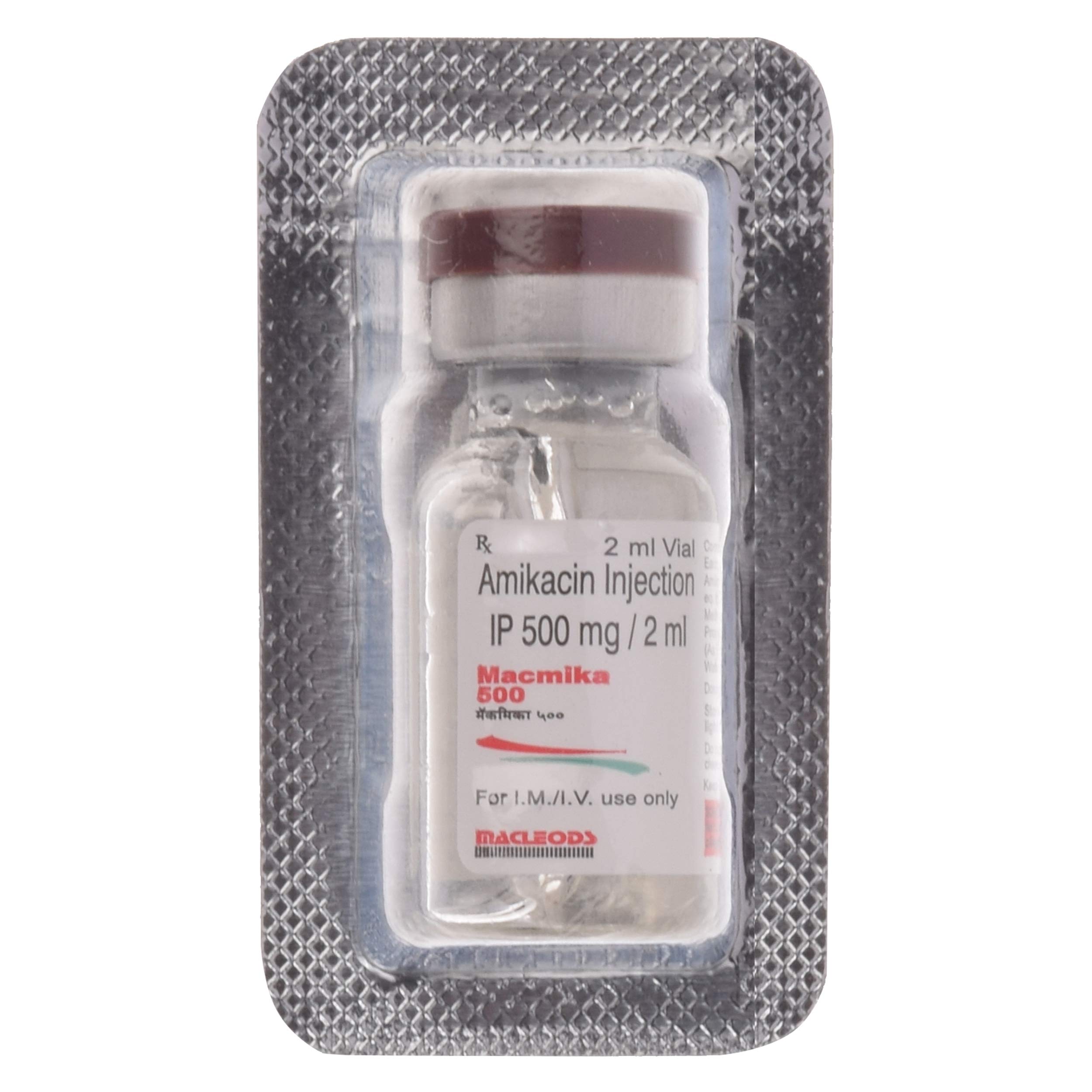
Macmika 500mg Injection contains Amikacin, an aminoglycoside antibiotic used to treat serious bacterial infections.
It works by inhibiting bacterial protein synthesis, effectively stopping the growth of susceptible bacteria.
Uses of Macmika 500mg Injection
-
Treatment of severe bacterial infections, including hospital-acquired infections
-
Used for urinary tract infections, respiratory infections, intra-abdominal infections, sepsis, and bone/joint infections
-
Often prescribed when other antibiotics are ineffective
How to Use
-
Administered intravenously (IV) or intramuscularly (IM) by a healthcare professional.
-
Dosage depends on patient’s weight, age, kidney function, and severity of infection.
-
Must be used under medical supervision only.
-
Ensure proper dilution and infusion rate as per doctor’s instructions.
Side Effects
Possible side effects include:
-
Pain, redness, or irritation at the injection site
-
Nausea, vomiting, or diarrhea
-
Dizziness or headache
-
Rare but serious: kidney toxicity (nephrotoxicity), hearing loss (ototoxicity), or allergic reactions
Precautions
-
Use only under medical supervision.
-
Inform your doctor if you have kidney disease, hearing impairment, or neuromuscular disorders.
-
Regular kidney function and hearing monitoring may be required during treatment.
-
Pregnant or breastfeeding women should use only if prescribed.
-
Store in a cool, dry place, protected from light.
-
Keep out of reach of children.

Maczone 1000mg Injection contains Ceftriaxone (1000mg), a third-generation cephalosporin antibiotic. It is widely prescribed for the treatment of moderate to severe bacterial infections and is administered by injection under medical supervision in hospitals or clinics.
How it works:
Ceftriaxone works by preventing the formation of bacterial cell walls, which are essential for their survival. This action kills bacteria and stops the infection from spreading.
Uses:
-
Respiratory tract infections (pneumonia, bronchitis)
-
Urinary tract infections (UTIs)
-
Skin and soft tissue infections
-
Bone and joint infections
-
Meningitis (brain infection)
-
Septicemia (blood infection)
-
Post-surgical infections
Benefits:
-
Broad-spectrum antibiotic effective against both Gram-positive and Gram-negative bacteria
-
Useful for serious and life-threatening infections
-
Administered as injection, ensuring fast and reliable action
Dosage & Administration:
The dosage is determined by the doctor based on the type and severity of infection, age, and body weight. It is given as an intravenous (IV) or intramuscular (IM) injection by a healthcare professional.
Precautions:
-
Should be used cautiously in patients with kidney or liver problems.
-
Not recommended in patients allergic to cephalosporins or penicillin.
-
Avoid alcohol during treatment as it may cause adverse reactions.
-
Safe use during pregnancy and breastfeeding should be confirmed by a doctor.
Possible Side Effects:
-
Pain, redness, or swelling at injection site
-
Diarrhea, nausea, or vomiting
-
Rash or allergic reaction
-
Rarely, changes in blood counts or liver function tests

Maczone 500mg Injection contains Ceftriaxone (500mg), a third-generation cephalosporin antibiotic. It is prescribed for mild to moderate bacterial infections affecting the respiratory tract, urinary tract, skin, soft tissues, blood, bones, and brain. The medicine is administered either intravenously (IV) or intramuscularly (IM) by a healthcare provider.
How it works:
Ceftriaxone works by stopping the bacteria from forming their protective cell wall. Without this wall, bacteria cannot survive, leading to the elimination of the infection.
Uses:
-
Respiratory tract infections (pneumonia, bronchitis)
-
Urinary tract infections (UTIs)
-
Skin and soft tissue infections
-
Bone and joint infections
-
Bloodstream infections (septicemia)
-
Brain infections (meningitis)
-
Infections after surgery
Benefits:
-
Broad-spectrum antibiotic that acts against various types of bacteria
-
Effective for both community-acquired and hospital-acquired infections
-
Provides fast relief when given as injection
Dosage & Administration:
The dosage and duration are decided by the doctor based on infection type, severity, and patient health condition. It is strictly given as an injection under medical supervision.
Precautions:
-
Inform your doctor if you have a history of allergy to cephalosporins or penicillin.
-
Use with caution in patients with kidney or liver disease.
-
Avoid alcohol during the treatment period.
-
Safety during pregnancy and breastfeeding should be confirmed with a doctor.
Possible Side Effects:
-
Pain, swelling, or redness at the injection site
-
Nausea, vomiting, or diarrhea
-
Rash, itching, or other allergic reactions
-
Rare: changes in liver enzymes or blood counts