
Maczone Plus 375 Injection combines Ceftriaxone (250mg) and Sulbactam (125mg) to provide enhanced antibacterial activity. This combination is especially useful in treating infections caused by resistant bacteria that cannot be controlled by Ceftriaxone alone.
How it works:
-
Ceftriaxone kills bacteria by inhibiting cell wall synthesis.
-
Sulbactam blocks beta-lactamase enzymes produced by some bacteria, ensuring Ceftriaxone remains effective.
Uses:
-
Respiratory tract infections (pneumonia, bronchitis)
-
Urinary tract infections (UTIs)
-
Skin and soft tissue infections
-
Abdominal infections
-
Bone and joint infections
-
Septicemia (blood infections)
-
Infections after surgery
Benefits:
-
Provides broader antibacterial coverage
-
Useful in infections caused by resistant organisms
-
Faster action as it is given by injection under medical supervision
Dosage & Administration:
The dose and duration are determined by the doctor depending on infection type and severity. It is administered intravenously (IV) or intramuscularly (IM) by a healthcare professional only.
Precautions:
-
Inform the doctor if you are allergic to cephalosporins or penicillin.
-
Use cautiously in patients with kidney or liver problems.
-
Avoid alcohol during treatment.
-
Discuss safety if pregnant or breastfeeding.
Possible Side Effects:
-
Pain, redness, or swelling at the injection site
-
Diarrhea, nausea, or vomiting
-
Rash, itching, or allergic reaction
-
Rare: changes in blood counts or liver/kidney function
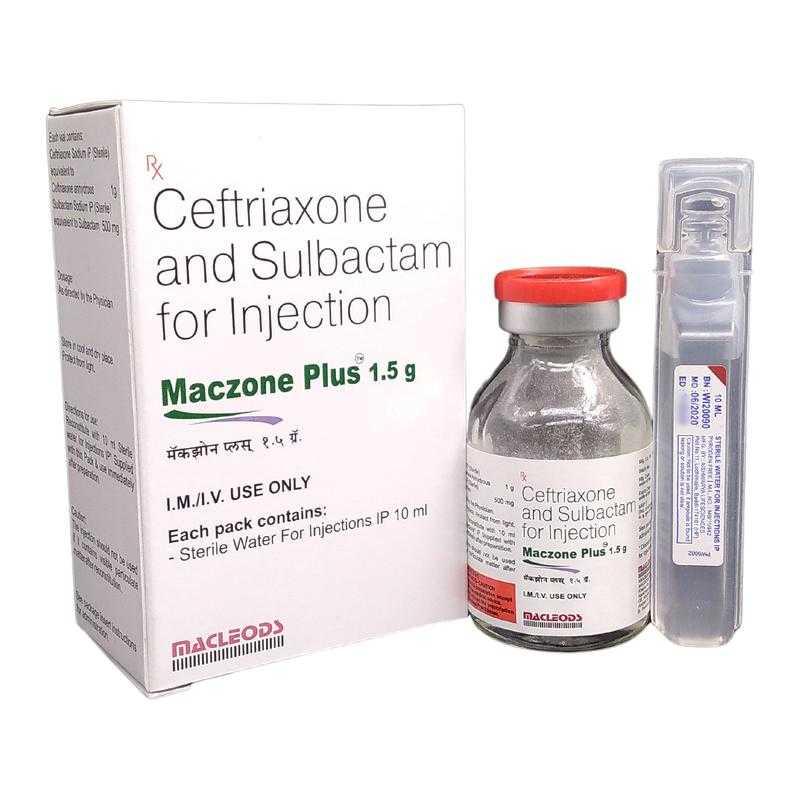
Maczone Plus Injection combines Ceftriaxone (1000mg), a third-generation cephalosporin antibiotic, with Sulbactam (500mg), a beta-lactamase inhibitor. This combination enhances the effectiveness of treatment, especially against bacteria that have developed resistance to antibiotics.
How it works:
-
Ceftriaxone destroys the bacterial cell wall, leading to death of the bacteria.
-
Sulbactam prevents bacteria from producing enzymes that can inactivate Ceftriaxone, thereby boosting its action.
Uses:
-
Severe respiratory tract infections (pneumonia, bronchitis)
-
Urinary tract infections (UTIs)
-
Intra-abdominal infections
-
Skin, bone, and joint infections
-
Septicemia (blood infections)
-
Brain infections like meningitis
-
Post-surgical infections
Benefits:
-
Broad-spectrum coverage against resistant bacteria
-
Effective in severe and mixed infections
-
Administered directly into the bloodstream or muscle for rapid action
Dosage & Administration:
The injection is given intravenously (IV) or intramuscularly (IM) by a healthcare professional. The dose and duration depend on the type and severity of the infection as well as the patient’s overall health condition.
Precautions:
-
Inform your doctor if you are allergic to cephalosporins, penicillin, or other antibiotics.
-
Use with caution in patients with kidney or liver disease.
-
Not recommended with alcohol due to risk of adverse effects.
-
Safety during pregnancy and breastfeeding should be confirmed by a doctor.
Possible Side Effects:
-
Pain, swelling, or redness at the injection site
-
Diarrhea, nausea, or vomiting
-
Rash, itching, or allergic reactions
-
Rare: changes in liver or kidney function, blood count changes

Mecodila 2500 Injection is a prescription medicine containing Methylcobalamin (Vitamin B12) 2500mcg. It is commonly prescribed for patients with Vitamin B12 deficiency, diabetic neuropathy, peripheral neuropathy, and megaloblastic anemia.
Methylcobalamin is the active form of Vitamin B12 that supports nerve regeneration, DNA synthesis, and healthy red blood cell production. It helps relieve symptoms such as numbness, tingling, burning sensation, and nerve pain while improving overall neurological health.
Uses of Mecodila 2500 Injection
- Vitamin B12 deficiency
- Peripheral neuropathy
- Diabetic neuropathy
- Megaloblastic anemia
- Nerve pain and nerve damage
- Nutritional Vitamin B12 deficiency
Benefits of Mecodila 2500 Injection
- Restores Vitamin B12 levels
- Promotes nerve repair and regeneration
- Reduces numbness and tingling
- Supports healthy red blood cell production
- Improves nerve function and neurological health
How Mecodila 2500 Injection Works
Methylcobalamin is the biologically active form of Vitamin B12. It helps produce healthy red blood cells, supports DNA synthesis, and repairs damaged nerve cells, improving nerve conduction and reducing neuropathic symptoms.
Dosage
- Administer only as prescribed by your doctor.
- Usually given as an intramuscular (IM) or intravenous (IV) injection by a healthcare professional.
- The dose and duration depend on your medical condition and response to treatment.
How to Use
- Receive the injection from a qualified healthcare professional.
- Do not self-inject unless instructed by your doctor.
- Complete the prescribed course for the best results.
Side Effects
Common side effects include:
- Pain or redness at the injection site
- Mild nausea
- Headache
- Dizziness
- Skin rash
- Itching
Seek immediate medical attention if you experience severe allergic reactions or difficulty breathing.
Precautions
- Inform your doctor if you have an allergy to Vitamin B12 or cobalt.
- Use with caution in patients with kidney disease or Leber’s disease.
- Tell your doctor if you are pregnant or breastfeeding.
- Regular monitoring may be required during long-term treatment.
Drug Interactions
Mecodila 2500 Injection may interact with:
- Chloramphenicol
- Metformin
- Proton pump inhibitors (e.g., Omeprazole)
- Colchicine
- Certain anticonvulsant medicines
Storage
- Store below 30°C.
- Protect from sunlight and moisture.
- Do not freeze.
- Keep out of reach of children.

Mega-CV 1.2gm Injection is a high-strength, parenteral antibiotic designed for moderate to severe bacterial infections that require intravenous or intramuscular administration. It contains:
-
Amoxycillin (1000mg): A broad-spectrum penicillin antibiotic that inhibits bacterial cell wall synthesis, leading to bacterial death.
-
Clavulanic Acid (200mg): A beta-lactamase inhibitor that protects Amoxycillin from degradation by resistant bacteria, enhancing its antibacterial efficacy.
This formulation ensures rapid and effective systemic delivery of the antibiotic, particularly for infections where oral administration is not feasible.
Uses / Indications
-
Severe respiratory tract infections (pneumonia, bronchitis, sinusitis)
-
Severe ENT infections (otitis media, tonsillitis, pharyngitis)
-
Skin and soft tissue infections
-
Urinary tract infections (UTIs)
-
Bone and joint infections
-
Infections requiring hospital-based therapy or rapid systemic antibiotic delivery
How It Works
-
Amoxycillin disrupts bacterial cell wall synthesis, leading to bacterial lysis and death.
-
Clavulanic Acid inhibits beta-lactamase enzymes produced by resistant bacteria, protecting Amoxycillin from degradation.
-
This combination provides broad-spectrum antibacterial coverage, including beta-lactamase-producing bacteria.
Dosage & Administration
-
Administered intravenously (IV) or intramuscularly (IM) as prescribed by a healthcare professional.
-
Dosage frequency depends on infection severity, patient condition, and renal function.
-
Usually infused over 20–30 minutes for IV administration.
-
Duration of therapy depends on infection type and clinical response.
-
Must be prepared and administered under medical supervision.
Side Effects
Common:
Less Common / Rare:
-
Allergic reactions (rash, itching, swelling)
-
Headache or dizziness
-
Mild liver enzyme elevation
Serious (rare):
-
Severe allergic reactions (anaphylaxis)
-
Liver dysfunction (jaundice, elevated liver enzymes)
-
Severe diarrhea due to Clostridium difficile infection
Precautions & Warnings
-
Avoid in patients with penicillin allergy.
-
Use cautiously in patients with renal or liver impairment.
-
Monitor patients during IV infusion for allergic reactions.
-
Ensure correct dilution and administration to prevent local irritation.
-
Complete the prescribed course even if symptoms improve early.
Summary
Mega-CV 1.2gm Injection (Amoxycillin 1000mg + Clavulanic Acid 200mg) is a high-strength parenteral antibiotic for moderate to severe bacterial infections, particularly those caused by beta-lactamase-producing bacteria. It ensures rapid systemic delivery and should be administered under strict medical supervision with adherence to dosing and monitoring guidelines.

Uses:
Meganeuron Forte Injection is a multivitamin and nerve-support therapy used for the treatment of neuropathies, nerve damage, and vitamin B deficiencies. This injection helps in:
-
Promoting nerve regeneration and repair (Methylcobalamin).
-
Supporting neurological function and alleviating nerve pain (Vitamin B6).
-
Improving energy metabolism and supporting tissue repair (Niacinamide).
-
Enhancing skin and nerve health through tissue nourishment (D-Panthenol).
It is often prescribed for conditions such as diabetic neuropathy, peripheral neuropathy, post-herpetic neuralgia, or after nerve injury.
Dosage:
-
Typically administered intramuscularly (IM) or intravenously (IV) as advised by a healthcare professional.
-
The frequency and duration depend on the severity of deficiency or nerve damage.
-
Usually given 1–3 times per week initially, followed by maintenance doses based on response.
Precautions:
-
Use with caution in patients with kidney or liver impairment.
-
Inform your doctor of any allergies, other medications, or medical conditions.
-
Not recommended for patients with hypersensitivity to any of the components.
-
Monitor for signs of vitamin overdose if using multiple supplements simultaneously.
Side Effects:
-
Mild: Pain or irritation at the injection site, redness, or swelling.
-
Gastrointestinal: Nausea, mild diarrhea, or abdominal discomfort.
-
Rare: Allergic reactions, rash, or dizziness.
-
Severe reactions are rare but should be reported immediately.
Additional Information:
Meganeuron Forte Injection provides a comprehensive B-vitamin and nerve-support combination. It is especially useful in patients who cannot tolerate oral supplements or require rapid correction of deficiencies. Combining this therapy with lifestyle measures, proper nutrition, and management of underlying conditions (like diabetes) enhances therapeutic outcomes.
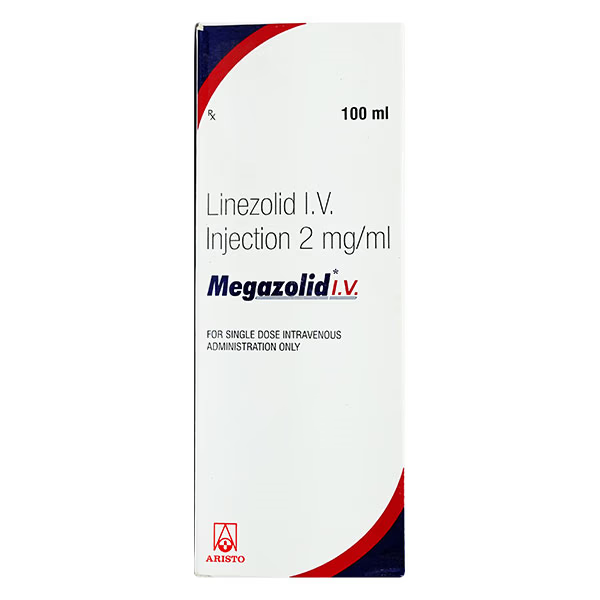
Megazolid 200mg Injection is a parenteral form of Linezolid, a synthetic oxazolidinone antibiotic used to treat serious Gram-positive bacterial infections, including resistant strains. It provides rapid systemic delivery of the active drug, making it suitable for patients who cannot take oral medication or require hospital-based therapy.
Uses / Indications
-
Serious skin and soft tissue infections caused by Gram-positive bacteria
-
Hospital-acquired and community-acquired pneumonia
-
Bloodstream infections (bacteremia)
-
Bone and joint infections
-
Infections caused by methicillin-resistant Staphylococcus aureus (MRSA) and vancomycin-resistant Enterococcus (VRE)
-
Severe systemic infections where oral therapy is not feasible
How It Works
-
Linezolid binds to the 50S subunit of bacterial ribosomes, preventing the formation of the functional 70S initiation complex.
-
This inhibits protein synthesis, stopping bacterial growth.
-
Effective against resistant Gram-positive bacteria and certain multi-drug resistant strains.
Dosage & Administration
-
Administered intravenously (IV) as prescribed by a doctor.
-
Typical adult dose: 200mg every 12 hours, adjusted based on infection severity and patient condition.
-
Pediatric dosing is weight-based.
-
Infuse over 30–120 minutes, depending on clinical requirements.
-
Monitor patients for hematologic and hepatic side effects during prolonged therapy.
Side Effects
Common:
-
Nausea, vomiting, diarrhea
-
Headache or dizziness
-
Mild injection site reactions
Less Common / Rare:
Serious (rare):
Precautions & Warnings
-
Avoid in patients with known hypersensitivity to Linezolid.
-
Use with caution in patients with renal or hepatic impairment.
-
Monitor complete blood counts for prolonged therapy.
-
Avoid concomitant use with MAO inhibitors or serotonergic medications.
-
Only use during pregnancy or breastfeeding if prescribed by a physician.
Summary
Megazolid 200mg Injection (Linezolid 200mg) is a broad-spectrum injectable antibiotic for serious Gram-positive infections, including MRSA and VRE. It provides rapid systemic delivery, suitable for hospitalized patients, and must be used under strict medical supervision with monitoring for side effects, particularly during extended therapy.
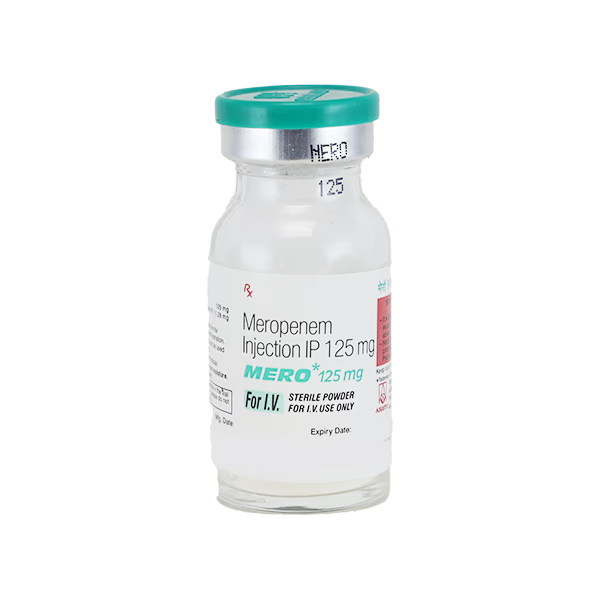
Mero 125mg Injection is a broad-spectrum carbapenem antibiotic used to treat serious bacterial infections. It contains Meropenem (125mg), which belongs to the beta-lactam class of antibiotics. Meropenem works by inhibiting bacterial cell wall synthesis, leading to bacterial cell death.
It is effective against a wide range of Gram-positive, Gram-negative, and anaerobic bacteria, including strains that are resistant to other antibiotics.
Uses / Indications
-
Severe respiratory tract infections (pneumonia, bronchitis)
-
Urinary tract infections (UTIs)
-
Intra-abdominal infections
-
Skin and soft tissue infections
-
Septicemia (bloodstream infections)
-
Meningitis
-
Infections caused by multi-drug resistant Gram-negative bacteria
How It Works
-
Meropenem binds to penicillin-binding proteins (PBPs) in bacterial cell walls.
-
This disrupts cell wall synthesis, causing bacterial lysis and death.
-
It is resistant to most beta-lactamases, making it effective against resistant bacteria.
Dosage & Administration
-
Administered intravenously (IV) or intramuscularly (IM) under medical supervision.
-
Adult dosage is usually 125mg–1g every 8 hours, depending on infection severity.
-
Pediatric dosage is weight-based.
-
Infuse over 15–30 minutes for IV administration.
-
Duration of therapy depends on infection type and response.
Side Effects
Common:
-
Nausea, vomiting, diarrhea
-
Headache
-
Pain or redness at the injection site
Less Common / Rare:
Serious (rare):
-
Severe allergic reactions (anaphylaxis)
-
Seizures (especially in patients with CNS disorders or renal impairment)
-
Clostridium difficile-associated diarrhea
Precautions & Warnings
-
Avoid in patients with known hypersensitivity to carbapenems or beta-lactams.
-
Use cautiously in renal impairment; dosage adjustment may be required.
-
Monitor for allergic reactions and gastrointestinal disturbances.
-
Complete the full prescribed course to prevent resistant infections.
-
Not effective against viral infections.
Summary
Mero 125mg Injection (Meropenem 125mg) is a broad-spectrum carbapenem antibiotic for serious Gram-positive, Gram-negative, and anaerobic infections. It should be administered under strict medical supervision, with attention to renal function and allergy history, ensuring the full course is completed for optimal efficacy.

Mero 250mg Injection is a broad-spectrum carbapenem antibiotic used for treating serious bacterial infections. It contains Meropenem (250mg), a beta-lactam antibiotic that works by inhibiting bacterial cell wall synthesis, leading to bacterial death.
It is effective against a wide range of Gram-positive, Gram-negative, and anaerobic bacteria, including multi-drug resistant strains.
Uses / Indications
-
Severe respiratory tract infections (pneumonia, bronchitis)
-
Urinary tract infections (UTIs)
-
Intra-abdominal infections
-
Skin and soft tissue infections
-
Bloodstream infections (septicemia)
-
Meningitis
-
Infections caused by multi-drug resistant Gram-negative bacteria
How It Works
-
Meropenem binds to penicillin-binding proteins (PBPs) in the bacterial cell wall.
-
This disrupts cell wall synthesis, causing bacterial lysis and death.
-
Resistant to most beta-lactamases, effective against resistant bacterial strains.
Dosage & Administration
-
Administer intravenously (IV) under medical supervision.
-
Adult dose: typically 250mg–1g every 8 hours, depending on infection severity.
-
Pediatric dose: weight-based.
-
Infuse over 15–30 minutes for IV administration.
-
Duration depends on infection type and response.
Side Effects
Common:
-
Nausea, vomiting, diarrhea
-
Headache
-
Injection site pain or redness
Less Common / Rare:
Serious (rare):
-
Severe allergic reactions (anaphylaxis)
-
Seizures (in patients with CNS disorders or renal impairment)
-
Clostridium difficile-associated diarrhea
Precautions & Warnings
-
Avoid in patients with hypersensitivity to carbapenems or beta-lactams.
-
Use cautiously in renal impairment; adjust dosage as needed.
-
Monitor for allergic reactions and gastrointestinal disturbances.
-
Complete the full course to prevent resistant infections.
-
Not effective for viral infections.
Summary
Mero 250mg Injection (Meropenem 250mg) is a broad-spectrum carbapenem antibiotic for serious infections caused by Gram-positive, Gram-negative, and anaerobic bacteria. It must be administered under strict medical supervision, with proper monitoring for renal function and allergic reactions, ensuring completion of the full prescribed course.
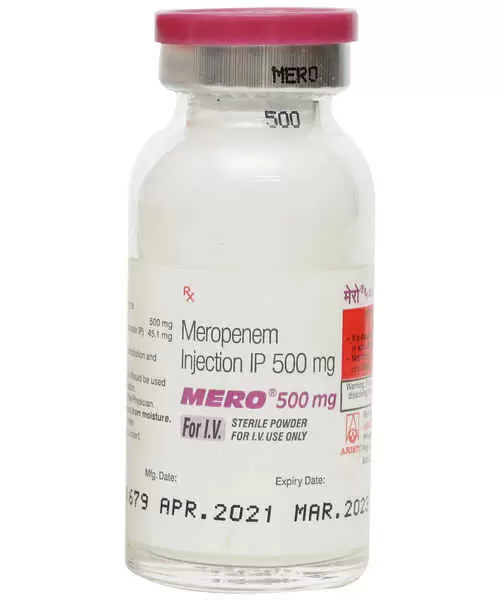
Mero 500mg Injection contains Meropenem, a broad-spectrum antibiotic belonging to the carbapenem group. It is used to treat severe bacterial infections caused by susceptible organisms. This injection is usually administered in hospitals under the supervision of healthcare professionals.
Uses
-
Severe respiratory tract infections (pneumonia, bronchitis)
-
Urinary tract infections (UTIs)
-
Skin and soft tissue infections
-
Intra-abdominal infections
-
Septicemia (blood infections)
-
Meningitis
-
Infections caused by multidrug-resistant bacteria
How It Works
Meropenem works by inhibiting bacterial cell wall synthesis, leading to the death of the bacteria. It is effective against both Gram-positive and Gram-negative bacteria, including resistant strains.
Side Effects
Common side effects may include:
-
Pain, redness, or swelling at the injection site
-
Headache
-
Nausea, vomiting, diarrhea
-
Rash or itching
-
Increased liver enzymes
Serious (rare) side effects:
-
Severe allergic reactions (swelling, breathing difficulty)
-
Seizures (in patients with existing neurological issues)
-
Superinfections (prolonged use can lead to fungal/secondary infections)
Precautions
-
Use with caution in patients with kidney problems or seizure disorders
-
Dose adjustments may be needed in patients with renal impairment
-
Not recommended for patients with a history of severe allergic reaction to other β-lactam antibiotics
-
Safe use in pregnancy and breastfeeding should be assessed by a doctor
Administration
-
Given intravenously (IV) by a healthcare professional
-
Dosage depends on infection severity, patient’s age, and kidney function
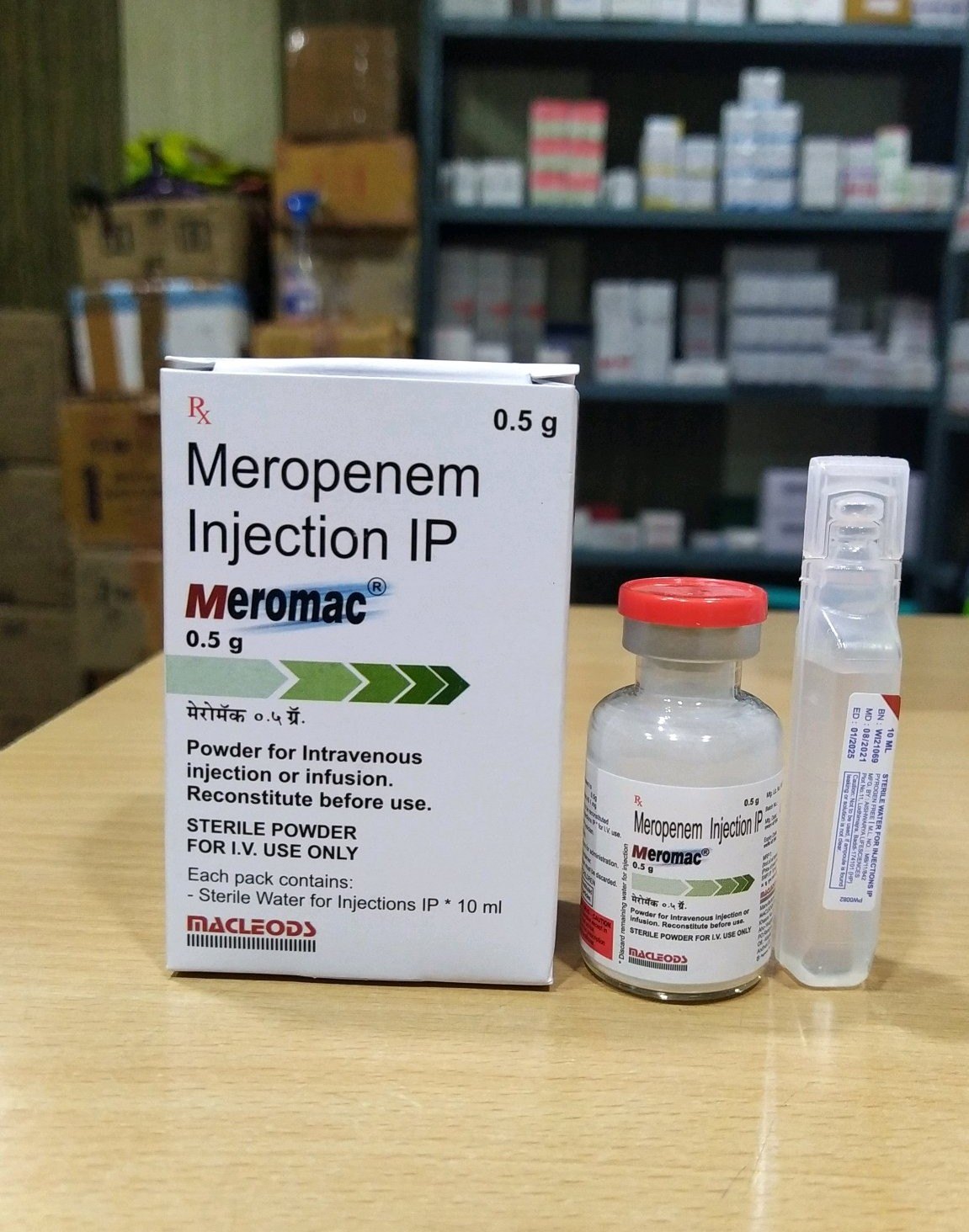
Meromac 0.5gm Injection contains Meropenem 0.5gm, a carbapenem antibiotic effective against a wide range of Gram-positive and Gram-negative bacteria. It is commonly prescribed for moderate to severe infections, including infections resistant to other antibiotics. Administered under medical supervision, it provides rapid and reliable antibacterial action.
How it works:
Meropenem inhibits bacterial cell wall synthesis, causing bacterial death. Its broad-spectrum activity ensures effectiveness against difficult-to-treat infections.
Uses:
-
Respiratory tract infections (pneumonia, bronchitis)
-
Urinary tract infections (UTIs)
-
Skin and soft tissue infections
-
Intra-abdominal infections
-
Bloodstream infections (septicemia)
-
Meningitis and other severe infections
Benefits:
-
Rapid and effective treatment of severe bacterial infections
-
Broad-spectrum coverage including resistant bacteria
-
Fast action via intravenous administration
Dosage & Administration:
Administered intravenously (IV) by a healthcare professional. Dosage and duration are determined by the doctor depending on infection type, severity, and patient condition.
Precautions:
-
Inform your doctor of any allergies to beta-lactam antibiotics
-
Use cautiously in patients with kidney or liver impairment
-
Not recommended during pregnancy or breastfeeding unless advised by a physician
Possible Side Effects:
-
Pain, swelling, or redness at the injection site
-
Nausea, vomiting, or diarrhea
-
Rash or mild allergic reactions
-
Rare: changes in liver/kidney function or blood counts

Meromac 125mg Injection contains Meropenem 125mg, a carbapenem antibiotic effective against a wide range of Gram-positive and Gram-negative bacteria. It is prescribed for mild to moderate infections and can be used in hospitals or clinics under medical supervision.
How it works:
Meropenem inhibits bacterial cell wall synthesis, leading to bacterial death. Its broad-spectrum action helps treat infections that may not respond to other antibiotics.
Uses:
-
Respiratory tract infections (pneumonia, bronchitis)
-
Urinary tract infections (UTIs)
-
Skin and soft tissue infections
-
Intra-abdominal infections
-
Bloodstream infections (septicemia)
-
Meningitis and other bacterial infections
Benefits:
-
Effective treatment of bacterial infections
-
Broad-spectrum coverage including resistant strains
-
Administered intravenously for fast and reliable action
Dosage & Administration:
Administered intravenously (IV) by a healthcare professional. Dosage and duration are determined by the doctor based on infection type, severity, and patient condition.
Precautions:
-
Inform your doctor of any allergies to beta-lactam antibiotics
-
Use cautiously in patients with kidney or liver impairment
-
Not recommended during pregnancy or breastfeeding unless prescribed by a physician
Possible Side Effects:
-
Pain, swelling, or redness at the injection site
-
Nausea, vomiting, or diarrhea
-
Rash or mild allergic reactions
-
Rare: changes in liver/kidney function or blood counts

Meromac 1gm Injection contains Meropenem 1gm, a carbapenem antibiotic effective against a wide range of Gram-positive and Gram-negative bacteria, including resistant strains. It is used in hospitals and clinics for moderate to severe infections requiring fast and reliable treatment.
How it works:
Meropenem works by inhibiting bacterial cell wall synthesis, leading to bacterial death. Its broad-spectrum activity ensures effectiveness against infections that are difficult to treat with other antibiotics.
Uses:
-
Respiratory tract infections (pneumonia, bronchitis)
-
Urinary tract infections (UTIs)
-
Skin and soft tissue infections
-
Intra-abdominal infections
-
Bloodstream infections (septicemia)
-
Meningitis and other severe infections
Benefits:
-
Rapid and effective treatment of severe bacterial infections
-
Broad-spectrum coverage including resistant bacteria
-
Administered intravenously for fast action
Dosage & Administration:
Administered intravenously (IV) by a healthcare professional. Dosage and duration are determined by the doctor based on infection type, severity, and patient condition.
Precautions:
-
Inform your doctor of any allergies to beta-lactam antibiotics
-
Use cautiously in patients with kidney or liver impairment
-
Not recommended during pregnancy or breastfeeding unless prescribed by a physician
Possible Side Effects:
-
Pain, swelling, or redness at the injection site
-
Nausea, vomiting, or diarrhea
-
Rash or mild allergic reactions
-
Rare: changes in liver/kidney function or blood counts