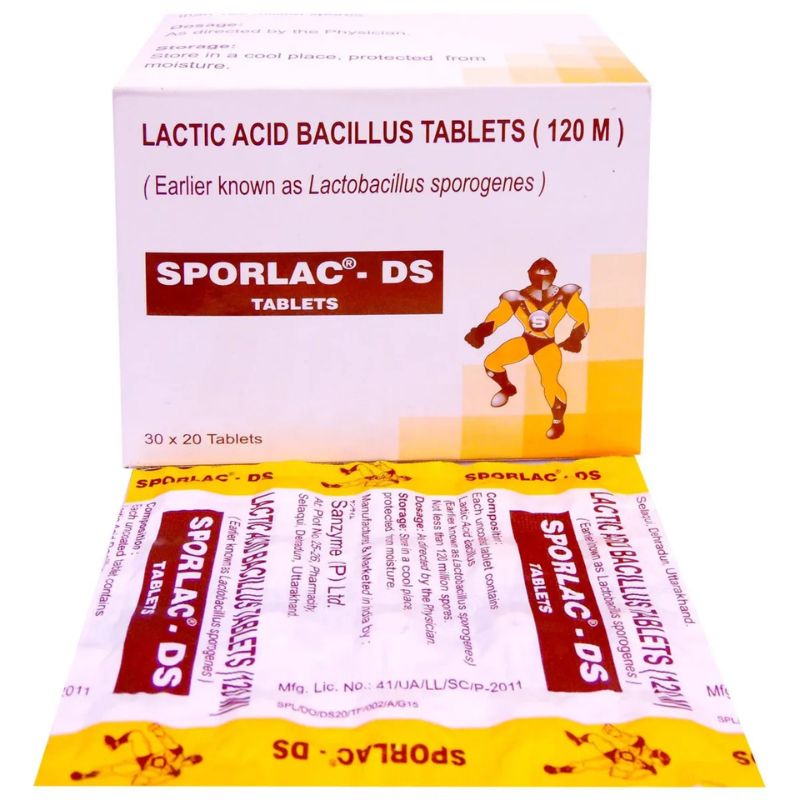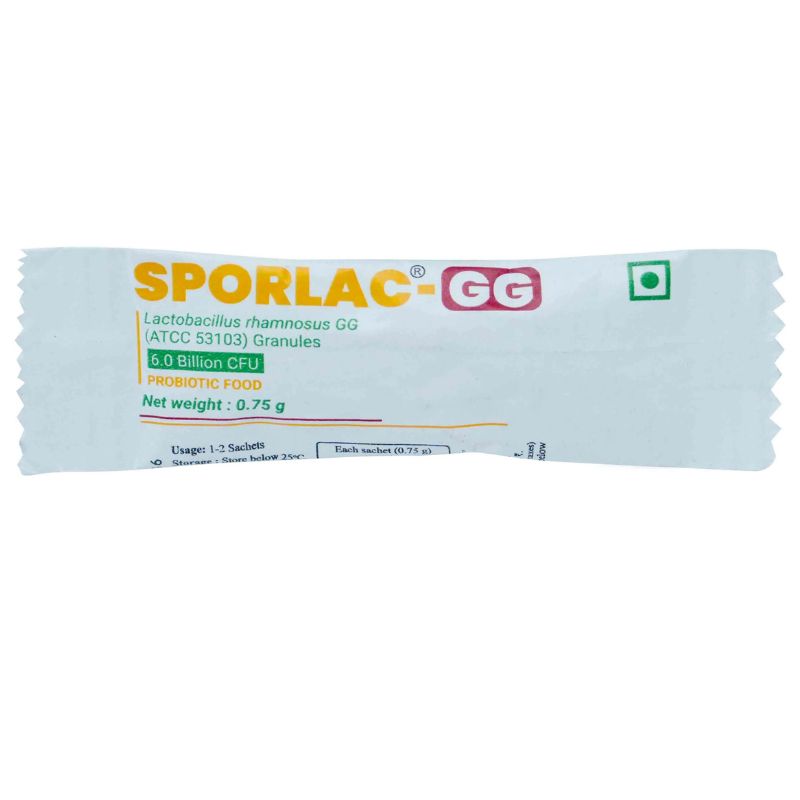
Sporlac GG Granules is a probiotic formulation containing Lactobacillus rhamnosus GG, one of the most clinically proven probiotic strains for digestive and immune health. It is gluten-free, lactose-free, and sugar-free, making it suitable for people with dietary restrictions, lactose intolerance, or diabetes.
These granules help restore healthy gut bacteria, improve digestion, and reduce symptoms of diarrhea, bloating, gas, and stomach discomfort. They are especially helpful for diarrhea in children, antibiotic-associated diarrhea, and digestive imbalance caused by infections.
Uses:
-
Helps manage and prevent diarrhea (including antibiotic-associated diarrhea)
-
Supports digestion and healthy gut bacteria
-
Reduces gas, bloating, and stomach upset
-
Strengthens immunity
-
Suitable for adults and children
Dosage:
-
Usually 1 sachet 1–2 times daily or as directed by the doctor.
-
Mix the granules in water, milk, or juice and consume immediately.
How to Use:
-
Open sachet and dissolve contents in liquid.
-
Can be taken before or after meals.
-
Continue for the duration advised.
Precautions:
-
Safe for most people; consult doctor before use in severely ill or immunocompromised individuals.
-
Check for allergy to probiotic strains.
-
Store in a cool, dry place.
Side Effects:
Generally well-tolerated. Rarely may cause:

Sporlac Plus Capsule is a multi-strain probiotic supplement formulated to support digestive health and immunity. Each vegetarian capsule contains a powerful combination of beneficial bacteria and yeast, providing not less than 2.5 billion live cells.
These probiotics help restore and maintain a healthy balance of gut flora, improve digestion, and protect against harmful bacteria. It is commonly used for diarrhea, antibiotic-associated digestive disturbances, bloating, gas, and general stomach discomfort.
Uses:
-
Helps manage and prevent diarrhea (including antibiotic-associated diarrhea)
-
Restores healthy gut flora
-
Reduces bloating, gas, and indigestion
-
Supports immune system function
-
Helps maintain intestinal health
Dosage:
Usually 1–2 capsules daily or as directed by the doctor. Can be taken with or after food. Swallow whole; do not crush or chew.
How to Use:
-
Take with water after meals.
-
Continue for the duration prescribed by the doctor.
-
Safe for long-term use if needed, as it contains natural probiotics.
Precautions:
-
Avoid use in severely immunocompromised patients unless advised by a doctor.
-
Check for any known allergies to probiotic strains.
-
Consult a doctor before giving to infants.
Side Effects:
Generally safe. Rarely may cause:
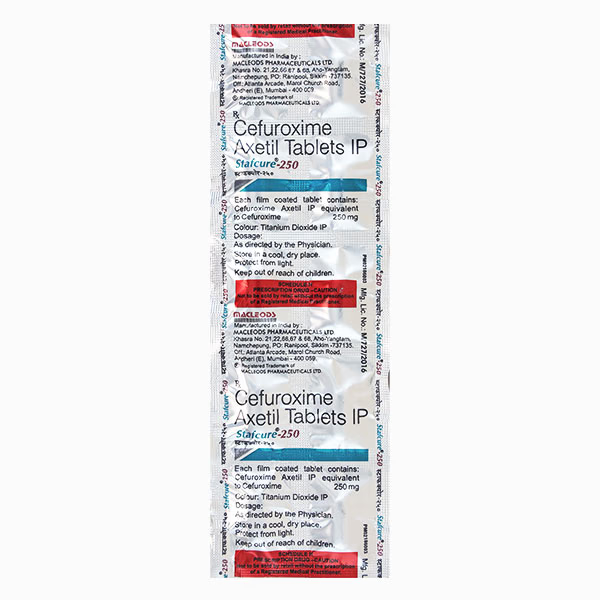
Stafcure 250 Tablet is a second-generation cephalosporin antibiotic containing Cefuroxime. It works by inhibiting bacterial cell wall synthesis, effectively killing susceptible bacteria. This antibiotic is commonly used for mild to moderate bacterial infections and provides broad-spectrum activity against Gram-positive and some Gram-negative bacteria.
Uses
Stafcure 250 Tablet is prescribed for:
-
Respiratory tract infections (sinusitis, bronchitis, pneumonia)
-
Ear, nose, and throat infections (otitis media, tonsillitis)
-
Skin and soft tissue infections
-
Urinary tract infections
-
Bone and joint infections
-
Dental infections
Advantages
-
Broad-spectrum cephalosporin effective against various bacterial infections
-
Convenient oral tablet form for outpatient treatment
-
Reduces the risk of complications from untreated infections
-
Effective against both Gram-positive and certain Gram-negative bacteria
Possible Side Effects
Common side effects:
Rare but serious side effects:
-
Severe allergic reactions (anaphylaxis)
-
Liver enzyme abnormalities
-
Clostridium difficile-associated diarrhea
Precautions
-
Take exactly as prescribed, preferably at the same time each day
-
Inform your doctor if you have cephalosporin allergy, kidney, or liver disease
-
Complete the full course to prevent bacterial resistance
-
Seek immediate medical attention if severe allergic reactions occur
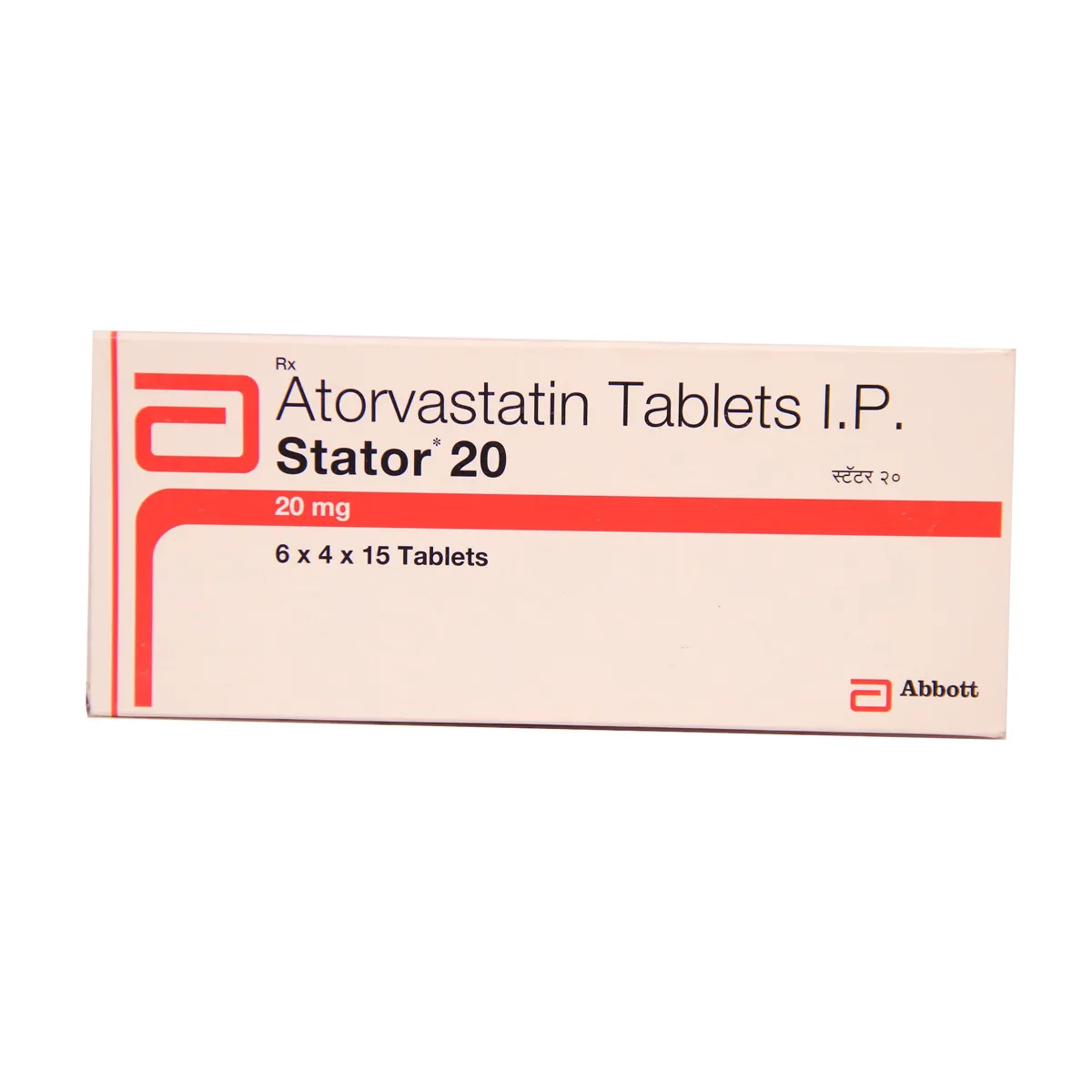
Stator 20 Tablet contains Atorvastatin (20mg), a statin-class medicine used to lower cholesterol and triglycerides in the blood. It helps reduce the risk of heart attack, stroke, and other cardiovascular diseases by lowering “bad cholesterol” (LDL & triglycerides) and increasing “good cholesterol” (HDL).
The 20mg strength is usually prescribed when a patient’s cholesterol levels are not adequately controlled with the 10mg dose, or when stronger cholesterol reduction is required due to higher cardiovascular risk.
Uses
-
Treatment of high cholesterol (hyperlipidemia, hypertriglyceridemia)
-
Prevention of heart attack and stroke in high-risk patients
-
Management of atherosclerosis (hardening of arteries)
-
Cardiovascular protection in patients with diabetes, hypertension, obesity, smoking history, or family history of heart disease
How to Use
-
Take the tablet orally with water, preferably in the evening or as directed by your doctor.
-
Can be taken with or without food.
-
Continue following a low-fat diet, exercise, and lifestyle modifications during treatment.
-
Do not stop this medicine suddenly without consulting your doctor.
Side Effects
Common side effects:
-
Stomach upset, indigestion, constipation, or diarrhea
-
Headache, dizziness
-
Muscle pain, tenderness, or weakness
Serious but rare side effects:
-
Severe muscle pain or breakdown (rhabdomyolysis)
-
Liver problems (yellowing of eyes/skin, dark urine)
-
Allergic reactions (rash, itching, swelling, difficulty breathing)
Precautions
-
Avoid alcohol as it can increase the risk of liver problems.
-
Inform your doctor if you have liver disease, kidney disease, or muscle disorders.
-
Not safe for pregnant or breastfeeding women.
-
Regular liver function and cholesterol monitoring is recommended during therapy.
Key Ingredient Recap

Stator 40 Tablet contains Atorvastatin (40mg), a medicine from the statin group that helps lower cholesterol and triglycerides in the blood. It reduces the risk of heart disease, stroke, and related complications by blocking the enzyme responsible for cholesterol production in the liver.
The 40mg strength is generally prescribed for patients with severe high cholesterol levels or those who need intensive lipid-lowering therapy because lower doses (10mg or 20mg) were not sufficient.
Uses
-
Treatment of high cholesterol (hypercholesterolemia, mixed dyslipidemia)
-
Prevention of heart attack and stroke in high-risk individuals
-
Slows progression of atherosclerosis (plaque build-up in arteries)
-
Cardiovascular protection in patients with diabetes, hypertension, obesity, or family history of heart disease
How to Use
-
Take the tablet orally with water, usually once daily, preferably in the evening.
-
Can be taken with or without food.
-
Continue following a cholesterol-lowering diet, exercise, and lifestyle changes while on treatment.
-
Do not stop the medicine suddenly without consulting your doctor.
Side Effects
Common side effects:
-
Constipation, indigestion, gas, stomach pain
-
Headache, dizziness, sleep disturbances
-
Muscle pain or joint pain
Serious but rare side effects:
-
Muscle damage (rhabdomyolysis) – severe muscle pain, weakness, dark urine
-
Liver problems – yellowing of eyes/skin, dark urine, persistent nausea
-
Allergic reactions – rash, swelling, difficulty breathing
Precautions
-
Avoid alcohol consumption to reduce risk of liver injury.
-
Not safe for pregnant or breastfeeding women.
-
Inform your doctor if you have liver disease, kidney disease, thyroid disorder, or history of muscle problems.
-
Routine blood tests for cholesterol levels and liver function are recommended.
Key Ingredient Recap
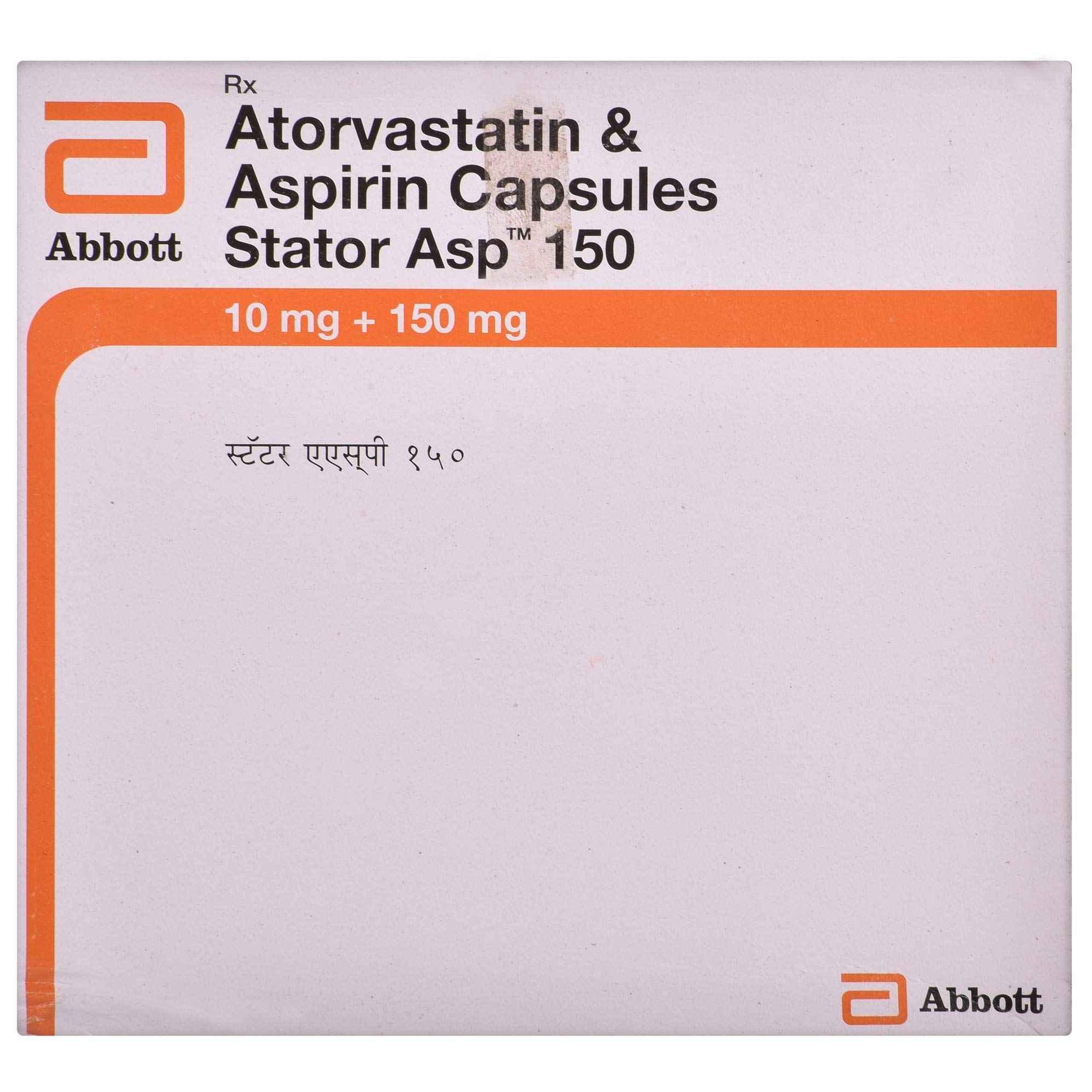
Stator Asp 150 Capsule is a fixed-dose combination medicine that contains Atorvastatin (10mg), a cholesterol-lowering statin, and Aspirin (150mg), an antiplatelet agent. This dual-action medicine is widely prescribed for patients who are at high risk of heart attack, stroke, and other cardiovascular complications.
-
Atorvastatin (10mg): Reduces “bad cholesterol” (LDL, triglycerides) and increases “good cholesterol” (HDL), helping to prevent plaque build-up in blood vessels.
-
Aspirin (150mg): Works as a blood thinner by preventing platelets from clumping together, thus reducing the risk of blood clots that may block arteries.
Uses
-
Prevention of heart attack and stroke in high-risk patients
-
Treatment of dyslipidemia (high cholesterol)
-
Reduces risk of atherosclerosis (hardening/narrowing of arteries)
-
Prevents recurrence of cardiovascular events in patients with a history of heart disease or stroke
How to Use
-
Take the capsule orally with water, usually once daily, at the same time each day.
-
Can be taken with or without food.
-
Follow a cholesterol-lowering diet, regular exercise, and lifestyle modifications along with the medicine.
-
Do not stop abruptly unless advised by your doctor.
Side Effects
Common side effects:
-
Indigestion, acidity, nausea, stomach discomfort
-
Headache, dizziness
-
Muscle pain, joint pain
-
Easy bruising or mild bleeding (due to aspirin)
Serious but rare side effects:
-
Severe muscle weakness or pain (possible rhabdomyolysis)
-
Signs of internal bleeding (black stools, vomiting blood, unusual nosebleeds)
-
Liver problems (yellow eyes/skin, persistent nausea, dark urine)
-
Severe allergic reactions
Precautions
-
Avoid alcohol as it increases risk of liver injury and stomach bleeding.
-
Not safe for pregnant or breastfeeding women.
-
Caution in patients with liver disease, kidney problems, asthma, stomach ulcers, bleeding disorders, or recent surgery.
-
Regular monitoring of liver function, cholesterol levels, and clotting profile is advised.
Key Ingredient Recap
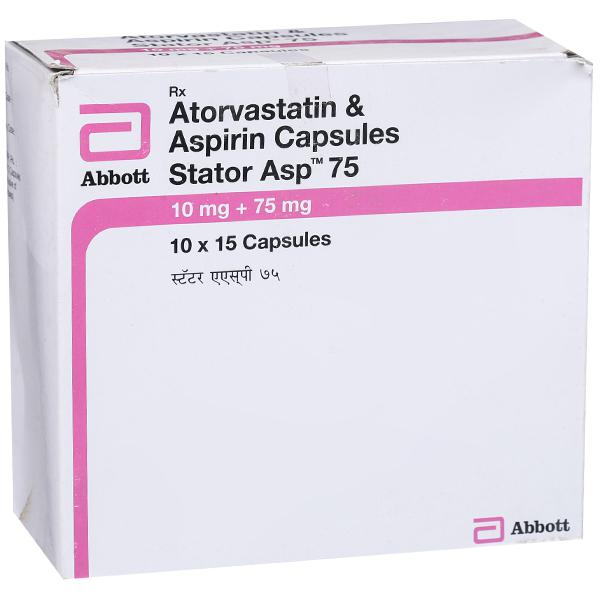
Stator Asp 75 Capsule is a cardiovascular combination medicine containing Atorvastatin (10mg) and Aspirin (75mg). It is mainly prescribed for long-term prevention of heart attack, stroke, and blood clot-related complications in patients with high cardiovascular risk.
-
Atorvastatin (10mg): A statin drug that reduces cholesterol levels by lowering LDL (bad cholesterol) and triglycerides while raising HDL (good cholesterol). This prevents plaque buildup in arteries.
-
Aspirin (75mg): A low-dose antiplatelet agent that prevents blood platelets from sticking together, reducing the risk of clot formation.
Uses
-
Prevents heart attack and stroke in high-risk patients
-
Long-term therapy for dyslipidemia (high cholesterol) with cardiovascular risk factors
-
Prevents atherosclerosis progression (hardening/narrowing of arteries)
-
Used in patients with a history of heart disease, stents, or stroke
How to Use
-
Take the capsule once daily with water, preferably at the same time each day.
-
Can be taken with or without food.
-
Continue with healthy diet, exercise, and lifestyle modifications for best results.
-
Do not discontinue abruptly without medical supervision.
Side Effects
Common side effects:
-
Indigestion, stomach pain, acidity, nausea
-
Headache, dizziness
-
Muscle or joint pain
-
Mild bleeding tendency (e.g., gums, nosebleeds)
Serious but rare side effects:
-
Severe muscle pain/weakness (rhabdomyolysis risk)
-
Internal bleeding (black stools, vomiting blood)
-
Liver issues (yellowing of skin/eyes, persistent nausea)
-
Severe allergic reactions
Precautions
-
Avoid alcohol as it may increase risk of liver damage and stomach bleeding.
-
Not recommended during pregnancy or breastfeeding.
-
Caution in patients with bleeding disorders, stomach ulcers, asthma, liver or kidney disease.
-
Regular liver function and lipid profile monitoring is required.
Key Ingredient Recap

Stator Gold Capsule is a triple combination cardiovascular medicine containing Aspirin (75mg), Atorvastatin (10mg), and Clopidogrel (75mg). It is primarily prescribed for the prevention of heart attack, stroke, and other complications due to blood clots and high cholesterol.
-
Aspirin (75mg): An antiplatelet agent that prevents platelets from sticking together, thereby reducing clot formation.
-
Atorvastatin (10mg): A statin that lowers LDL cholesterol and triglycerides while increasing HDL cholesterol, protecting arteries from plaque build-up.
-
Clopidogrel (75mg): An antiplatelet medicine that prevents harmful blood clots, reducing the risk of heart attack and stroke.
This fixed-dose combination works by preventing clot formation and lowering cholesterol, making it highly effective for patients with high cardiovascular risk.
Uses
-
Prevention of heart attack (myocardial infarction)
-
Prevention of stroke and transient ischemic attack (TIA)
-
Management of atherosclerosis (narrowing of arteries due to cholesterol build-up)
-
Long-term protection in patients with coronary artery disease, high cholesterol, diabetes, or hypertension
How to Use
-
Take once daily, usually in the evening, with or without food.
-
Swallow whole with water; do not crush or chew.
-
Follow your doctor’s instructions strictly, especially regarding diet, exercise, and lifestyle.
Side Effects
Common:
-
Stomach upset, acidity, indigestion
-
Muscle pain or weakness
-
Increased bleeding tendency (e.g., nosebleeds, gum bleeding)
-
Headache or dizziness
Serious (seek medical help immediately):
-
Severe stomach pain, vomiting blood, or black stools (possible GI bleeding)
-
Unusual bruising or prolonged bleeding
-
Yellowing of skin/eyes, dark urine (liver issues)
-
Severe muscle pain or weakness (possible rhabdomyolysis)
Precautions
-
Avoid alcohol, as it increases risk of stomach bleeding and liver strain.
-
Not suitable during pregnancy or breastfeeding.
-
Use with caution in patients with bleeding disorders, peptic ulcer disease, liver or kidney impairment.
-
Inform doctor if taking other blood thinners or painkillers (NSAIDs).
-
Regular monitoring of lipid profile, liver function, and clotting parameters is recommended.
Key Ingredient Recap
-
Aspirin (75mg): Antiplatelet to reduce clot formation.
-
Atorvastatin (10mg): Statin to control cholesterol.
-
Clopidogrel (75mg): Antiplatelet to prevent strokes and heart attacks.

Stator-F Tablet is a lipid-lowering combination medicine that contains Atorvastatin (10mg) and Fenofibrate (160mg). It is prescribed to manage mixed dyslipidemia where both cholesterol and triglyceride levels are high.
-
Atorvastatin (10mg): A statin that lowers LDL (bad cholesterol), increases HDL (good cholesterol), and prevents plaque build-up in arteries.
-
Fenofibrate (160mg): A fibrate that reduces triglycerides and VLDL (very low-density lipoproteins), helping to improve lipid profile.
Together, they control cholesterol and triglyceride levels, reducing the risk of atherosclerosis, heart attack, and stroke.
Uses
-
Treatment of mixed dyslipidemia (high cholesterol + high triglycerides)
-
Prevention of cardiovascular disease in high-risk patients
-
Reduces the risk of plaque build-up in arteries
-
Supportive therapy for patients with diabetes, obesity, or metabolic syndrome
How to Use
-
Take once daily in the evening or as directed by the doctor.
-
Can be taken with food to minimize stomach upset.
-
Swallow whole; do not crush or chew.
-
Regular lipid profile monitoring is essential.
Side Effects
Common:
Serious (seek medical attention):
-
Severe muscle pain (possible rhabdomyolysis)
-
Signs of liver problems (yellowing skin/eyes, dark urine)
-
Pancreatitis symptoms (severe abdominal pain)
-
Allergic reactions (rash, swelling, difficulty breathing)
Precautions
-
Avoid alcohol, as it increases liver strain.
-
Not recommended in pregnancy and breastfeeding.
-
Use cautiously in patients with liver, kidney, or gallbladder disease.
-
Monitor liver function tests, kidney profile, and lipid levels regularly.
Key Ingredient Recap
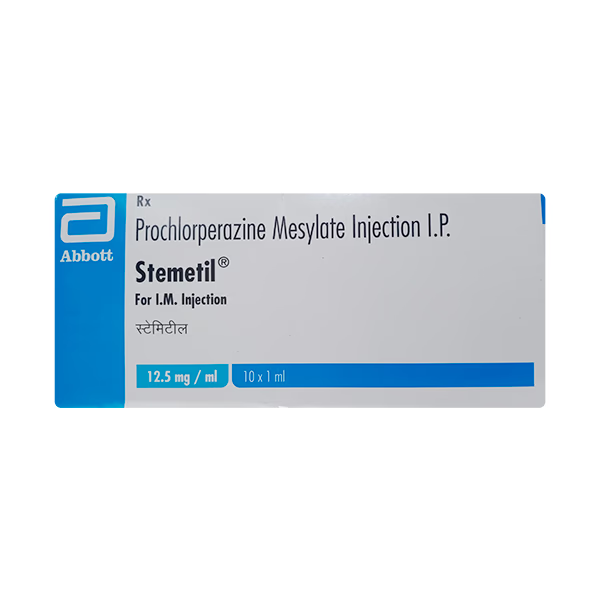
Stemetil Injection contains Prochlorperazine (12.5mg), which belongs to the group of medicines known as phenothiazines. It is commonly used to treat severe nausea, vomiting, dizziness, and vertigo associated with inner ear disorders (such as Ménière’s disease). Additionally, it is sometimes used in the management of migraine attacks and certain psychiatric conditions like schizophrenia or anxiety (when oral therapy is not possible).
This injection is especially useful when rapid relief is required or when the patient cannot take oral medication.
Uses
-
Treatment of severe nausea and vomiting (post-surgery, chemotherapy, infections, or medications)
-
Relief from vertigo, dizziness, and balance disorders
-
Management of migraine-associated nausea
-
Adjunct therapy in schizophrenia and acute psychosis (short-term use when oral forms are unsuitable)
How to Use
-
Administered by a healthcare professional only via intramuscular (IM) or intravenous (IV) route.
-
Dosage depends on age, medical condition, and severity of symptoms.
-
Not recommended for self-administration.
Side Effects
Common:
Serious (seek medical help immediately):
-
Severe muscle stiffness, tremors, or uncontrollable movements (extrapyramidal symptoms)
-
Irregular heartbeat or low blood pressure
-
Jaundice (yellowing of skin/eyes)
-
Allergic reaction (rash, swelling, difficulty breathing)
Precautions
-
Not recommended for children under 1 year.
-
Use with caution in patients with liver, kidney, heart disease, Parkinson’s disease, or epilepsy.
-
Avoid alcohol and other sedatives, as they may increase drowsiness.
-
Pregnant and breastfeeding women should use only if prescribed by a doctor.
-
May cause drowsiness—avoid driving or operating machinery after use.
Key Ingredient Recap
-
Prochlorperazine (12.5mg): An antiemetic and antipsychotic agent that works by blocking dopamine receptors in the brain, controlling nausea, vomiting, and balance-related issues.