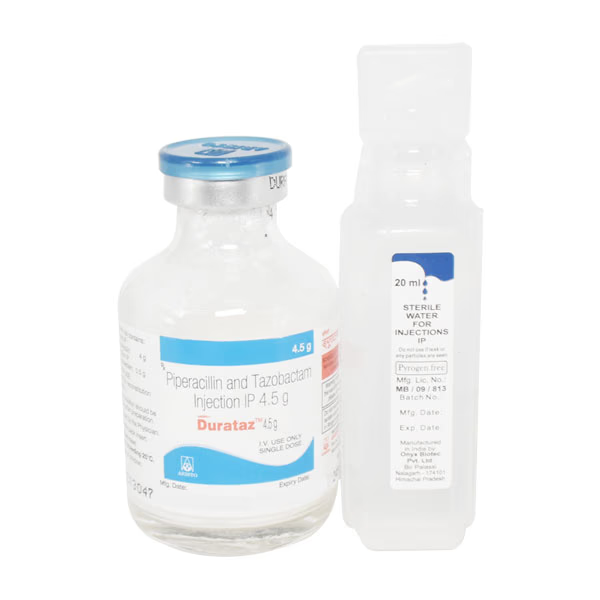




Durataz 1000 mg/125 mg Injection is a broad-spectrum antibiotic combination used for the treatment of moderate to severe bacterial infections. It contains Piperacillin, a penicillin-class antibiotic that kills bacteria by inhibiting cell wall synthesis, and Tazobactam, a beta-lactamase inhibitor that prevents bacterial enzymes from destroying Piperacillin.
Together, this combination is more effective against resistant bacteria and is commonly used in hospital and clinical settings for serious infections. It is administered by a healthcare professional as an intravenous (IV) or intramuscular (IM) injection.
Uses / Indications
-
Lower respiratory tract infections (pneumonia, bronchitis)
-
Urinary tract infections (complicated and uncomplicated)
-
Intra-abdominal infections (peritonitis, appendicitis)
-
Skin and soft tissue infections (cellulitis, wound infections)
-
Septicemia (blood infections)
-
Gynecological infections
-
Bone and joint infections
-
Hospital-acquired infections caused by resistant bacteria
How It Works (Mechanism of Action)
-
Piperacillin (1000 mg): Inhibits bacterial cell wall synthesis → causes bacterial cell death.
-
Tazobactam (125 mg): Inhibits beta-lactamase enzymes → protects Piperacillin from breakdown by resistant bacteria.
-
Combined Effect: Extends antibacterial spectrum and makes treatment more effective against difficult-to-treat infections.
Dosage & Administration
-
Administered by a doctor or nurse through IV infusion or IM injection.
-
Dosage depends on type and severity of infection, age, weight, and kidney function of the patient.
-
Usual adult dose: Every 6–8 hours (as prescribed).
-
Treatment duration varies from a few days to weeks, depending on the infection.
Side Effects
Common:
-
Diarrhea, nausea, vomiting
-
Injection site pain or swelling
-
Rash, itching
-
Headache, insomnia
Serious (rare):
-
Severe allergic reactions (swelling of face, lips, throat, difficulty breathing)
-
Clostridium difficile–associated diarrhea (severe diarrhea with blood/mucus)
-
Low blood cell counts (anemia, leukopenia, thrombocytopenia)
-
Electrolyte imbalance (low potassium levels)
-
Seizures (especially in patients with kidney impairment)
Precautions & Warnings
-
Not recommended in patients with a history of allergy to penicillin, cephalosporins, or beta-lactam antibiotics.
-
Caution in patients with kidney disease, liver disease, or seizure disorders.
-
Prolonged use may cause secondary infections (fungal or resistant bacteria).
-
Regular monitoring of kidney function, liver enzymes, and blood counts may be required during long-term therapy.
-
Use in pregnancy or breastfeeding should only be under medical advice.
Summary
Durataz 1000 mg/125 mg Injection is a powerful antibiotic containing Piperacillin (1000 mg) and Tazobactam (125 mg). It is widely used in hospitals for the treatment of severe infections caused by resistant bacteria. By combining Piperacillin with Tazobactam, it ensures enhanced antibacterial activity and prevents drug resistance. Administration should always be under the supervision of a healthcare professional.
Durataz 4.5 gm Injection is a broad-spectrum antibiotic used to treat serious bacterial infections in hospitalized patients. It contains Piperacillin, a penicillin-class antibiotic that destroys bacteria by inhibiting cell wall synthesis, and Tazobactam, a beta-lactamase inhibitor that protects Piperacillin from enzymatic breakdown by resistant bacteria.
This combination is highly effective against a wide range of Gram-positive and Gram-negative bacteria, including strains resistant to many other antibiotics. It is generally reserved for moderate to severe infections, especially in critically ill or immunocompromised patients.
Uses / Indications
-
Lower respiratory tract infections (pneumonia, hospital-acquired pneumonia)
-
Complicated urinary tract infections
-
Intra-abdominal infections (appendicitis, peritonitis, biliary infections)
-
Skin and soft tissue infections (cellulitis, diabetic foot infections, wound infections)
-
Septicemia (bloodstream infections)
-
Bone and joint infections
-
Gynecological infections (pelvic inflammatory disease, postpartum infections)
-
Febrile neutropenia (infection in patients with low white blood cells)
How It Works (Mechanism of Action)
-
Piperacillin (4000 mg): Inhibits bacterial cell wall synthesis → kills bacteria.
-
Tazobactam (500 mg): Inhibits beta-lactamase enzymes → protects Piperacillin from resistance.
-
Synergistic Effect: Expands antibacterial coverage, making it effective against resistant organisms.
Dosage & Administration
-
Given by a doctor or nurse as intravenous (IV) infusion over 30 minutes.
-
Typical adult dose: 4.5 g every 6–8 hours, depending on the severity of infection.
-
Dosage adjustment required in patients with kidney impairment.
-
Duration of therapy depends on infection type and clinical response.
Side Effects
Common:
-
Diarrhea, nausea, vomiting
-
Headache, insomnia
-
Rash, itching, injection site reactions
-
Constipation or abdominal discomfort
Serious (rare):
-
Severe allergic reactions (anaphylaxis, angioedema)
-
Clostridium difficile–associated diarrhea (bloody, persistent diarrhea)
-
Low blood counts (anemia, leukopenia, thrombocytopenia)
-
Elevated liver enzymes or jaundice
-
Seizures (especially in patients with kidney problems or high doses)
Precautions & Warnings
-
Contraindicated in patients allergic to penicillins, cephalosporins, or beta-lactam antibiotics.
-
Use cautiously in patients with kidney or liver impairment.
-
Long-term use may lead to superinfections with resistant bacteria or fungi.
-
Monitor renal function, liver enzymes, and blood counts during prolonged therapy.
-
Pregnant or breastfeeding women should use only on medical advice.
-
Avoid unnecessary use to prevent antibiotic resistance.
Summary
Durataz 4.5 gm Injection is a powerful hospital-use antibiotic containing Piperacillin (4000 mg) + Tazobactam (500 mg). It is widely used in the treatment of severe bacterial infections, particularly those caused by resistant organisms. Given only under medical supervision via IV infusion, it plays a critical role in managing life-threatening infections in intensive care and inpatient settings.
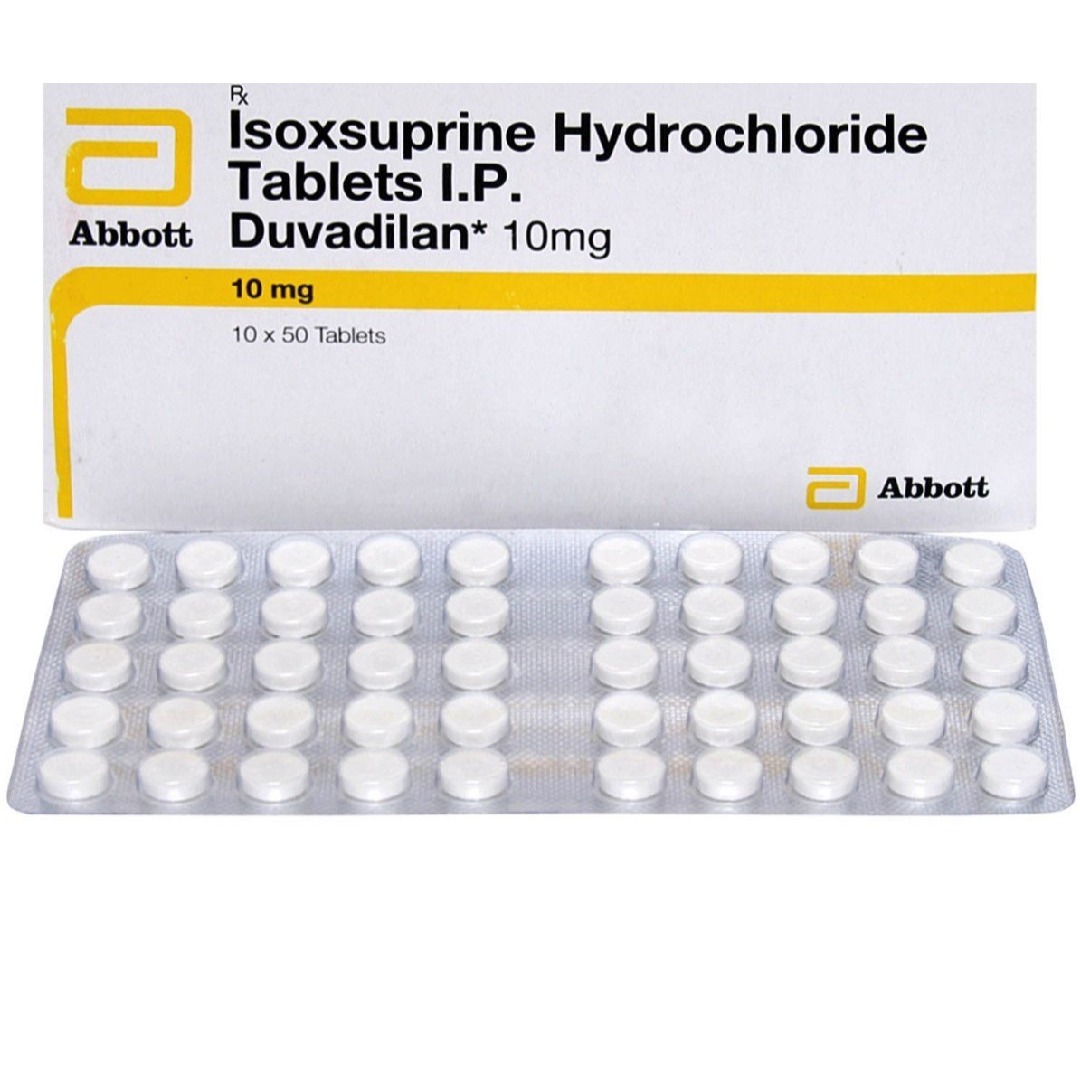
Duvadilan Tablet contains Isoxsuprine (10mg), a vasodilator and smooth muscle relaxant. It helps improve blood circulation by widening blood vessels and also relaxes the muscles of the uterus. Because of these actions, it is widely used in the treatment of peripheral vascular diseases and in pregnancy-related conditions such as threatened miscarriage or premature labor.
Unlike the Retard SR capsule (40mg) which is long-acting, this tablet is an immediate-release form, so it works faster but may need to be taken more frequently.
Uses
-
Peripheral vascular diseases:
-
Pregnancy-related conditions:
-
Other circulatory problems: Helps relieve cramps, pain, and numbness in hands/feet caused by poor blood supply.
How It Works
-
Vasodilation: Relaxes blood vessels → improves blood flow → reduces symptoms of poor circulation.
-
Smooth muscle relaxation: Relieves uterine contractions → helps prevent premature labor.
-
Enhanced oxygen supply: Improves delivery of oxygen and nutrients to affected tissues and placenta.
Dosage & Administration
-
Usual adult dose: As directed by the doctor, often taken 2–3 times daily.
-
Swallow with water; can be taken with or without food.
-
Take at the same time each day for better effectiveness.
Side Effects
Common side effects:
Serious but uncommon:
-
Low blood pressure
-
Palpitations or fast heartbeat
-
Allergic reactions (rash, swelling, difficulty breathing)
Precautions
-
Not recommended in patients with:
-
Use with caution in patients with heart disease, diabetes, glaucoma, or liver/kidney problems.
-
Avoid alcohol as it may worsen dizziness or hypotension.
-
Use in pregnancy should be strictly under medical supervision.
Storage
Duzela 20 Capsule DR contains Duloxetine (20mg), a serotonin-norepinephrine reuptake inhibitor (SNRI). The delayed-release (DR) formulation ensures gradual absorption for consistent therapeutic effects. It is primarily used to treat depression, anxiety disorders, neuropathic pain, and chronic musculoskeletal pain.
Uses:
-
Major depressive disorder (MDD)
-
Generalized anxiety disorder (GAD)
-
Neuropathic pain (e.g., diabetic peripheral neuropathy)
-
Chronic musculoskeletal pain (e.g., lower back pain, osteoarthritis pain)
Dosage:
-
Take exactly as prescribed by your doctor.
-
Usually taken once daily, with or without food.
-
Swallow the capsule whole; do not crush, chew, or open.
-
Do not stop medication suddenly; follow doctor’s guidance for dosage adjustments.
Side Effects:
-
Nausea, dry mouth, constipation
-
Dizziness, drowsiness, headache
-
Sweating, loss of appetite
-
Rare: liver toxicity, serotonin syndrome, severe allergic reactions
Precautions:
-
Inform doctor if you have liver or kidney issues, heart disease, or high blood pressure.
-
Avoid alcohol while taking this medication.
-
Use caution when driving or operating machinery until you know how the drug affects you.
-
Not recommended during pregnancy or breastfeeding unless prescribed.
-
Regular monitoring for mood changes or worsening symptoms may be needed.
Duzela M 20 Capsule DR is a combination medicine containing Duloxetine (20mg), a serotonin-norepinephrine reuptake inhibitor (SNRI), and Methylcobalamin (1.5mg), a form of Vitamin B12. The delayed-release (DR) formulation allows gradual absorption, providing consistent therapeutic effects. It is primarily used to manage neuropathic pain, support nerve health, and treat depression or anxiety.
Uses:
-
Management of diabetic peripheral neuropathy and other nerve-related pain
-
Major depressive disorder (MDD) and generalized anxiety disorder (GAD)
-
Supports nerve regeneration and reduces neuropathic symptoms
Dosage:
-
Take exactly as prescribed by your doctor.
-
Usually taken once daily, with or without food.
-
Swallow the capsule whole; do not crush, chew, or open.
-
Do not stop medication suddenly; follow doctor’s guidance for dosage adjustments.
Side Effects:
-
Nausea, dry mouth, constipation
-
Dizziness, drowsiness, headache
-
Sweating, loss of appetite
-
Rare: liver toxicity, serotonin syndrome, severe allergic reactions
Precautions:
-
Inform doctor if you have liver or kidney issues, heart disease, or high blood pressure.
-
Avoid alcohol while taking this medication.
-
Use caution when driving or operating machinery until you know how the drug affects you.
-
Not recommended during pregnancy or breastfeeding unless prescribed.
Duzela M 30 Capsule DR is a prescription medicine that combines Duloxetine, an antidepressant, and Methylcobalamin, a vitamin B12 supplement. It is mainly used for treating nerve pain, neuropathy, and certain mood-related conditions.
Uses:
-
Management of neuropathic pain (nerve-related pain)
-
Treatment of diabetic peripheral neuropathy
-
Helps in depression and anxiety disorders
-
Supports nerve health and regeneration due to Vitamin B12 supplementation
How to Use:
-
Take this medicine as prescribed by your doctor.
-
Swallow the capsule whole with water; do not crush or chew.
-
It can be taken with or without food, preferably at the same time each day.
-
Dosage and duration depend on the patient’s condition and doctor’s advice.
Precautions:
-
Use only under medical supervision.
-
Inform your doctor about any history of liver or kidney problems.
-
Avoid alcohol while taking this medicine.
-
Pregnant or breastfeeding women should consult their doctor before use.
-
Do not stop the medicine suddenly without medical advice, as it may cause withdrawal symptoms.
Possible Side Effects:
-
Nausea, vomiting, or indigestion
-
Drowsiness or dizziness
-
Dry mouth
-
Loss of appetite
-
Sleep disturbances
-
In rare cases: liver issues, mood changes, or allergic reactions
Important:
DYCREFLAT contains Pancreatin and Activated Dimethicone in an enteric-coated, alu-alu tablet. This enzyme-probiotic combination is used to aid digestion and relieve symptoms of gas, bloating, and indigestion.
How DYCREFLAT Works
-
Pancreatin: A blend of digestive enzymes (amylase, lipase, protease) that helps break down carbohydrates, fats, and proteins in food, improving nutrient absorption and digestive comfort.
-
Activated Dimethicone: An anti-foaming agent that disperses gas bubbles in the intestine, providing relief from bloating, discomfort, and excess gas formation.
Uses of DYCREFLAT
-
Management of indigestion and exocrine pancreatic insufficiency
-
Relief from abdominal bloating, flatulence, and gas-related discomfort
-
Support for digestive enzyme deficiency and conditions causing impaired digestion.
Benefits
-
Enhances digestive process and nutrient absorption
-
Provides rapid relief from gas and bloating
-
Can be useful for patients with chronic digestive complaints, post-meal discomfort, and enzyme deficiency disorders.
Side Effects
Generally well tolerated; possible mild side effects include:
-
Mild gastrointestinal upset (nausea, abdominal pain, diarrhea)
-
Rarely, allergic reactions or skin rash.
Directions for Use and Precautions
-
Take as directed by a healthcare provider, usually after meals
-
Suitable for individuals with digestive enzyme deficiency and associated symptoms
-
Not recommended for use in children, pregnancy, or in case of allergy to ingredients unless advised by a doctor.
DYCREFLAT supports digestion and relieves gas, used for digestive wellness under medical supervision.
Dydrojoy 10 mg Tablet contains Dydrogesterone, a synthetic hormone that mimics the natural female hormone progesterone. It is widely used in the management of various gynecological and hormonal disorders caused by progesterone deficiency.
Progesterone plays a vital role in regulating the menstrual cycle, supporting pregnancy, and maintaining the uterine lining. When the body does not produce enough progesterone, conditions like irregular periods, infertility, recurrent miscarriage, or abnormal uterine bleeding may occur. Dydrojoy helps restore hormonal balance, regulate the menstrual cycle, and support reproductive health.
Uses / Indications
-
Irregular menstrual cycles
-
Secondary amenorrhea (absence of menstruation)
-
Abnormal uterine bleeding due to hormonal imbalance
-
Infertility due to luteal phase defect
-
Endometriosis (painful periods, pelvic pain)
-
Premenstrual syndrome (PMS)
-
Threatened or recurrent miscarriage due to low progesterone
-
Hormone replacement therapy (HRT) in menopause (with estrogen)
How It Works (Mechanism of Action)
-
Dydrogesterone (10 mg): Acts as a natural progesterone substitute → restores hormonal balance.
-
Maintains a healthy uterine lining (endometrium) → supports implantation and pregnancy.
-
Regulates menstrual cycles by opposing the action of estrogen.
-
Reduces symptoms of endometriosis and PMS by correcting hormonal imbalance.
Dosage & Administration
-
Dosage depends on the condition being treated:
-
Menstrual irregularities / abnormal bleeding: Usually 10 mg once or twice daily during the second half of the cycle.
-
Infertility due to luteal insufficiency: 10 mg daily after ovulation until menstruation or confirmation of pregnancy.
-
Threatened miscarriage: Higher doses may be prescribed (e.g., 40 mg initially, followed by 10 mg every 8 hours).
-
Recurrent miscarriage prevention: 10 mg twice daily until the 20th week of pregnancy.
-
Always follow the doctor’s exact instructions.
-
Can be taken with or without food, swallowed whole with water.
Side Effects
Common:
-
Headache, nausea, dizziness
-
Breast tenderness, bloating
-
Mood changes, mild weight gain
-
Menstrual spotting or breakthrough bleeding
Serious (rare):
-
Allergic reactions (rash, itching, swelling, breathing difficulty)
-
Liver problems (yellowing of eyes/skin, dark urine, abdominal pain)
-
Severe depression or mood swings
Precautions & Warnings
-
Not to be used in women with unexplained vaginal bleeding, liver disease, or hormone-sensitive cancers.
-
Caution in patients with blood clotting disorders, depression, or history of breast cancer.
-
Regular monitoring of liver function may be required during long-term use.
-
Not a contraceptive – should not be relied on for birth control.
-
Safe use during pregnancy only under strict medical supervision.
-
Should not be taken without medical advice if breastfeeding.
Summary
Dydrojoy 10 mg Tablet (Dydrogesterone 10 mg) is a progesterone hormone replacement therapy used to manage menstrual disorders, infertility, endometriosis, PMS, and pregnancy-related complications due to low progesterone levels. By restoring hormonal balance, it helps regulate periods, support pregnancy, and reduce gynecological symptoms.
Dydrowell 10mg Tablet contains Dydrogesterone (10mg), a synthetic form of the natural female hormone progesterone. It is widely used in the management of menstrual disorders, infertility issues, and pregnancy-related complications that arise due to progesterone deficiency.
Unlike some other hormonal treatments, Dydrogesterone is well tolerated, does not have estrogenic or androgenic effects, and closely mimics the action of natural progesterone. This makes it particularly suitable for women requiring hormonal balance during different stages of reproductive health.
Uses of Dydrowell 10mg Tablet
-
Treatment of menstrual cycle disorders such as irregular periods, painful menstruation (dysmenorrhea), or absence of periods (amenorrhea)
-
Management of luteal phase defects in infertility
-
Support in assisted reproductive techniques (ART) such as IVF
-
Prevention and treatment of threatened or recurrent miscarriage due to low progesterone levels
-
Treatment of endometriosis (tissue growth outside the uterus causing pain and infertility)
-
Management of abnormal uterine bleeding due to hormonal imbalance
-
Hormonal support in postmenopausal hormone replacement therapy (HRT) (when combined with estrogen)
How it Works
-
Dydrogesterone acts like natural progesterone, helping prepare the uterus for pregnancy and supporting early pregnancy.
-
It corrects hormonal imbalance in women, regulates the menstrual cycle, and prevents abnormal tissue growth in conditions like endometriosis.
-
By maintaining proper progesterone levels, it reduces the risk of miscarriage and supports embryo implantation.
Dosage & Administration
-
The dose varies depending on the condition being treated.
-
It should be taken orally with water, preferably at the same time each day.
-
Follow the exact dosage schedule advised by the doctor, as timing is important in hormonal therapy.
-
Do not stop suddenly without consulting a doctor.
Possible Side Effects
Most women tolerate Dydrowell 10mg well, but some may experience:
-
Headache or migraine
-
Nausea or stomach discomfort
-
Breast tenderness
-
Mood swings or mild depression
-
Weight changes
-
Irregular spotting or breakthrough bleeding
Rarely:
-
Allergic reactions (rash, itching, swelling)
-
Jaundice or liver-related issues (uncommon but requires medical attention)
Precautions
-
Inform your doctor if you have a history of liver disease, unexplained vaginal bleeding, blood clotting disorders, or depression.
-
Regular monitoring may be required during long-term treatment.
-
Safe for use during pregnancy when prescribed, especially for recurrent miscarriage or IVF support.
-
Use cautiously while breastfeeding (small amounts may pass into breast milk).
Storage
DYtor 10 Tablet contains Torasemide (10mg), a loop diuretic (water pill) that helps remove excess water and salt from the body through urine. It is mainly prescribed to manage edema (fluid retention) and high blood pressure (hypertension). By reducing excess fluid, it helps relieve symptoms such as swelling in the legs, ankles, or lungs, and prevents complications related to heart, liver, or kidney disorders.
Uses:
-
Edema due to heart failure, liver cirrhosis, or kidney disease
-
Hypertension (high blood pressure)
-
Pulmonary edema (fluid in the lungs)
-
Management of congestive heart failure (CHF)
Dosage:
-
Usually taken once daily, preferably in the morning to avoid frequent nighttime urination.
-
Dosage and duration depend on the medical condition and response to treatment.
-
Should be taken as prescribed by the doctor.
How to Use:
-
Swallow the tablet whole with water.
-
Can be taken with or without food.
-
Take at the same time each day for best results.
-
Do not stop the medicine suddenly without consulting your doctor.
Precautions:
-
Use cautiously in patients with kidney, liver, or electrolyte imbalance.
-
Not recommended during pregnancy or breastfeeding unless prescribed.
-
Avoid alcohol and dehydration while on this medicine.
-
Inform your doctor about all other ongoing medications, especially for blood pressure or diabetes.
-
Regular monitoring of blood pressure, kidney function, and electrolyte levels (sodium, potassium) is advised.
Side Effects:
-
Increased urination
-
Dizziness or lightheadedness (especially on standing)
-
Dehydration or dry mouth
-
Muscle cramps or weakness
-
Nausea or headache
-
In rare cases: electrolyte imbalance or low blood pressure
DYtor 20 Tablet contains Torasemide (20mg), a loop diuretic (water pill) used to remove excess fluid and salt from the body. It is commonly prescribed to treat edema (fluid retention) caused by heart failure, liver cirrhosis, or kidney disease, and to manage high blood pressure (hypertension). By increasing urine output, DYtor 20 helps reduce swelling, shortness of breath, and fluid overload, improving overall heart and kidney function.
Uses:
-
Edema due to heart failure, kidney, or liver disease
-
Hypertension (high blood pressure)
-
Pulmonary edema (fluid accumulation in lungs)
-
Congestive heart failure (CHF) management
Dosage:
-
Typically taken once daily, preferably in the morning to prevent nighttime urination.
-
The dosage and duration are decided by the doctor based on condition and response.
-
Do not exceed the prescribed dose.
How to Use:
-
Swallow the tablet whole with water.
-
Can be taken with or without food.
-
Take at the same time every day for consistent results.
-
Continue taking the medicine even if you feel well — stopping suddenly may worsen your condition.
Precautions:
-
Use cautiously if you have kidney disease, liver problems, gout, or electrolyte imbalance.
-
Not recommended during pregnancy or breastfeeding unless advised by a doctor.
-
Avoid alcohol and dehydration while taking this medicine.
-
Regular monitoring of blood pressure, kidney function, and electrolyte levels (especially potassium and sodium) is essential.
-
Inform your doctor if you are taking other diuretics, blood pressure medicines, or diabetes medications.
Side Effects:
-
Frequent urination
-
Dizziness or lightheadedness (especially when standing up)
-
Dehydration or dry mouth
-
Muscle cramps or weakness
-
Low blood pressure
-
Nausea or headache
-
Rare: electrolyte imbalance or increased blood urea/creatinine levels