



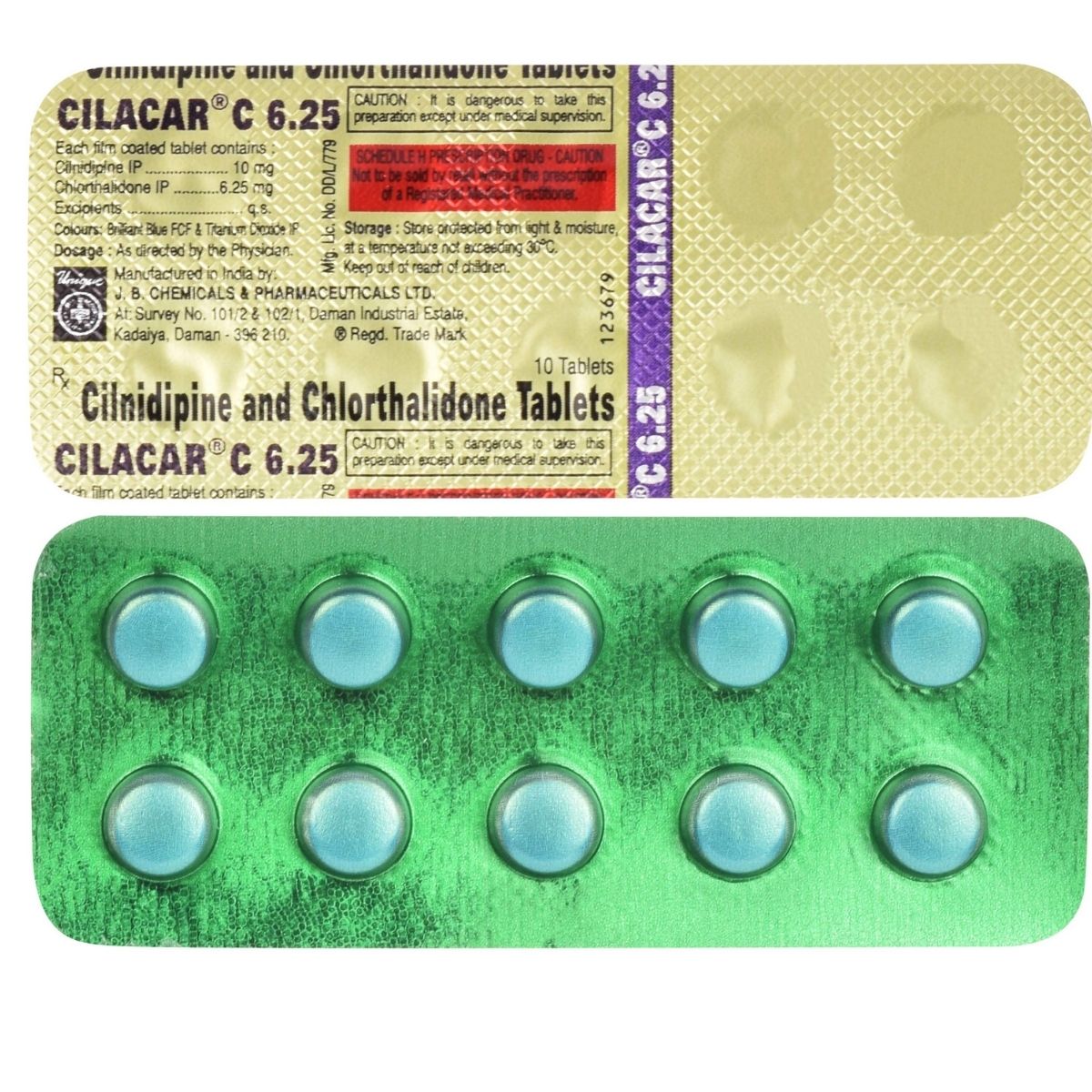
Description
Uses
- High blood pressure (hypertension)
- Hypertension requiring combination therapy
- Helps reduce the risk of complications associated with uncontrolled blood pressure
Key Benefits
- Helps lower high blood pressure
- Relaxes and widens blood vessels
- Helps remove excess sodium and water from the body
- Reduces the workload on the heart
- Provides blood-pressure control through two complementary mechanisms
How Cilacar C Works
Cilnidipine is a calcium channel blocker. It relaxes the muscles in blood-vessel walls, helping the vessels widen and allowing blood to flow more easily.
Chlorthalidone is a thiazide-like diuretic. It increases the elimination of sodium and water through urine, reducing the amount of fluid circulating in the blood vessels.
Together, these actions help lower blood pressure.
Dosage & How to Use
Take Cilacar C Tablet exactly as prescribed by your doctor.
- Swallow the tablet whole with water.
- It can generally be taken with or without food.
- Take it at approximately the same time every day.
- Because Chlorthalidone increases urination, your doctor may recommend taking it earlier in the day.
- Do not stop or change the dose without medical advice.
- Continue your recommended diet, exercise, and reduced-salt lifestyle measures.
Side Effects
Common side effects may include:
- Dizziness
- Headache
- Increased urination
- Ankle or foot swelling
- Weakness
- Low blood pressure
- Electrolyte changes
Chlorthalidone may sometimes cause changes in potassium, sodium, uric acid, or blood sugar levels.
Seek medical attention for severe dizziness, fainting, severe weakness, irregular heartbeat, or significant swelling.
Precautions
Tell your doctor if you have:
- Kidney disease
- Liver disease
- Low blood pressure
- Electrolyte imbalance
- Gout or high uric acid
- Diabetes
- Heart problems
Your doctor may periodically monitor blood pressure, kidney function, electrolytes, and blood glucose during treatment.
Drug Interactions
Cilacar C may interact with:
- Other blood-pressure medicines
- Diuretics
- Lithium
- Digoxin
- NSAID painkillers such as Ibuprofen or Diclofenac
- Medicines that affect potassium or other electrolytes
- Diabetes medicines
Tell your doctor about all prescription medicines, OTC medicines, vitamins, and supplements you take.



Leave a Reply