



Original price was: ₹158.59.₹135.85Current price is: ₹135.85.
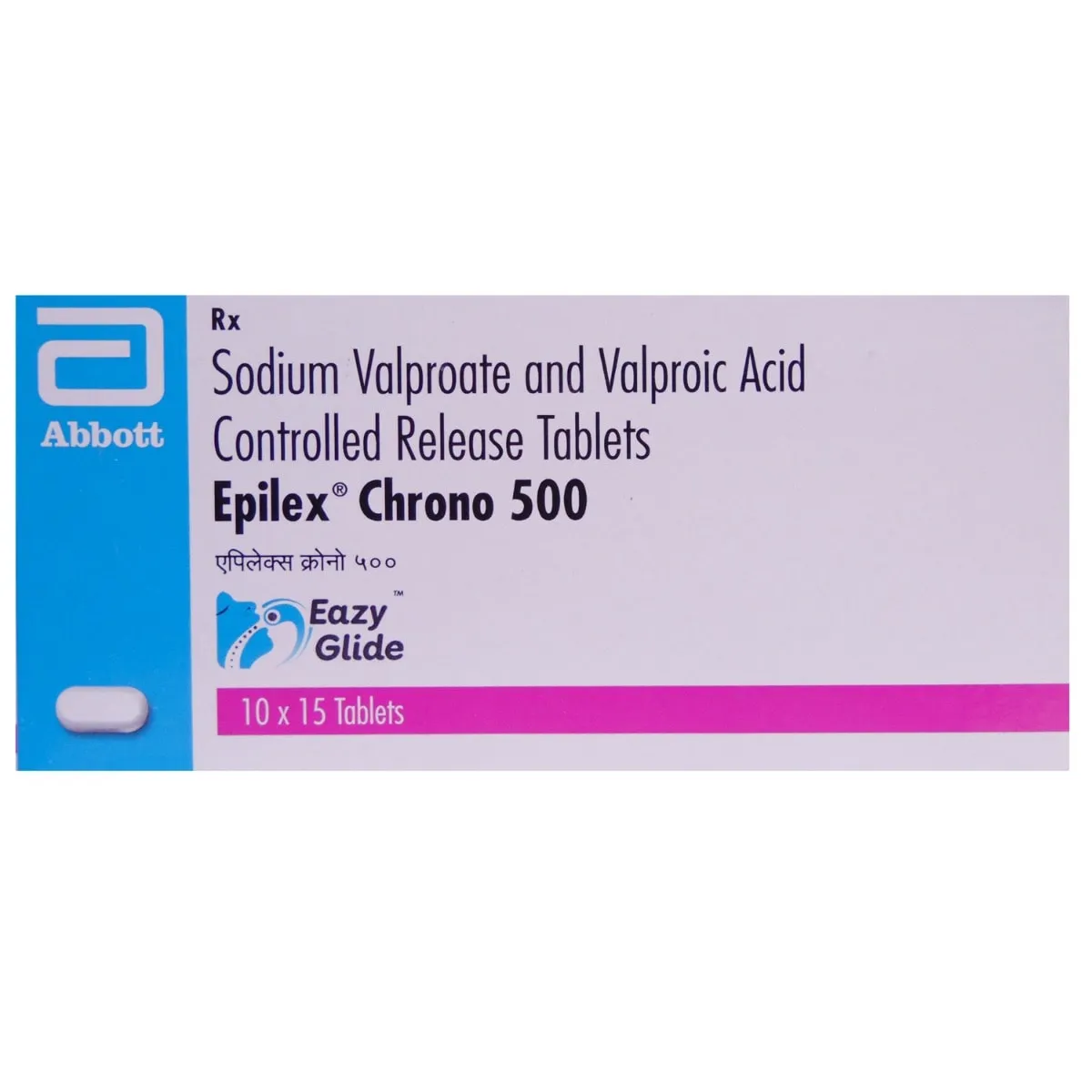
Epilex Chrono 500 Tablet CR
Manufacturer / Marketer: Abbott
Packaging: Strip of 10 controlled-release tablets
Salt Composition: Sodium Valproate (333mg) + Valproic Acid (145mg)
Description
Epilex Chrono 500 Tablet CR is an antiepileptic medication that combines sodium valproate and valproic acid in a controlled-release form. It is primarily prescribed for the management of epilepsy (seizures), bipolar disorder, and sometimes for the prevention of migraine headaches.
This dual formulation ensures sustained release of the drug, maintaining stable blood levels for longer duration and reducing the frequency of dosing compared to immediate-release tablets.
Key Uses:
-
Treatment and prevention of generalized and partial seizures in epilepsy
-
Management of bipolar mood disorder
-
Prophylaxis of migraine attacks
How it Works:
The combination of sodium valproate and valproic acid works by increasing the amount of gamma-aminobutyric acid (GABA) in the brain, a natural chemical messenger that suppresses abnormal nerve activity. This action helps to calm excessive electrical signals in the brain, thereby preventing seizures and stabilizing mood.
Dosage & Administration:
-
Administered orally, usually with meals to reduce gastric upset.
-
Dosage is tailored according to age, body weight, and clinical condition.
-
Must be taken regularly at the same time daily for best results.
-
Sudden discontinuation should be avoided, as it may cause withdrawal seizures.
Possible Side Effects:
-
Nausea, vomiting, abdominal discomfort
-
Dizziness, tremors, headache, drowsiness
-
Weight gain, hair loss
-
Rare but serious: liver toxicity, pancreatitis, blood abnormalities (requires monitoring)
Warnings & Precautions:
-
Contraindicated in pregnancy unless no safer alternatives are available (risk of serious birth defects).
-
Not suitable for patients with severe liver disease or pancreatitis.
-
Regular monitoring of liver function, pancreatic enzymes, CBC, and serum drug levels may be necessary during prolonged therapy.
-
Avoid alcohol to minimize excessive sedation.
is an antiepileptic medication that combines sodium valproate and valproic acid in a controlled-release form. It is primarily prescribed for the management of epilepsy (seizures), bipolar disorder, and sometimes for the prevention of migraine headaches.
This dual formulation ensures sustained release of the drug, maintaining stable blood levels for longer duration and reducing the frequency of dosing compared to immediate-release tablets.
Key Uses:
-
Treatment and prevention of generalized and partial seizures in epilepsy
-
Management of bipolar mood disorder
-
Prophylaxis of migraine attacks
How it Works:
The combination of sodium valproate and valproic acid works by increasing the amount of gamma-aminobutyric acid (GABA) in the brain, a natural chemical messenger that suppresses abnormal nerve activity. This action helps to calm excessive electrical signals in the brain, thereby preventing seizures and stabilizing mood.
Dosage & Administration:
-
Administered orally, usually with meals to reduce gastric upset.
-
Dosage is tailored according to age, body weight, and clinical condition.
-
Must be taken regularly at the same time daily for best results.
-
Sudden discontinuation should be avoided, as it may cause withdrawal seizures.
Possible Side Effects:
-
Nausea, vomiting, abdominal discomfort
-
Dizziness, tremors, headache, drowsiness
-
Weight gain, hair loss
-
Rare but serious: liver toxicity, pancreatitis, blood abnormalities (requires monitoring)
Warnings & Precautions:
-
Contraindicated in pregnancy unless no safer alternatives are available (risk of serious birth defects).
-
Not suitable for patients with severe liver disease or pancreatitis.
-
Regular monitoring of liver function, pancreatic enzymes, CBC, and serum drug levels may be necessary during prolonged therapy.
-
Avoid alcohol to minimize excessive sedation.
Related products
-
34% OFF
MUPICIP 15GM
Original price was: ₹257.89.₹170.00Current price is: ₹170.00. Add to cart -
5% OFF

AZICIP 100 ORAL SUSPN
Original price was: ₹50.46.₹48.00Current price is: ₹48.00. Add to cart -
32% OFF

L QUIN 500
Original price was: ₹102.48.₹70.00Current price is: ₹70.00. Add to cart -
29% OFF

AZICIP 500
Original price was: ₹80.57.₹57.00Current price is: ₹57.00. Add to cart